
Chaos in Kolkata: Messi’s India ‘GOAT Tour’ Sparks Fan Fury and Stadium Inquiry
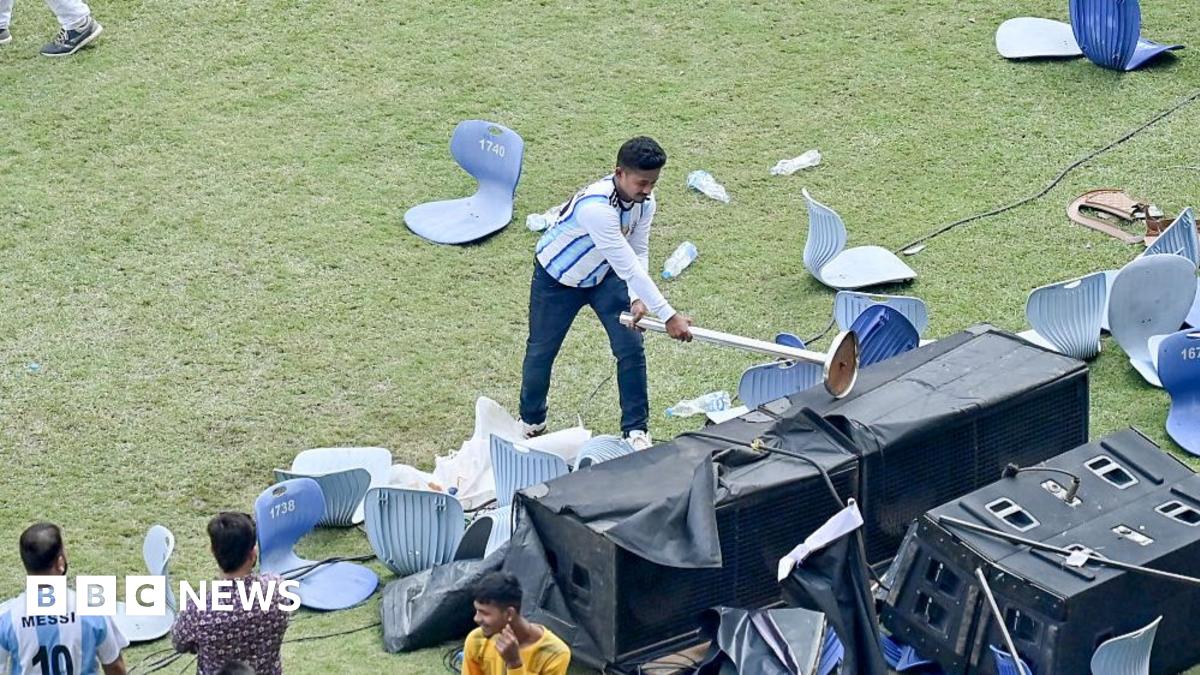
Lionel Messi’s much-hyped ‘GOAT Tour’ stop in India took a chaotic turn in Kolkata, where frustrated fans threw chairs and bottles inside the stadium after a mismanaged event, forcing security interventions and triggering a political and sporting storm. With the Inter Miami and Argentina icon scheduled to visit Kolkata, Hyderabad, Mumbai and New Delhi, West Bengal chief minister Mamata Banerjee publicly apologised to Messi and “sports lovers” and ordered a formal enquiry to determine how an evening meant to celebrate the alleged greatest of all time descended into anger and unrest.
Messi’s ‘GOAT Tour’ in India: From Celebration to Controversy
Billed as a historic moment for Indian football fandom, Messi’s India ‘GOAT Tour’ promised fan interactions, exhibition activities and city-wide celebrations across Kolkata, Hyderabad, Mumbai and New Delhi. Yet the Kolkata leg has quickly become a flashpoint, exposing deep frustrations about event organisation, ticketing transparency and fan treatment in one of India’s most passionate football regions.
Instead of a festive showcase of the eight-time Ballon d’Or winner, the night ended in jeers, flying objects and questions over safety and accountability. For a country desperate to host elite football talent, the fallout could shape how future global superstars view India as a tour destination.
Why Kolkata Matters: A Football City Waiting for Its Moment
Kolkata is not just another stop on Messi’s itinerary. It is Indian football’s spiritual heartland, home to legendary clubs like Mohun Bagan and East Bengal, and a city that has packed stadiums for international stars before—from Diego Maradona’s 2008 visit to Lionel Messi’s own Argentina friendly against Venezuela at the Salt Lake Stadium in 2011.
That history helps explain the emotional temperature inside the stadium. Many fans saw Messi’s ‘GOAT Tour’ appearance as a once-in-a-lifetime opportunity. When the experience failed to match expectations—whether in access, visibility, or event flow—the disappointment escalated into anger with alarming speed.

Messi’s presence, even in a non-competitive setting, tapped into a fan base that has followed his club and international exploits for nearly two decades—through Barcelona’s Champions League nights, Argentina’s 2022 World Cup triumph, and now his Inter Miami chapter in Major League Soccer.
What Went Wrong: From Anticipation to Fans Throwing Chairs and Bottles
The stadium event in Kolkata reportedly suffered from a mix of poor communication, delays and fan dissatisfaction over what they actually got for their tickets. As expectations for close interaction with Messi collided with the reality of limited visibility and restricted access, tempers flared.
- Fans in certain sections complained of restricted views and minimal on-pitch activity.
- Delays and unclear announcements contributed to confusion and crowd restlessness.
- As frustration peaked, chairs and bottles were thrown, with security forced to step in.
- Videos of the unrest quickly spread on social media, amplifying the backlash nationwide.
While no major injuries have been widely reported so far, the scenes of chairs and bottles being hurled are deeply concerning in an era of heightened focus on stadium safety. For Messi—who has generally enjoyed a warm, almost reverential reception in neutral venues around the world—the images were a jarring contrast to the adulation he typically receives.
Official Response: Banerjee’s Apology and the Enquiry Committee
Recognising the scale of the embarrassment, West Bengal chief minister Mamata Banerjee moved quickly to distance the state from the chaos and to reassure both the public and Messi’s camp that the incident would be taken seriously.
“The enquiry committee will conduct a detailed enquiry into the incident, fix responsibility, and we will ensure such mismanagement does not happen again. I apologise to Messi and all sports lovers who felt let down at the stadium.”
The language was deliberate: an explicit apology not just to paying fans, but to Messi himself, whose global brand is tightly managed and highly protective of his image. The formation of an enquiry committee signals that organisers, private partners and possibly state agencies involved in logistics could all come under scrutiny.
| Focus Area | Expected Questions |
|---|---|
| Event Management | Were timelines, crowd control and stage layout adequately planned? |
| Ticketing & Communication | Did fans receive clear information on what their tickets guaranteed? |
| Security Protocols | Were there enough security personnel and were emergency plans rehearsed? |
| Stakeholder Responsibility | Which organising bodies or partners bear primary responsibility? |
The findings will matter far beyond Kolkata. Tournament organisers, international promoters and agents representing top-tier athletes will watch closely to gauge whether India can offer both the passion and the professionalism required for marquee events.
The Fan Perspective: Passion, Expectations and a Sense of Betrayal
To understand the intensity of the reaction, you have to understand what Messi represents to this generation of Indian fans. Many have grown up streaming La Liga, the UEFA Champions League and FIFA World Cups at odd hours, forming deep emotional bonds with players they might never see in person.
- Messi is not just a footballer; he is a symbol of excellence and consistency.
- For younger fans, he represents their first true global sports idol.
- Seeing him live, even briefly, carries huge emotional weight.

When that emotional investment meets logistical failure, the fallout is rarely calm. While nothing excuses violent behaviour or damage to property, it is crucial for organisers to anticipate that intensity and plan accordingly—especially when branding an event around the “GOAT” narrative, which inherently raises expectations.
Messi’s Global Pull: Why India Fought to Host the ‘GOAT Tour’
Beyond the emotional connection, there is cold, hard data explaining why promoters are eager to bring Messi to India even at this late stage of his career with Inter Miami and the Argentina national team.
| Metric | Approximate Figure* | Relevance to India Tour |
|---|---|---|
| Goals (Club & Country) | 800+ career goals | Driving the “GOAT” branding and fan curiosity. |
| Major Trophies | 40+ including World Cup & multiple UCLs | Elevates event status beyond a mere friendly visit. |
| Social Media Reach | Hundreds of millions of followers | Huge amplification for host cities and sponsors. |
| Broadcast & Streaming Pull | Top ratings for World Cup & key club matches | Justifies premium pricing and large-scale venues. |
*Figures are approximate and based on publicly available statistics from reputable football databases and official competitions.
For organisers, these numbers translate directly into revenue potential—ticket sales, sponsorship deals, broadcast rights and city branding. For fans, they represent a chance to witness living history. When that promise is broken or mishandled, the backlash is equally large.

Multiple Angles: Who Bears the Blame for the Kolkata Chaos?
As is often the case with high-profile sporting controversies, the Kolkata incident has sparked competing narratives about who is truly at fault.
- Organisers & Promoters: Critics argue the event was oversold and under-planned, with more marketing sizzle than logistical substance.
- Local Authorities: Some point to inadequate coordination between private organisers and public agencies responsible for safety and traffic control.
- Fans: Others insist that however poor the organisation, throwing chairs and bottles crosses a clear line and damages India’s sporting reputation.
- Global Stakeholders: Agents and international promoters may quietly question whether the risk-return ratio of such tours in emerging markets is acceptable.
“You can’t sell fans a dream and then deliver a distant, disorganised glimpse. This isn’t about Messi—it’s about how you treat the people who fill your stadiums,” an Indian football analyst noted on a national sports broadcast.
The enquiry committee will help clarify official responsibility, but the reputational equation is more complex. If the incident is seen as a one-off organisational failure, future tours may proceed with stricter conditions. If it is perceived as inherent risk, elite stars and their clubs could think twice before committing.
What This Means for Messi, India and Future Football Tours
In the short term, the priority will be ensuring that the remaining ‘GOAT Tour’ events in Hyderabad, Mumbai and New Delhi run smoothly, safely and transparently. Messi’s camp will want clear guarantees on security, scheduling and fan management before stepping into any more volatile environments.
- For Messi: His legacy in India is unlikely to be defined by one chaotic evening, but his entourage will be more cautious about non-competitive appearances.
- For Indian Football: The incident is a wake-up call to match passion with professionalism if the country wants to host more elite players, pre-season tours and tournaments.
- For Fans: There may be stricter security and more controlled access at future events, potentially changing the intimacy of player-fan interactions.
India’s long-term goal of becoming a regular stop on the global football circuit—whether for club pre-season tours, exhibition matches or promotional events—depends on learning from nights like Kolkata. That means transparent communication, realistic promises, and an unwavering commitment to safety and accessibility.
The immediate drama may fade, but the key question remains: will this controversy push Indian organisers to raise their standards, or will it make the world’s biggest stars think twice before bringing their tours to one of the sport’s most passionate yet still-developing markets?
For now, Messi continues his Indian journey under a brighter, more unforgiving spotlight—one that will measure not just his star power, but how well the country can rise to meet the expectations that come with hosting the game’s greatest names.
Further Reading and Official Resources
For readers looking to explore more about Lionel Messi, Indian football and official regulations around major events:
- FIFA Official Website – Global regulations, player profiles and tournament information.
- Inter Miami CF Official Page – Club details, fixtures and news on Messi’s MLS career.
- Argentine Football Association (AFA) – Official updates on the Argentina national team.
- All India Football Federation (AIFF) – Governing body for football in India, with domestic and international event information.
- UEFA – Background on Messi’s historic Champions League exploits with Barcelona.
As the enquiry in Kolkata unfolds and the rest of the ‘GOAT Tour’ progresses, these sources will help provide context on how a single turbulent night fits into the broader story of Messi’s global journey and India’s evolving football ambitions.
