
Chaos, Clutch Plays and a Crown: Eagles Outlast Commanders to Clinch NFC East
The Philadelphia Eagles clinched the NFC East title for the second straight season with a 29-18 win over the Washington Commanders in a heated divisional matchup that saw three players ejected, big defensive swings, and playoff implications on the line. A rivalry game with a championship feel turned chippy, but the Eagles kept their composure long enough to secure home-field advantage in the division and send a clear message to the rest of the NFC playoff field.
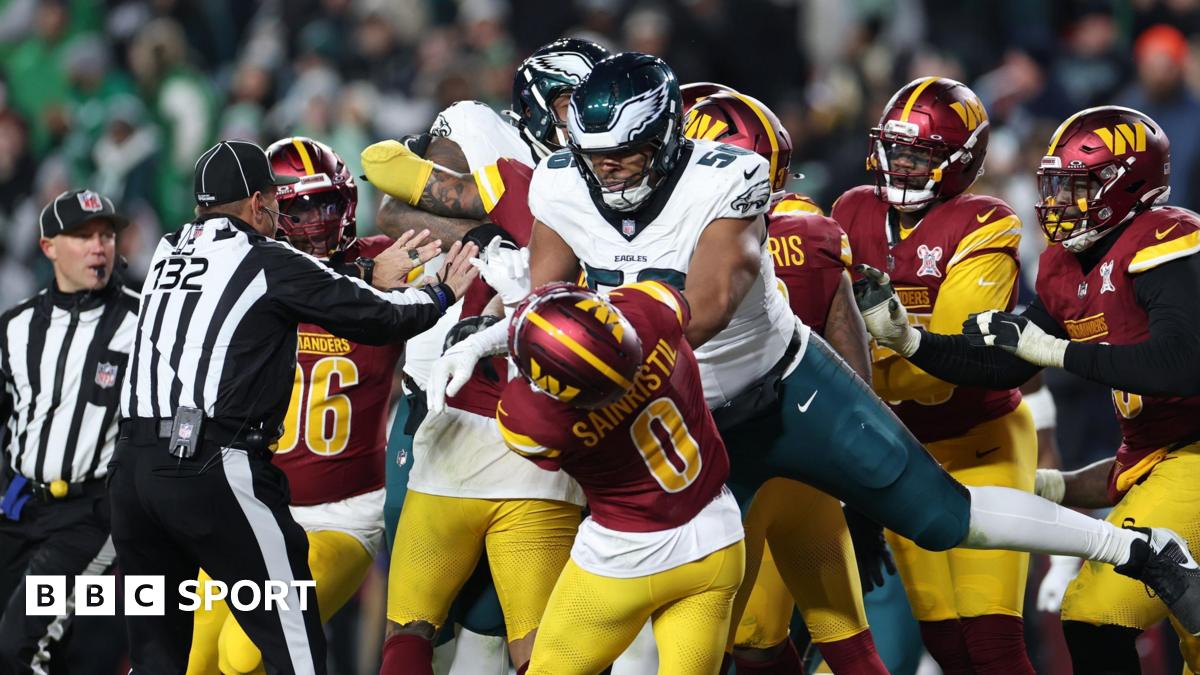
This wasn’t just another regular-season win. It was a statement: the road to the NFC playoffs will once again run through Philadelphia, and the Eagles were willing to embrace the physical, emotional chaos of a divisional battle to get there.
NFC East on the Line: Why This Eagles–Commanders Clash Mattered
Divisional games are rarely quiet, but this one arrived with extra weight. The Eagles entered needing a win to lock up the NFC East crown for the second consecutive season, while the Washington Commanders were playing for pride, evaluation, and the chance to spoil a rival’s celebration.
Under head coach Nick Sirianni, Philadelphia has turned consistency into a weapon. Securing back-to-back division titles in a rugged NFC East—featuring the Dallas Cowboys’ high-powered offense and the ever-scrappy New York Giants—underscores how stable this Eagles core has become on both sides of the ball.
- Second straight NFC East title for the Eagles
- Fourth straight season with a winning record
- Another playoff berth for Jalen Hurts and a veteran-led roster built for January football
Key Moments: From Ejections to the Eagles’ Closing Surge
The game flipped between control and chaos, and the officiating crew was right in the middle of it. Three players were ejected after tempers boiled over in the second half, with Washington’s Javon Kinlaw and Quan Martin among those sent to the locker room early following an on-field altercation.
“You never want it to go there, but we stayed together and stayed locked in,” an Eagles veteran said postgame. “We had everything to play for. That was the difference.”
The ejections turned up the volume inside the stadium but also exposed a critical difference between the two sides: Philadelphia managed the emotional spikes while Washington struggled to regain defensive discipline in key red-zone situations.
- First-half defensive stand by the Eagles inside their own 10-yard line
- Jalen Hurts orchestrating multiple scoring drives with balanced run-pass rhythm
- Post-ejection stretch where Washington’s undermanned defense couldn’t slow the Eagles’ ground game
Box Score Snapshot: Eagles vs. Commanders by the Numbers
The 29-18 final doesn’t fully capture the emotional swings, but the stat sheet tells a clear story of a more efficient, more composed Eagles side. Washington moved the ball in stretches, yet stalled in crucial moments and couldn’t match Philadelphia’s execution in the red zone.
| Stat | Eagles | Commanders |
|---|---|---|
| Final Score | 29 | 18 |
| Turnovers | Fewer giveaways, key late-game ball security | Costly mistakes in plus territory |
| Red-Zone Efficiency | Capitalized on short fields | Drives stalled inside the 20 |
| Penalties | More disciplined after skirmish | Ejections and flags disrupted rhythm |
While the Commanders had stretches of competent offense, especially between the 20s, their inability to finish drives defined the gap between a playoff team and a rebuilding one.
Visual Breakdown: Eagles’ Intensity and Commanders’ Frustration


The Ejections: Line Between Physical and Out of Control
Physicality is the heartbeat of NFC East football, but Sunday’s clash crossed the line from intense to undisciplined. Washington defenders Javon Kinlaw and Quan Martin were ejected after a heated confrontation that escalated beyond standard post-whistle pushing. Another player joined them in being tossed, punctuating a sequence that changed the tenor of the game.
For Washington, the ejections were more than a headline—they were a schematic problem. Losing key defensive personnel forced adjustments in coverage and rotations, and Philadelphia immediately tested those changes with tempo and misdirection.
“We’ve got to be smarter,” a Washington coach acknowledged. “You can’t give a team like that extra possessions, extra chances, and play short-handed on top of it.”
- Momentum swung decisively toward the Eagles after the altercation
- Washington’s defensive depth was stretched thin in the fourth quarter
- The officiating crew tightened control, resulting in a stricter standard the rest of the way
What This NFC East Title Says About the Eagles’ Playoff Ceiling
Clinching the NFC East again isn’t just a box checked—it’s another data point in the argument that the Eagles are built for sustained contention. They didn’t play flawless football, but they did show traits that translate in January: resilience, situational execution, and depth across the roster.
Offensively, Jalen Hurts continues to command a unit that can win in multiple ways. With a physical rushing attack, a playbook full of RPO concepts, and receivers who win in contested situations, Philadelphia remains one of the toughest teams in the NFC to game-plan for over 60 minutes.
Defensively, the Eagles’ pass rush and back-end communication still have room to sharpen, but they showed the bend-don’t-break profile that often defines playoff success. When the field shrank, Washington’s options did too.
- Back-to-back division titles strengthen Nick Sirianni’s résumé among top coaches
- Roster continuity and veteran leadership give the Eagles a mental edge
- Health and depth in the trenches will determine how far this team can go in the postseason
Commanders’ Takeaways: Discipline, Identity, and the Road Ahead
For the Washington Commanders, this loss is less about the final score and more about what it reveals. There were flashes—drives that moved with tempo, defensive stands that showed toughness—but the inability to string clean football together against a top-tier opponent was evident.
The ejections will grab headlines, but internally, the focus will be on:
- Establishing a consistent offensive identity
- Improving situational football in the red zone and on third down
- Building a defensive culture that plays at the edge without crossing it
With roster questions looming and the NFC East not getting any easier, Washington’s front office and coaching staff face a pivotal offseason. Games like this one—against a standard-setting rival—offer a clear measuring stick.
Human Side of a Title Clincher: Emotion, Relief, and Rivalry
Beyond the numbers and the flags, you could see what this meant to the Eagles’ sideline. Veterans who’ve lived the grind of the NFC East hugged coaches in the final minutes. Younger players soaked in the moment, many of them clinching a division title for the first time as primary contributors rather than role players.
“It never gets old,” one Eagles starter said. “This division is a fight every single week. To win it again, on the road, against a rival—that’s special.”
On the other side, Washington players walked off with mixed emotions—frustration over missed chances, disappointment in the ejections, but also an awareness that they had gone toe-to-toe with one of the NFC’s heavyweights for long stretches. For younger Commanders, this kind of game is a brutal but valuable classroom.
Deeper Dive: Stats, Standings, and Official Team Pages
For fans who want to dig further into the numbers and postseason implications of the Eagles’ NFC East title, official league and team resources offer comprehensive breakdowns:
- NFL.com – Official League Site
- Philadelphia Eagles – Official Team Page
- Washington Commanders – Official Team Page
- Eagles Team Stats and Splits
- Commanders Team Stats and Splits
These resources provide up-to-date playoff pictures, advanced metrics, and historical context that frame how significant repeated NFC East crowns are in the modern NFL.
What Comes Next: Eagles’ Playoff Path and Commanders’ Reset
With the division wrapped, the Eagles can focus on playoff seeding, rest, and fine-tuning. The next challenge is balancing health with sharpness—resting key veterans without losing the edge that has defined their best football this season.
For the Commanders, the conversation shifts to roster construction and culture. How do they close the gap on a team like Philadelphia? Can they bottle the competitive stretches from games like this while eliminating the lapses in discipline that cost them in big spots?
As the NFC playoff picture crystallizes, one thing is clear: the Eagles have reaffirmed their status as one of the conference’s standard-bearers. The only remaining question is whether this NFC East title is just another step or the start of a deeper postseason run that ends with something even bigger.
Can the Eagles turn divisional dominance into a Super Bowl push—and how quickly can Washington reshape itself to truly challenge them again?
