
Carlos Alcaraz Stuns Tennis World by Splitting with Longtime Coach Juan Carlos Ferrero
Alcaraz–Ferrero Shock Split Sends Tremors Through Men’s Tennis
Carlos Alcaraz has shocked the tennis world by ending his long-time coaching partnership with fellow Spaniard Juan Carlos Ferrero, a split that raises major questions about the next chapter of the six-time major champion’s already historic career. After working together since Alcaraz’s mid-teens and building one of the most successful player–coach duos of the decade, the 22-year-old has decided it is time for a new direction at the very peak of his powers.
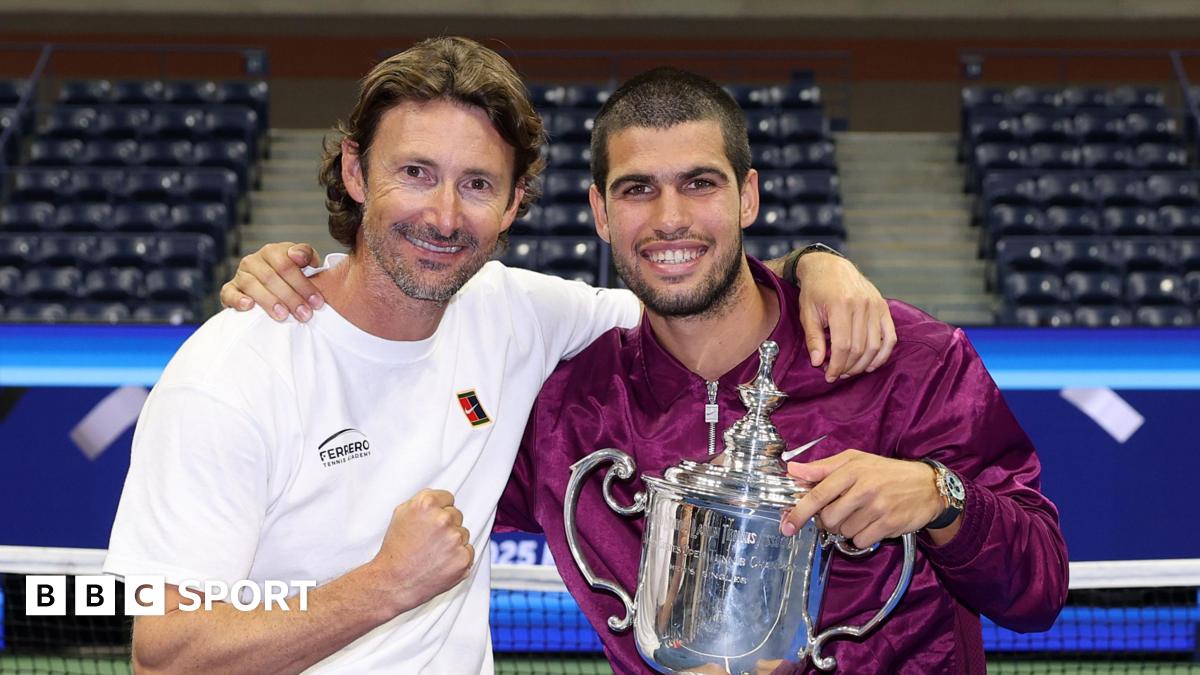
From Prodigy to Six-Time Major Champion: A Partnership that Defined an Era
When Juan Carlos Ferrero first took Carlos Alcaraz under his wing, the young Spaniard was a raw teenager with outrageous talent but limited experience. Ferrero, a former world No. 1 and French Open champion, brought structure, discipline, and a clear blueprint for modern aggressive baseline tennis.
Together, they engineered one of the fastest ascents in ATP history. Under Ferrero’s guidance, Alcaraz evolved from promising junior to six-time Grand Slam winner and world No. 1, blending ferocious topspin, all-court creativity, and a relentless competitive edge that often drew comparisons to the “Big Three” era.
- First Grand Slam title as a teenager.
- Youngest ATP world No. 1 in history.
- Multiple majors on different surfaces by age 22.
Their partnership became a model for how a former champion can sculpt a new star, with Ferrero’s calm authority balancing Alcaraz’s explosive athleticism and fearless shot-making.
Official Announcement and Early Reactions
The split was confirmed on Wednesday via Alcaraz’s social channels and quickly echoed across the tennis media. Although full details of the decision have not been publicly disclosed, both sides emphasized respect and gratitude.
“Juanqui has been much more than a coach to me. He believed in me when I was just a kid with big dreams. We’ve achieved things together that I never imagined at this age, and I’ll always be grateful for everything he’s done for my career and for me as a person.”
“Working with Carlos has been one of the great experiences of my life in tennis. I’m proud of the player and the man he’s become. It feels like the right moment for him to take his own path, and I’ll always be in his corner.”
Early reaction from analysts has focused less on tension and more on timing: why now, and what this means for a player already at the summit of the sport.
By the Numbers: The Ferrero Impact on Alcaraz’s Career
While exact win–loss figures and title counts can fluctuate with each season, there is no doubt that the Ferrero era was statistically elite. Alcaraz’s development curve under Ferrero compares favorably with the very best young stars in ATP history.
| Category | Ferrero Era | Context |
|---|---|---|
| Grand Slam titles | 6 majors by age 22 | Among the fastest to six in Open Era history |
| ATP ranking peak | World No. 1 | Youngest ATP year-end No. 1 |
| Titles on surfaces | Hard, clay, and grass titles | True all-surface champion profile |
| Big wins | Multiple victories vs. top-5 players | Regularly beat Djokovic, Medvedev, and other elite names |
In high-pressure matches, Ferrero’s influence showed in Alcaraz’s tactical maturity: using drop shots to disrupt rhythm, varying serve locations under stress, and balancing explosive aggression with well-timed defense.

Why Now? Possible Reasons Behind the Split
Without detailed public comments, any explanation remains partly speculative, but several plausible factors align with typical tour dynamics when a star parts ways with a long-time coach at a high point.
- Fresh tactical ideas. Opponents have now studied Alcaraz’s patterns for several seasons. A new coach could introduce fresh serve patterns, net approaches, or return schemes to stay ahead of the curve.
- Personal evolution. At 22, Alcaraz is no longer an up-and-comer; he is a leading figure on the ATP Tour. Players at this stage often seek more autonomy or different voices to match their maturity.
- Schedule and workload management. With deep runs at majors, Olympics, and Masters 1000 events, long-term physical planning is critical. A new team structure might place greater focus on sports science and load management.
Importantly, nothing about the split suggests a loss of belief. Instead, it reads like a calculated gamble: disrupt a successful formula in hopes of unlocking an even higher ceiling.

Tactical Evolution: What Might Change in Alcaraz’s Game?
Under Ferrero, Alcaraz leaned into high-tempo baseline aggression, heavy topspin, and all-court variety. A new coaching voice could tweak the balance between risk and control, especially in tight fifth sets or under heavy scoreboard pressure.
Areas where a new coach could put a stamp on his game:
- Serve patterns: Increasing free points on first serve, especially on pressure points.
- Shot selection: Sharpening when to pull the trigger on low-percentage winners versus constructing longer rallies.
- Net play: Building on his natural feel at the net to end points more efficiently.
- Clay-to-grass adjustments: Refining transitions between surfaces to maintain peak form throughout the calendar.
Any drastic overhaul would be risky; the most likely scenario is targeted refinement rather than a complete stylistic reboot.

Who Could Coach Alcaraz Next? Potential Candidates and Fit
The open question now dominating conversation: who steps into Ferrero’s role? High-profile player–coach pairings are as much about personality fit as technical expertise.
Types of candidates likely to be considered:
- Former top-10 players with major-winning experience who understand the pressure of being the hunted.
- Data-driven modern coaches capable of integrating analytics into match preparation and in-season adjustments.
- Spanish-speaking coaches familiar with Alcaraz’s cultural background and training preferences.
Whatever the choice, the new coach will inherit a generational talent already proven in big finals. The challenge is not building a champion from scratch, but sustaining and marginally improving an already elite level.
How the Split Fits Into Tennis History
Major stars changing coaches at, or near, their peak is nothing new in tennis. Novak Djokovic, Roger Federer, and Andy Murray all made bold coaching switches that initially raised eyebrows but often led to renewed success or extended primes.
The Alcaraz–Ferrero split will likely be viewed through a similar lens: a high-risk, high-reward pivot designed to keep a champion from stagnating in a tour that constantly recalibrates to its brightest stars.
- It underscores how compressed championship windows can feel, even for young players.
- It highlights the mental strain of sustaining success year after year.
- It shows that dominance rarely means comfort; the drive to improve persists.

Human Side: A Young Star Growing Up in the Spotlight
Beyond tactics and trophies, this is also a personal story. Ferrero has been a mentor, almost a second father figure, guiding Alcaraz through the intense scrutiny that comes with being labeled tennis’s next great superstar.
For fans, the split is bittersweet. Many associate Alcaraz’s biggest wins with the steady presence of Ferrero in the box, quietly nodding or offering a calm fist pump. That familiar image will be gone, replaced by a new face and a new dynamic.
Yet for a 22-year-old who has already carried the expectations of a nation and the broader ATP Tour, this is also a natural step in asserting independence, building his own inner circle, and shaping the next decade of his professional and personal life.
What This Means for the ATP Tour and Alcaraz’s Future
For the rest of the ATP Tour, any hint of instability at the top is an opportunity. Rivals will sense even a small opening as Alcaraz adapts to new coaching methods, especially at the next few Grand Slams and Masters 1000 events.
From an analytical standpoint, the key markers to watch in the coming months will be:
- His performance in deciding sets and tight tiebreaks.
- Serve efficiency and break-point conversion under pressure.
- Consistency across surfaces through a full season.
Objectively, there is no immediate reason to expect a drop-off. Alcaraz’s toolkit is too complete, his mentality too competitive. But coaching shifts can subtly influence confidence, decision-making, and preparation routines.
The most intriguing question now is not whether Alcaraz can win more majors—he almost certainly will—but how this decision shapes the style and narrative of his prime years. Will a new voice in his corner redefine his legacy, or simply refine a path already set in motion by Ferrero?
As the next season unfolds, every glance into Alcaraz’s players’ box, every tactical adjustment mid-match, will feel like a clue to how one of tennis’s brightest stars intends to write his next chapter.
For schedules, draws, and official updates, fans can monitor the ATP Tour website and Alcaraz’s player profile on official tour platforms.
