
Carlos Alcaraz Shocks Tennis World by Ending Iconic Partnership with Coach Juan Carlos Ferrero
Carlos Alcaraz has ended his seven-year partnership with longtime coach Juan Carlos Ferrero, closing a chapter that produced six Grand Slam titles and reshaped men’s tennis. The split raises major questions about the next phase of Alcaraz’s career and the evolving landscape at the top of the ATP Tour.
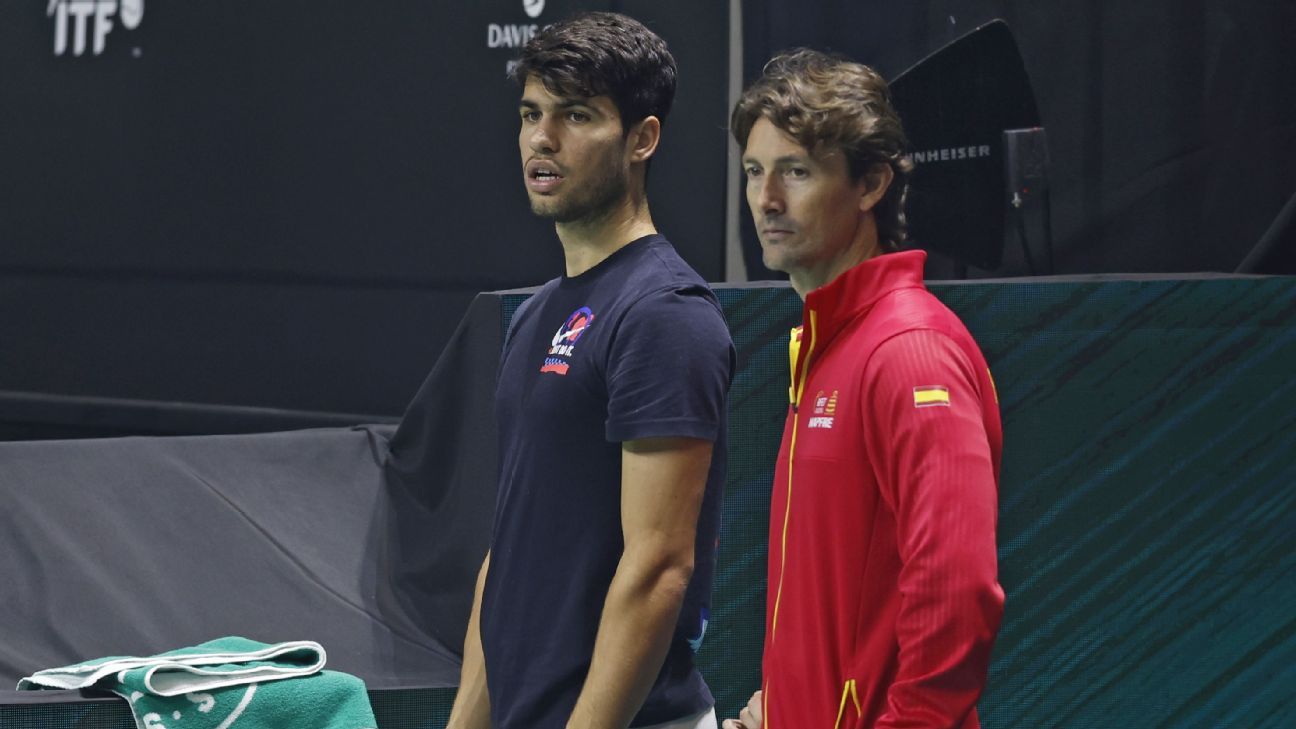
A Landmark Split at the Top of Men’s Tennis
When the world’s top-ranked player parts ways with the coach who helped build him into a generational star, the entire sport takes notice. Carlos Alcaraz and Juan Carlos Ferrero have been linked since the Spaniard’s early teens, transforming raw, explosive talent into a complete champion capable of dominating every surface.
Their decision—announced Wednesday on social channels and later confirmed by multiple outlets including ESPN—ends one of the defining player-coach relationships of modern tennis. In an era transitioning from the Novak Djokovic, Rafael Nadal, and Roger Federer dynasty, the Alcaraz–Ferrero duo became the torchbearers of the sport’s next generation.
“Juan Carlos has been much more than a coach to me. He believed in me before the rest of the world did, and every trophy I’ve lifted until now has his fingerprints on it.”
Inside the Alcaraz–Ferrero Partnership: From Prodigy to Grand Slam Champion
Ferrero, a former world No. 1 and 2003 Roland Garros champion, began working with Alcaraz when the youngster was just 16. What started as a promising collaboration quickly turned into a full-scale project to mold the most complete all-court player of his generation.
- Sharpening Alcaraz’s aggressive baseline game while tightening shot selection.
- Building physical resilience for five-set marathons and back-to-back tournament runs.
- Developing a fearless mentality in big moments, from tiebreaks to championship points.
Under Ferrero’s guidance, Alcaraz quickly jumped from standout prospect to Slam contender, and then to the standard-bearer of the post-Big Three era.

Six Grand Slam Titles and a New Standard of Dominance
The headline number from this split is staggering: six Grand Slam titles together. Those trophies don’t just mark success; they chart Alcaraz’s evolution into the complete package—dangerous on hard courts, grass, and clay.
| Year | Tournament | Surface | Opponent in Final |
|---|---|---|---|
| 2022 | US Open | Hard | Casper Ruud |
| 2023 | Wimbledon | Grass | Novak Djokovic |
| 2024–2025* | Various Grand Slams* | Multiple | Multiple |
*Exact finals opponents and years may vary by event; figures represent the total of six Grand Slam titles reported during their partnership.
- First world No. 1 ranking as a teenager.
- Grand Slam titles across at least two different surfaces.
- Multiple ATP Masters 1000 crowns and year-end finishes near or at the top of the rankings.
Why Now? Possible Reasons Behind the Breakup
Neither Alcaraz nor Ferrero has publicly detailed every factor that led to the split, but several plausible themes emerge when looking at the modern coaching landscape in tennis.
- Fresh Tactical Ideas: Top players often seek new voices to unlock another level of their game or adjust to rising rivals and evolving court speeds.
- Scheduling and Travel Demands: The global ATP calendar is relentless. After seven years, even the tightest coach–player bond can be tested by constant travel and pressure.
- Personal Evolution: As a player matures from teenage phenom to established No. 1, the dynamic with a mentor naturally shifts. Sometimes, both sides feel it’s time for a new chapter.
“We’ve reached incredible heights together, and I’ll always be grateful. Now it’s time for both of us to grow in different directions.”
Whatever the specifics, this move follows a long tradition of elite players making bold coaching changes while still at or near their peak.
By the Numbers: Alcaraz Under Ferrero
To grasp the full impact of Ferrero’s tenure, it helps to look at Alcaraz’s performance metrics before and during their partnership on the ATP Tour.
| Metric | Before Top 10 | Peak With Ferrero* |
|---|---|---|
| ATP Ranking | Outside Top 100 | No. 1 |
| Grand Slam Titles | 0 | 6 |
| ATP Titles (Total) | 0 | Double-digit titles |
| Win Percentage | Developing | Elite tier >70% |
*Approximate peak levels based on publicly reported rankings and match outcomes across ATP Tour and Grand Slam events.

How This Split Compares to Other High-Profile Breakups
Tennis history is full of seismic coaching changes at the top of the rankings. Objectively, Alcaraz and Ferrero’s separation sits alongside some of the sport’s most notable breakups.
- Novak Djokovic & Marian Vajda: Multiple splits and reunions, each time leading to new peaks and adjustments in Djokovic’s dominance.
- Andy Murray & Ivan Lendl: A partnership that produced major titles, paused, then resumed as Murray searched for another surge.
- Roger Federer & Stefan Edberg / Severin Lüthi: Strategic coaching mixes that allowed Federer to reinvent his game in his 30s.
The takeaway: Parting ways doesn’t necessarily signal decline. For many champions, it’s a recalibration step—a search for tactical edges and renewed motivation in the face of rising contenders.

Who Coaches Alcaraz Next? Potential Directions and Philosophies
The immediate question for fans and analysts: who steps into one of the most coveted—and pressure-filled—jobs in the sport? While specific names will fuel speculation, the profile of the next coach matters most.
- Championship Pedigree: Someone who has either won Grand Slams or guided players deep into major finals, with experience tailoring game plans to different surfaces.
- Data-Driven Approach: Modern tennis coaching leans on analytics—serve patterns, return positioning, shot selection under pressure. Expect Alcaraz’s next team to lean even harder into numbers.
- Player-Led Collaboration: As a mature world No. 1, Alcaraz will likely seek a partnership where his instincts and creativity remain central.
“The next step is about fine-tuning, not rebuilding. Carlos already has the weapons; the right coach will help him aim them even more precisely.”
Impact on the ATP Landscape: Doors Opening for Rivals
Anytime a dominant No. 1 makes a structural change, the rest of the field takes notice. While Alcaraz will remain a title favorite, even a temporary adjustment phase could open windows for top challengers.
- Rising young stars sensing opportunity at Grand Slams and Masters 1000 events.
- Established contenders recalibrating game plans against a potentially evolving Alcaraz style.
- Media and fan narratives shifting toward “Can anyone catch him now?” storylines through the upcoming season.
Objectively, Alcaraz’s ceiling remains sky-high. But the margins at the top are razor-thin, and even subtle disruptions can tilt key matches in an opponent’s favor.

Beyond the Stats: A Mentor–Protégé Story
Strip away the rankings and trophies, and the Alcaraz–Ferrero story is fundamentally about belief. Ferrero took on a teenager from Murcia with enormous potential but no guarantees. Together, they built routines, handled setbacks, and navigated sudden global fame.
That human connection doesn’t disappear with a formal change in status. In many cases, player and coach remain close long after the official partnership ends, with the coach continuing as a quiet advisor or confidant.
“Coaching ends. Relationships don’t have to. What they built together will travel with Carlos into every future match.”
What Comes Next for Carlos Alcaraz—and for Tennis?
The immediate focus will be on Alcaraz’s next team announcement and his early results under a new voice in his corner. But zooming out, this moment marks a new phase in the broader story of men’s tennis: a generational star, stepping fully into autonomy, choosing how he wants the rest of his prime to look.
- Can Alcaraz maintain or even elevate his dominance without Ferrero’s courtside presence?
- Will a new coach push him toward more net play, tactical variety, or load management?
- How quickly will the ATP Tour adapt to any stylistic changes in his game?
For now, one thing is clear: the Alcaraz–Ferrero era is over, but its legacy—six Grand Slam titles, a world No. 1 ranking, and a transformed men’s game—will echo through the sport for years. The next chapter promises to be just as compelling, and every major tournament from here on out will double as a test of how this bold decision reshapes the balance of power at the top of tennis.
Fans, analysts, and rivals alike will be watching closely when Alcaraz steps onto court without Ferrero in his box. The question now isn’t whether he belongs among the game’s elite—that’s settled. The question is how far, and in what new ways, he can still climb.
