
2026 World Cup Draw Guide: TV Times, Streaming Options, Pots Explained and What It Means for Your Team
The 2026 World Cup draw is here, and with it comes the moment every qualified nation has been waiting for: finding out who stands between them and a deep run on soccer’s biggest stage. With a new 48‑team format, expanded groups, and meticulously seeded pots, today’s draw will shape the entire tournament narrative long before a ball is kicked.
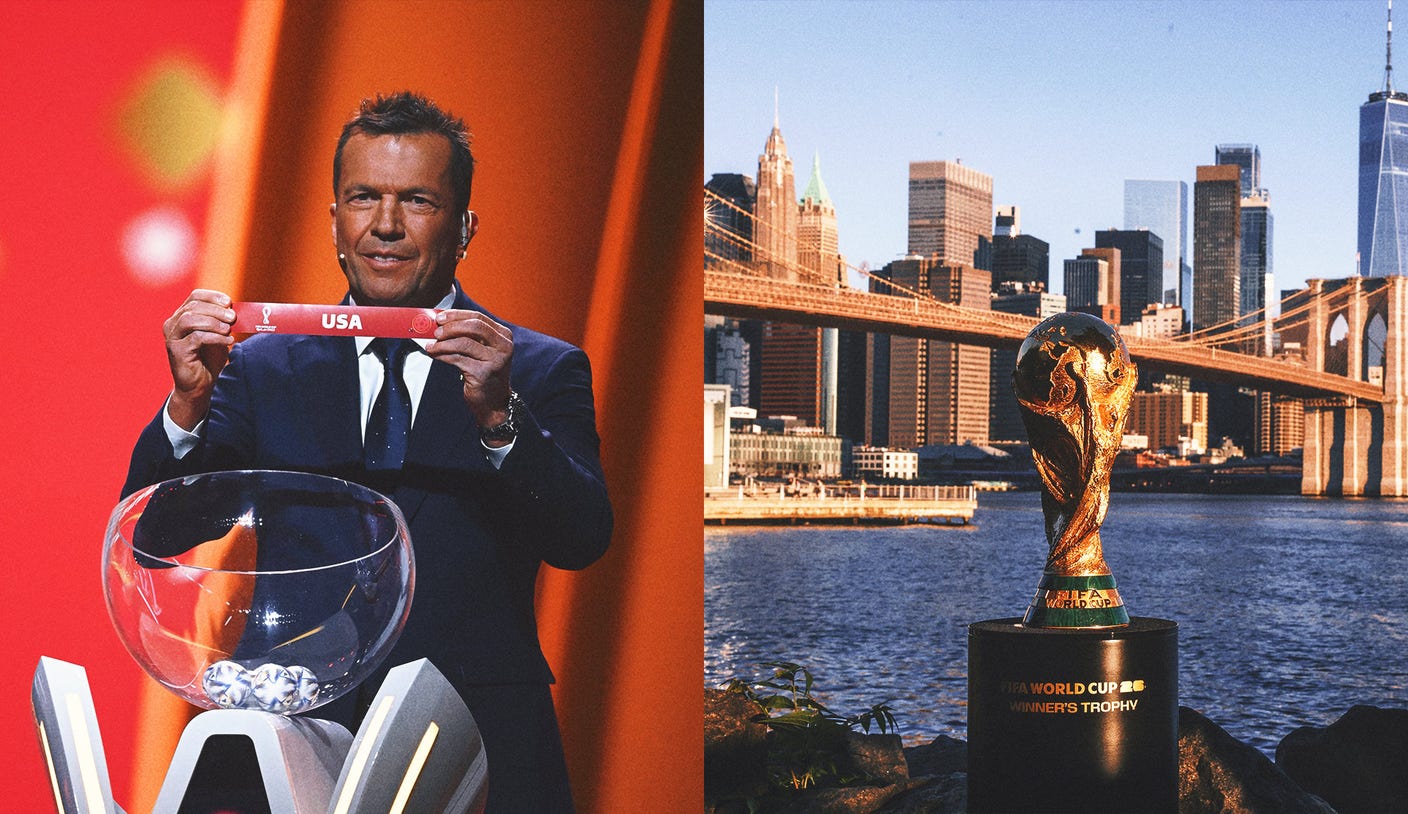
How to Watch the 2026 World Cup Draw
Whether you’re following your home nation or scouting future knockout opponents, the 2026 World Cup draw will be broadcast globally across television and streaming platforms, with full coverage, analysis, and instant reaction from former players and coaches.
Exact TV partners vary by region, but the draw is typically carried by official FIFA broadcasters and major sports networks. Many territories will also offer free live streams through official digital platforms.
- Official source: Global live stream and updates via FIFA.com and the FIFA app.
- Regional broadcasters: Rights-holding networks in each country (check your local listings or federation website).
- Streaming platforms: Partner apps and websites for your local TV rights-holder, often with multi-language commentary.
- Second-screen experience: Live stats, group simulators, and bracket projections from reputable outlets such as ESPN and FOX Sports.
For fans who are visually or hearing impaired, official broadcasters increasingly provide audio description and captioned streams to align with accessibility best practices, so check your provider’s accessibility options before the show begins.
How the 2026 World Cup Draw Works
The 2026 World Cup is the first to feature 48 teams, co-hosted by the United States, Mexico, and Canada. That expansion fundamentally changes how the draw is conducted and how the bracket will take shape.
Teams are placed into seeding pots based largely on the FIFA Men’s World Ranking, then drawn into groups. From there, the schedule, venues, and potential knockout routes are finalized.

Key format points
- 48 teams are split into 12 groups of four (Groups A–L).
- Each group contains one team from each seeding pot (Pot 1–Pot 4).
- Hosts (USA, Mexico, Canada) are automatically placed in Pot 1 and assigned to different groups.
- Teams from the same confederation generally cannot share a group, except in some cases for UEFA due to its larger number of qualified teams.
- The top two teams from each group plus the eight best third-place teams advance to a 32-team knockout bracket.
“With 48 teams and a new group structure, the draw is more than pageantry — it’s a roadmap that can either open doors or slam them shut before the first whistle.”
— Tournament analyst’s view on the 2026 format
What Are World Cup Draw Pots?
The term “pots” refers to the seeded groups of teams used during the draw. Rather than randomly placing all 48 teams together, FIFA divides them into four pots of 12 based on competitive strength and host status.
This system limits early clashes between traditional powerhouses, gives emerging nations a clearer picture of their challenge, and helps maintain competitive balance across the tournament.
How seeding pots are determined
- Pot 1: Hosts (USA, Mexico, Canada) plus the highest-ranked qualified teams in the FIFA rankings.
- Pot 2: The next strongest block of qualified nations by ranking.
- Pot 3: Middle-ranked qualifiers.
- Pot 4: Lower-ranked qualifiers and play-off winners.
While rankings are the primary factor, geographic balance rules (no duplicate confederations in most groups) also shape which teams can be drawn together, especially in the later stages of the draw.
Illustrative 2026 World Cup Seeding Pots
Below is an illustrative example of how the pots can look for the 2026 World Cup. Exact placement depends on the final FIFA rankings and qualification outcomes, but the structure will resemble this distribution of strength tiers.
| Pot 1 (Top seeds) | Pot 2 | Pot 3 | Pot 4 |
|---|---|---|---|
| United States (host) | Strong UEFA side | Mid-ranked CONMEBOL team | Playoff winner 1 |
| Mexico (host) | Top CAF side | Asian qualifier | Playoff winner 2 |
| Canada (host) | CONCACAF contender | European debutant | Lower-ranked AFC side |
| Reigning world champion | South American dark horse | African rising power | OFC winner |
For finalized pots and real-time updates, follow the official tournament page on FIFA’s World Cup hub.
What the Draw Means for Your Team
If your country has punched its ticket to 2026, the draw will do three things instantly: define the difficulty of the group, outline travel and recovery demands, and sketch a potential path to the knockouts and beyond.
Big winners from a favorable draw
- Top seeds with balanced groups can manage minutes, rotate deeper squads, and target peaking in the round of 16 and quarterfinals.
- Emerging nations landing in groups without multiple giants gain a realistic shot at making the knockouts or even topping the group.
- Hosts often benefit from strong home support and familiar conditions, amplifying the advantage of a manageable group.
Risks of the “Group of Death”
When the draw places multiple heavyweights together, plus a dangerous underdog, you get the dreaded “Group of Death.” Here, traditional powers are forced to play at near-knockout intensity from matchday one, and a single mistake can send a giant home early.
“You can’t win the World Cup on draw day, but you can make life a lot harder for yourself. We’ll respect whoever’s in front of us, but every coach is secretly hoping to avoid the real minefields.”
— National team head coach on the importance of the draw

Key Storylines to Watch on Draw Day
Beyond your own flag, draw day sets up the major subplots that will run through the 2026 World Cup. From old rivalries to fresh matchups in new host cities, the possibilities are wide open.
- Host nation paths: Where will the United States, Mexico, and Canada be slotted, and how favorable are their groups?
- Traditional giants: How are global powers distributed across the groups, and which potential quarterfinal collisions are already baked in?
- Debutants: Which first-time participants or long-absent nations find themselves with a realistic chance to reach the knockout rounds?
- Travel demands: With games spread across North America, some groups may face significant travel, affecting rest and preparation.
- Confederation balance: How Europe, South America, Africa, Asia, Oceania, and CONCACAF contenders are spread can influence perceived difficulty.

Fan Checklist: How to Follow the 2026 World Cup Draw Like a Pro
Draw day can feel overwhelming, with names flying in every direction and graphics updating in real time. A simple plan will help you extract every bit of insight and enjoyment from the show.
- Know your pot: Confirm which pot your country is in ahead of time via your federation or FIFA’s official page.
- Review possible opponents: Note which teams cannot share your group due to confederation rules, then list the realistic opponents from each pot.
- Track venues: As groups are drawn, keep an eye on which host cities your team is assigned — crucial for travel planning and time zones.
- Watch the bracket: Many broadcasts show how groups feed into the knockout bracket; start mapping potential round-of-16 and quarterfinal paths.
- Save the schedule: Once dates are confirmed, plug group matches into your calendar with local kickoff times.
What Happens After the 2026 World Cup Draw?
The final whistle of the draw is only the beginning. Immediately afterward, coaches, analysts, and players dive into planning mode while supporters start dreaming up scenarios.
- Coaches begin tailoring tactical plans to specific group opponents and potential knockout rivals.
- Federations lock in travel logistics, training bases, and friendly matches that mirror group-stage styles.
- Fans rush to secure tickets, accommodation, and travel routes to follow their team across North America.
From now until kickoff, every conversation about the 2026 World Cup — power rankings, dark horses, golden boot contenders — is framed by what happens on draw day. Your nation’s story starts with the moment its name is pulled from a pot.
As the balls are drawn and groups form on the big screen, ask yourself: Is this the path that sets up a historic run for your country, or a gauntlet that forges a legend? Either way, the road to the 2026 World Cup begins now — and the draw is your first, unmissable chapter.
