
Inside Tesla’s Austin Robotaxi Surge: How Self-Driving Fleets Could Rewrite Urban Mobility
Tesla’s emerging robotaxi service in Austin, Texas, is transitioning from small-scale pilot to a more visible, city-level deployment. Reports indicate the number of robotaxis operating in Austin will roughly double in December, expanding a fleet that uses Tesla’s Full Self-Driving (FSD) software to offer driverless—or driver‑supervised—rides in select areas. While the fleet size is still modest compared with traditional ride-hailing platforms, the significance lies in the pace of iteration and data collection that fuels Tesla’s AI systems.
Futurist and technology analyst Brian Wang of NextBigFuture has highlighted this Austin rollout as a pivotal test for whether Tesla’s vertically integrated hardware–software stack can scale robotaxi economics: low per‑mile operating cost, high utilization, and continuous software improvement via over‑the‑air updates.
“Robotaxis are not just about replacing drivers. They are about rebuilding the cost structure and capacity of urban transportation from the ground up.”
— Brian Wang, Futurist and Founder of NextBigFuture
Mission Overview
The Austin robotaxi program is central to Tesla’s long-stated mission: accelerate the world’s transition to sustainable energy and transport. In practice, the mission for the Austin deployment can be broken into several near‑term objectives.
Core Objectives
- Validate full-stack autonomy in a real city: Demonstrate that FSD can safely handle dense urban traffic, construction zones, pedestrians, cyclists, and changing weather in Austin.
- Test robotaxi unit economics: Evaluate maintenance, energy consumption, ride pricing, and utilization rates needed to achieve profitable operations without a human driver.
- Refine the human–AI interface: Understand how riders interact with driverless cars—onboarding, trust, safety expectations, and accessibility needs.
- Generate large-scale driving data: Use real-world operations to improve perception, prediction, and planning through continuous machine-learning training loops.
- Engage regulators and the public: Prove that autonomous vehicles can meet or exceed human driving safety while complying with state and local regulations.
Austin offers a mix of dense downtown streets, fast suburban arterials, university zones, and complex event traffic (e.g., SXSW, sports events), making it an ideal proving ground for Tesla’s autonomy ambitions.
Technology: How Tesla’s Austin Robotaxis Work
Tesla’s Austin robotaxis rely on a tightly integrated combination of custom hardware, sensor suites, and neural‑network–driven software. Unlike other players such as Waymo or Cruise, Tesla’s approach is heavily vision-based, designed to scale across millions of vehicles rather than a small fleet of specialized robo‑cars.
Sensor Suite and Perception
Tesla’s latest vehicles use a primarily camera-based system often referred to as “Tesla Vision,” supplemented by ultrasonic sensors on some older models. The Austin robotaxis are expected to leverage:
- Eight or more high‑resolution cameras providing 360‑degree coverage around the vehicle.
- Forward-facing cameras with long-range detection for highway and arterial roads.
- On‑board compute via Tesla-designed FSD chips, optimized for inference of large neural networks with low power consumption.
These sensors feed into a multi-stage perception pipeline that detects vehicles, pedestrians, cyclists, lane markings, traffic signals, road signs, and unstructured obstacles such as construction barriers.
Neural Networks and Planning
At the core of Tesla’s autonomy stack is a suite of large neural networks trained on millions of video clips and telemetry from the global Tesla fleet. The system performs:
- Perception: Identifying and localizing objects, road edges, and free space in three dimensions.
- Prediction: Anticipating the future motion of surrounding agents (cars, cyclists, pedestrians) under uncertainty.
- Planning and Control: Generating safe, comfortable trajectories that respect traffic rules, and converting those trajectories into steering, acceleration, and braking commands.
“The hardest part of self-driving is not seeing the world; it’s understanding human behavior in all its unpredictability.”
— Lex Fridman, AI Researcher and Podcast Host
Data Engine and Fleet Learning
Tesla’s competitive edge is its data engine—a continuous loop in which:
- Vehicles in Austin (and worldwide) record edge cases and challenging scenes.
- Data is uploaded, labeled (often with automated tools), and used to retrain neural networks.
- New model versions are validated in simulation and beta programs.
- Improved models are deployed over-the-air to the fleet, including Austin robotaxis.
This approach allows Tesla to iterate quickly without physically recalling vehicles, increasing the pace of innovation and refinement.
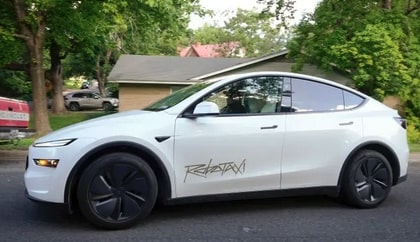
Visualizing Tesla’s Austin Robotaxi Expansion
High-quality imagery helps illustrate how Tesla’s robotaxis are being integrated into Austin’s urban landscape and how the underlying technology looks in practice.
Scientific and Societal Significance
The Austin robotaxi deployment is not just a business move; it is a large-scale socio‑technical experiment with far‑reaching implications in AI, transportation science, and urban planning.
Autonomous Driving as an AI Benchmark
Full autonomy in real cities is one of the most demanding real-world AI benchmarks. It requires:
- Multi-modal perception (vision, motion, context) under variable lighting and weather.
- Real-time decision making with tight latency requirements.
- Robustness to rare events (edge cases) that may never appear in training data.
Progress in Tesla’s robotaxis directly feeds into evaluation of deep learning at scale, reinforcement learning from human feedback, and techniques for building out-of-distribution resilience.
Urban Mobility and Emissions
If Tesla can deploy a large, largely electric robotaxi fleet:
- Per‑mile emissions can drop relative to typical gas-powered rideshare vehicles.
- Vehicle utilization can increase—fewer cars serving more trips—which may eventually reduce the number of private vehicles needed per capita.
- Combined with renewable energy, overall transportation carbon intensity could decline.
“Shared, electric, and automated mobility has the potential to radically cut urban transport emissions if managed carefully.”
— International Energy Agency, Future of Mobility Analysis
Data for Urban Planning
Robotaxi fleets generate rich, anonymized datasets:
- Origin–destination patterns and congestion hotspots.
- Temporal demand curves by hour, day, and event.
- Safety-relevant incident and near‑miss statistics.
Over time, collaboration between Tesla, city planners, and researchers could enable:
- Smarter traffic signal timing.
- Dedicated drop‑off zones for AVs.
- Better placement of bike lanes and pedestrian crossings.
Milestones on the Road to Austin’s Robotaxi Future
The decision to roughly double Tesla’s robotaxis in Austin by December represents one step in a longer progression of autonomy milestones, both for Tesla and the broader industry.
Key Tesla Milestones Relevant to Austin
- Autopilot introduction: Early highway automation laid the groundwork for advanced driver-assistance systems.
- FSD Beta: Urban street navigation with human supervision, rolled out widely to Tesla owners in North America.
- Vision-only transition: Removal of radar from new vehicles, focusing on camera-based perception.
- Regulatory approvals: Incremental permissions in various jurisdictions for supervised or limited driverless operation.
- Austin fleet scale-up: Moving from pilot-scale to a more meaningful number of robotaxis that can be evaluated statistically.
Metrics to Watch
As fleet size in Austin increases, several metrics will help experts gauge progress:
- Disengagement rate: How often human oversight (if present) must intervene.
- Crash and incident statistics: Comparing robotaxis to human-driven baselines per million miles.
- Ride availability and wait times: User-experience indicators for practical viability.
- Operating cost per mile: Critical for determining long-term business sustainability.
Challenges and Open Questions
Despite rapid progress, deploying autonomous robotaxis at scale remains extremely challenging. Tesla’s Austin program will have to confront not just technical hurdles, but also regulatory, societal, and economic ones.
Technical Challenges
- Long-tail edge cases: Unusual behaviors from other drivers, unexpected road closures, and rare weather combinations.
- Adverse weather robustness: Heavy rain, fog, or glare can degrade camera performance.
- Generalization to new environments: Systems tuned for one part of Austin must work across the entire metro area.
Regulatory and Ethical Hurdles
Policymakers, including those in Texas, are grappling with how to evaluate and approve autonomous systems. Key questions include:
- What safety threshold must be met to allow fully driverless operations?
- How should liability be assigned in the event of an accident?
- What transparency and reporting standards should be required?
Following incidents involving other AV fleets, regulators are increasingly cautious, emphasizing detailed data reporting and independent safety audits.
Public Trust and Adoption
Even if robotaxis statistically outperform human drivers, trust must be earned. Austin residents will judge the service based on:
- Perceived safety and smoothness of rides.
- How well vehicles respect pedestrians, cyclists, and local driving norms.
- Clarity of in‑car communication (e.g., explaining unexpected stops or reroutes).
“Safety in autonomous driving is not just about engineering metrics; it’s about the human perception of safety.”
— Fei-Fei Li, Computer Vision Pioneer and AI Researcher
Tools and Resources for Understanding Tesla’s Robotaxis
For readers who want to dive deeper into the AI and systems-engineering behind robotaxis, there are accessible tools and learning resources that complement this real-world case study in Austin.
Educational Resources
- Tesla Autonomy Day (YouTube) – Detailed technical presentations from Tesla’s AI and Autopilot teams.
- arXiv.org – Preprints on computer vision, planning, and reinforcement learning relevant to autonomous driving.
- NHTSA – U.S. safety reports and guidance related to automated driving systems.
Hands-on AI and Robotics Gear (Affiliate Suggestions)
For technically inclined readers who want to experiment with AI and robotics at home or in a lab, consider:
- NVIDIA Jetson Xavier NX Developer Kit – A compact edge-AI platform suitable for experimenting with real-time perception and control.
- Raspberry Pi 5 (8GB) – A versatile single-board computer for prototyping robotics, sensing, and small-scale autonomy projects.
- Pan-Tilt Camera Kit for Raspberry Pi – Ideal for learning the fundamentals of visual perception and object tracking.
Conclusion
Tesla’s plan to roughly double its Austin robotaxi fleet in December is less about the absolute number of vehicles and more about entering a new phase of real‑world validation. Austin is becoming one of the first large-scale testbeds where a vision-centric, AI-driven autonomy stack will be measured not in lab demos, but in daily trips across a living city.
Success is not guaranteed. Technical, regulatory, and social challenges remain substantial. However, the data and experience gained from Austin’s rollout will help answer critical questions: Can AI-driven robotaxis achieve safety levels meaningfully above human drivers? Can the economics of shared autonomy beat traditional car ownership and ridesharing? And can cities adapt fast enough to harness the benefits while managing the risks?
Over the next few years, Austin’s streets may offer some of the clearest early answers. For scientists, engineers, policymakers, and informed citizens, watching this experiment unfold—and engaging with its findings—will be essential to shaping an autonomous mobility future that is safe, equitable, and sustainable.
Additional Insights: How to Critically Track Robotaxi Progress
To go beyond headlines, focus on a few concrete indicators as Tesla and other companies scale robotaxis:
- Independent safety analyses from regulators and academic groups, not just company press releases.
- Peer-reviewed research on autonomous driving failures and mitigation strategies.
- Community feedback from residents in deployment cities—Austin, Phoenix, San Francisco, and beyond.
Tracking these metrics over time will provide a clearer picture of whether robotaxis are truly on track to deliver safer, cleaner, and more affordable transportation—or whether expectations need recalibrating.
References / Sources
- NextBigFuture – Tesla Austin Robotaxi Coverage: https://www.nextbigfuture.com
- Tesla Autonomy Day (YouTube): https://www.youtube.com/watch?v=hx7BXih7zx8
- International Energy Agency – Future of Mobility: https://www.iea.org/topics/transport
- NHTSA Automated Vehicles: https://www.nhtsa.gov/road-safety/automated-vehicles-safety
- Wikimedia Commons – Tesla and Austin Images: https://commons.wikimedia.org
