
Oscar Mystery in the Sky: Pavel Talankin’s Missing Statuette and the Politics of Mr Nobody Against Putin
Oscar Mystery in the Sky: Pavel Talankin’s Missing Statuette and the Politics of Mr Nobody Against Putin
Russian filmmaker Pavel Talankin’s Oscar for his political drama Mr Nobody Against Putin reportedly went missing during a New York flight, turning a routine awards-season journey into a bizarre aviation whodunnit that blends celebrity, geopolitics and airline accountability.
By Culture & Screen Desk |
Source reporting: BBC News. Details may evolve as airlines and investigators complete their inquiries.
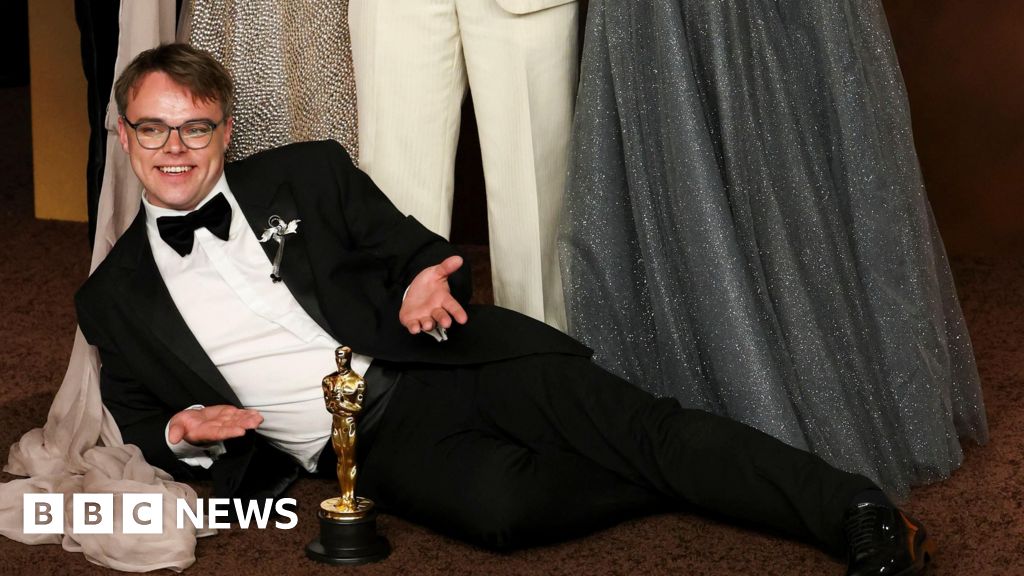
When Your Oscar Becomes Carry-On Drama
Celebrity air travel horror stories usually involve paparazzi or delays, not the disappearance of the film world’s most recognisable trophy. Yet that’s the scenario surrounding Russian director Pavel Talankin, whose Oscar for the politically charged drama Mr Nobody Against Putin has reportedly gone missing on a flight out of New York. According to his partner, the filmmaker has flown “multiple times” with both his Oscar and his Bafta—with no issues—until now.
The airline, clearly aware this is a public relations minefield, says it “regrets the situation” and has launched an urgent “comprehensive internal search” for the award. Somewhere between TSA security theatre and the baggage carousel, an object worth far more in symbolism than in gold has vanished.
Who Is Pavel Talankin and Why This Oscar Matters
Talankin’s name has been steadily circulating on the festival circuit, but 2026 is the year it properly broke into mainstream conversation. Winning both an Academy Award and a Bafta in the same season marks a major crossover moment for any director, let alone one whose work is so explicitly political. Mr Nobody Against Putin slots into the growing canon of contemporary Russian and exiled-Russian cinema that confronts power structures head‑on.
In awards-speak, this kind of film is “timely” and “urgent,” which usually translates to: it makes some people in power very uncomfortable. That’s part of why this missing statuette story lands differently than, say, a lost suitcase of couture dresses. It brushes up against geopolitics, protest art and the way institutions—from airlines to award bodies—handle politically sensitive work.
From Red Carpet to Runway: The Flight Where the Oscar Vanished
The disappearance reportedly happened on a flight out of New York, a city that’s practically an extension of Hollywood during awards season. Talankin and his partner were travelling with the Oscar as hand luggage—standard practice for trophy-toting talent who understandably don’t want to check a piece of their career into the hold.

According to statements given to the BBC, Talankin has repeatedly flown with both the Oscar and the Bafta around the US and internationally without incident. That detail matters: it suggests he and his team know the usual protocols, and that this isn’t a case of a first‑time traveller misunderstanding cabin baggage rules.
“He’d flown multiple times with his Oscar and also his Bafta, both of which he’d won this year, across the US and on international flights, and never had any issues bringing his awards on board,” his partner told the BBC.
For the airline, the optics are brutal: in the age of viral outrage, “we lost an Oscar” is not a line you want trending. Hence the carefully worded promise of a “comprehensive internal search,” which sounds halfway between an HR investigation and a heist movie logline.
Why a Missing Statuette Hits Harder When the Film Is Political
On paper, an Oscar is just a metal object. In practice, it’s a passport, a bargaining chip and a piece of propaganda—especially for a film openly in conflict with the Kremlin’s narrative. Mr Nobody Against Putin reportedly builds on a line of dissident cinema that includes everything from documentary exposés to blackly comic dramas about corruption and power.
In that context, the missing statuette takes on a symbolic charge, even if the most likely explanation is depressingly mundane: a mix‑up, misplacement or opportunistic theft. The internet’s instinct will be to ask whether there’s something more sinister at play, because that’s how we now read almost anything involving Russia, dissent and public symbols of success in the West.

Whether or not that’s fair, it shows how awards have become part of the global messaging war. A golden statue in a glass cabinet at home can be read as a tiny but potent rebuke to authoritarian power. Its unexplained disappearance, understandably, makes people uneasy.
Airlines, Accountability and the High-Value Carry-On Problem
Strip away the geopolitical intrigue, and this is also a story about something very basic: how airlines handle high‑value items that fit neatly into that ambiguous space between personal possession and priceless artefact.
- Airlines typically advise keeping valuables in your personal item or under-seat bag.
- Cabin crew sometimes insist on overhead storage during full flights, creating risk for small, easily moved items.
- Liability for lost property is often capped or excluded in the fine print, especially for “valuables.”
A trophy doesn’t fall neatly into the categories airline contracts were written for. It’s not jewellery, not exactly electronics, and its true value is neither purely financial nor easily insurable. If the Oscar isn’t recovered, the question shifts from “How did this happen?” to “Who pays, and how do you replace the irreplaceable?”
The Story Behind Mr Nobody Against Putin and Its Awards Run
While full plot details are still filtering through wider audiences, Mr Nobody Against Putin has been positioned within industry chatter as a tense, character‑driven political drama rather than a straightforward documentary. Think closer to Leviathan or The Lives of Others than a talking‑heads news special—personal stories that make systems of power feel crushingly intimate.

The film’s awards‑season momentum fits a pattern: in the last decade, both the Oscars and Baftas have tried—unevenly—to position themselves as morally serious arbiters of culture, championing work that engages with authoritarianism, inequality and state violence.
As one critic noted in early festival coverage, “Films like Mr Nobody Against Putin aren’t just cinema—they’re entries in a global argument about who gets to define truth.”
That framing makes the missing Oscar feel, intentionally or not, like another chapter in that argument. The film interrogates power; its physical symbol of validation disappears in a liminal, hard‑to‑audit space fifty thousand feet up.
Trophies in Transit: Awards That Went Missing Before
Talankin’s airborne Oscar drama joins a surprisingly long list of trophy‑gone‑missing stories that tend to surface after big awards nights.
- Several actors over the years have admitted to misplacing Oscars at parties and in taxis, only to recover them via sheepish phone calls.
- In 2000, a batch of 55 Oscars was stolen from a shipping container in LA; most were later found in a trash bin behind a supermarket.
- Other industry awards, from Grammys to Emmys, have been reported stolen in home burglaries and occasionally resurfaced at pawn shops.

The difference here is the combination of high political stakes and the involvement of a major international airline. This isn’t a tipsy mix‑up at an afterparty; it’s a potential security and reputational issue with lawyers, insurers and PR teams hovering just offstage.
What the Incident Reveals: Strengths, Weaknesses and Industry Blind Spots
Beyond the headline drama, the incident exposes some uncomfortable truths about how the film industry, airlines and audiences handle the physical symbols of culture.
- Strength: The swift media focus underscores that audiences do understand awards as more than ego boosts; people recognise the political and emotional weight of this particular Oscar.
- Weakness: Airline protocols still seem ill‑equipped for handling unique, high‑profile items that are easy to move and hard to track once separated from their owner.
- Blind spot: Institutions celebrate provocative art onstage but don’t always have infrastructure built around protecting it—and its creators—once the spotlight moves on.
None of that means there’s a conspiracy here; it may well turn out to be a simple, infuriating screw‑up. But the fact that a misplaced object instantly becomes a global talking point tells you how precarious and politicised cultural symbols have become.
Where to Watch Mr Nobody Against Putin and Follow the Story
As the airline’s internal search continues, interest in Mr Nobody Against Putin is only likely to grow. Distributors will quietly welcome the extra visibility—this is the kind of strange-but-true story that can push a serious political drama into the streaming algorithms of viewers who might otherwise skip it.

For official information as it emerges, keep an eye on:
- The airline’s press statements and customer‑service channels.
- Coverage from major outlets such as BBC News, The Hollywood Reporter and Variety.
- The film’s page on databases like IMDb, which will track release and festival dates.
A High-Altitude Whodunnit With Real-World Stakes
As mysteries go, “The Case of the Missing Oscar” sits somewhere between a prestige‑TV cold open and an unglamorous customer‑service nightmare. The most likely ending is prosaic: the statuette turns up in a storeroom, an overhead bin or on the other side of an over‑zealous security check, followed by apologetic statements and maybe a photo‑op reunion.
But even if it resolves quietly, the incident has already done its cultural work. It’s reminded us that art doesn’t just live on screens or stages; it travels through the messy infrastructures of our everyday world, where it can be celebrated, mishandled or—occasionally—vanish without a trace. For a film that dares to take on Putin by name, that fragile journey feels pointedly on‑theme.
