
Neil deGrasse Tyson on What Really Happens to Our Bodies After We Die
What Happens to Our Bodies After Death? Neil deGrasse Tyson’s Cosmic Perspective
Astrophysicist Neil deGrasse Tyson recently shared a quietly stunning explanation of what happens to our bodies after death on his podcast StarTalk, sparking a wave of curiosity and reflection. Instead of focusing on supernatural claims, he walks us through the physics and chemistry of what really happens when we die—and how, in a very real way, we return to the universe that built us.
In this article, we’ll unpack Tyson’s core ideas, add what current science says about the body after death, and explore why many people find this cosmic view surprisingly comforting. We’ll stay grounded in evidence, avoid overreaching into spiritual promises, and focus on what we know from biology, physics, and astronomy.

Why We Keep Asking: What Really Happens When We Die?
Humans have been asking what happens after death for as long as we’ve been human. For many, the fear isn’t just about pain or the moment of dying—it’s the uncertainty of what comes next, and what it means for everything we’ve done in life.
- Will anything of “me” remain?
- Is death a hard stop, or some kind of transition?
- Does science offer comfort, or only cold facts?
Tyson’s answer doesn’t try to settle spiritual questions. Instead, he reframes the conversation: your body is made of borrowed cosmic material. Death is how that material is returned.
“When you die, you don’t take your atoms with you. They go back into the Earth, the air, the cosmos. The universe has a perfect recycling program.”
— Paraphrased from Neil deGrasse Tyson’s explanation on StarTalk
Neil deGrasse Tyson’s Cosmic View of Death
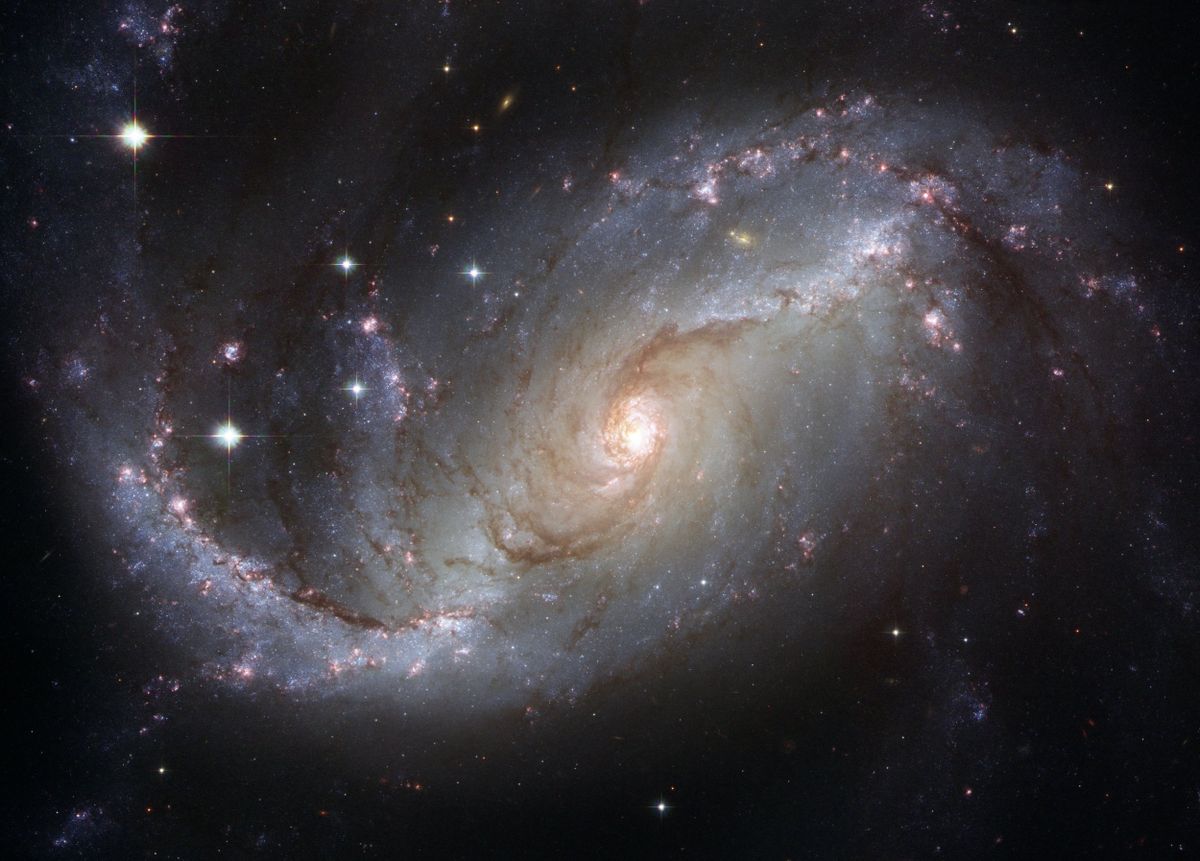
Tyson often reminds audiences that every atom in our bodies—carbon, oxygen, nitrogen, iron—was forged in ancient stars. In his recent comments, he extended that story beyond life itself.
- You are made of star-stuff. The heavy elements in your body were created in stellar cores and supernova explosions, then incorporated into clouds of gas and dust that formed our solar system.
- Life is temporary cosmic organization. Biology takes those atoms and arranges them into incredibly complex structures—cells, tissues, organs, a conscious brain.
- Death is cosmic redistribution. When you die, that organized structure breaks down. The atoms don’t vanish; they return to the wider environment, ready to be reused.
In Tyson’s framing, the “end” of your body is a transformation in the flow of matter and energy. The same laws of thermodynamics that governed your heartbeat and brain activity continue to govern what happens next.
The Biology of What Happens to Your Body After Death
Tyson talks about atoms and energy; biology fills in the step-by-step story of the body itself. While the exact timing varies by environment, here’s a simplified progression based on forensic science research.
1. The moment of death (minutes to hours)
- Heartbeat and breathing stop, cutting off oxygen to the brain and organs.
- Brain activity ceases, typically within minutes, leading to irreversible loss of consciousness.
- Cells begin to malfunction as chemical gradients dissolve without energy input.
2. Early postmortem changes (hours)
- Algor mortis: the body gradually cools toward ambient temperature.
- Livor mortis: blood settles in dependent areas, causing purplish discoloration.
- Rigor mortis: muscles stiffen as ATP (the cell’s “energy currency”) is depleted.
3. Decomposition (days to years)
- Autolysis: your own enzymes begin digesting cell structures.
- Putrefaction: bacteria in your gut and tissues break down proteins and fats, producing gases.
- Insect activity: in natural settings, insects and other organisms contribute to breakdown.
- Skeletonization: over longer timescales, soft tissues disappear, leaving bones that will eventually weather and disintegrate.
These processes have been studied in detail at forensic research facilities around the world. They’re not morbid curiosities; they help investigators solve crimes and improve our understanding of human biology.

The Physics: Where Does “Your” Energy Go?
Tyson frequently references the first law of thermodynamics: energy cannot be created or destroyed, only transformed. That law applies to the energy that was once keeping you alive.
- Heat: As your metabolism stops, residual heat dissipates into the environment.
- Chemical energy: The energy in your tissues is used by bacteria, insects, and other organisms as they metabolize your remains.
- Radiation and light (indirectly): Over longer cycles, the atoms from your body may end up in plants, animals, or materials that interact with sunlight and the broader environment.
“Your energy is not lost to nothingness. It’s redistributed, as the laws of physics demand, into the environment around you.”
— Concept consistent with Neil deGrasse Tyson’s physics-based explanations
Returning to the Earth: How Your Atoms Rejoin the Planet
After decomposition, the elements in your body—carbon, nitrogen, calcium, phosphorus, iron, and more—re-enter natural cycles on Earth.
- Soil and plants: Nutrients from your body can end up in the soil, where plants absorb them through roots.
- Food chain: Animals eat those plants, incorporating “your” atoms into their own bodies.
- Water and air: Some elements move into groundwater or the atmosphere as gases.
This is why Tyson and other science communicators say you are part of a grand recycling system. Over enough time, the matter that once formed you can participate in countless new forms of life.

Beyond Earth: Could Your Atoms Rejoin the Cosmos?
Over very long timescales, the Earth itself is part of a larger cosmic cycle. While your atoms will spend a very long time bound up in our planet, they ultimately remain part of the same universe that created them.
- Geological cycles slowly move atoms through rocks, oceans, and atmosphere.
- Planetary evolution could, in the far future, alter where Earth’s material ends up (for example, as the Sun evolves through its life cycle billions of years from now).
- Cosmic perspective: Tyson often emphasizes that we are not separate from the universe; we are a way for the universe to know itself.
From this view, death doesn’t eject you from the cosmos—you were never outside it to begin with. Instead, your temporary configuration as a human being relaxes back into the broader universe.
Finding Comfort in a Scientific View of Death
A strictly physical explanation of death can feel cold at first. Yet many people, including listeners of Tyson’s podcast, report that this perspective actually brings them a deep sense of peace.
One listener described, after losing a parent, that thinking of their loved one’s atoms becoming part of the trees, the soil, and the air around their favorite park gave them a way to feel connected without relying on beliefs they didn’t personally hold. The science didn’t erase grief—but it softened the edge of finality.
- It validates emotion: Science doesn’t dismiss our pain; it simply describes the physical side of what’s happening.
- It offers continuity: Nothing is “erased.” Matter and energy continue in different forms.
- It deepens awe: Recognizing that we are reorganized starlight can make life feel more, not less, meaningful.
What Science Can’t Tell Us About Death
Tyson is usually careful to separate what science can say from what it can’t. Physics and biology describe matter, energy, and observable processes in the body. They do not currently answer:
- Whether consciousness has any existence beyond brain activity.
- Whether there is a spiritual realm or afterlife.
- What personal meaning death “should” have for you.
These questions fall into philosophy, spirituality, and personal belief. Many people hold religious or spiritual views alongside a respect for scientific explanations of the body. The two do not have to be in conflict as long as we’re honest about the limits of each.
“The good thing about science is that it’s true whether or not you believe in it.” — Neil deGrasse Tyson
This applies to the physics of matter and energy, not to metaphysical claims that lie beyond current evidence.
Practical Ways to Use This Perspective in Everyday Life
Understanding what happens to our bodies after death isn’t just a curiosity—it can shape how we live. Here are a few gentle, practical ways to integrate this cosmic view into daily life.
- Reflect on your connection to nature.
Spend a few minutes outside, noticing that the air you breathe and the food you eat are part of the same cycles your body will eventually rejoin. - Talk honestly about death with loved ones.
When appropriate, share what feels comforting or meaningful to you about this perspective. Listening to each other’s views can reduce fear and isolation. - Consider end-of-life choices that align with your values.
Options like green burial, cremation, or donation to science each express different relationships to the idea of returning to nature and contributing to knowledge. - Use mortality as motivation, not paralysis.
Remembering that life is finite can nudge us to prioritize relationships, curiosity, and meaningful work—things Tyson often highlights when he speaks about our brief moment in the cosmos.
In Summary: A Grounded, Cosmic View of What Happens After We Die
Neil deGrasse Tyson’s explanation of what happens to our bodies after death is both simple and profound: the matter and energy that make you are conserved. Your atoms, forged in ancient stars, are temporarily arranged into a living human and then released back into the environment when you die.
- Your body follows well-understood biological steps of decomposition.
- Your atoms and energy are redistributed, not annihilated.
- Over time, you literally become part of soil, plants, animals, air—and, in the grandest sense, the universe itself.
Science doesn’t try to answer every spiritual question, but it does offer a reliable, evidence-based story about our physical selves. For many, that story is not just acceptable—it’s beautiful.
Call to action: The next time you look up at the night sky or walk through a forest, remember that you are made of this universe and will one day return to it. Let that awareness guide you to live with a little more curiosity, gratitude, and compassion—toward yourself, others, and the fragile world we all share.
Further Reading and Sources
For readers who want to explore more, these sources discuss star formation, human decomposition, and Tyson’s broader views:
- Tyson, N. D. Astrophysics for People in a Hurry. (Overview of our cosmic origins.)
- National Library of Medicine – Articles on the stages of human decomposition and postmortem change.
- NASA – Educational materials on stellar nucleosynthesis and how elements are formed in stars.
- Peer-reviewed forensic science journals covering algor mortis, rigor mortis, and taphonomy (the study of decomposition).
Note: Specific links are not included here to avoid outdated URLs, but these topics are well covered in major scientific and medical databases and on official space agency websites.
