
Inside the Neural Revolution: How Brain–Computer Interfaces Are Rewiring the Future of Human–Machine Interaction
Brain–computer interfaces (BCIs) translate patterns of neural activity into digital control signals for cursors, robotic limbs, keyboards, or even synthetic speech. What was once a speculative cyberpunk idea is now a serious area of clinical neuroscience and neurotechnology, with high-profile demonstrations from academic groups and companies such as Neuralink, Synchron, Blackrock Neurotech, and others gaining millions of views on YouTube, TikTok, and X.
At the same time, large-scale neural recording tools like Neuropixels probes are transforming basic neuroscience by letting researchers simultaneously monitor tens of thousands of neurons in animal models. The resulting insights into population coding of movement, perception, and decision-making directly inform better BCI algorithms and hardware designs.
This article explains how modern BCIs work, what technologies enable large-scale neural recording, why these systems are trending, and the scientific, ethical, and engineering challenges that will shape their future.
Mission Overview: What Are Brain–Computer Interfaces Trying to Achieve?
The central mission of contemporary BCI research is to restore lost function and communication for people with severe neurological impairment—such as spinal cord injury, brainstem stroke, amyotrophic lateral sclerosis (ALS), or advanced neurodegenerative disease. The key idea is straightforward:
- Record neural signals that reflect the person’s intentions.
- Use machine-learning models to decode those signals in real time.
- Map the decoded intentions to a meaningful output—moving a robotic arm, selecting letters on a screen, or producing synthesized speech.
Beyond clinical restoration, longer-term visions include seamless control of augmented/virtual reality (AR/VR), bidirectional interfaces that both read from and write to the brain, and potential cognitive augmentation. These speculative applications excite investors and the public, but they sit on a spectrum from scientifically plausible to heavily overhyped.
“The most compelling near‑term applications of BCIs are not about mind‑reading or superintelligence—they are about giving people back capabilities that disease or injury has taken away.”
Visualizing Modern BCIs and Large-Scale Neural Recording

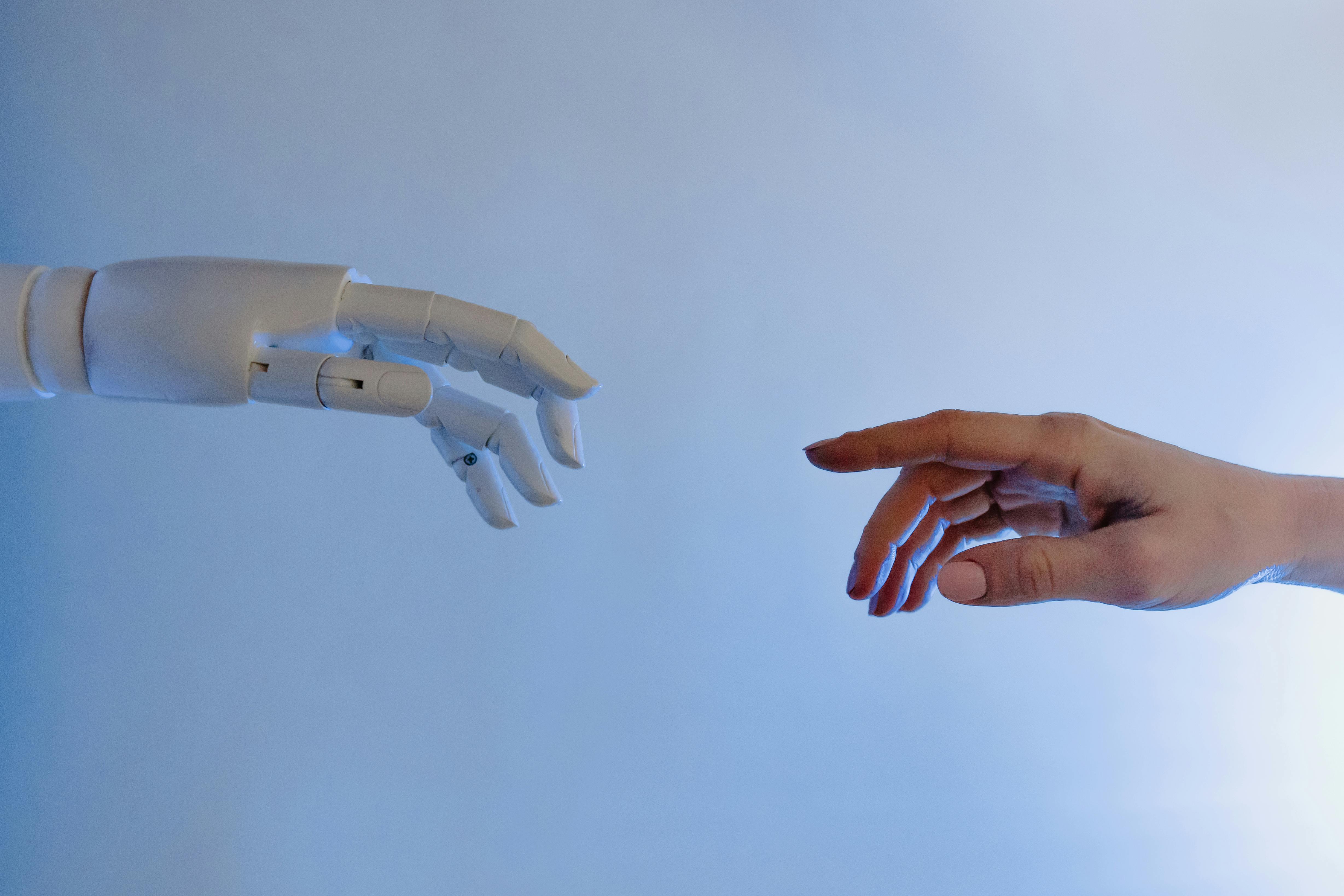


Technology: How BCIs and Large-Scale Neural Recording Actually Work
BCIs depend on three pillars: neural sensing, signal processing and decoding, and output/control. Large-scale neural recording technologies supply the raw data that make high‑bandwidth BCIs possible.
Neural Sensing: Invasive vs. Non-Invasive Approaches
Neural activity can be recorded at different spatial scales and levels of invasiveness:
- Invasive BCIs (implanted electrodes in cortex)
- Utah arrays and high-density grids: Rigid silicon arrays (e.g., Blackrock Neurotech’s Utah array) penetrate motor or sensory cortex and record extracellular spikes and local field potentials (LFPs) from hundreds of neurons.
- Flexible “neural threads” and depth probes: Newer platforms (e.g., Neuralink, NeuroPace depth leads) use flexible polymer threads or depth electrodes that aim to reduce micromotion, scarring, and long-term tissue response.
- Neuropixels and related probes: In animal research, Neuropixels 2.0 probes provide thousands of recording sites along a thin shank, enabling simultaneous observation of tens of thousands of neurons across brain regions.
- Non-invasive BCIs (no surgery)
- Electroencephalography (EEG): Measures scalp potentials produced by synchronous activity in large cortical populations. It is inexpensive and widely available, but spatially blurred and susceptible to noise.
- Functional near-infrared spectroscopy (fNIRS): Uses optical sensors on the scalp to infer changes in cortical blood oxygenation. It has lower temporal resolution but can complement EEG.
- Magnetoencephalography (MEG): Detects magnetic fields from neuronal currents. Traditionally large and expensive, but emerging optically pumped magnetometers hint at more portable MEG in the future.
Signal Processing and Decoding: Where AI Meets the Brain
Once neural data are acquired, they pass through a processing pipeline:
- Preprocessing: Filtering, artifact removal (e.g., eye blinks in EEG), referencing, spike sorting (detecting and classifying action potentials).
- Feature extraction: Computing firing rates across time windows, spectral power in specific frequency bands, or latent factors via dimensionality reduction methods like PCA or factor analysis.
- Decoding: Machine-learning models map neural features to intended outputs. Algorithms range from linear decoders (Kalman filters, linear regression) to recurrent neural networks (RNNs), transformers, and convolutional models.
Recent breakthroughs in BCI performance are tightly coupled to advances in AI. For example:
- Neural speech decoders trained on hours of recordings from speech motor cortex can reconstruct continuous text or synthetic audio from attempted speech, even in patients who can no longer speak.
- Language-model-assisted BCIs combine neural decoding with large language models (LLMs) to auto-correct and fill in intended words, similar to smartphone predictive text but driven by brain activity.
Control Interfaces: From Cursors to Robotic Limbs
Decoded signals drive different effectors:
- 2D cursors and virtual keyboards for communication (selecting letters, words, or icons).
- Robotic arms and prosthetic hands that allow multi‑DOF (degree of freedom) reaching and grasping.
- Speech synthesizers that transform neural activity into audible speech in near real time.
- Smart home control such as turning on lights, adjusting thermostats, or using messaging apps.
Academic trials have already demonstrated text entry rates that approach or exceed typical smartphone typing speeds in some participants, and synthetic speech BCIs have reached intelligible, conversational‑rate output for a handful of trial volunteers.
Scientific Significance: What Large-Scale Neural Recording Is Teaching Us
Large-scale recording technologies like Neuropixels and high-density arrays enable neuroscientists to move from single-neuron anecdotes to population-level theories of brain function. Instead of asking what “neuron A” does, researchers examine how coordinated patterns across thousands of neurons represent information.
Population Coding and Neural Manifolds
In motor cortex, for example, movement-related activity often lies on a low-dimensional manifold: a structured subspace of possible firing patterns. Decoders exploit this fact by learning trajectories on this manifold corresponding to different intended movements.
- Dimensionality reduction methods like Gaussian Process Factor Analysis, jPCA, or manifold learning reveal underlying dynamical systems that govern neural activity.
- BCI adaptation leverages neural plasticity; the human brain can learn to reshape its activity patterns to better align with decoder expectations, improving control over time.
“The emerging picture is that neural populations form rich dynamical systems whose trajectories can be co‑opted by BCIs, turning thought into action through learned mappings.”
Closed-Loop Experiments and Plasticity
BCIs do not simply read the brain; they participate in a closed feedback loop. When participants see the consequences of their neural activity on a cursor or robotic arm, their brains adapt:
- Neural firing patterns reorganize to make control easier and more reliable.
- Decoders can be periodically recalibrated or even continuously updated to track neural changes.
- These adaptations reveal fundamental rules about learning, credit assignment, and reinforcement in cortical circuits.
Insights from such closed-loop experiments feed back into BCI design, motivating decoders that explicitly model neural dynamics and plasticity rather than treating the brain as a static encoder.
Mission in Practice: Current Clinical and Consumer Directions
Modern BCI work spans a spectrum from highly regulated implantable medical devices to consumer-grade wellness gadgets. Their goals, evidence base, and risks differ dramatically.
Clinical BCIs for Severe Paralysis and Communication
The most mature and ethically compelling BCIs are geared toward people who have minimal or no voluntary movement:
- Restoring reliable communication for “locked‑in” patients using text or synthesized speech.
- Enabling basic computer interaction: messaging, browsing, and simple productivity tasks.
- Providing functional limb control via robotic arms or exoskeletons, sometimes combined with stimulation of muscles or spinal cord.
High-profile implants from companies like Neuralink and Synchron are running early feasibility and pivotal trials in the United States and other regions. Public videos highlight participants playing video games, sending social media posts, or moving cursors in real time using thought alone.
Non-Invasive Consumer Neurotech
At the consumer end, EEG headsets and “neurofeedback” devices target gaming, meditation, and productivity. Their signal quality is far lower than clinical-grade equipment and they cannot decode rich, precise intentions, but they can:
- Measure coarse metrics of arousal, attention, and relaxation.
- Support simple control schemes (e.g., binary selections, basic game inputs).
- Provide feedback for mindfulness and focus training.
For interested readers, educational devices like the InteraXon Muse 2 EEG Headband offer an accessible, non‑clinical way to explore EEG-based neurofeedback for meditation and focus training. While not a medical device and far from the capabilities of invasive BCIs, it can help users understand the basics of brain signal measurement.
Milestones: From Early Experiments to Viral BCI Demos
The field of BCIs and large‑scale neural recording has advanced through a series of technical and clinical milestones.
Historical and Technical Milestones
- Early EEG BCIs (1970s–1990s): Pioneering work by Jacques Vidal and others showed that scalp EEG could be used to control simple devices, creating the term “brain–computer interface.”
- Intracortical motor BCIs (2000s): Studies by the Braingate consortium and allied groups demonstrated that monkeys and humans could control cursors and robotic arms via motor cortical implants.
- High‑density arrays and Neuropixels (2010s–2020s): Dense arrays and Neuropixels probes enable recordings from tens of thousands of neurons, dramatically increasing available information for decoders.
- Neural speech prostheses (late 2010s–2020s): Groups at UCSF, Stanford, and others showed that attempted speech can be decoded into text or synthesized voice in people who cannot speak, with word rates approaching natural conversation.
- High‑profile commercial demos (2020s): Videos from Neuralink, Synchron, and other startups showcasing participants playing games, browsing the web, or using social media by thought alone have pushed BCIs into mainstream news and online debate.
Large-Scale Recording Milestones
- Neuropixels probes enabling real‑time tracking of neural ensembles across multiple brain areas in behaving animals.
- Simultaneous recording of cortex, thalamus, and hippocampus, revealing interactions underlying memory, attention, and navigation.
- Advances in open-source platforms such as the International Brain Laboratory, enabling standardized large-scale datasets shared across institutions.
Challenges: Engineering, Clinical, and Ethical Hurdles
Despite dramatic progress, BCIs and large-scale neural recording face formidable obstacles that will determine how widely—and how safely—these technologies are deployed.
Biological and Engineering Challenges
- Long-term stability of implants: Implanted electrodes can trigger gliosis and scar tissue, reducing signal quality over months to years. Flexible materials, novel coatings, and minimally invasive approaches aim to mitigate this, but truly decades-long performance remains unproven.
- Biocompatibility and infection risk: Any device traversing the skull has to manage infection risk, mechanical stress, and heat dissipation while preserving neural tissue health.
- Power, bandwidth, and miniaturization: Fully implantable devices must transmit high-bandwidth data wirelessly while remaining small, efficient, and safe. This pushes the limits of low‑power ASIC design and wireless telemetry.
- Calibration and robustness: Neural signals drift over time. Seamless user experience requires decoders that adapt without constant manual recalibration, while still behaving predictably.
Clinical and Regulatory Challenges
BCIs for paralysis are invasive medical devices, subject to stringent regulation by agencies like the FDA and to careful risk–benefit analysis:
- Surgical risk vs. functional gain: For people with severe disability, the bar for acceptable risk may be higher, but regulators require rigorous evidence that implants provide durable, meaningful benefit.
- Equitable access: Without deliberate policy and reimbursement frameworks, sophisticated BCIs could remain limited to a small number of wealthy patients or elite hospitals.
- Long-term support: Implants must be supported for many years—software maintenance, hardware updates, and clinical follow‑up cannot simply end with the trial.
Ethical, Legal, and Social Challenges
Perhaps the most widely discussed issues arise around neural data itself—who controls it, how it is used, and what it means for privacy and identity.
- Neural data ownership: Should patients own a copy of their raw and processed neural data? Can companies train proprietary decoders or AI models on that data without explicit, ongoing consent?
- Surveillance and coercion risks: While current BCIs cannot read arbitrary thoughts, future systems may infer increasingly rich information. Strong legal protections are needed to prevent compulsory monitoring or misuse by employers, insurers, or governments.
- Autonomy and agency: BCIs that assist with decision-making (e.g., BCIs combined with recommender systems) raise subtle questions about where human agency ends and algorithmic agency begins.
- Hype vs. reality: Overstated claims about “mind‑reading” or “merging with AI” can distort public understanding, complicate consent, and set unrealistic expectations for patients and families.
“As BCIs move from laboratory prototypes to products, the governance of neural data will be as important as the engineering of electrodes and algorithms.”
Why BCIs Are Trending: Social Media, AI, and Public Imagination
BCIs have existed as a niche research field for decades, but three forces have pushed them into mainstream conversation in the mid‑2020s:
- Viral demo videos: Clips of individuals with paralysis playing games, sending posts on X, or controlling cursors by thought alone are emotionally powerful and highly shareable.
- The AI boom: As the public becomes more familiar with machine learning and large language models, it is easier to grasp the idea that neural signals can be decoded into text, images, or actions using similar tools.
- Philosophical intrigue: Questions about free will, identity, and “mind reading” naturally invite debate on social platforms and in long-form discussions (for example, on YouTube channels such as Lex Fridman or academic talks shared by leading labs).
Thoughtful coverage in outlets like Nature, Science, and MIT Technology Review helps balance hype with realistic appraisals of benefits and limitations.
Conclusion: A Decade That Will Define Human–Machine Integration
Brain–computer interfaces and large‑scale neural recording sit at the nexus of neuroscience, AI, clinical medicine, and ethics. Invasive BCIs are already restoring communication and basic control to people who had lost them, while non-invasive systems open gentler, if more limited, paths to widespread adoption.
Over the next decade, progress in materials science, low-power electronics, and machine learning is likely to:
- Increase channel counts and recording stability for implants.
- Boost the accuracy and robustness of neural decoders, especially for speech.
- Enable tighter closed loops via sensory feedback (e.g., artificial touch delivered through stimulation).
- Clarify the risk–benefit profile for different patient populations through larger trials.
Whether BCIs evolve into niche medical tools, mainstream assistive technologies, or the foundation of broader human–machine symbiosis will depend as much on social choices and ethical frameworks as on engineering ingenuity. Careful governance of neural data, transparent communication with the public, and patient‑centric design should guide the field as it transitions from spectacular demos to everyday clinical reality.
Additional Resources and Practical Next Steps
For readers who want to explore this space more deeply, consider:
- Reading recent review articles on BCIs and large-scale recording in journals like Nature Reviews Neuroscience and Neuron.
- Watching conference talks from meetings such as the Society for Neuroscience and the NeurIPS workshop tracks on neuroAI and BCIs.
- Following leading scientists and engineers on professional networks like LinkedIn, where researchers regularly share preprints, datasets, and open-source tools.
- Exploring open datasets such as those from the International Brain Laboratory and DANDI Archive for hands‑on experimentation with neural data and decoding models.
For technically inclined readers, combining publicly available neural datasets with modern deep‑learning frameworks (e.g., PyTorch, JAX, TensorFlow) offers a realistic way to contribute to decoder design and benchmarking—without needing surgical implants or specialized hardware yourself.
References / Sources
- Willett, F. R., et al. (2021). “High-performance brain-to-text communication via handwriting.” Nature. https://www.nature.com/articles/s41586-021-03506-2
- Moses, D. A., et al. (2021). “Neuroprosthesis for decoding speech in a paralyzed person with anarthria.” New England Journal of Medicine. https://www.nejm.org/doi/full/10.1056/NEJMoa2027540
- Steinmetz, N. A., et al. (2021). “Neuropixels 2.0: A miniaturized high-density probe for stable, long-term brain recordings.” Science. https://www.science.org/doi/10.1126/science.abf4588
- Nature Neuroscience Collection: “Brain–computer interfaces.” https://www.nature.com/collections/hafbjfibbd
- IEEE Brain Initiative – Brain–Computer Interfaces. https://brain.ieee.org/brain-computer-interfaces/
- Ienca, M., & Andorno, R. (2017). “Toward new human rights in the age of neuroscience and neurotechnology.” Life Sciences, Society and Policy. https://lsspjournal.biomedcentral.com/articles/10.1186/s40504-017-0050-1
- International Brain Laboratory. https://int-brain-lab.org/
