
Inside the AI PC Era: How Copilot+ Laptops and On‑Device Models Are Rewiring Personal Computing
The phrase “AI PC” has gone from marketing slogan to industry battle cry between 2024 and 2026. Microsoft is retooling Windows around Copilot+, Qualcomm is betting on ARM-based Snapdragon X chips with powerful NPUs, while Intel and AMD race to match NPU performance in x86 laptops. Apple, in parallel, doubles down on its own on‑device models across the M‑series and A‑series chips. Together, they are trying to define the next dominant computing platform—one where AI inference happens right on your lap, not only in distant data centers.
This shift is not just about faster chips. It’s about moving intelligence closer to the user, intertwining operating systems, silicon, developer tools, and cloud services into a new stack. Below, we unpack the mission behind AI PCs, the technologies underneath, the scientific and economic implications, the concrete milestones so far, and the stubborn challenges still in the way.
Mission Overview: What Is an AI PC and Why Now?
In today’s narrative, an “AI PC” is a laptop or desktop designed around a dedicated AI accelerator—typically called an NPU (Neural Processing Unit)—alongside the CPU and GPU. Industry groups like the MLCommons and major vendors loosely converge on a few traits:
- Integrated NPU capable of tens to hundreds of TOPS (trillions of operations per second) of INT8/FP16 performance.
- Operating-system‑level AI features such as Windows Copilot+, macOS/iOS on‑device models, and enhanced camera/audio pipelines.
- Optimized power and thermal design so AI workloads can run continuously without destroying battery life.
- Software stacks (SDKs, drivers, runtimes) that make it practical for developers to target the NPU instead of solely the CPU/GPU.
The timing is no accident. After massive smartphone and cloud build‑outs, PC sales stagnated and replacement cycles lengthened. At the same time, the success of transformer models and large language models (LLMs) created a new category of compute‑hungry workloads. Running everything in the cloud is expensive and limited by bandwidth and latency. AI PCs promise:
- Lower latency for interactive tasks like code completion and live translation.
- Better privacy by keeping raw data—documents, audio, camera feeds—on the device.
- Cost optimization by offloading inference from costly data center GPUs to users’ own hardware.
“We’re moving from a world where PCs access AI in the cloud to a world where PCs are AI devices in their own right.”
—Satya Nadella, CEO of Microsoft, at the 2024 Copilot+ PC launch event
The Competitive Landscape: Microsoft, Qualcomm, Intel, AMD, and Apple
From 2024 through 2026, mainstream tech coverage from outlets like The Verge, Ars Technica, and TechRadar has coalesced around a few flagship AI PC ecosystems.
Microsoft Copilot+ PCs
Microsoft’s Copilot+ branding is effectively its certification program for AI‑ready Windows machines. Requirements typically include:
- An NPU delivering at least a defined TOPS threshold (often cited around 40+ TOPS for first‑wave devices).
- Modern CPU and GPU capabilities.
- Minimum RAM and storage to host multiple models and large indexes.
Features like Recall (content indexing across your activities), enhanced Studio Effects for video calls, and on-device live captions are meant to showcase what this new hardware can do.
Qualcomm Snapdragon X Elite/Plus
Qualcomm’s Snapdragon X Elite and X Plus chips are ARM-based SoCs with integrated Adreno GPUs and Hexagon NPUs tuned for AI workloads. Early benchmarks on YouTube and sites like Notebookcheck highlight:
- Competitive multi‑day battery life under mixed AI and productivity workloads.
- Strong NPU performance for generative tasks (image generation, speech recognition) at modest power draw.
- Growing pains with x86 app compatibility and driver maturity on Windows on ARM.
Intel Core Ultra and AMD Ryzen AI
Intel and AMD have both integrated NPUs into their mobile processors—Intel Core Ultra and AMD Ryzen AI families. Compared with Qualcomm:
- Advantage: x86 compatibility for legacy software remains seamless.
- Challenge: Achieving ARM‑class efficiency while pushing high peak performance.
Both are iterating rapidly, with roadmaps toward >100 TOPS combined CPU+GPU+NPU in thin‑and‑light designs around 2025–2026.
Apple’s On‑Device Model Strategy
While the term “AI PC” is mostly used in the Windows/PC ecosystem, Apple is pushing a parallel narrative. The company’s M‑series chips and Neural Engine drive on‑device features like:
- Real‑time transcription in apps like Voice Memos and Notes.
- On‑device language models for suggestions and summarization (announced across macOS, iOS, and iPadOS).
- Image understanding for object detection, search, and accessibility features.
Apple emphasizes privacy: many features are explicitly labeled as “on device,” and when cloud models are used, the company highlights end‑to‑end encryption and limited data retention.
Technology: How NPUs and On‑Device Models Actually Work
Technically, an AI PC is defined less by branding and more by its silicon and software stack. At the heart lies the NPU—a specialized accelerator optimized for massive parallelism and low‑precision arithmetic common in neural networks.
NPU Architecture in a Nutshell
While implementations vary, most NPUs share several traits:
- Matrix multiply units: Engines optimized for batched matrix multiplications (GEMM), the core of transformer and CNN layers.
- Low‑precision data paths: INT8, INT4, and FP16 arithmetic to boost throughput and reduce power versus full FP32.
- On‑chip SRAM: Fast local memory to cache weights and activations, minimizing DRAM bandwidth.
- Dedicated scheduling hardware: To orchestrate layer execution and data movement efficiently.
On‑Device Models: Compression and Optimization
Running AI locally imposes strict constraints. You cannot reliably deploy a 500‑billion‑parameter model to a laptop. Instead, vendors rely on:
- Model distillation: Training a smaller “student” model to imitate the behavior of a larger “teacher” model.
- Quantization: Shrinking weights from 32‑bit floats to 8‑bit or lower integers, with techniques like quantization‑aware training to preserve accuracy.
- Pruning and sparsity: Removing redundant weights and exploiting sparse computation hardware.
- Local caching: Caching embeddings or partial responses for repeated queries.
For developers, this translates into toolchains like:
- ONNX Runtime with NPU execution providers (used heavily in Windows ecosystems).
- Apple’s Core ML and Metal APIs for neural networks on the Apple Neural Engine and GPU.
- Vendor‑specific SDKs like Qualcomm’s AI Engine and Intel OpenVINO.
“The real shift with AI PCs is not just where the model runs, but how we co‑design models and hardware together.”
—Andrew Ng, AI researcher and Coursera co‑founder, commenting on edge AI trends
Everyday Use Cases: Beyond the Hype
Tech reviewers at sites like Engadget, TechRadar, and independent YouTubers have stress‑tested current AI PCs. The most convincing use cases fall into a few buckets.
Personal Productivity and Knowledge Work
- Document summarization and drafting: On‑device LLMs that can summarize PDFs, recommend edits, or draft emails, with sensitive content never leaving your machine.
- Semantic search and Recall‑style features: Indexing local files, emails, and browsing history into embeddings for natural‑language querying.
- Meeting transcription and action items: Real‑time speech‑to‑text and summarization during calls without cloud streaming.
Media and Creativity
- AI photo editing: Background removal, upscaling, de‑noise, and smart selection tools accelerated by NPUs.
- Local image generation: Running models like Stable Diffusion variants or smaller diffusion models using NPU+GPU hybrids.
- Video filters and effects: Real‑time style transfer, background blur, and gaze correction for streamers and remote workers.
Accessibility and Communication
- Live captions and translation: Closed captions for any audio source, with optional translation into multiple languages.
- Screen content understanding: Describing images, charts, or UI elements for visually impaired users.
- Voice control and dictation: Improved accuracy and responsiveness for voice interfaces.
On social platforms like YouTube, TikTok, and X (Twitter), creators commonly showcase side‑by‑side demos: an AI PC running an NPU‑accelerated task while a conventional machine pegs the CPU, drains battery, and lags behind.
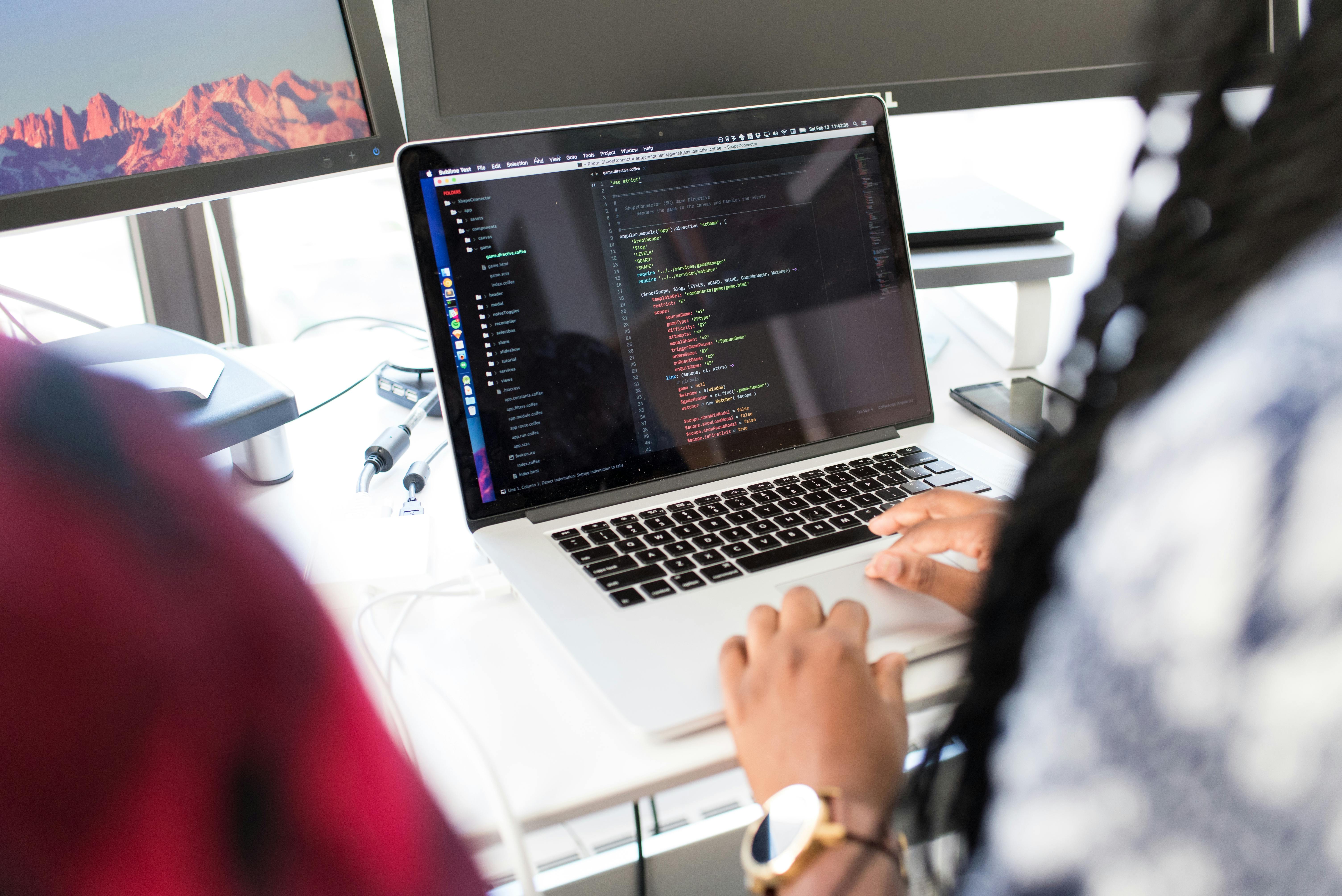
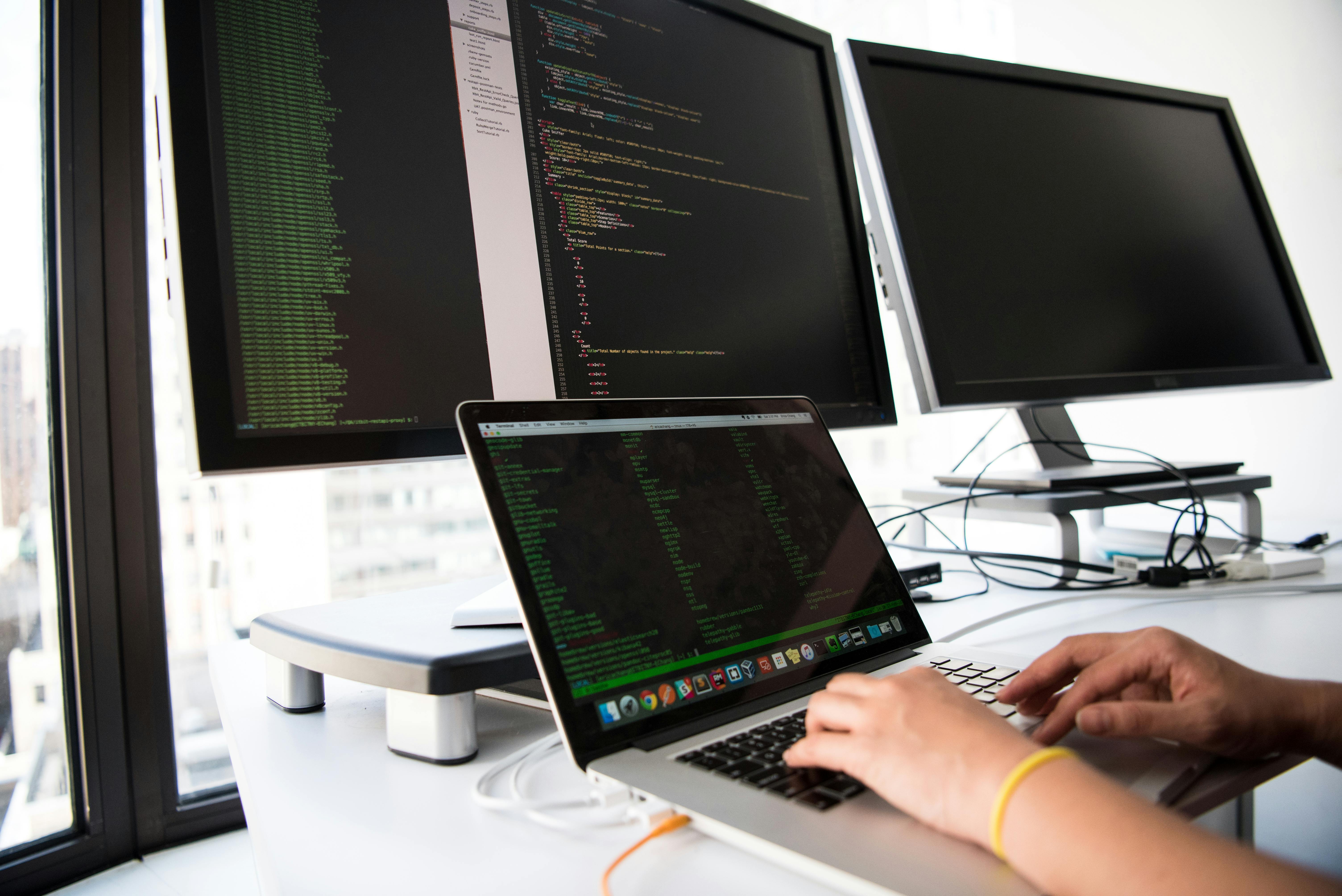

Visualizing the AI PC Era

Scientific Significance: Edge AI at Scale
From a research perspective, AI PCs are part of a broader shift toward edge AI—running ML workloads closer to where data is generated. This has several important implications:
- Federated learning and personalization: Devices can adapt models to individual users locally and, with consent, share only gradient updates or anonymous statistics.
- Energy distribution: Offloading inference from central data centers to millions of endpoints can flatten peak energy loads and reduce the need for massive GPU clusters.
- Human–AI interaction: Lower latency enables more conversational and continuous assistance, making “copilots” feel more like collaborators than chatbots.
Privacy‑conscious communities, including many on Hacker News, emphasize that on‑device inference also changes the risk landscape. Leaks from centralized training sets or prompt logs are less of a concern when raw inputs never leave the user’s device.
“The most private data are often the most interesting data. Moving inference on-device lets us explore new applications without sending everything to the cloud.”
—Dawn Song, Professor of Computer Science at UC Berkeley, on privacy-preserving machine learning
Enterprise and Business Impact
Business-focused outlets like TechCrunch and Vox’s tech coverage argue that AI PCs are as much a go-to-market story as a technological one.
Why Enterprises Care
- Data sovereignty: Many organizations cannot send sensitive data (legal docs, health data, source code) to public clouds for inference.
- Predictable costs: Buying fleets of AI PCs is a capital expenditure; paying per-token cloud inference is an ongoing operational cost.
- Hybrid inference strategies: Enterprises can run smaller, vetted models locally and reserve cloud calls for complex or rare queries.
Example Workflows Emerging in 2024–2026
- Local code assistants fine-tuned on internal repositories.
- Contract review tools that run initial screening on-device for lawyers or procurement teams.
- Offline customer support search tools for field technicians.
Early pilots suggest that, even if AI PCs cost more up front, they can reduce total cost of ownership when thousands of users run frequent inference-heavy tasks. Some organizations also view them as an insurance policy against regulatory uncertainty around cross-border data flows.
Hardware Considerations and Buying Advice
For professionals and enthusiasts considering an AI PC between 2024 and 2026, a few hardware parameters matter more than marketing labels.
Key Specs to Prioritize
- NPU performance: Look for published TOPS figures and real-world benchmarks for workloads you care about (e.g., Stable Diffusion, Whisper, Llama).
- Unified memory and capacity: 16 GB should be considered the bare minimum; 32 GB+ is safer for heavy local models and multitasking.
- Storage: At least 1 TB SSD if you plan to host multiple models and large vector indexes.
- Thermals and acoustics: Sustained AI loads can reveal poor cooling design; check long-duration benchmarks, not just short bursts.
Example Devices and Ecosystem Gear
While specific models evolve quickly, several families of devices are emblematic of the AI PC trend, including early Copilot+ ultrabooks from major OEMs and Apple’s M‑series MacBooks with strong on‑device capabilities.
To complement an AI‑focused workflow, creators and developers often invest in high‑performance external drives and input devices. For instance, many professionals pair AI laptops with a fast NVMe external SSD like the Samsung T7 Shield 1TB Portable SSD to store local datasets and model variants without sacrificing portability.
Milestones: 2024–2026 Timeline Highlights
The AI PC story has unfolded rapidly. Some key milestones include:
- Late 2023: Intel and AMD introduce the first mainstream laptop CPUs with integrated NPUs, signaling that AI acceleration will be standard, not exotic.
- First half of 2024: Microsoft announces Copilot+ PCs with strict NPU requirements, alongside Qualcomm Snapdragon X Elite/Plus‑based devices.
- Mid–2024: Apple unveils expanded on‑device model capabilities at WWDC, including generative features powered by the Neural Engine with selective cloud fallback.
- Late 2024–2025: Enterprises pilot AI‑equipped fleets, with early case studies presented at events like Microsoft Ignite and NVIDIA GTC.
- 2025–2026 (expected): Second‑generation NPU designs reach 100+ TOPS, and ecosystem tools mature enough that mid‑range laptops run impressive local models out of the box.
Media outlets continue to stress-test each wave of hardware, with in‑depth coverage like Ars Technica’s architectural breakdowns and AnandTech’s microarchitecture analyses.
Challenges: Hype, Limitations, and Open Questions
Despite rapid progress, AI PCs face real constraints—and a skeptical segment of reviewers and users.
1. Model Quality vs. Size
Local models are necessarily smaller than frontier cloud models (like GPT‑4‑class systems). This creates a tension:
- Local models: Great for speed, privacy, and cost but may hallucinate more or fail on complex reasoning.
- Cloud models: More capable but add latency, cost, and privacy considerations.
Most vendors adopt a hybrid approach—run simple tasks locally and escalate to the cloud when needed. The UX challenge is making this seamless and transparent.
2. Software Maturity and “AI Washer” Marketing
As Engadget and The Verge often note in reviews, early AI PC features can feel rough or underwhelming. Some systems ship with:
- Half-baked recall/search features that mis-index or misinterpret content.
- Camera effects that introduce artifacts or lag.
- Limited third-party app support for NPUs.
This has fueled accusations of “AI washing”—slapping an AI label on incremental features to sell upgrades.
3. Privacy and Telemetry
Running inference locally is not the same as total privacy. Operating systems and vendors may still collect:
- Usage telemetry, including which features are used and when.
- Aggregated prompts or error logs (sometimes opt‑out rather than opt‑in).
Strong privacy controls, clear permissions, and on‑device encryption are essential if users are to trust AI PCs with sensitive data.
4. Environmental and Lifecycle Impact
A key open question is whether AI PCs will:
- Extend device lifetimes by enabling more functionality via software updates on capable hardware, or
- Accelerate obsolescence by creating pressure to upgrade to the latest NPU every few years.
Researchers in sustainable computing stress the need for longer OS and driver support windows, modular components where feasible, and energy‑aware scheduling for AI workloads.
Developer Ecosystem and Tooling
For the AI PC era to matter, developers must actually target NPUs and design for on-device models.
Key Tools and Frameworks
- ONNX Runtime: Adopted widely on Windows, with execution providers for various NPUs.
- PyTorch and TensorFlow converters: Pipelines to quantize and export models to ONNX or Core ML.
- Local LLM frameworks: Tools like llama.cpp, GPT4All, and others that exploit CPU, GPU, and NPU acceleration.
Best Practices Emerging
- Offer offline‑first modes with graceful cloud backup when connectivity is available.
- Allow users to choose between “fast & local” and “smart & cloud” for each workflow.
- Clearly label when data leaves the device and provide robust opt‑out mechanisms.
Many practitioners share hands‑on experiences on platforms like LinkedIn and in conference talks at events like NeurIPS, ICML, and Microsoft Build, where edge ML and optimization sessions are often packed.
Learning, Benchmarking, and Staying Informed
Because the AI PC ecosystem is changing month by month, technical audiences rely on a mix of sources:
- Deep‑dive reviews: Sites like Ars Technica, AnandTech, and Tom’s Hardware dissect chip designs and benchmark NPUs on real workloads.
- Academic and industry white papers: Research from NVIDIA, Intel, AMD, and Qualcomm on low‑precision inference, sparsity, and edge AI.
- Benchmark suites: MLPerf, SPEC’s emerging ML workloads, and vendor‑specific demo apps.
- YouTube channels: Channels like Linus Tech Tips, MKBHD, and smaller benchmarking‑focused creators who run Stable Diffusion, Whisper, and Llama locally to compare platforms.
For a structured introduction to on‑device ML, courses and guides from organizations like TensorFlow Lite and Apple’s Machine Learning resources are especially useful.
Looking Ahead: The Future of the AI PC Platform
By 2026, most new mid‑ to high‑end laptops are expected to ship with NPUs as table stakes. The more interesting question is how software and user behavior will evolve.
Possible Directions
- Agentic workflows: Local‑first “AI agents” that can plan tasks over hours or days—monitoring inboxes, filing documents, or preparing reports—while keeping sensitive context on device.
- Cross‑device intelligence: Phones, PCs, and wearables sharing encrypted state so that assistance follows you from desk to couch to commute.
- Personal knowledge bases: Lifelong, encrypted personal archives indexed by on‑device models and selectively shared with cloud agents when explicitly approved.
Whether AI PCs become as transformative as smartphones will largely depend on whether developers can invent genuinely new workflows—not just re‑skin old apps with autocomplete and filters.
Conclusion
AI PCs—Copilot+ laptops, Snapdragon X systems, NPU‑equipped Intel and AMD machines, and Apple’s on‑device‑first Macs—represent a genuine architectural shift: computation and intelligence are moving to the edge in a big way. Latency drops, more data stays private, and developers suddenly have a new class of accelerator in every reasonably modern laptop.
At the same time, limitations in model size, immature software, privacy concerns, and aggressive marketing mean that not every “AI PC” is worth an upgrade yet. The most pragmatic path forward is hybrid: pair strong local capabilities with judicious cloud usage, and be transparent about where data goes and why.
For technically savvy users, the AI PC era is an opportunity to rethink how they work—treating the laptop not just as a portal to the cloud, but as a powerful, semi‑autonomous collaborator. For everyone else, the next few hardware generations will determine whether “AI PC” becomes a default reality like Wi‑Fi and SSDs—or fades into the background as another short‑lived buzzword.
References / Sources
- Microsoft Copilot+ PCs overview
- Qualcomm Snapdragon X Elite and X Plus platform
- Intel Core Ultra with integrated NPU
- AMD Ryzen AI processors
- Apple Machine Learning research and on-device intelligence
- Ars Technica gadget and chip architecture coverage
- The Verge AI and computing coverage
- MLCommons benchmarks and edge AI resources
- Microsoft Windows AI developer resources
Practical Tips for Readers Evaluating AI PCs
To make the most informed decision in this fast‑moving space:
- Clarify your workflows: Are you editing media, coding, analyzing data, or mostly browsing and writing? Heavier AI use justifies waiting for stronger NPU generations.
- Favor transparency: Choose platforms that clearly document on‑device vs. cloud processing and offer robust privacy controls.
- Check independent benchmarks: Look for tests of the specific AI tasks you care about—not just synthetic TOPS numbers.
- Plan for 3–5 years: Buy enough CPU, GPU, NPU, RAM, and storage that your device can benefit from upcoming on‑device model improvements throughout its lifecycle.
- Experiment locally: Try running small open‑source models on your current machine to understand where AI acceleration would genuinely help.
Approached thoughtfully, the AI PC era can be less about chasing hype and more about building a reliable, private, and efficient personal computing environment that grows with you over the next decade.
