Beau Starr Remembered: How a Character Actor Helped Define ‘Goodfellas’ Grit and ‘Halloween’ Terror
Beau Starr’s Final Curtain Call: Remembering a Character Actor You Always Recognized
Beau Starr, best known as Sheriff Ben Meeker in the Halloween franchise and for his small but potent turn in Martin Scorsese’s Goodfellas, has died at 81. For decades he was one of those actors whose face you knew instantly even if you couldn’t quite place the name—a quintessential working character actor who quietly helped shape the texture of American genre cinema.
Confirmed via family statements reported by TMZ and later picked up by outlets like Variety, Starr’s passing has prompted an outpouring of appreciation from horror fans, ’90s TV kids, and crime‑movie obsessives alike. This isn’t just a memoriam; it’s a look at what his career says about the unsung backbone of film and television.

From Canadian Roots to Hollywood Mainstay
Born in Canada and working his way into the American film and TV system, Beau Starr came up the old‑school way: small roles, steady gigs, and zero vanity about billing. While he never became a marquee name, his résumé reads like a crash course in late‑20th‑century popular entertainment—crime dramas, network procedurals, cult horror sequels, and prestige films that now feel like canon.
Throughout the 1980s and 1990s, Starr was part of a generation of actors who specialized in grounded authority figures: cops, sheriffs, detectives, and blue‑collar men whose job was to keep the story’s chaos in check. In an era obsessed with anti‑heroes and larger‑than‑life villains, he represented something subtler: the weary, pragmatic adult in the room.
Sheriff Ben Meeker: A Cornerstone of the Halloween Franchise
For horror fans, Beau Starr is immortalized as Sheriff Ben Meeker in Halloween 4: The Return of Michael Myers (1988) and Halloween 5: The Revenge of Michael Myers (1989). These sequels arrived after John Carpenter’s original had already become legend, and by the late ’80s, slashers were in danger of feeling like self‑parody. Meeker helped anchor the chaos.
Meeker isn’t a flashy role; he’s not the Final Girl or the masked boogeyman. Instead, he’s the guy who actually believes the threat, fortifies the town, and does the unglamorous work of crisis management. Starr plays him with a blend of steel and exhaustion that feels truer to small‑town reality than most horror lawmen.
“In a franchise built on teenagers and terror, Sheriff Meeker is the rare adult who both understands the stakes and refuses to be a bystander.” — genre critic commentary on Halloween 4
When fans talk about the “feel” of the late‑’80s Halloween entries—the paranoia, the sense that Haddonfield is a community pushed to the brink—Starr’s contribution is baked into that mood. He gives the movies a backbone, and for a generation of VHS kids, “Sheriff Meeker” is as synonymous with the saga as the Myers mask itself.
A Small Role in Goodfellas, A Big Place in Crime‑Movie Lore
If Halloween gave Beau Starr his horror‑icon status, Goodfellas placed him inside one of the most revered crime films ever made. Scorsese’s 1990 classic is crowded with titanic performances—Ray Liotta, Robert De Niro, Joe Pesci—yet it’s populated by a deep bench of faces that make the mob world feel lived‑in. Starr is part of that fabric.
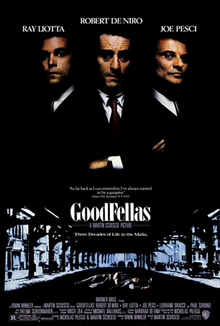
Crime cinema, especially of the Scorsese school, runs on authenticity. You need performers who look and sound like they’ve actually spent time in police stations, union halls, and neighborhood bars. Starr brought that grounded quality, the same one that made him so believable in horror. You trust that he knows the job, the streets, and the systems that prop up both criminals and cops.
“Goodfellas is about detail, about the specific textures of a world.” — Roger Ebert, reviewing Goodfellas
Starr’s presence is one of those textures. He’s a reminder that the magic of a masterpiece often lies not just in its stars but in the reliability of its supporting players.
Television Work and the Art of the Working Actor
Beyond the big‑screen highlights, Beau Starr made his living in television—guest spots, recurring roles, and that semi‑mythic status of “Oh, it’s that guy again.” In the pre‑Prestige‑TV era, actors like Starr formed the connective tissue between cop shows, legal dramas, and family series.
This kind of career requires range without showboating. You have to be credible in a single scene, often delivering exposition or emotional grounding, with no guarantee that viewers will ever learn your name. It’s unglamorous work, but it’s essential. Starr’s consistency across genres—horror, crime, drama—made him a go‑to for casting directors who needed quiet authenticity.

Legacy: The Face of Genre Cinema’s Working Class
In an entertainment culture obsessed with fame metrics and franchise leads, Beau Starr’s career is a reminder that film and TV are collective arts. Without reliable performers in the third or fourth line of the call sheet, even the best scripts and biggest stars can feel hollow.

His strengths were clear: a grounded presence, a knack for authority figures who felt human rather than cardboard, and a willingness to disappear into stories that weren’t “about” him. If there’s a criticism to be made, it’s really about the system, not the man—Hollywood rarely writes complex inner lives for the kinds of characters he excelled at, which means a lot of his best work is necessarily understated.
“You may not know the name, but you know the work—and the work is what lasts.”
As horror fans revisit Halloween 4 and 5, and as new generations discover Goodfellas on streaming queues, Beau Starr’s performances will keep circulating, the way great character acting always does: not loudly, but persistently.
Where to Revisit Beau Starr’s Most Memorable Roles
If news of his passing has you curious—or nostalgic—here are a few essential titles to stream or revisit, both for enjoyment and as a mini masterclass in supporting performance:
- Halloween 4: The Return of Michael Myers (1988) – The definitive Sheriff Meeker showcase and a fan‑favorite sequel.
- Halloween 5: The Revenge of Michael Myers (1989) – Messier, but crucial for Meeker’s continued arc and the evolving mythology.
- Goodfellas (1990) – An essential crime film where Starr is part of the ensemble that gives the world its density and grit.

Saying Goodbye Without Letting Go
Beau Starr’s death at 81 closes the book on a distinctly mid‑to‑late‑20th‑century kind of Hollywood career: steady, unshowy, and deeply woven into the genres that shaped mainstream taste—horror, crime, network drama. He may not have been a household name, but the worlds he helped create absolutely were.
As the industry tilts ever more toward IP and algorithms, remembering actors like Starr is a way of remembering what gives those properties a soul: human scale, lived‑in faces, and performances that don’t demand attention so much as reward it. Sheriff Ben Meeker will still be fortifying Haddonfield. The cops and working‑class men of crime cinema will still feel a little more real. In that sense, Beau Starr’s work isn’t ending with him—it’s rolling on in every rewatch.