
AI‑Designed Proteins: How Generative Models Are Rewriting the Code of Life
Artificial intelligence is rapidly changing how scientists read, predict, and now write the molecules of life. Building on the breakthrough of AlphaFold-style models that can infer protein 3D structures from amino-acid sequences, a new generation of AI systems is moving from passive prediction to active design. These tools can propose entirely new proteins—enzymes, binders, scaffolds, and switches—that have never existed in nature yet perform useful, highly specific functions. This convergence of AI, structural biology, and synthetic biology is fueling a wave of interest across biology, chemistry, genetics, and microbiology communities, and is reshaping what is technically and ethically possible in biotechnology.

Mission Overview: From Protein Prediction to Programmable Biology
The central mission of AI‑designed proteins is to turn protein engineering into a programmable, predictable discipline—more like software development than trial‑and‑error chemistry. Instead of randomly mutating proteins and screening millions of variants in the lab, researchers can now:
- Use AI models to predict which amino‑acid sequences will fold into stable 3D structures.
- Specify a desired function (e.g., binding to a viral spike protein, catalyzing a specific reaction) and have AI propose candidate designs.
- Iterate between in silico design and in vitro testing, tightening the feedback loop between computation and experimentation.
AlphaFold (DeepMind), RoseTTAFold (University of Washington), and more recent generative models like RFdiffusion and OpenFold have demonstrated that protein structure space has learnable patterns. Modern systems combine:
- Structure prediction models to evaluate candidate folds.
- Sequence generative models (transformers, diffusion models) to sample new sequences.
- Property predictors to estimate stability, solubility, and functional performance.
Together, they form an increasingly powerful design stack for synthetic biology.
“We are at the beginning of a new era in which AI will help us understand and design biological systems with unprecedented precision.” — Demis Hassabis, Co‑founder and CEO, DeepMind
Technology: How AI Designs New Proteins
AI‑driven protein design builds on three pillars: large biological datasets, expressive neural architectures, and powerful optimization methods. While implementation details vary across platforms, most workflows share a common logic.
1. Learning the “Language of Proteins”
Protein design models often treat amino‑acid sequences like sentences. Transformers—the same core architecture behind large language models—are trained on millions of natural proteins from databases like UniProt and the AlphaFold Protein Structure Database.
These models learn statistical regularities such as:
- Which residue patterns tend to appear in helices vs. beta sheets.
- Which mutations are likely tolerated vs. destabilizing.
- Long‑range dependencies (e.g., residues far apart in sequence but close in 3D space).
2. Generative Design: Sampling Novel Sequences
Modern systems go beyond prediction by explicitly generating new sequences. Several strategies are common:
- Autoregressive transformers that propose amino acids one at a time, conditioned on desired properties.
- Diffusion models (e.g., RFdiffusion) that iteratively “denoise” random structures into plausible protein backbones and sequences.
- Inverse folding models that, given a target backbone shape, suggest sequences likely to adopt that structure.
3. Multi‑Objective Optimization
A designed protein must be:
- Structurally stable.
- Expressible in a host organism or cell‑free system.
- Functionally active (catalytic, binding, signaling, etc.).
- Safe and non‑immunogenic, for therapeutic applications.
AI systems increasingly use multi‑objective optimization, balancing these criteria with reinforcement learning or gradient‑based search. Some platforms automatically generate tens of thousands of candidates and prioritize a small set for wet‑lab testing based on predicted performance.
4. Integrated Lab Automation
Some cutting‑edge labs and biotech firms couple AI design with robotic experimentation:
- AI proposes a library of protein sequences.
- Robots synthesize DNA, transform cells, and run high‑throughput assays.
- Measured data (e.g., binding affinity, enzyme kinetics) feeds back into the models.
This “closed‑loop” approach accelerates discovery and allows models to learn from failures as well as successes.
Scientific Significance: Why AI‑Designed Proteins Matter
AI‑driven protein design touches multiple scientific frontiers—from fundamental questions in evolution to practical advances in medicine and sustainable chemistry.
Health and Medicine
Next‑generation therapeutics are a central driver of interest in AI‑designed proteins:
- De novo binders that attach to viral proteins, blocking infection pathways (inspired by early work on designed SARS‑CoV‑2 inhibitors).
- Custom antibodies and nanobodies with optimized specificity and reduced off‑target binding.
- Therapeutic enzymes that degrade toxic metabolites or pathological aggregates in metabolic and neurodegenerative diseases.
- Programmable cytokines and immune switches for more precise immunotherapies.
Early‑stage clinical pipelines are beginning to feature AI‑designed candidates, though rigorous safety and efficacy testing remains non‑negotiable.
Sustainability and Industry
Designed enzymes can enable greener, more efficient manufacturing processes:
- Biocatalysts for pharmaceutical synthesis that operate at lower temperatures and with fewer toxic solvents.
- Plastic‑degrading enzymes optimized to act on PET and other polymers, advancing circular economy goals.
- Microbial cell factories engineered with AI‑optimized metabolic pathways to produce fuels, materials, and specialty chemicals.
Popular science videos about “enzymes that eat plastic” capture this imagination, but behind the scenes, AI design is making it faster to engineer such catalysts and tune their performance for real‑world conditions.
Foundational Biology and Evolution
AI‑generated proteins also probe a deeper question: How much of possible protein space has life actually explored? When generative models propose sequences that:
- Have no detectable homology to known proteins, yet
- Fold into stable structures and carry out specific functions,
they demonstrate that the space of viable proteins is vastly larger than what evolution happened to sample. This challenges long‑held views about sequence constraints and opens quantitative studies of evolvability and the structure of fitness landscapes.
“We are no longer limited to what evolution has already tried. With generative models, we can systematically explore regions of protein space that biology has never visited.” — David Baker, Institute for Protein Design
Milestones: Key Developments from 2020–2026
Between 2020 and 2026, the field has moved at remarkable speed. Some widely discussed milestones include:
1. AlphaFold and the Structural Revolution
- 2020–2021: AlphaFold2 demonstrates high accuracy in the CASP14 competition, effectively solving many aspects of the protein‑folding problem.
- 2021–2023: The AlphaFold Protein Structure Database expands to hundreds of millions of predicted structures, providing templates and training data for downstream models.
2. De Novo Protein Design at Scale
- RFdiffusion (2023) from the Baker lab uses diffusion models to design new protein backbones and sequences, enabling complex architectures like cages and binders.
- Academic and industrial groups publish examples of AI‑designed enzymes, immunogens, and scaffolds with wet‑lab validation.
3. Industrialization of AI‑First Protein Design
Startups and established biotechs build entire pipelines around AI‑assisted design:
- Companies like Generate:Biomedicines, Profluent, and Isomorphic Labs (Alphabet) integrate generative models with proprietary datasets and robotic platforms.
- Pharma partners sign multi‑billion‑dollar discovery deals focused on AI‑designed biologics and small molecules.
4. Community Tools and Open-Source Ecosystem
The democratization of tools is accelerating interest:
- Open‑source implementations like OpenFold and community notebooks for ColabFold expand access.
- YouTube and TikTok channels run live coding sessions showing how to predict protein structures or run simple design tasks in the cloud.
Challenges: Technical, Ethical, and Governance Questions
Despite the excitement, AI‑designed proteins face serious challenges that scientists, ethicists, and policymakers are actively debating.
1. Technical Limitations and Validation Gaps
- Prediction ≠ reality: A protein predicted to be stable may fail in expression, misfold in cells, or aggregate.
- Context dependence: Cellular environment, post‑translational modifications, and interactions with other biomolecules can dramatically alter behavior.
- Data bias: Training sets skewed toward certain folds or organisms can bias what models deem “likely” or designable.
Robust wet‑lab validation and conservative interpretation of in silico metrics remain essential—especially for therapeutics.
2. Dual‑Use and Biosafety
The same tools that can design lifesaving proteins could, in principle, be misused to:
- Enhance virulence or stability of harmful pathogens.
- Design novel toxins or immune‑evasive molecules.
While current systems still require specialized expertise and physical lab infrastructure, the barriers are trending downward. This has led to:
- Policy discussions in forums such as the U.S. National Academies and OECD on AI‑bio governance.
- Proposals for model access controls, usage monitoring, and content filters for biological design tools.
- Voluntary commitments by several AI‑bio companies to follow responsible‑use guidelines.
“The challenge is to reap the benefits of AI in biology while putting meaningful, enforceable guardrails around high‑risk applications.” — Jesse Kirkpatrick, biosecurity researcher
3. Equity, Access, and Capacity Gaps
Another concern is that AI‑enabled synthetic biology could exacerbate global inequities:
- High‑resource labs may capture most of the benefits, while low‑resource regions remain dependent on imported technologies.
- Proprietary datasets and closed models could limit open scientific progress.
Initiatives focused on open data, shared infrastructure, and capacity building in low‑ and middle‑income countries will be crucial to ensure that AI‑designed biology benefits are widely distributed.
AI, DIY Culture, and Public Engagement
The idea that you might one day “design a protein from your laptop” has captured the imagination of maker communities and biohackers. Cloud‑based design interfaces, low‑cost DNA synthesis, and community labs make the field more visible than ever.
While meaningful experimentation still requires biosafety infrastructure and training, public interest plays an important role:
- It drives demand for transparent education about how these tools work and what they can—not just hypothetically—do today.
- It increases pressure on regulators and industry to establish responsible‑use norms.
- It opens opportunities for citizen science projects in safe, well‑scoped domains (e.g., enzyme design puzzles, protein folding games).
High‑quality explainers on platforms like YouTube, TikTok, and LinkedIn—from computational biologists, biotech founders, and science communicators—are crucial in shaping public understanding. For instance:
- 3Blue1Brown style channels help demystify the math of deep learning.
- Computational biology creators break down how models like AlphaFold and RFdiffusion actually work, using clear visualizations.
Practical Tools and Learning Resources
For students, researchers, and professionals interested in AI‑driven protein design, a growing ecosystem of tools and resources is available.
Foundational Reading and Courses
- Nature collection on protein design and engineering
- Institute for Protein Design (UW) — research highlights, talks, and educational material.
- AI for Medicine specialization for a broad grounding in AI applications in healthcare.
Hands‑On Software and Platforms
- OpenFold and ColabFold for structure prediction.
- Bench tools like PyRosetta and RosettaScripts for physics‑based refinement and design.
- Jupyter and Google Colab notebooks that integrate transformers or diffusion models for sequence generation and scoring.
Recommended Reference Materials (Amazon)
For deeper study, many researchers and advanced students rely on comprehensive references such as:
- Molecular Biology of the Cell (Alberts et al.) — a classic for understanding cellular context and protein function.
- Introduction to Protein Structure (Branden & Tooze) — essential for structural biology fundamentals.
- Deep Learning (Goodfellow, Bengio & Courville) — the standard text on the AI side of the story.
Future Outlook: Toward General‑Purpose Molecular Design
Looking ahead to the late 2020s and beyond, several trends are likely to define the next wave of AI‑driven synthetic biology:
- Multimodal models that jointly reason over DNA, RNA, proteins, and small molecules, enabling end‑to‑end design of genetic circuits and therapeutic modalities.
- Higher‑fidelity physical modeling integrated with machine learning (e.g., hybrid quantum mechanics/molecular mechanics plus deep nets) for accurate reaction and binding predictions.
- In‑cell and in‑organism design, where models learn not just isolated proteins but how they behave in whole pathways and tissues.
- Stronger regulatory frameworks that specify safe development pipelines, auditing requirements, and red‑line applications for AI‑bio systems.
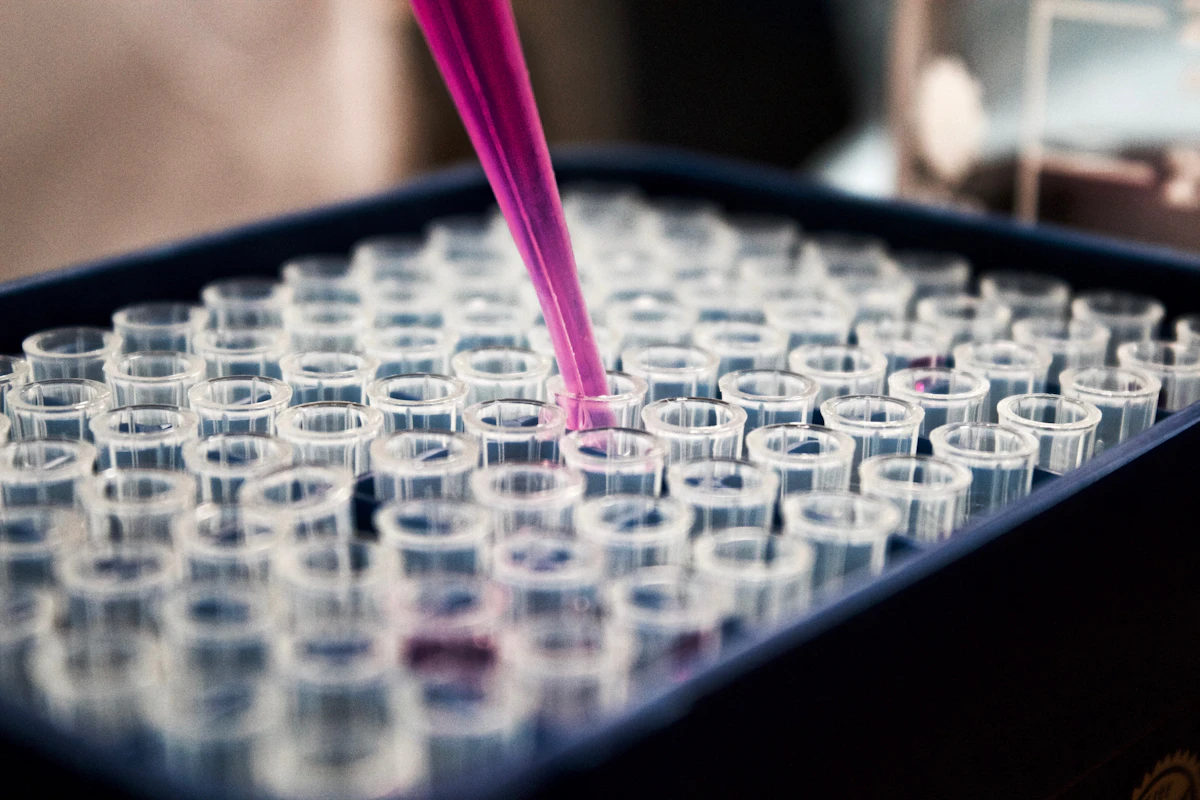
The central question is not whether AI will transform protein science—it already has—but how societies choose to channel and govern this power. The coming years will test our ability to align rapid technical progress with safety, equity, and public trust.
Conclusion: From Reading Life’s Code to Writing It
AI‑designed proteins sit at the heart of a broader shift from observing biology to programming it. By learning the rules that connect sequence, structure, and function, generative models allow scientists to explore vast regions of molecular possibility that evolution has never touched.
If developed responsibly, this technology could:
- Accelerate discovery of new therapeutics and vaccines.
- Enable more sustainable chemical and materials manufacturing.
- Deepen our understanding of life’s design principles and evolutionary history.
At the same time, it raises serious questions about biosafety, dual‑use risk, and global equity that demand proactive, inclusive governance. Scientists, policymakers, industry, and the public will all need a seat at the table.
For informed readers—whether from biology, computer science, or adjacent fields—now is an ideal moment to engage: learn the tools, follow the policy debates, and help shape how AI‑designed proteins and synthetic biology evolve over the next decade.
Additional Tips for Staying Current
To keep up with AI‑designed proteins and synthetic biology, consider the following strategies:
- Follow key researchers and institutes on X/Twitter and LinkedIn, such as the Institute for Protein Design (@ipd_uw) and DeepMind’s science team.
- Subscribe to newsletters like SynBioBeta for industry news and event updates.
- Join relevant communities on Slack, Discord, or professional networks focused on computational biology and bioengineering.
- Watch conference talks from venues like NeurIPS, ICML, RECOMB, and the Protein Design and Engineering meetings on YouTube or institutional sites.
A disciplined combination of primary literature, high‑quality explainers, and community discussion will give you a balanced, up‑to‑date view of this fast‑moving field.
References / Sources
Selected sources for further reading:
- Jumper et al., “Highly accurate protein structure prediction with AlphaFold.” Nature (2021).
- Watson et al., “De novo design of protein structure and function with RFdiffusion.” Science (2023).
- U.S. National Security Commission on Emerging Biotechnology, “Dual‑Use Risks of AI‑Enabled Biology.” Cell (2023).
- AlphaFold Protein Structure Database (EMBL‑EBI & DeepMind).
- SynBioBeta — Synthetic biology news and analysis.
