
Your Walls Called: They Want Texture, Drama, and a Weekend Makeover
Home: When Your Walls Are Boring and You’re Emotionally Not Okay With That
Somewhere right now, a beige wall is quietly crying in flat, builder-grade paint. Meanwhile, textured walls and DIY feature walls are out here living their best lives on TikTok, stealing all the likes, and making living rooms look like boutique hotels on a ramen budget.
If you’ve been doom-scrolling #homedecorideas, #walldecor, or “weekend wall makeover,” you’ve seen it: limewash clouds, velvety Roman clay, sleek concrete-look fireplaces, and those vertical wood slat walls that whisper, “Yes, I do own matching glassware now.”
This guide is your no-gatekeeping tour through 2026’s biggest wall trends—limewash, plaster, microcement, wood slats, and modern paneling—plus how to pick the right one for your space, actually pull it off, and avoid turning your bedroom into a patchy, streaky crime scene.
Why Textured Walls Are Suddenly Everywhere (Including Your FYP)
Textured and feature walls are surging because they hit the sweetest of sweet spots: huge visual impact, relatively low cost, and extremely satisfying before–after reveals. Instead of replacing all your furniture, you just change the backdrop—and suddenly your old sofa looks like it belongs in a design magazine.
- They film beautifully: Limewash and plaster catch light like a filter in real life. Influencers get instant, chic backgrounds for videos and photos.
- They’re more accessible than ever: Creators share step-by-step tutorials, tool breakdowns, and even “mistakes I made so you don’t have to” content.
- They play nicely with many styles: Limewash loves muted luxury and organic modern; paneling and slats work with both traditional and ultra-modern spaces.
- They’re renter-ish friendly: Some options (like certain panels or removable slats) are reversible or can be limited to one wall.
Translation: your walls no longer have to be passive background characters. They can be the main character—with range.
Limewash: The Soft-Focus Filter for Your Walls
Think of limewash as the Instagram “soft blur” filter, but in paint form. It creates a cloudy, tonal effect—soft, subtle, and a little bit ancient-villa-in-Italy (minus the airfare and the existential crisis about your life choices).
Best rooms for limewash
- Living rooms: A limewashed fireplace wall with a simple mantel instantly looks designer, especially in warm whites, beiges, or stone tones.
- Bedrooms: Behind the bed, limewash can make the room feel like a soft, boutique hotel cocoon.
Limewash pro tips (so it looks chic, not streaky)
- Use the right primer: Many limewash brands require a mineral or specialty primer so the finish moves and blends properly.
- Work in random “X” motions: Don’t roll it like regular paint. Use a big brush and crisscross strokes to get that cloudy, layered look.
- Commit to the full process: It often looks scary at coat one. The magic happens by coat two or three when the movement and tonal variation show up.
If you’re decorating a small bedroom or living room, limewash is ideal because it adds depth without overwhelming patterns. It’s wall makeup, not wall surgery.
Roman Clay & Plaster: For When You Want Your Walls to Smolder
Limewash is soft-focus; Roman clay and plaster are the “I lift and own linen trousers” version. They’re thicker, more tactile textures that look like high-end European interiors and fancy restaurants that only serve things on handmade plates.
Where plaster shines
- Feature fireplaces: A plaster or Roman clay fireplace surround looks like custom stone, especially in warm greige, mushroom, or clay tones.
- One main accent wall: Behind a sofa or a bed, it adds dimension without needing extra art.
Plaster sanity-saver tips
- Practice first: Test your technique on a large piece of scrap drywall or foam board. Figure out your pressure and motion before touching your Real Wall.
- Thin layers win: Multiple thin layers are easier to control than one thick, chaotic swipe that looks like a frosting accident.
- Mind the light: Plaster emphasizes light and shadow. Check how it looks in morning, afternoon, and evening—you may need to adjust your texture or color depth.
Plaster doesn’t need a lot of styling competition. Pair it with simple wood furniture, a couple of well-chosen sconces, and one great piece of art (or none at all if you’re going for architectural minimalism).
Microcement & Concrete-Look Walls: Minimalist, But Make It Moody
Microcement and concrete-look finishes are the go-to for modern, minimalist spaces. Think: gallery wall, but literally the wall is the gallery. These finishes show up most on fireplace surrounds, TV walls, and sometimes entryways for that “I live in a very calm architectural Pinterest board” vibe.
Where to use concrete-look finishes
- Fireplace surrounds: Especially in open-plan living rooms where you want a focal point that feels clean and modern.
- TV walls: A concrete-look wall can visually “ground” a TV and make it feel intentional, not like a black rectangle floating in space.
Concrete-look common sense
- Don’t over-darken small spaces: Deep charcoal can be stunning, but in a tiny room with limited light, try softer grays or greige concrete tones.
- Pair with warmth: Add wood, soft textiles, and warm lighting so the space feels cozy, not like an underground parking garage.
- Check product suitability: Some microcement systems are for walls only; others can do floors or wet areas. Read. The. Instructions.
Wood Slat Walls: The Vertical Blinds Glow-Up No One Saw Coming
Vertical or fluted wood slat walls are having a moment, especially behind TVs, beds, and entry consoles. They add warmth, texture, and just enough drama to say, “Yes, I did watch three hours of DIY slat wall videos before committing.”
Best places for wood slats
- TV wall in the living room: A vertical slat backdrop with integrated LED strips instantly turns your TV into a cinematic moment instead of a tech eyesore.
- Behind the bed: Either full height or half height as a massive headboard that doubles as a feature wall.
- Entryway console wall: A short slat panel behind a console plus a mirror = instant “styled” look as soon as you walk in.
Wood slat pro moves
- Plan your spacing: Decide on your gap width (e.g., 1/2" or 3/4") and use spacers so it doesn’t look like you eyeballed it after coffee.
- Stain before installing: It’s far easier to stain or finish the slats flat on sawhorses than on your wall (or your floor, by accident).
- Mind the acoustics: Slats can actually help soften echo—bonus if your living room sounds like a train station.
If you’re renting, you can mount slats to a thin painted board and anchor that board in a few spots, minimizing holes and maximizing your deposit survival rate.
Modern Paneling: Board-and-Batten, Picture Frame, and Reeded Magic
Modern paneling is the overachiever of the feature wall world: versatile, classic, and surprisingly forgiving. From board-and-batten to picture-frame molding and reeded panels, you can tailor it to traditional, transitional, or modern spaces just by changing proportions and paint color.
Where paneling really shines
- Bedroom headboard walls: Half-height or full-height paneling in deep greens, blues, or earthy taupes can make a basic bed look custom.
- Hallways or entryways: Wainscoting or paneling adds character and protects walls from everyday life (and rogue backpacks).
Paneling guidelines so it doesn’t look random
- Respect the architecture: Use existing elements—door heights, window placements—as a guide for panel proportions.
- Choose your vibe via color: White or light neutrals feel classic; deep, saturated tones feel modern and cocoon-like.
- Measure thrice, cut once: Sketch your panel layout on paper, then on the wall with painter’s tape before cutting anything.
Pair paneled walls with simple art or a statement mirror. You don’t need a gallery wall on top of a feature wall unless chaos is your aesthetic.
Living Room vs. Bedroom: Who Gets Which Wall Treatment?
Not every trend belongs in every room. Let’s assign wall treatments like a very stylish seating chart.
Living room decor ideas
- Limewashed fireplace wall: Pair with a restrained mantel—maybe one large vase or a simple piece of art. Let the wall texture be the star.
- TV wall with vertical slats and LED strips: Hidden LED strips top or side-light the slats, giving a subtle glow for movie nights.
- Single textured accent wall: Instead of busy wallpaper, one limewash or plaster wall can anchor the sofa and make the room feel layered.
Bedroom decor ideas
- Paneled headboard wall: Go full-height for drama or half-height with a ledge to rest art and small decor.
- Limewash behind the bed: Choose soft, warm neutrals or gentle greens for a hotel-like calm vibe.
- DIY upholstered wall panels: Fabric-wrapped panels serve as both headboard and feature wall, adding comfort and sound absorption.
A quick rule of thumb: living rooms can handle bolder, higher-contrast walls since they’re social spaces. Bedrooms do best with softer, more cocoon-y finishes that don’t visually shout at you while you’re trying to sleep.
DIY Reality Check: Weekend Makeovers Without Weekend Regrets
The internet loves a “48-hour wall transformation” montage, but it edits out the parts where someone is crying into a paint tray at 11:45 p.m. Let’s avoid that.
Before you start any textured wall project
- Prep the wall: Fill holes, sand lumps, clean dust. Texture highlights imperfections, it doesn’t hide them.
- Do a product test: Try a sample on a low-visibility area or scrap board. Check color and texture when dry.
- Check your tools: For plaster, you’ll want trowels and wide knives; for limewash, big brushes or specialty rollers; for slats and paneling, a saw, level, and nailer.
- Plan your stopping points: Some finishes need to be worked edge-to-edge while wet, so know how far you’ll realistically get in one session.
Common mistakes (and how to fix them)
- Patchy limewash: Often, it just needs another coat. Blend with soft, overlapping “X” strokes and maintain a wet edge.
- Too-heavy plaster texture: Lightly sand high spots once fully dry and add a thin, smoothing coat.
- Uneven slat spacing: Use consistent spacers from the start and measure center-out instead of wall-to-wall only.
Remember: DIY is “do it yourself,” not “do it perfectly on the first try.” Most viral creators only show you attempt number three.
Styling Textured Walls: Less Stuff, More Intention
Once your wall is fabulous, you don’t need to smother it with decor. The trend now is minimal wall decor on maximal walls.
- One statement piece: A large-scale art print, sculptural mirror, or oversized sconce pair is often enough.
- Architectural interest over clutter: Built-in shelving, shallow arches, or niches can replace traditional art.
- Lighting is your bestie: Wall sconces, picture lights, or hidden LED strips along slats or paneling bring out the texture and change the mood from “nice wall” to “who is your designer?”
Let the texture do the talking. Your job is just to give it a good supporting cast.
Your Weekend Wall Glow-Up Game Plan
If your walls are begging for a personality transplant, here’s a quick decision roadmap:
- Want soft, airy, and forgiving? Go limewash.
- Want rich, tactile, and a little dramatic? Try Roman clay or plaster.
- Want modern, minimalist, and sculptural? Opt for microcement or concrete-look finishes.
- Want warmth, lines, and a hint of “architecturally expensive”? Choose wood slat walls.
- Want classic with a modern twist? Do board-and-batten, picture-frame, or reeded paneling.
Start with one wall in one room. Treat it like a first date: commit for an evening, see how you feel in different lighting, and if it goes well…there might be a second wall.
Your home doesn’t need to look like anyone else’s grid. But if your walls are going to be in the background of your life—and your videos—they might as well be interesting.
Suggested Images (Strictly Relevant & Royalty-Free)
Below are carefully selected, strictly relevant image suggestions that visually reinforce key sections of this blog. All URLs point to realistic, contextual photos from reputable, royalty-free sources.
Image 1: Limewashed Living Room Wall
Placement location: Directly after the paragraph in the “Limewash: The Soft-Focus Filter for Your Walls” section that ends with “It’s wall makeup, not wall surgery.”
Supports sentence/keyword: “If you’re decorating a small bedroom or living room, limewash is ideal because it adds depth without overwhelming patterns.”
Image description: A realistic photo of a living room with a warm white limewashed accent wall behind a simple sofa. The wall shows soft, cloudy tonal variations. A minimal fireplace or console can be present, styled simply with a vase or one framed art piece, emphasizing the texture of the wall. Neutral furniture, no visible people, and no busy patterns.
SEO-optimized alt text: “Living room with warm white limewashed feature wall behind a neutral sofa, showing soft textured paint effect.”
Image URL:
https://images.pexels.com/photos/6587845/pexels-photo-6587845.jpeg

Image 2: Wood Slat TV Wall with LED Lighting
Placement location: In the “Wood Slat Walls: The Vertical Blinds Glow-Up No One Saw Coming” section, after the bullet point: “TV wall in the living room: A vertical slat backdrop with integrated LED strips instantly turns your TV into a cinematic moment instead of a tech eyesore.”
Supports sentence/keyword: “TV wall in the living room: A vertical slat backdrop with integrated LED strips instantly turns your TV into a cinematic moment instead of a tech eyesore.”
Image description: A realistic, modern living room featuring a TV mounted on a vertical wood slat wall. The slats are evenly spaced and run from floor to ceiling. Subtle LED strip lighting is integrated along the top or sides of the slat wall, creating a soft glow. Furniture is minimal and contemporary; no people are present.
SEO-optimized alt text: “Modern living room with TV mounted on vertical wood slat feature wall and integrated LED strip lighting.”
Image URL:
https://images.pexels.com/photos/6585762/pexels-photo-6585762.jpeg
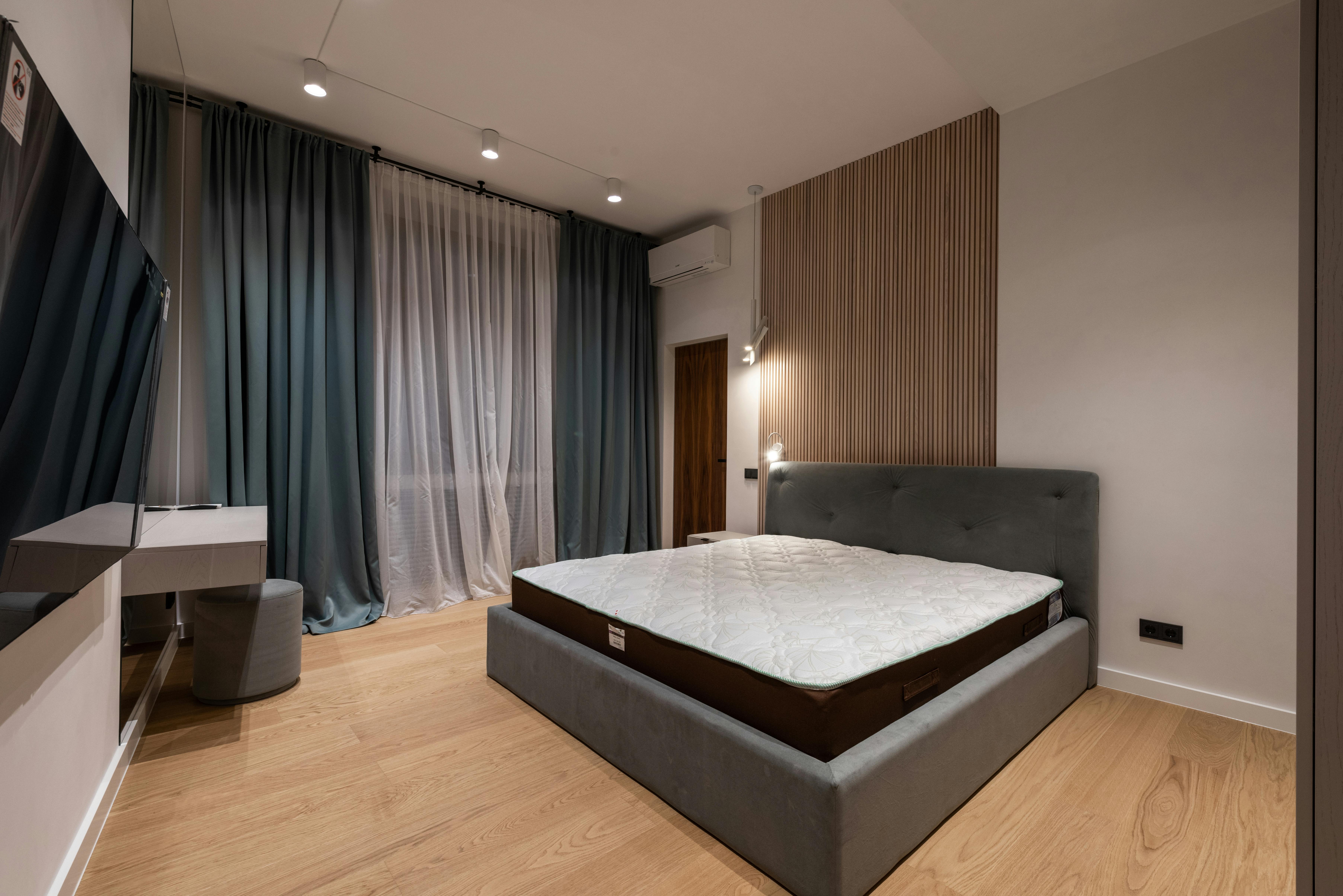
Image 3: Paneled Bedroom Headboard Wall
Placement location: In the “Modern Paneling: Board-and-Batten, Picture Frame, and Reeded Magic” section, after the bullet point: “Bedroom headboard walls: Half-height or full-height paneling in deep greens, blues, or earthy taupes can make a basic bed look custom.”
Supports sentence/keyword: “Bedroom headboard walls: Half-height or full-height paneling in deep greens, blues, or earthy taupes can make a basic bed look custom.”
Image description: A realistic bedroom with a full-height or half-height paneled headboard wall painted in a deep, saturated color (such as forest green or navy). A simple bed with neutral bedding sits against the paneled wall. Styling is minimal—maybe two small bedside tables and lamps—so the paneling is clearly visible and the focus of the image.
SEO-optimized alt text: “Bedroom with deep green paneled headboard wall and simple neutral bed creating a custom feature wall look.”
Image URL:
https://images.pexels.com/photos/6588573/pexels-photo-6588573.jpeg

