
Why Prince Louis’s Eighth Birthday Portrait Has Everyone Talking
Prince Louis’s latest birthday portrait, taken on a spring holiday in Cornwall and released to mark his eighth birthday, is doing what royal photos increasingly do best: quietly update the monarchy’s image while doubling as a made‑for‑social‑media moment.
A relaxed royal milestone in Cornwall
The new photograph, shot by long‑time royal photographer Matt Porteous earlier this month in Cornwall, shows Prince Louis—the third child of the Prince and Princess of Wales and fourth in line to the throne—enjoying a relaxed holiday moment. It continues a now familiar tradition: carefully timed portraits released by Kensington Palace around key family milestones, from first days at school to birthdays.
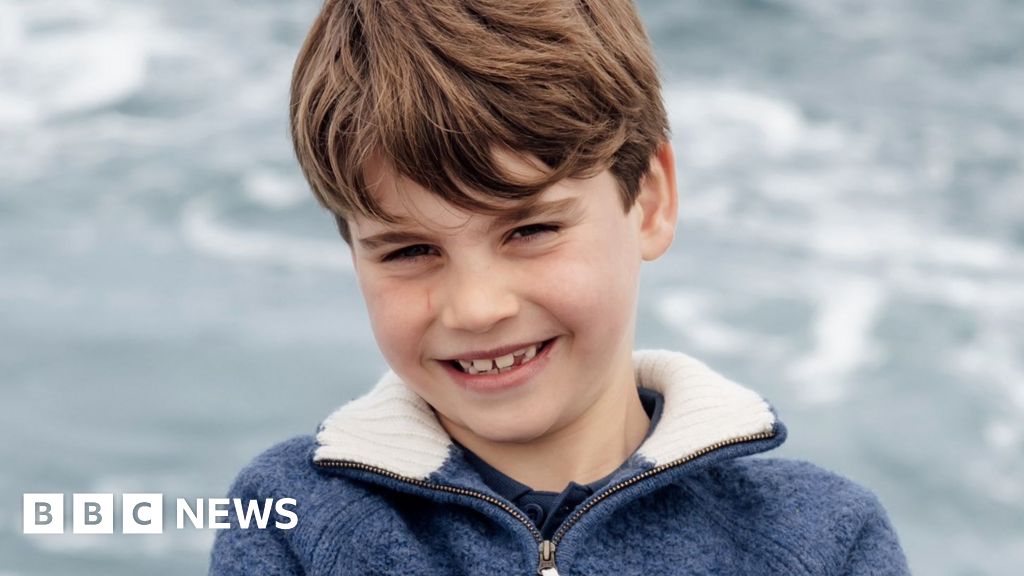
On the surface, it’s a sweet family moment. Underneath, it’s a small but telling chapter in how the modern royal family manages image, privacy and public expectation in the age of Instagram and 24‑hour news.
Where Prince Louis fits in the line of succession
Louis Arthur Charles of Wales was born on 23 April 2018. As the younger brother of Prince George, 12, and Princess Charlotte, 10, he sits fourth in the line of succession to the British throne, after his grandfather King Charles III, his father Prince William, and his brother George.
- Prince George: destined for a lifetime of constitutional focus and early public duty.
- Princess Charlotte: emblematic of the post‑primogeniture monarchy, where birth order matters more than gender.
- Prince Louis: part of a new generation of “spare” royals whose paths are less rigidly defined.
Unlike previous generations—think Prince Andrew in the 1980s or Prince Harry in the 1990s—Louis belongs to a hyper‑mediated era where a single photograph can become global shorthand for “the mood of the monarchy”.
Matt Porteous and the “informal royal” aesthetic
The photograph comes from Matt Porteous, a familiar name in royal circles. He has previously captured intimate moments for the Wales family, from playful beach shots to quieter, more candid portraits.
“My work with the royal family has always been about documenting genuine moments. It’s less about formality, more about emotion.”
That ethos fits the current Kensington Palace strategy. Rather than the stiff, studio‑bound portraits of previous decades, we now get:
- Natural light and outdoor settings.
- Simple, neutral clothing instead of ceremonial dress.
- Images that could almost pass for a stylish family’s Instagram post.
Visually, the Louis portrait continues this look: bright but not glossy, relaxed but still carefully controlled. It’s the monarchy reframed as a relatable family—albeit one that happens to vacation on postcard‑ready Cornish cliffs.
Why Cornwall matters in this royal story
Cornwall is not just a pretty backdrop. The region carries symbolic weight in royal storytelling, historically tied to the title Duke of Cornwall, now held by Prince William as Prince of Wales. Choosing Cornwall for Louis’s holiday photo subtly gestures to the family’s connection with the South West.
Culturally, Cornwall has become shorthand in British media for:
- Coastal escapes and domestic tourism.
- TV dramas like Poldark that romanticise rural life.
- Environmental conversations around coastal erosion and sustainable tourism.
By positioning Louis in this setting, the image resonates with a broader trend: the Royal Family aligning themselves with green spaces, conservation work, and an idealised version of British countryside life.
The royal image in the age of social media
Official royal portraits now have two primary audiences: traditional media and social media. Kensington Palace photographs are released to agencies but also appear almost simultaneously on platforms like Instagram and X, where they are dissected, memed and endlessly re‑captioned.
The Louis photo continues several media‑savvy patterns:
- Controlled intimacy: We see a relaxed, happy child, without revealing too much about his daily life.
- Predictable cadence: Birthdays, first days at school, and key national events anchor the release schedule.
- Shareable aesthetics: Horizontal composition, clear focus, and bright colours—ideal for news sites and social feeds alike.
It’s a balancing act: enough access to feel open, enough distance to protect the children’s privacy. The Louis portrait leans decisively toward the “normal family holiday” vibe while still being unmistakably royal.
Royal childhoods then and now
Comparing Louis’s public childhood to earlier generations highlights how quickly expectations have shifted. Prince William and Prince Harry grew up under the tabloid gaze, but their childhood images were largely mediated by print and broadcast outlets. Today, those same moments are screenshotted, remixed and debated in real time.
Yet there is a deliberate echo of older royal photo traditions:
- Birthday portraits recall the formal sittings of Queen Elizabeth II’s children.
- Holiday settings nod to earlier family trips to Balmoral or the Isles of Scilly.
- Co‑ordinated siblings’ portraits echo classic Windsor family images.
The difference now is control. By commissioning photographers like Porteous and releasing images directly, the Wales family shapes the first draft of their children’s visual biography rather than leaving it to the paparazzi.
Strengths and limitations of the new Louis portrait
As a piece of royal communication, the Louis birthday image largely succeeds. It feels warm, unforced and in step with contemporary tastes, while still telegraphing stability and continuity.
What works particularly well:
- Authenticity: The outdoor setting and relaxed pose reduce the sense of “photo‑op stiffness”.
- Consistency: It aligns with previous portraits of George and Charlotte, reinforcing a coherent family narrative.
- Accessibility: The image is easily shareable and instantly legible, even to casual royal watchers.
Where it feels constrained:
- Predictability: The formula—outdoors, casual, smiling—now risks becoming a little safe and samey.
- Opacity: As with all tightly controlled images, we learn very little about Louis beyond “happy child, nice holiday”.

Still, the goal here is not radical reinvention. It’s reassurance. In that sense, the birthday portrait delivers exactly what the institution needs it to: continuity wrapped in casual charm.
How critics and the public are likely to read the photo
Royal images are Rorschach tests. Supporters will see a happy child enjoying a seaside holiday; critics may see an institution still relying on soft‑focus imagery to maintain relevance. The truth, as usual, sits somewhere in between.
Royal commentator and author Catherine Mayer has noted that “the modern monarchy survives on a steady stream of imagery that is just personal enough to appear intimate, and just impersonal enough to be endlessly recycled.”
The Louis portrait fits that template neatly. Expect it to show up in future retrospectives of his life—an early chapter in the long visual story of a royal who may never wear the crown but will always live in its shadow.
Looking ahead: the evolving image of Prince Louis
As Prince Louis grows older, these annual portraits will gradually give way to more public engagements, school milestones and, eventually, his own choices about how visible he wants to be. For now, the Cornwall birthday image is a reminder that he is still, fundamentally, a child—albeit one whose holiday snapshots double as state‑adjacent communication.
In an era when every public figure is also a brand, the Prince and Princess of Wales are carefully setting the tone for their children’s public images: cheerful, outdoorsy, and just a little bit aspirational. The new Louis portrait doesn’t revolutionise that approach—but it reinforces it with sunlit confidence.
As the next set of royal milestones approaches—George’s teenage years, Charlotte’s expanding public role, and Louis’s own gradual emergence—expect more images like this: formally informal, unmistakably curated, and designed to live comfortably on both front pages and phone screens.
