
Why Apple’s On‑Device AI Could Change Everything About How We Use Our iPhones
As regulators scrutinize data-hungry cloud models and users grow wary of surveillance capitalism, Apple’s bet on hybrid AI—where sensitive tasks run locally and only complex workloads tap the cloud—could redefine what “smart” and “private” mean in everyday devices.
Apple’s AI push is no longer theoretical or incremental. After years of being perceived as an AI laggard compared with OpenAI, Google, and Microsoft, Apple is now rapidly shipping and previewing AI features that live directly on devices. This move leverages its A‑series and M‑series chips, which integrate neural processing units (NPUs) optimized for machine learning inference.
The strategic pivot is not just about catching up; it is about defining a distinctly “Apple” approach to AI—privacy-led, hardware-accelerated, and deeply integrated into the operating system rather than bolted on as a cloud service. The company is effectively arguing that the future of AI is not only in giant server farms but also in the chips inside your pocket and on your desk.
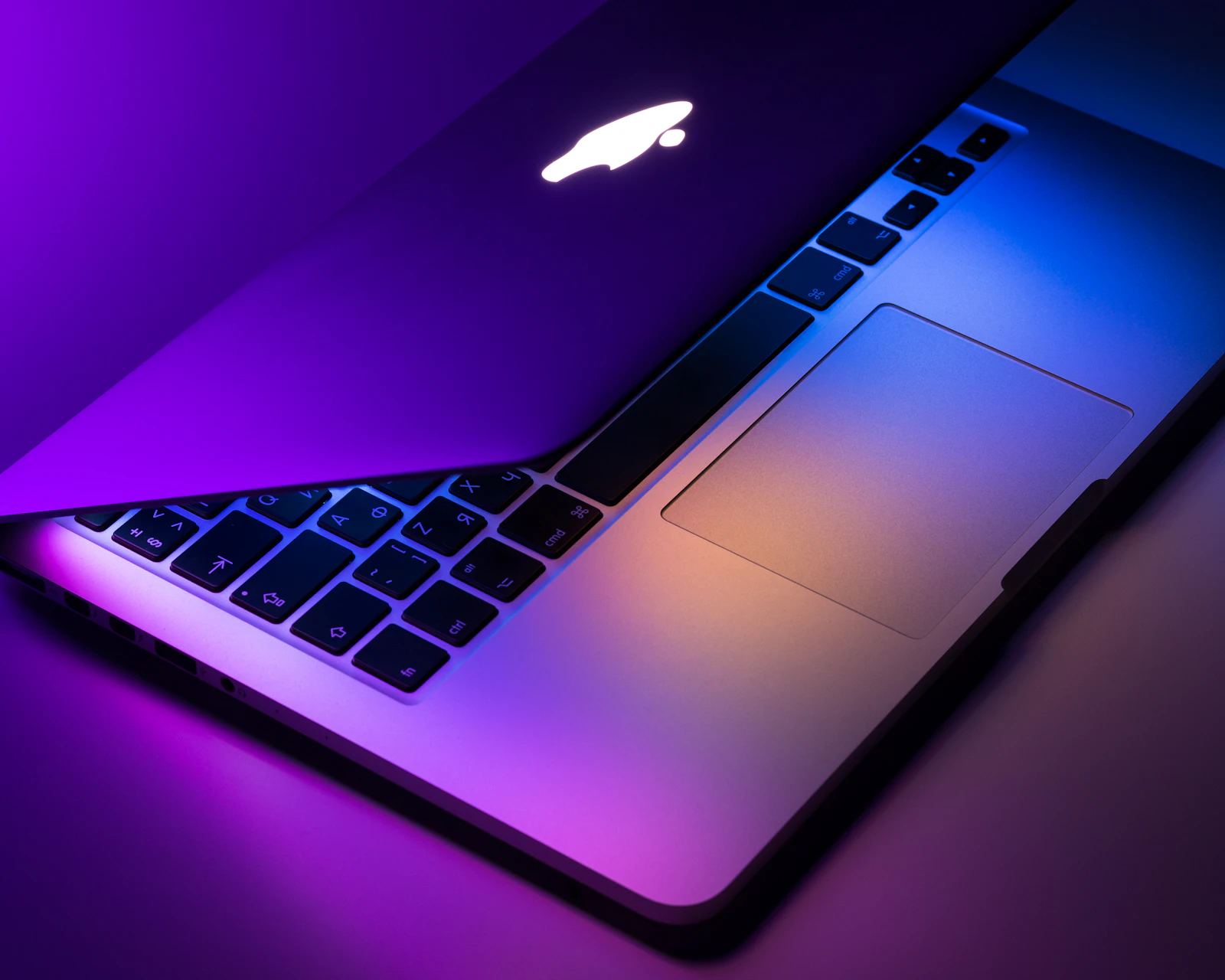
Mission Overview: Apple’s AI Strategy in Context
Apple’s overarching mission in AI can be summarized as delivering personal intelligence without pervasive surveillance. Compared with rivals that lean heavily on cloud-based large language models (LLMs), Apple focuses on:
- On-device models for language understanding, summarization, and image analysis.
- Hybrid AI architectures where the device decides when to invoke cloud models.
- Privacy-preserving techniques such as on-device learning and differential privacy.
- System-level integration into Siri, Spotlight, Photos, Notes, Safari, and third‑party apps via APIs.
“Apple’s advantage is not having the biggest model in the cloud; it’s having a capable model that is already in your pocket and deeply aware of your personal context, without that context ever leaving your device.”
Technology: Custom Silicon and On‑Device AI Models
Apple’s AI push is inseparable from its silicon roadmap. Since the introduction of the Neural Engine in the A11 Bionic and the subsequent M‑series chips for Macs, Apple has been building hardware specifically tuned for ML inference.
Apple Silicon and Neural Engines
Modern Apple chips (A17 Pro, M2, M3 families and beyond) integrate NPUs that can perform trillions of operations per second (TOPS) dedicated to neural workloads. This enables:
- Low-latency inference: Responses from on-device models arrive in tens of milliseconds, essential for natural-feeling assistants.
- Energy efficiency: NPUs are far more power-efficient than CPUs or GPUs for ML, critical for battery-powered devices.
- Thermal management: Dedicated silicon allows sustained AI workloads without drastic throttling.

On‑Device Language and Vision Models
Apple is reported to be deploying a family of compact yet capable models tailored for device constraints:
- Language models for text understanding, rewriting, summarization, and task planning.
- Vision models for object recognition, scene understanding, OCR, and image search within Photos and Files.
- Multimodal models that connect what you see on screen with what you say to Siri or type into apps.
Instead of chasing the largest possible parameter count, Apple focuses on distilled and quantized models that run comfortably within the memory and power envelope of mobile devices.
Developer Tooling: Core ML and Beyond
For developers, Apple’s strategy centers on Core ML, ML Kit-style APIs, and new system-level capabilities that expose Apple’s own models as services:
- Drop‑in text summarization and rewrite APIs for productivity apps.
- Vision APIs that automatically understand documents, receipts, and scenes.
- Personal context APIs (with user permission) to make apps situationally aware while respecting data minimization.
Developers who want to explore modern on-device ML can already experiment with compact open models using a MacBook with Apple silicon, for instance by running local LLM setups or using libraries like llama.cpp.
For power users and independent researchers, devices like the Apple 2023 MacBook Pro with M3 Pro provide enough local compute to prototype and benchmark on‑device models without renting GPU time in the cloud.
Privacy-Centric Assistants: Architecture and Techniques
Apple’s AI marketing message is simple: intelligence without intrusion. Under the hood, several technical choices support this promise.
On‑Device by Default, Cloud When Necessary
Apple is moving toward a tiered processing model:
- Tier 1 – Pure local: Most everyday tasks—rewriting messages, creating summaries, extracting to‑dos—are handled entirely on-device.
- Tier 2 – Hybrid: More complex queries may trigger a secure, anonymized cloud call, with the device mediating what data is sent.
- Tier 3 – Opt‑in cloud personalization: For users who explicitly consent, certain preferences and history may be stored in the cloud, still with strong privacy controls.
Differential Privacy and On‑Device Learning
To improve models without building detailed dossiers on individuals, Apple has invested heavily in differential privacy, a mathematical technique that adds statistical noise to aggregated data. This allows Apple to see broad usage patterns—what features are popular, which phrases models fail on—without revealing any one user’s data.
“We believe privacy is a fundamental human right. That’s why we design Apple products to protect it, giving you more control over your information.”
On-device learning techniques may also keep personalization—like adapting to your writing style—entirely local. Instead of uploading raw messages, the model’s updates can be computed and stored on-device, aligning with stricter global data protection standards.
Reinventing Siri: From Voice Command to True Assistant
Siri has long been mocked for lagging behind Google Assistant, Alexa, and newer conversational agents based on GPT‑class models. Apple’s AI pivot is in large part about rehabilitating Siri into a capable, context-aware, multi-step assistant.
What a Next‑Generation Siri Looks Like
Based on public demos, leaks, and analyst coverage, the upgraded Siri is expected to support:
- Rich context retention across multiple turns (“Book a table there for 7 pm and invite my sister”).
- Deeper app integration, executing sequences of actions across apps.
- On‑screen understanding: “Summarize this article” or “Add these dates to my calendar.”
- Hybrid reasoning, with on-device steps and optional cloud help for more complex tasks.
Because much of the language understanding can run locally, users benefit from faster responses and fewer awkward pauses. More importantly, the assistant can work on deeply personal data—messages, emails, notes—without shipping them to a remote server.

Developer Ecosystem Implications
A smarter Siri is only as powerful as the apps it can orchestrate. Apple is reportedly expanding:
- Intents and App Intents frameworks so third‑party apps can expose rich actions to Siri.
- Structured shortcut graphs where the assistant can plan multi-step workflows.
- Natural-language action mapping, letting users say what they want in plain English rather than memorizing command syntax.
This could significantly change how developers design app flows: instead of every workflow living inside the app’s UI, many tasks may be initiated conversationally via Siri or system‑level AI panels.
Scientific Significance: From Cloud Giants to Edge Intelligence
From a research and systems perspective, Apple’s on-device emphasis is part of a broader shift toward edge AI—running sophisticated models on phones, wearables, cars, and IoT devices instead of centralized servers.
Why On‑Device AI Matters
Key scientific and engineering drivers include:
- Scalability: Serving tens or hundreds of millions of users exclusively from the cloud is expensive and energy intensive. Offloading computation to client devices spreads the load.
- Latency and reliability: On-device inference reduces dependence on network quality, which is crucial for accessibility and safety-critical applications.
- Privacy and security: Keeping raw personal data local reduces the attack surface and regulatory exposure.
Academic work on arXiv and industrial research from Apple, Google, and others has shown that careful model compression—quantization, pruning, distillation—can deliver strong capabilities within mobile constraints.
“The edge is becoming a first‑class citizen for AI deployment, not just a thin client of the cloud.”
Hybrid AI as the Dominant Paradigm
The emerging consensus is that neither pure-cloud nor pure-local AI is ideal. Instead, hybrid architectures will dominate:
- Local models handle personal context, quick interactions, and privacy‑sensitive data.
- Cloud models handle heavy reasoning, global knowledge, and cross-user learning.
- Coordinating runtimes route requests dynamically based on cost, privacy, and latency needs.
Apple’s vertically integrated stack—its control over chips, operating systems, and frameworks—puts it in a uniquely strong position to orchestrate this hybrid model transparently to users.
Milestones in Apple’s AI Evolution
Although the recent media attention makes Apple’s AI pivot seem sudden, the groundwork has been laid over more than a decade. A simplified milestone timeline looks like this:
Key Historical Milestones
- 2011–2014: Siri introduced and gradually integrated deeper into iOS, but remains largely rule-based and cloud-reliant.
- 2017: A11 Bionic debuts with the first Neural Engine, explicitly targeting on-device ML tasks.
- 2018–2020: Core ML matures, apps like Photos showcase on-device face and object recognition.
- 2020: M1 chip launches, bringing Apple silicon and Neural Engine to the Mac lineup.
- 2022–2024: Explosion of generative AI highlights the limitations of cloud-only approaches and accelerates Apple’s internal LLM work.
- 2024 onward: System-level on-device models roll out across iOS, iPadOS, macOS; Siri and developer APIs become visibly more capable.
Each step represents more workloads migrating from servers to devices, culminating in today’s AI‑enhanced OS features and assistants that can reason over your data locally.
Challenges: Technical, Strategic, and Regulatory
Despite its advantages, Apple’s AI strategy faces nontrivial challenges.
Technical Trade‑offs
- Model size vs. device constraints: Fitting competitive models into a smartphone’s limited memory and power envelope requires aggressive compression, which can hurt capability.
- Fragmented hardware base: Older devices with weaker NPUs may not support advanced features, complicating rollout and user expectations.
- Evaluation and safety: Testing locally running models across countless real‑world contexts is complex, especially when personalization makes behavior diverge by user.
Ecosystem and Developer Adoption
Apple must convince developers to bet on its AI stack rather than tying their apps directly to third‑party cloud LLM APIs. That means:
- Providing competitive capabilities through system APIs.
- Offering clear business incentives—better performance, lower latency, lower inference cost.
- Maintaining stable, well-documented interfaces that developers can safely depend on.
Regulatory Scrutiny
Even privacy-forward approaches do not escape regulation. Apple must navigate:
- App Store antitrust concerns when bundling system-level AI that might disadvantage third‑party apps.
- AI transparency and safety rules in the EU, US, and other regions, which may demand explainability and recourse mechanisms for AI decisions.
- Data transfer and localization requirements when hybrid AI features rely on cloud backends in different jurisdictions.
How Users and Developers Can Prepare
For everyday users, the coming years will likely make devices feel more proactive and “aware” without requiring a subscription to an external AI service. To get ready:
- Ensure you are on a relatively recent iPhone, iPad, or Mac with a modern Neural Engine to benefit fully from on-device AI.
- Review privacy settings carefully as new AI features launch; decide what personal context you want the system to access.
- Experiment with updated versions of built‑in apps (Notes, Mail, Photos) as they gain summarization and organization features.
For developers, the shift is an opportunity to differentiate:
- Prototype with Core ML and Apple’s emerging AI APIs to understand latency and quality profiles.
- Design for intent-based interaction so your app plays nicely with Siri and system-level AI panels.
- Plan tiered experiences where advanced AI features gracefully degrade on older hardware.
Conclusion: From AI Laggard to Privacy-First Contender
Apple’s AI trajectory illustrates a broader industry realignment. After an initial phase where “AI” meant massive cloud LLMs accessible through web UIs and APIs, the pendulum is swinging toward embedded, context-rich intelligence on personal devices.
Whether Apple ultimately “wins” in AI is less important than the precedent it sets: you do not have to choose between powerful assistants and pervasive data collection. With the right architecture—hybrid models, hardware acceleration, and privacy-preserving techniques—it is possible to deliver helpful, personalized AI that leaves sensitive data where it belongs: in the hands of the user.
For technologists, policymakers, and consumers, Apple’s on-device AI strategy is worth watching closely. It may become the template for how future devices blend convenience, capability, and civil liberties in an AI‑saturated world.
Additional Resources and Further Reading
For readers who want to go deeper into the technical and strategic aspects of Apple’s AI efforts and on-device intelligence, the following resources provide valuable context:
- Apple Machine Learning Research – Official Apple write‑ups on on-device ML, privacy, and system design.
- Apple Newsroom – Announcements about new AI features in iOS, iPadOS, and macOS.
- Apple Developer – Machine Learning – Documentation and sample code for Core ML and related frameworks.
- The Verge and TechCrunch – Ongoing analysis and news coverage of Apple’s AI launches.
- YouTube: Apple On‑Device AI – Keynotes, developer talks, and expert breakdowns of Apple’s AI stack.
- LinkedIn Discussions on Edge AI – Professional commentary on the shift from cloud to edge intelligence.
References / Sources
Selected sources that inform this overview:
- Apple – Privacy
- Apple Machine Learning Research Papers
- Apple Developer – Machine Learning
- The Verge – Apple Section
- TechCrunch – Apple Coverage
- arXiv – Apple ML Research Publications
- Stratechery – Analysis of Apple’s Strategy
As Apple continues to roll out on-device and hybrid AI features throughout 2025 and beyond, revisiting these sources and watching each annual WWDC keynote will provide the most up‑to‑date picture of how its privacy‑centric assistant strategy evolves.
