
Why AI PCs and Custom Silicon Are About to Redefine Your Next Hardware Upgrade
From battery-sipping neural engines to operating systems rebuilt around AI assistants, this new generation of hardware is quietly redefining what a “personal” computer really is—and raising fresh questions about privacy, security, and who wins the next decade of computing.

Illustration of a modern processor and laptop representing AI-focused PC hardware. Image credit: Pexels / ThisIsEngineering.
Mission Overview: What Exactly Is an “AI PC”?
The phrase “AI PC” has exploded across coverage from Engadget, TechRadar, Ars Technica, and The Verge, but the underlying mission is more concrete than the marketing label suggests: bring powerful AI experiences directly onto your laptop or desktop, without depending entirely on the cloud.
In practical terms, an AI PC is usually defined by three converging traits:
- A dedicated NPU (neural processing unit) alongside the CPU and GPU, tuned for matrix-heavy AI workloads.
- Operating systems and apps redesigned around AI features such as copilots, writing aids, enhanced search, and creative tools.
- Energy-efficient custom silicon that can run these models locally without killing battery life or sounding like a jet engine.
The result is a new upgrade narrative: instead of buying a new PC for more frames per second or a slightly faster browser, you are being sold a machine that can summarize your inbox, transcribe your calls, manipulate images, and help write code—all on-device.
“The next wave of computing is about computers that understand us, instead of us learning to understand computers.” — Satya Nadella, CEO of Microsoft
The Rise of Custom Silicon and NPUs
The defining hardware shift behind AI PCs is the move from generic, one-size-fits-all CPUs to tightly integrated systems-on-chip (SoCs) with specialized accelerators. These accelerators—NPUs, tensor engines, neural engines—are optimized for linear algebra operations that underpin modern machine learning.
Intel, AMD, and Qualcomm: NPUs for the Windows Ecosystem
Intel, AMD, and Qualcomm are converging on similar architectural playbooks for AI-capable Windows machines:
- Intel Core Ultra (Meteor Lake and beyond) includes an integrated NPU alongside performance and efficiency CPU cores plus Xe graphics, targeting always-on AI tasks such as live transcription and webcam enhancements.
- AMD Ryzen AI chips (e.g., Ryzen 7040 and 8040 series mobile processors) combine Zen CPU cores, RDNA graphics, and an XDNA-based NPU that Microsoft uses to meet its “Copilot+ PC” AI performance baseline.
- Qualcomm Snapdragon X series brings ARM-based SoCs with powerful NPUs to Windows, aiming to marry phone-class battery life with laptop-class performance.
Reviewers have begun benchmarking not just CPU and GPU performance, but also TOPS (tera operations per second) delivered by these NPUs under real workloads: small and medium local language models, noise suppression in calls, and AI-assisted photo editing.
Apple Silicon: Performance-Per-Watt Benchmark
Apple’s M-series and A-series chips continue to be the reference point for energy-efficient computing:
- Each generation (M1, M2, M3) ships with an upgraded Neural Engine designed to accelerate on-device ML across macOS and iOS.
- Independent reviews at outlets like Ars Technica consistently highlight Apple’s advantage in performance-per-watt compared with many x86-based designs.
- Workloads such as AI-assisted code completion, local document summarization, and on-device translation often run at lower power draw on Apple laptops, extending battery life meaningfully.
“What matters is not just raw speed, but how much work you can do per watt. That’s where custom silicon really changes the game.” — Johny Srouji, Senior Vice President, Hardware Technologies, Apple
Operating Systems and the AI-First Software Stack
Hardware without software is wasted silicon. The real inflection point comes from operating systems and core productivity apps being rebuilt around AI as a first-class capability.
Windows as an AI Platform
Microsoft is pushing Windows into an AI-native future through:
- Copilot integration deeply baked into Windows and Microsoft 365, enabling contextual help across documents, emails, and the OS itself.
- On-device inference for specific models, offloading simple or privacy-sensitive tasks from the cloud to the local NPU.
- AI APIs for developers, giving third-party apps unified access to hardware acceleration via DirectML and related frameworks.
OEMs like Lenovo, Dell, HP, and ASUS then layer their own utilities on top—AI camera framing, adaptive performance modes, and battery optimizers tuned by local models.
Apple’s Tight Hardware–Software Loop
Apple’s macOS and iOS are built hand-in-glove with its chips:
- Core ML provides optimized paths from high-level ML models to the Neural Engine.
- On-device Siri improvements rely more on local processing, reducing latency and cloud dependency.
- Creative apps like Final Cut Pro and Logic Pro increasingly ship with ML-accelerated features, from scene detection to audio clean-up.
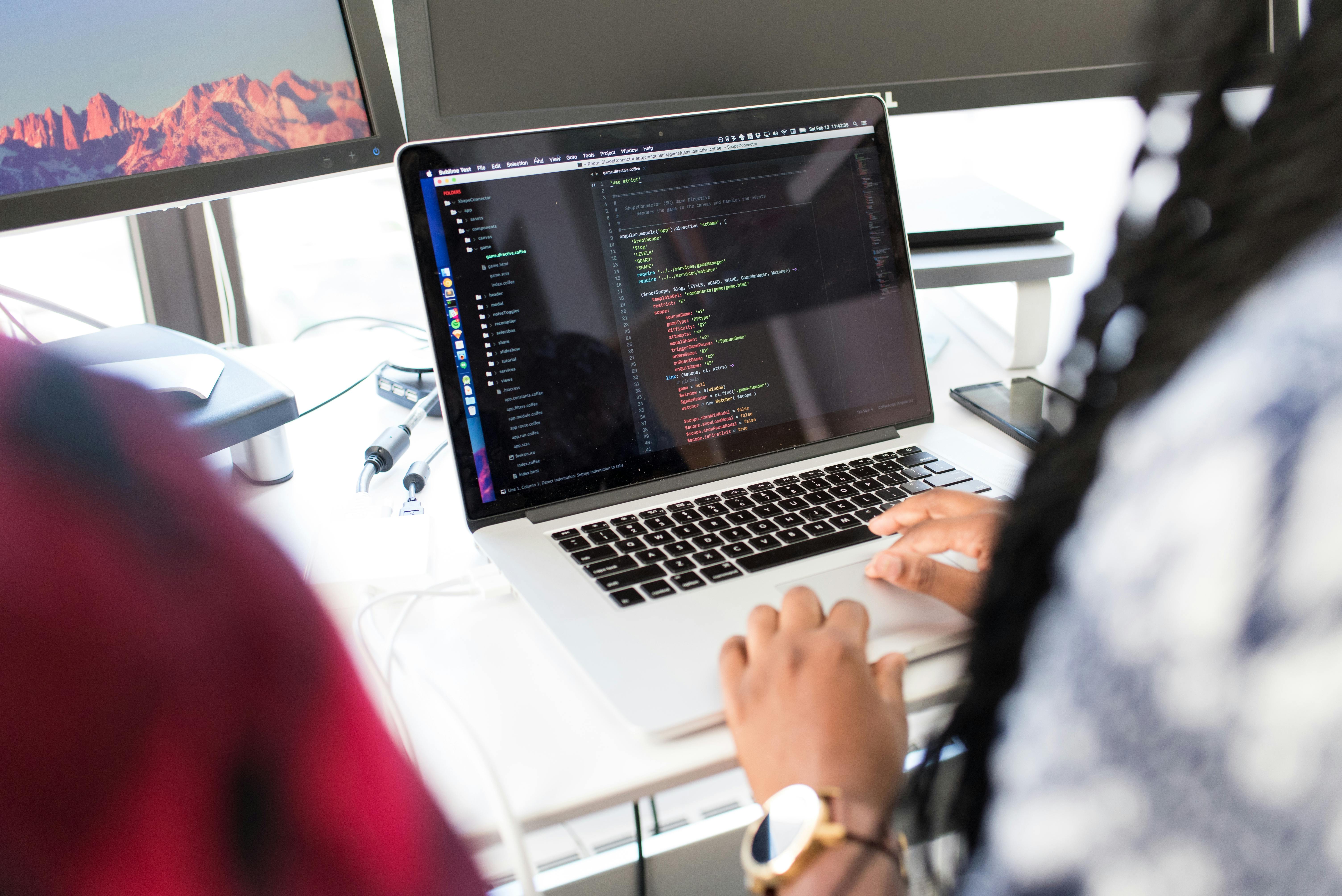
Developer environment where AI-enabled software is built and tested. Image credit: Pexels / Christina Morillo.
Does an AI PC Change Everyday Computing?
TechRadar, Engadget, and a growing cohort of YouTube creators are stress-testing the AI PC promise in real workflows. The consensus so far: some benefits are subtle but addictive, others are still emerging.
Everyday Use Cases
Early adopters report noticeable changes in tasks such as:
- Search and organization: semantic search across local files, emails, and notes—“find the PDF where we discussed Q3 pricing.”
- Communication: real-time meeting transcription and translation, automatic call summaries, and smarter email triage.
- Creative work: AI B-roll suggestions in video editing, AI-assisted mastering in music production, quick masking and object removal in photo tools.
Creator and Developer Workflows
Content creators on YouTube demonstrate side-by-side renders where machines equipped with NPUs offload AI effects from the GPU, freeing both time and thermal headroom. Similarly, developers are benchmarking:
- Local code completion and refactoring via language models running on-device.
- Offline documentation search, powered by embeddings stored locally.
- Privacy-preserving log analysis, where sensitive telemetry never leaves the laptop.
“Once your laptop can summarize a 100-page spec in seconds without touching the cloud, it’s hard to go back.” — Various developer reviews on YouTube’s AI PC benchmark videos
Technology: How NPUs and Custom Chips Accelerate AI
Under the hood, most of these accelerators are optimized for the same patterns: dense matrix multiplication, convolution operations, and low-precision arithmetic (INT8, FP16, sometimes even 4-bit formats).
Key Architectural Elements
- Matrix units / tensor cores that perform many multiply–accumulate operations in a single clock cycle.
- On-chip SRAM buffers to keep weights and activations close to the compute units, reducing power-hungry memory traffic.
- Specialized dataflows that schedule operations to maximize reuse of data in caches.
These design choices matter more as models shrink and quantize. A 7–13B parameter language model, trimmed and quantized, can run acceptably on a laptop-class NPU when carefully optimized.
On-Device vs. Cloud Inference
The AI PC era is not about replacing the cloud, but about splitting workloads intelligently:
- Local inference for latency-sensitive, privacy-critical, or smaller models.
- Cloud offload for large frontier models, heavy fine-tuning, or collaborative workloads.
- Hybrid modes where a local model filters or pre-processes data before a call to the cloud.
This division is central to battery life and user experience. It’s also why NPUs are becoming table stakes: they enable the OS scheduler to juggle AI tasks without crushing CPU responsiveness or GPU thermals.
Scientific and Industry Significance
From a broader science-and-technology perspective, AI PCs and custom silicon mark a shift from centralized AI to a distributed intelligence fabric that extends from data centers to edge devices.
Decentralized AI and Edge Computing
Placing capable models at the edge (laptops, tablets, phones) has several implications:
- Reduced latency for human–computer interaction, crucial for assistive technologies and accessibility.
- Bandwidth savings by avoiding constant uplink of raw audio, video, or sensor data.
- Greater resilience when cloud connectivity is poor or intermittent.
Research communities working on arXiv and similar platforms are publishing a steady stream of papers on model compression, quantization, and edge inference that directly feed into commercial AI PC capabilities.
Human–Computer Interaction (HCI)
As personal devices gain capabilities that previously required server clusters, HCI research is pivoting toward:
- Conversational interfaces that feel less like chatbots and more like collaborative partners.
- Contextual computing where the PC infers user intent from documents, history, and environment—ideally with transparent controls.
- Assistive technology for users with disabilities, from real-time captioning to intelligent screen readers.
“The most profound technologies are those that disappear. AI, when run locally and seamlessly, has the potential to become that kind of invisible helper.” — Paraphrased from Mark Weiser, pioneer of ubiquitous computing
Key Milestones in the AI PC Evolution
The current wave did not emerge overnight. Several milestones paved the way for AI PCs:
- 2010s: GPU compute revolution — General-purpose GPU programming and deep learning frameworks normalized hardware acceleration for ML.
- Mid-2010s: Mobile NPUs — Apple, Huawei, and others shipped early NPUs in smartphones, proving the value of dedicated ML accelerators.
- 2020–2022: Apple M-series — The first Apple Silicon Macs demonstrated what tightly integrated SoCs could do for laptops.
- 2023 onward: Copilot+ PCs and Ryzen AI laptops — Microsoft, Intel, AMD, and Qualcomm aligned around NPU performance targets and AI-first marketing.
Each step advanced the idea that general-purpose CPUs alone are no longer enough for modern workloads.

Close-up of circuit board and processor, symbolizing advances in custom silicon. Image credit: Pexels / Tookapic.
Privacy, Security, and Governance Challenges
Running AI locally often improves privacy by reducing cloud dependence—but it also changes the threat model.
Security Risks of On-Device Models
Enterprise IT teams worry about:
- Model and data theft if a laptop with locally cached models and embeddings is stolen or compromised.
- Malware leveraging NPUs to obfuscate activities or accelerate password cracking and other attacks.
- Shadow AI, where employees run unapproved local models on corporate endpoints.
Policy and Management Responses
In response, organizations are exploring:
- Hardware-backed encryption (e.g., TPMs, Secure Enclaves) for model weights and sensitive embeddings.
- Endpoint management policies that govern which AI tools can run on corporate machines.
- Auditing and logging of AI-assisted actions for compliance, while respecting user privacy.
Regulators are also taking note, with evolving guidance on AI transparency, data handling, and user consent—all of which apply as much to local inference as to cloud services.
The Next Hardware Upgrade Cycle
Tech press widely frames AI PCs as the first compelling PC upgrade story since SSDs and high-refresh, high-resolution displays. But will users actually upgrade en masse?
Why This Upgrade Cycle Is Different
Several factors may push both consumers and enterprises:
- Software baselines rising — Future OS releases and productivity suites may assume NPU availability for core features.
- Battery and thermals — Even non-AI tasks benefit from more efficient silicon, leading to longer-lived, quieter laptops.
- Competitive pressure — Organizations that adopt AI-enhanced workflows early might see productivity gains others can’t easily match with older hardware.
Buyer’s Checklist for an AI PC
For users considering an AI PC in the next 12–24 months, key questions include:
- Does the processor include a modern NPU that meets or exceeds current OS vendor recommendations?
- Is the device certified or optimized for major AI workloads you care about (creative apps, coding tools, etc.)?
- How does it perform on battery under sustained AI tasks, not just benchmarks?
- Can security teams manage and monitor AI features appropriately in your environment?
Practical Buying Guide and Recommended Hardware
If you are evaluating AI-ready hardware today, it is worth looking at systems that combine strong CPUs, capable NPUs, and good thermals.
Representative AI-Ready Laptops
Examples of systems that reviewers frequently highlight for AI workloads include:
- Apple MacBook Air with M2 or M3 — Excellent performance-per-watt and strong Neural Engine support for macOS-native AI workflows. See, for instance, the 13" MacBook Air with M2 on Amazon: Apple MacBook Air Laptop with M2 chip.
- Windows laptops with Intel Core Ultra or AMD Ryzen AI — Models branded around Copilot+ or “AI PC” often meet Microsoft’s NPU performance thresholds, providing smoother local AI experiences.
- ARM-based Windows laptops with Snapdragon X series — Designed for long battery life and constant connectivity, increasingly competitive in AI benchmarks as native app support grows.
When reading reviews on sites like The Verge or TechRadar, pay close attention to AI-specific tests: local transcription, video effects, and any measurements of NPU utilization under real workloads.
Looking Ahead: Where AI PCs and Custom Silicon Are Headed
Over the next few years, several trends are likely:
- More specialized accelerators on consumer devices, including dedicated blocks for video AI, sensor fusion, and cryptography.
- Standardized AI benchmarks that go beyond TOPS and measure real-world latency, quality, and energy usage.
- Smarter orchestration between cloud and edge, where device-resident models cooperate with larger server-side models.
- Greater regulatory scrutiny of on-device AI features, consent flows, and data retention policies.
As this happens, the definition of a “PC” will stretch—encompassing not just laptops and desktops, but also tablets, extended-reality headsets, and emerging device categories that share the same AI-first architecture.
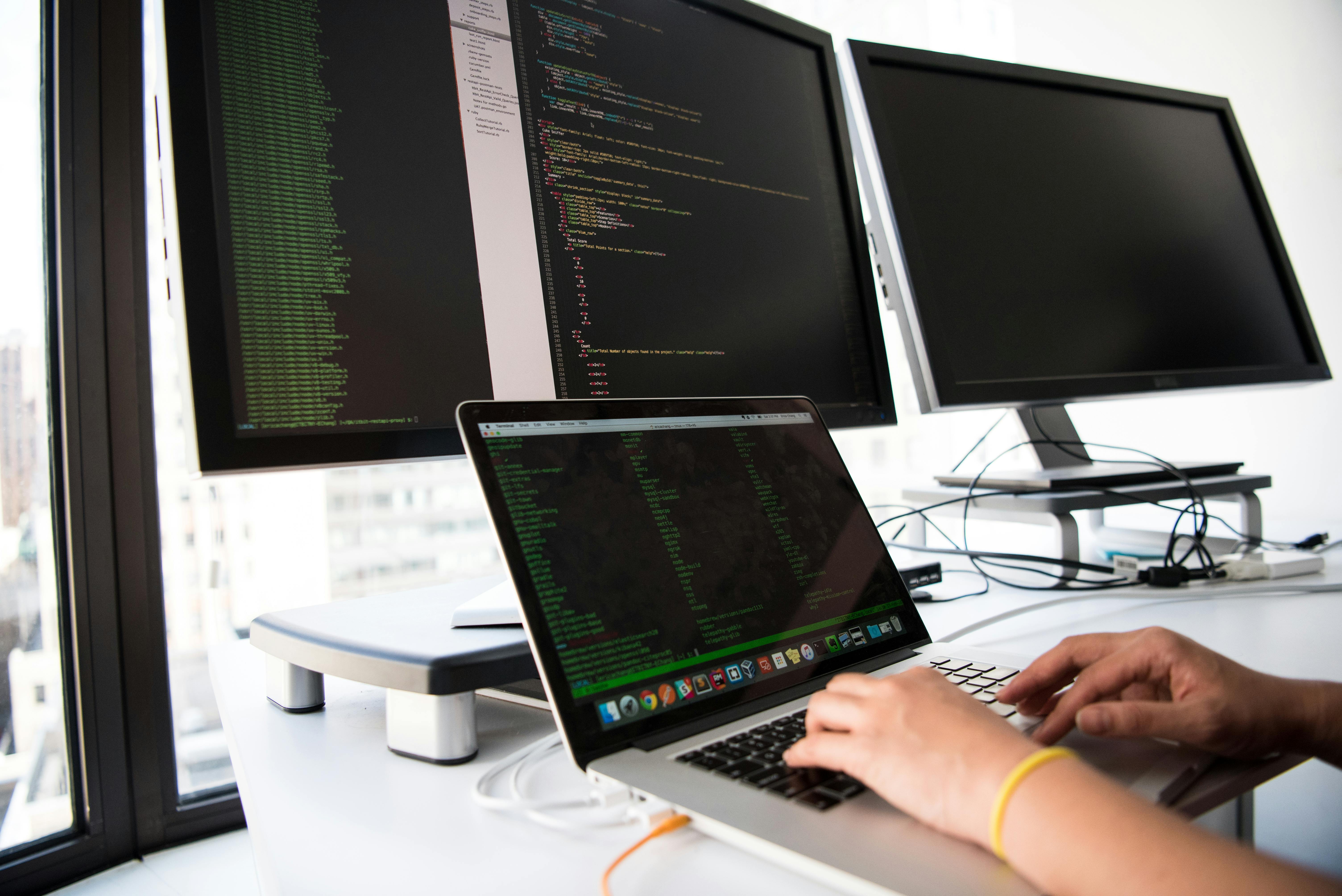
The future of personal computing blends AI across phones, laptops, and new device categories. Image credit: Pexels / Christina Morillo.
Conclusion: Beyond the Buzzword
The term “AI PC” may be a marketing construct, and critics are right that PCs have run machine learning workloads for years. Yet beneath the buzzword lies a substantive architectural shift: custom silicon with dedicated NPUs, operating systems tuned for AI, and a software ecosystem that increasingly assumes local intelligence as a core capability.
Whether this translates into a massive, sustained hardware upgrade wave will depend on how quickly everyday experiences truly improve—and how well vendors handle privacy, security, and openness. For technically minded buyers, the best strategy is to look past the label and evaluate the fundamentals: NPU capability, power efficiency, ecosystem fit, and long-term support.
In the coming decade, the most “personal” aspect of your personal computer may be its ability to understand your context, respect your data, and help you think more clearly—all powered by silicon you carry with you every day.
Additional Resources and Further Reading
To dive deeper into AI PCs, custom silicon, and on-device AI, consider the following:
- AnandTech coverage of AI accelerators and NPUs — in-depth technical analysis of chips from Intel, AMD, Qualcomm, and Apple.
- Microsoft’s Windows Copilot and AI PC documentation — official overview of AI integration in Windows.
- Apple Machine Learning resources — technical guidance on using the Neural Engine via Core ML.
- Google AI Blog — research and engineering posts that often discuss edge and on-device AI.
- YouTube AI PC benchmark playlists — real-world comparisons of AI workflows on different hardware.
References / Sources
Selected sources for the discussion above include:
- Engadget: AI PC coverage
- TechRadar: AI PC news and reviews
- Ars Technica: PC hardware and Apple Silicon analysis
- The Verge: Tech and PC hardware reporting
- Intel: Core Ultra and NPU product pages
- AMD: Ryzen AI processors
- Qualcomm: Snapdragon platforms for laptops
- Apple Newsroom: M-series announcements
- arXiv: Edge inference and quantization papers
