
Right-to-Repair Revolution: How Repairability Scores Are Ending the Era of Sealed Gadgets
Mission Overview: Why Right-to-Repair Matters Now
Right-to-repair has become a defining issue in how we design, buy, and live with technology. Once dominated by a small circle of activists and independent repair shops, the topic now appears regularly in outlets like Ars Technica, Wired, and The Verge.
At stake is a simple but powerful question: when you buy a gadget, do you truly own it—or are you renting its functionality on the manufacturer’s terms? New regulations in the European Union and multiple U.S. states, growing pressure from sustainability goals, and a wave of social-media teardowns are challenging the long-dominant model of thin, sealed, and disposable devices.
“If you can’t fix it, you don’t own it.” — Kyle Wiens, co-founder of iFixit
At the same time, manufacturers are experimenting with self-service repair portals, modular product lines, and official parts programs—while still relying on software locks, glued assemblies, and calibration tools that can keep independent repair just out of reach.
Mission Overview: The Regulatory Shift Toward Repairability
Over the last few years, right-to-repair has gone from a patchwork of local campaigns to a coordinated global policy movement. Legislators now see repairability as central to consumer protection, competition policy, and climate strategy.
Key Laws and Policy Milestones (EU, US, and Beyond)
- European Union: The EU has steadily expanded Ecodesign and circular-economy rules to require spare parts availability, standardized fasteners, and documentation for categories including household appliances, TVs, and certain electronics. In 2024–2025, the EU advanced a dedicated Right to Repair initiative aimed at making repair the default option.
- United States (Federal): The White House and the Federal Trade Commission have signaled support for right-to-repair, with the FTC publishing a report on manufacturer-imposed repair restrictions and pursuing enforcement against deceptive practices.
- United States (State-level): States including New York, Minnesota, Colorado, and California have passed varying forms of right-to-repair bills, covering consumer electronics, powered wheelchairs, farm equipment, and more. These laws typically require manufacturers to supply parts, tools, and documentation to consumers and independent repairers on fair and reasonable terms.
- Global Momentum: Countries such as Australia and Canada are actively debating similar measures, while international organizations tie repairability to extended producer responsibility and e‑waste reduction targets.
Policy journalists at outlets like The Verge and Wired have emphasized that these rules do more than tweak warranty obligations; they often force a fundamental rethink of internal layouts, bonding methods, and software architectures that were optimized around sealed manufacturing and short product cycles.
Technology: How Design Choices Shape Repairability
Repairability is not just a policy question; it is fundamentally an engineering and product-design problem. Every choice—screws versus glue, modular boards versus monolithic system-on-modules, user-replaceable batteries versus internal pouches—affects both serviceability and performance.
From Screws and Clips to Glue and Welds
Teardown videos and iFixit guides have made once-invisible design trends highly visible. Older laptops and phones often used:
- Standardized screws (Phillips or Torx sizes)
- Removable back covers and batteries
- Discrete daughterboards for ports, buttons, and radios
By contrast, many modern devices rely on:
- Glued or laser-welded glass assemblies
- Heavily integrated mainboards with soldered storage and RAM
- “Pancake” internal stacking that minimizes thickness but complicates disassembly
“Integration can improve performance and reliability, but it also concentrates failure modes and makes single-component repair nearly impossible.” — iFixit teardown commentary
Software Locks, Parts Pairing, and Calibration
Beyond physical construction, modern electronics rely on extensive firmware and cloud connectivity. This has created new classes of repair barriers:
- Parts pairing: Critical components such as displays, batteries, and biometric sensors (fingerprint readers, Face ID modules) may be cryptographically paired to a specific logic board. Swapping in an otherwise compatible part can trigger warnings, disable features, or degrade performance unless a proprietary calibration tool is used.
- Cloud activation and region locking: Some products require cloud-based activation after repair. If access is restricted to authorized centers, independent shops are effectively locked out.
- Diagnostic tool access: Manufacturer-only diagnostic suites can be necessary to clear error codes, reset security flags, or validate safety functions after component replacement.
Engineers on forums like Hacker News regularly debate to what extent these mechanisms are justified by security, safety, or regulatory requirements versus being primarily business controls that constrain competition in repair markets.
Repairability Scores: Turning Teardowns into Buying Criteria
One of the most important cultural shifts has been the normalization of repairability scores in mainstream reviews. Websites and regulators increasingly treat repairability as a measurable, comparable attribute—much like performance, battery life, or camera quality.
iFixit and the Rise of Public Teardowns
iFixit popularized the now-familiar 0–10 scale that rates devices on how easy they are to open, diagnose, and fix. Factors include:
- Ease of opening without damage
- Availability and standardization of fasteners
- Modularity of key components (battery, screen, ports, cameras)
- Availability of official manuals and parts
- Use of adhesives vs. mechanical connectors
French regulations have gone further by requiring an official Indice de réparabilité label for some product categories, displayed at the point of sale to help consumers factor repairability into purchasing decisions.
How Consumers and Enterprises Use Repairability Scores
For individual buyers, a repairability score can:
- Signal whether a cracked screen or dead battery will be affordable to fix
- Influence resale value—repairable devices often hold value longer
- Align with environmental values by reducing expected e‑waste
For enterprises and public-sector buyers managing fleets of laptops, tablets, or specialized equipment, scores and serviceability metrics contribute to:
- Total cost of ownership models
- Procurement standards that include repair, support, and parts-availability commitments
- Compliance with internal sustainability or ESG frameworks
Visualizing the Shift: Teardowns, Tools, and Repair Culture
Right-to-repair’s rise has been highly visual, fueled by YouTube teardown channels and TikTok clips that make the guts of gadgets mainstream entertainment.

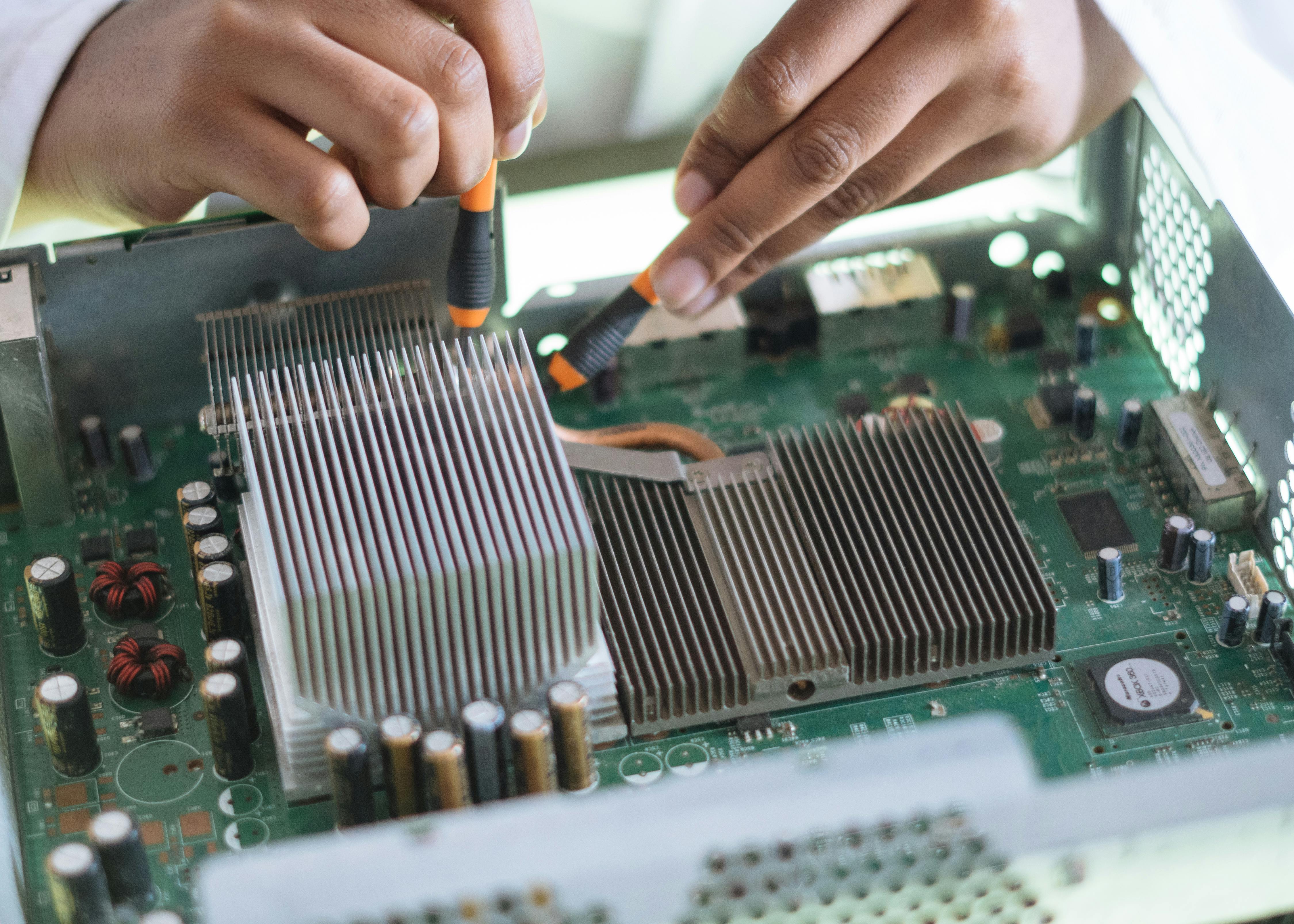

Channels like JerryRigEverything and Strange Parts, along with iFixit’s own YouTube presence, have helped normalize the idea that opening a device to understand or repair it is not only possible but empowering.
Manufacturer Self-Service Repair Programs
In response to regulatory pressure and public scrutiny, many major brands have launched “self-service” or “DIY” repair programs. These programs vary significantly in scope and usability.
Common Elements of Self-Service Programs
- Official parts available for purchase by consumers or independent shops
- Rental or sale of manufacturer-approved tools and jigs
- Online repair manuals or step-by-step guides
- Software utilities for component pairing or calibration (sometimes limited to authorized partners)
Coverage by outlets like Ars Technica and TechRadar has highlighted mixed results. While these programs mark a philosophical shift away from strictly closed ecosystems, they can still impose:
- High part prices that make repair uneconomical compared to replacement
- Complex, risk-laden procedures that intimidate average users
- Software locks that require online authorization even when genuine parts are used
“Self-service is a good headline, but the test is whether an out-of-warranty customer can realistically afford and complete a repair without feeling punished for trying.” — Paraphrased from tech policy commentary
Nonetheless, the existence of these programs creates valuable legal and cultural precedent: they acknowledge that users have a legitimate expectation to fix what they own.
Scientific Significance: Repairability, E‑Waste, and Lifecycle Emissions
From a sustainability and systems-engineering perspective, right-to-repair is tightly linked to lifecycle analysis, circular economy models, and climate targets.
Lifecycle Carbon and Resource Intensity
Multiple studies, including analyses summarized by the International Energy Agency and the European Commission’s science services, show:
- A substantial share of a device’s total carbon footprint is embedded in manufacturing and logistics rather than use-phase electricity.
- Extending the average life of smartphones and laptops by just one or two years can materially reduce sector-wide emissions and raw-material demand.
- Critical minerals such as cobalt, lithium, and rare earths are concentrated in complex global supply chains with geopolitical and environmental risks.
Repairability directly improves the functional lifetime of existing hardware, delaying the need for new production and helping meet circular-economy objectives.
Repair, Reuse, and the Circular Economy
Repair sits near the top of the waste hierarchy, above recycling. A fully circular electronics ecosystem emphasizes:
- Design for durability and repairability (robust housings, modular components, clear documentation).
- Refurbishment and reuse (second-hand markets, certified refurbishers, donation programs).
- Material recovery only once repair and reuse are no longer viable.
Increasingly, ESG frameworks and corporate sustainability reports include metrics around repair, refurbishment, and take-back schemes, making repairability a board-level concern rather than a niche technical detail.
Milestones: How We Got to the Edge of the “End of Sealed Gadgets”
The story of right-to-repair over the past decade can be understood through several key milestones in law, media, and market behavior.
Timeline of Pivotal Developments
- Early 2010s: Grassroots repair groups, iFixit teardowns, and maker communities popularize the idea that consumer electronics can be safely opened and repaired.
- Mid–late 2010s: Advocacy extends from farm equipment (notably tractors) and medical devices to smartphones and laptops. High-profile disputes around diagnostic access and software locks reach mainstream outlets.
- 2020–2023: EU Ecodesign rules expand, France introduces repairability labeling, and multiple U.S. states pass targeted right-to-repair bills.
- 2023–2025: Big-name manufacturers launch or expand self-service repair programs. Tech reviewers begin including repairability as a core review criterion.
- Today: Major procurement frameworks, institutional investors, and climate strategies treat reparability and product lifetime as strategic levers for emissions reduction and cost control.
Each step has moved the Overton window—from seeing sealed, disposable electronics as inevitable, to seeing them as design choices that can be regulated, shamed, or out-competed.
Challenges: Security, Safety, Economics, and Engineering Trade-offs
Making devices more repairable is not as simple as mandating screws instead of glue. There are real trade-offs and constraints that engineers, policymakers, and advocates must navigate.
Security and Privacy Concerns
Many systems, especially those handling biometric data and payments, must withstand sophisticated attacks. Manufacturers argue that:
- Limiting parts pairing and calibration tools reduces the attack surface for hardware-based exploits.
- Restricting access to secure enclaves and bootloaders helps prevent compromised components from undermining encryption or authentication.
Advocates counter that:
- Security through obscurity is fragile; transparent, audited designs can be both repairable and secure.
- Well-defined security domains (for example, secure elements on separate modules) can be preserved even when other components are modular and user-replaceable.
Safety, Liability, and Compliance
Devices handling high voltages, medical functions, or safety-critical operations (e-bikes, EVs, medical implants, industrial controllers) face:
- Regulatory certification requirements that assume specific hardware configurations and assembly procedures.
- Liability concerns if user modifications or poorly executed repairs lead to failure or injury.
Thoughtful right-to-repair regulation is beginning to distinguish between consumer electronics and more tightly regulated domains, while still pressing manufacturers to avoid unnecessary restrictions.
Economic and Supply-Chain Realities
On the manufacturing side, there are legitimate cost and complexity challenges:
- Stocking spare parts for many years ties up capital and warehouse space.
- Designing modular systems can increase bill of materials (BOM) cost and assembly steps.
- Global supply chains must be resilient enough to keep parts available even when primary product lines move on to new generations.
That said, new business models—subscription maintenance, certified refurbishment, and trade‑in ecosystems—can offset these costs by creating recurring revenue and deepening customer loyalty.
Practical Guidance: Choosing and Maintaining Repairable Devices
For consumers and IT decision-makers, repairability is increasingly actionable at the point of purchase and during ownership.
Before You Buy: What to Look For
- Published repairability scores: Check iFixit, manufacturer documentation, and—where applicable—official labels like the French repairability index.
- Spare parts availability: Confirm that batteries, screens, and keyboards are available at reasonable prices.
- Modular design claims: Some manufacturers explicitly market modular laptops or phones; verify independent reviews to ensure the claims hold up.
- Warranty and repair policy: Look for brands that do not void warranties simply because a device was opened for inspection or simple repairs.
For example, modular or business-focused laptops often feature user-replaceable RAM, SSDs, and batteries, and some brands provide downloadable service manuals.
Tools and Skills for DIY Repairs
If you plan to perform basic repairs yourself, a few high-quality tools dramatically increase your success rate and reduce the chance of damage:
- A precision screwdriver set with multiple bit types (Torx, Pentalobe, tri-point)
- Plastic opening picks and spudgers to avoid scratching or shorting components
- A good-quality ESD-safe work mat and tweezers
- Optionally, a heat gun or iOpener-style heating pack for safely loosening adhesives
Well-reviewed toolkits such as the iFixit Moray Precision Bit Set or the iFixit Pro Tech Toolkit are popular among repair professionals and hobbyists in the U.S., and are designed specifically for modern electronics.
Always consult step-by-step guides (for example, on iFixit or manufacturer portals) and read them fully before beginning. Many failures occur not from the difficulty of the repair, but from surprises mid-process.
The Future: Toward Truly Sustainable, Repairable Tech
Looking ahead, several trends suggest that the end of the most aggressively sealed gadget designs may be in sight—at least for some segments.
Emerging Design Paradigms
- Modular platforms: Laptops and some phones that use interchangeable modules for ports, cameras, storage, and even processors, enabling both repair and upgrade.
- Service-first industrial design: Products whose external form factor and internal layout are co-designed with repair steps in mind, often in collaboration with repair communities.
- Smart diagnostics: Devices that provide clear, on-device diagnostics and repair instructions rather than vague error codes.
Policy and Market Feedback Loops
As regulations tighten and consumers vote with their wallets, manufacturers that embrace repairability can benefit from:
- Extended product lifecycles with recurring service and accessory revenue
- Stronger brand loyalty and differentiation in crowded markets
- Better alignment with government and enterprise procurement criteria
“Designing for repair is not about nostalgia for old gadgets; it’s a systems-level optimization problem that spans climate, supply chains, and user trust.” — A common theme in hardware engineering discussions on LinkedIn
The remaining question is not whether repairability will matter, but how quickly the ecosystem—from chip design to operating systems to logistics—can adapt.
Additional Resources and Ways to Get Involved
If you want to go deeper or take action beyond your own purchases, several organizations and content creators provide high-quality information and advocacy tools.
- iFixit Right to Repair Hub — Guides, teardowns, and policy updates.
- Right to Repair Europe — European coalition tracking legislation and organizing campaigns.
- Beginner Electronics Repair Playlists on YouTube — Learn basic soldering, diagnostics, and safety.
- Repair Café — A global network of community events where volunteers help fix everyday items.
Following prominent voices—such as iFixit’s Kyle Wiens, policy researchers at organizations like the U.S. PIRG, and investigative reporters at Wired and The Verge—can keep you current as legislation and corporate strategies evolve.
Conclusion
Right-to-repair, repairability scores, and the growing backlash against sealed, disposable gadgets represent more than a consumer-rights skirmish. They form a central front in rethinking how technology fits into our economies, our climate targets, and our daily lives.
As regulatory frameworks mature and repair culture continues to spread through social media and local communities, manufacturers face a clear choice: double down on locked-down ecosystems, or embrace repairability as a source of resilience, loyalty, and long-term value. For users, the power lies in both legislation and everyday purchasing decisions. Choosing repairable devices, supporting transparent brands, and sharing repair knowledge moves the market toward a future in which “end of life” is defined by physics and creativity—not arbitrary software locks or glued seams.
References / Sources
- iFixit – Teardowns and Repairability Scores
- European Commission – Right to Repair Initiative
- Wired – Right-to-Repair Coverage
- The Verge – Right-to-Repair News
- U.S. Federal Trade Commission – Right to Repair Resources
- International Energy Agency – Digitalisation and Energy Report
- Right to Repair Europe – Policy and Campaigns
