Mystery No More: How Freida McFadden Finally Unmasked The Housemaid’s Best-Selling Author
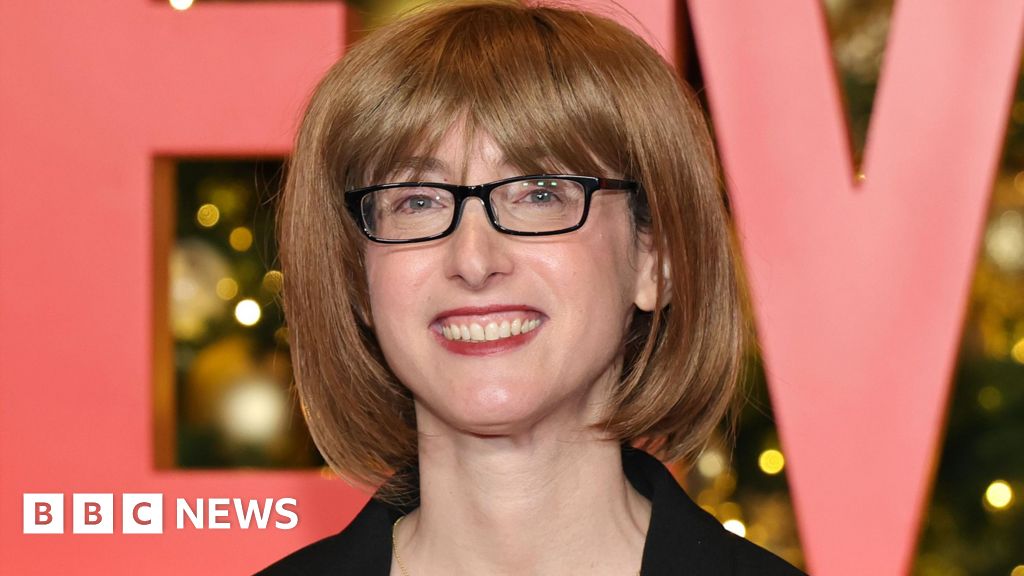
For years, one of publishing’s biggest whodunits wasn’t inside the pages of a thriller but on the cover: who exactly was Freida McFadden, the best-selling author behind The Housemaid? Now, after dominating charts, BookTok feeds, and airport bookshops worldwide, the elusive writer has finally revealed her true identity—confirming she’s a practicing physician who’s been secretly running a parallel life as a blockbuster thriller novelist.
The Secret Life of Freida McFadden: How a Doctor Became a Best-Selling Thriller Phenomenon
In a BBC interview, McFadden explained why she guarded her real name so closely, especially around colleagues and patients:
“At work, I want to be a doctor. A lot of my books have medical stuff in them, and I don't want people saying, ‘Is this based on me?’ It feels unprofessional.”
That tension—between professional duty and creative freedom—sits at the heart of McFadden’s story, and it helps explain not just her anonymity, but the edge that’s made The Housemaid and its sequels addictive to so many readers.
From Anonymous Thriller Writer to Global Best-Seller
Before she became a household name in psychological thrillers, McFadden was part of a broader wave of indie and hybrid authors quietly building empires outside traditional publicity machines. Her breakout novel, The Housemaid, slipped into the cultural bloodstream the way so many twenty-first century hits now do: through algorithms and word of mouth, not glossy book tours.
The book’s blend of domestic suspense, claustrophobic setting, and twist-heavy plotting put it squarely in the lineage of hits like Gone Girl and The Girl on the Train, but with a distinctly pulpier, more bingeable energy. It quickly climbed best-seller lists, fueled heavily by:
- BookTok recommendations and viral spoiler-free reaction videos
- Kindle and e-book discounts that turned it into a digital impulse buy
- Library waitlists and book club chatter looking for “one more twisty read”
- Its accessible, pacey prose that made it ideal for casual and heavy readers alike
That popularity made the author’s anonymity feel like an old-school literary mystery in an era when most writers are expected to live online as much as on the page.
Why Freida McFadden Stayed Anonymous: Ethics, Privacy, and the Day Job
McFadden’s decision to keep her real name under wraps wasn’t just a marketing gimmick; it was about professional boundaries. As a physician, she operates in a world governed by strict ethics, confidentiality, and patient trust. Writing fiction—even loosely inspired by medical scenarios—could easily blur lines in the eyes of colleagues or patients.
Her comment about things “feeling unprofessional” hits on an anxiety many professionals share in the social-media era: what happens when your side passion becomes massively visible? For McFadden, anonymity was a way to:
- Protect patient privacy and avoid assumptions about real-life inspirations
- Maintain credibility in a demanding medical specialty
- Preserve a private life separate from parasocial fan relationships
- Write more freely about dark or ethically fraught situations
Culturally, it also places her in a lineage of writers with double lives—think T.S. Eliot the banker, Agatha Christie the pharmacist, or, more recently, Mallory Blackman and Michael Crichton, who also mined medical knowledge for gripping fiction.
Inside The Housemaid: Why This Psychological Thriller Hit So Hard
At its core, The Housemaid is a classic locked-in thriller: a woman takes a live-in job with a wealthy family, only to realize the real danger is inside the house. It plays on class tension, power imbalances, and the unreliable nature of domestic bliss—themes that have long powered the “domestic noir” subgenre.
What sets McFadden’s take apart isn’t radical innovation so much as high-efficiency storytelling:
- Short, bingeable chapters: Structurally, the book mirrors streaming TV episodes, each ending on a hook that begs “just one more.”
- Relatably messy protagonists: Her leads are flawed, occasionally infuriating, but emotionally legible—ideal for readers who like yelling at characters in the best way.
- Twists that feel cinematic: This is the kind of thriller you can easily imagine as a limited series on Netflix or BBC One, which only fuels its shareability.
- Lean, accessible prose: The writing isn’t ornate; it’s engineered for momentum, which makes it work across age groups and reading levels.
Critical reaction has been mixed in a way that’s almost a badge of honor for commercial thrillers. Some reviewers call the twists “implausible but wildly entertaining,” while others praise the book’s unpretentious commitment to pure suspense over literary refinement. In other words: precisely what many readers are craving after a long day.

When Medicine Meets Mystery: How Her Day Job Shapes Her Fiction
McFadden’s background in medicine quietly permeates her storytelling. Many of her books weave in hospitals, diagnoses, or bodily vulnerability—not in a technical, textbook way, but as engines for fear and tension. Readers may not always clock it, but a doctor’s eye for the fragility of the human body amps up the stakes in even domestic scenarios.
This crossover isn’t unique—Michael Crichton, Tess Gerritsen, and even Robin Cook paved the way—but McFadden’s thrillers occupy a different cultural space: more mass-market, digital-first, and shaped by online fandoms rather than network TV adaptations (at least for now).
In a media moment obsessed with “authenticity,” McFadden’s clinical experience gives her license to push stories into nightmarish territory while keeping just enough plausibility to unsettle readers.

The Freida McFadden Effect: BookTok, Algorithms, and the New Thriller Economy
McFadden’s rise is also a snapshot of how the book industry works in the 2020s. Instead of a slow burn through traditional reviews and broadsheets, a single viral TikTok reaction can spike sales overnight. The Housemaid and its follow-ups have thrived in that environment—short, punchy, and easy to pitch in a fifteen-second video.
The industrial mechanics behind her success include:
- Digital-first reading habits: High Kindle and audiobook adoption make suspense fiction a constant companion on commutes and chores.
- Streaming-era storytelling: Readers trained on twist-heavy shows gravitate toward books that deliver similar cliffhangers.
- Community validation: Online reading communities function as live recommendation engines, boosting certain titles in waves.

Strengths and Weaknesses: A Balanced Look at Freida McFadden’s Work
McFadden’s growing catalogue has drawn a passionate fanbase and a fair share of critics. Evaluated as commercial genre fiction, her strengths are clear but so are her trade-offs.
What She Does Especially Well
- Relentless pacing: Few contemporary thriller writers understand cliffhangers as intuitively.
- High-concept hooks: Her premises are easy to summarize and immediately intriguing.
- Reader-first storytelling: She writes with entertainment as the primary goal, not literary prestige.
- Atmosphere of dread: Confined domestic spaces and power imbalances are exploited with precision.
Where the Criticism Lands
- Some twists stretch plausibility for readers who prefer subtler plotting.
- Characters can feel archetypal rather than deeply psychological.
- Prose style is straightforward rather than stylistically distinctive.
But those criticisms come with a caveat: they’re often voiced by readers looking for literary fiction inside a clearly commercial package. Judged on its own terms—as fast, dark entertainment—McFadden’s work largely delivers what it promises.

What Freida McFadden’s Reveal Means for Her Future—and for Thrillers
Now that Freida McFadden’s true identity is public, the questions shift from “Who is she?” to “What comes next?” With her profile raised by outlets like the BBC, the odds of more mainstream recognition—and likely screen adaptations of The Housemaid universe—only increase.
The reveal also spotlights a larger cultural shift: creatives with demanding “day jobs” are no longer niche curiosities but central players in how genre fiction evolves. McFadden’s dual identity as doctor and best-seller suggests a future in which expertise from medicine, law, tech, and beyond increasingly shapes the stories that dominate trend lists and streaming queues.
In the end, the unmasking doesn’t puncture the spell of The Housemaid; it deepens it. Knowing that the woman orchestrating these nightmare scenarios spends her days trying to heal people only adds another layer of irony—and intrigue—to one of the thriller world’s most unlikely success stories.