
Jelly Roll Powerbombs Into WrestleMania History With Wild Pat McAfee Table Spot
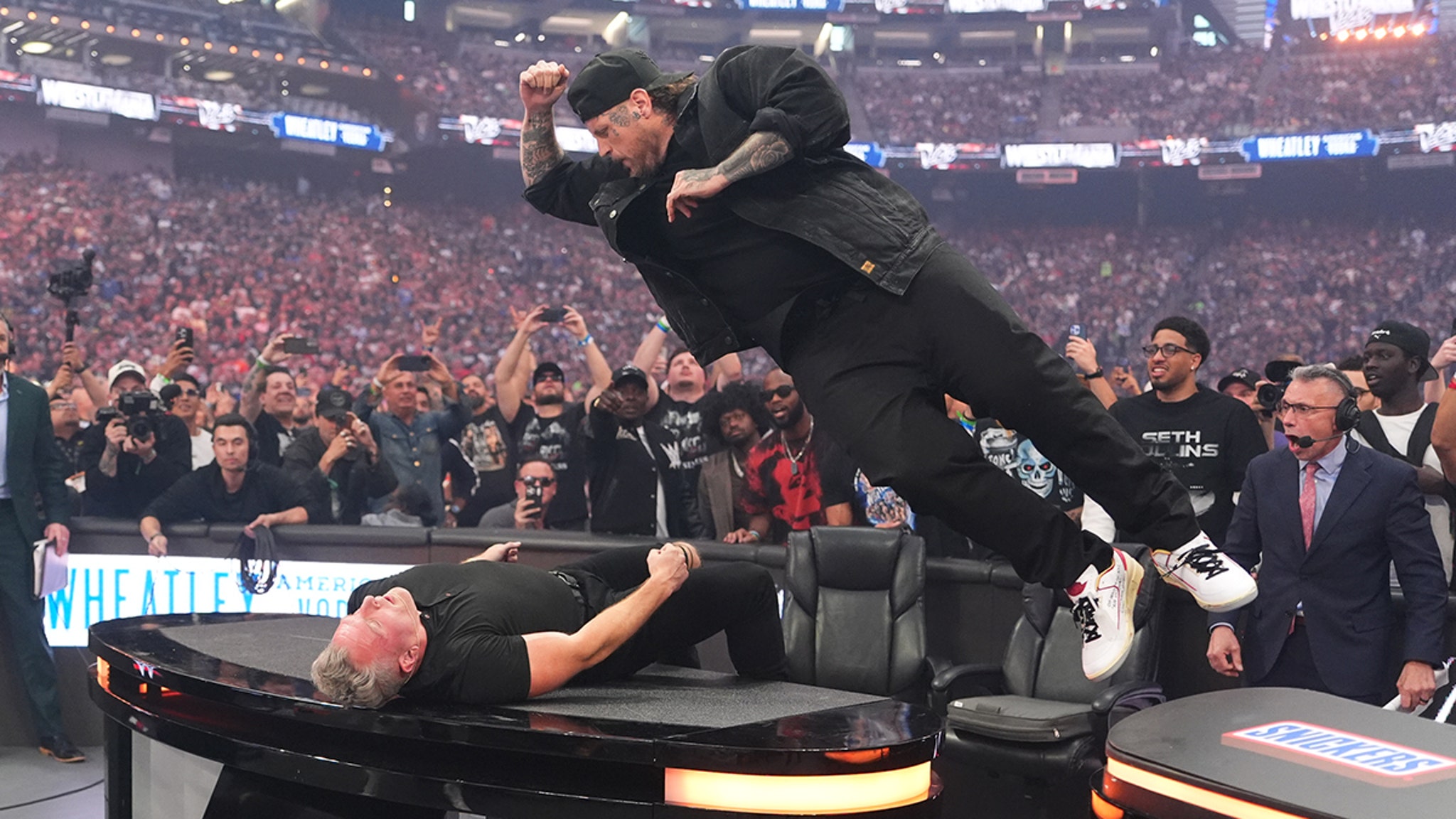
Jelly Roll shocked WWE fans at WrestleMania 42 by smashing Pat McAfee through the announcers table during the main event, turning a celebrity cameo into a full-on sports‑entertainment moment that blurred the line between country stardom and pro‑wrestling chaos.
When Country Crosses the Guardrail: Jelly Roll’s WrestleMania 42 Moment
By WrestleMania standards, we’ve seen just about everything: Lawrence Taylor closing the show, Bad Bunny hitting Canadian destroyers, Logan Paul turning Frog Splashes into brand deals. But at WrestleMania 42, country‑rap star Jelly Roll added his name to that chaotic celebrity hall of fame by putting Pat McAfee through the announcers table in front of a stunned stadium crowd.
What could have been a quick, wink‑to‑the‑camera cameo turned into a fully committed table spot that had WWE fans and mainstream audiences replaying the clip on social feeds within minutes. It’s the kind of crossover moment that says as much about modern pro wrestling as it does about Jelly Roll’s unlikely lane in pop culture.
Jelly Roll, Pat McAfee, and WWE: How We Got Here
If this clip popped on your feed out of context, it might look like a random viral stunt. In reality, it’s the collision of three major entertainment ecosystems: country music, sports media, and WWE’s ever‑evolving celebrity machine.
- Jelly Roll has spent the last few years going from Nashville curiosity to award‑show staple, turning raw, autobiographical songs into arena anthems.
- Pat McAfee, ex‑NFL punter turned sports‑talk star, has become one of WWE’s most charismatic part‑time personalities, bouncing between the commentary desk and in‑ring chaos.
- WWE has long treated WrestleMania as a cross‑promotional Super Bowl, where music, sports, and Hollywood converge under one very merch‑driven roof.
By the time WrestleMania 42 rolled around, Jelly Roll had already become a familiar face to WWE viewers, with his music popping up in hype packages and his name floating around as a potential live performer. Putting him physically in the story instead of just on the soundtrack was a logical, if still wild, next step.
The Spot: Jelly Roll Smashes Pat McAfee Through the Table
During the main event of WrestleMania 42, tensions at ringside boiled over. Jelly Roll, who had been introduced earlier in the show to a big‑fight‑feel reception, found himself in the middle of the ringside chaos with McAfee jawing in his direction.
What followed was pure sports‑entertainment spectacle: Jelly Roll grabbed McAfee and drove him through the announcers table in a carefully set‑up, but visually wild, crash. Commentary sold the moment like a truck hit the desk, the crowd popped, and social media did what social media does—looping the clip into the night.
“Jelly Roll just proved there is nothing soft about him as he just smashed Pat McAfee through the announcer’s table during the main event of WrestleMania 42.”
From a production standpoint, it’s classic WWE: a protected celebrity, a veteran performer in McAfee who knows how to absorb the impact safely, and camera cuts designed to make the move look as devastating as possible without crossing the line into genuine danger.

Why This Works: Celebrity Spots, Kayfabe, and Crossover Appeal
Celebrity matches can go sideways fast—too safe and they feel corny, too reckless and they become a PR nightmare. The Jelly Roll–McAfee spot threads that needle nicely, for a few reasons.
- Both men already play heightened versions of themselves. Jelly Roll’s public persona is part redemption story, part bar‑brawl energy. McAfee is a walking hot‑mic. Putting them in a ringside confrontation feels organic, not forced.
- WWE understands the highlight economy. A musician performing a theme song is cool. That same musician putting a commentator through a table? That’s a TikTok clip, a Twitter replay, and a day’s worth of talk‑show fodder.
- The spot respects wrestling’s internal logic. The table break doesn’t undercut the wrestlers in the main event, it enhances the feeling that “anything can happen” around the match without overshadowing the actual finish.
In other words, it’s spectacle with a point: use Jelly Roll’s physicality and real‑life toughness narrative to amplify WWE’s chaos, while giving McAfee yet another viral bump on his already stacked highlight reel.
From Nashville to the Noise: Jelly Roll’s Cultural Momentum
Jelly Roll’s presence at WrestleMania isn’t random booking; it’s the latest stop in a very modern version of stardom. His music lives in a Venn diagram of country, hip‑hop, and rock, and his fanbase cuts across demographics that WWE badly wants: country listeners, rock radio holdouts, and younger streaming audiences.
His biography—time in jail, addiction, public recovery, and a late‑career rise—maps surprisingly well onto wrestling’s classic redemption arcs. WWE has always gravitated toward stars whose real‑life narratives can be folded into kayfabe. With Jelly Roll, that story is already baked in.
So when he plants McAfee through a table, it doesn’t play like a pop star slumming it with wrestlers for a paycheck. It feels, weirdly, like something his fans might expect him to do if the night got out of hand.
WWE’s Celebrity Playbook at WrestleMania 42
WWE’s relationship with celebrity has evolved from “look who we got to show up” to “how can this appearance travel beyond the ring?” In the streaming era, the goal isn’t just popping the live crowd; it’s owning the algorithm for 24 to 48 hours.
- Authenticity sells. Jelly Roll brings a blue‑collar, rough‑around‑the‑edges image that meshes with the wrestling audience rather than talking down to it.
- Partners with platforms. McAfee’s massive digital footprint means any angle involving him gets instant amplification on YouTube and social media.
- Moments over matches. WWE knows not every casual viewer will follow a full three‑hour card, but a single outrageous moment can convert a non‑fan into a clip‑watcher—and maybe into a subscriber later.
The table spot fits that strategy perfectly: recognizable faces, one clear visual, no deep lore required. You don’t need to know the full WrestleMania card to understand “country star puts loud sports host through a table.”

What Worked — And Where It Could Have Missed
Celebrity spots are polarizing, so it’s worth breaking down the strengths and the potential drawbacks of Jelly Roll’s WrestleMania 42 appearance.
Strengths
- Commitment to the bit: Jelly Roll didn’t half‑step; he leaned into the physicality, which always earns respect from wrestling fans.
- Perfect dance partner: McAfee is trusted by both WWE and its audience to make big spots look good without overshadowing the talent.
- Replay value: One look at the clip and you understand why it dominated timelines—clean setup, big crash, huge reaction.
Potential Weaknesses
- Risk of overcrowding the main event: Too much ringside chaos can blur focus from the actual wrestlers closing the show.
- Celebrity inflation: When everyone is taking big bumps, the truly special moments can start to feel less rare.
- Short‑term over long‑term: If the angle doesn’t feed into any follow‑up storytelling, it risks being just a fun, but disposable, GIF.
Where It Ranks: Jelly Roll Among WrestleMania’s Celebrity Moments
WrestleMania history is full of non‑wrestlers taking surprisingly serious bumps. Jelly Roll’s table smash with McAfee slides into that conversation alongside some notable company.
- Bad Bunny’s high‑risk dives showed that a music star could look like a natural between the ropes.
- Logan Paul’s viral athleticism turned influencer cynicism into genuine “okay, this guy is good” respect.
- Jelly Roll’s table spot taps a different energy—less polished, more brawler—closer to the old‑school “celebrity who looks like they might actually bar‑fight you” aesthetic.
In terms of pure visual impact, that table exploding under McAfee puts the moment in the upper tier of modern Mania celebrity stunts—even if it doesn’t carry the same long‑term narrative weight as a full celebrity match.

Where to Watch and What to Queue Up Next
WWE will inevitably spotlight the Jelly Roll–McAfee table spot across its official platforms. For the full context around the moment, the main event and related segments are typically available on:
- WWE.com and the company’s highlight reels.
- Peacock in the U.S. (or regional WWE Network platforms elsewhere) for the full WrestleMania 42 event.
- TMZ’s coverage for mainstream reactions and extended clips.
Final Bell: What Jelly Roll’s Table Spot Says About Pop Culture in 2026
Jelly Roll sending Pat McAfee through a table at WrestleMania 42 isn’t just a funny clip—it’s a snapshot of where pop culture sits in 2026. Genres and mediums are blurred; a country‑rap star can be a red‑carpet regular one night and a de facto enforcer on WWE’s biggest stage the next.
For WWE, it’s proof that the WrestleMania formula still works: find a star with genuine momentum, give them a moment that feels risky but safe, and let the internet do the rest. For Jelly Roll, it’s another unexpected chapter in a career built on left turns and second chances—one that now includes breaking a table on the grandest stage of them all.
Whether this remains a one‑off stunt or the start of a deeper WWE storyline, the message is clear: in an era where attention is the real championship belt, a well‑timed table spot might be the most powerful finishing move of all.

Review Meta
This article discusses a real‑world entertainment event featuring Jelly Roll and Pat McAfee at WWE WrestleMania 42, analyzing its cultural impact and production context.
- WrestleMania (event series) on IMDb (placeholder link – check IMDb for the official WrestleMania 42 listing)
- Official WrestleMania hub on WWE.com
