
Inside Apple’s AI Pivot: How On‑Device Intelligence Could Redefine the iPhone
For years, Apple appeared to be sitting out the generative AI race while OpenAI, Google, and Microsoft dominated headlines with cloud‑based chatbots and copilots. Recent reporting from outlets such as The Verge, Ars Technica, and TechCrunch now points to a different reality: Apple has been quietly building a distinct AI strategy centered on running smaller, highly optimized models directly on its devices, backed by a privacy‑preserving cloud stack running on Apple silicon in its own data centers.
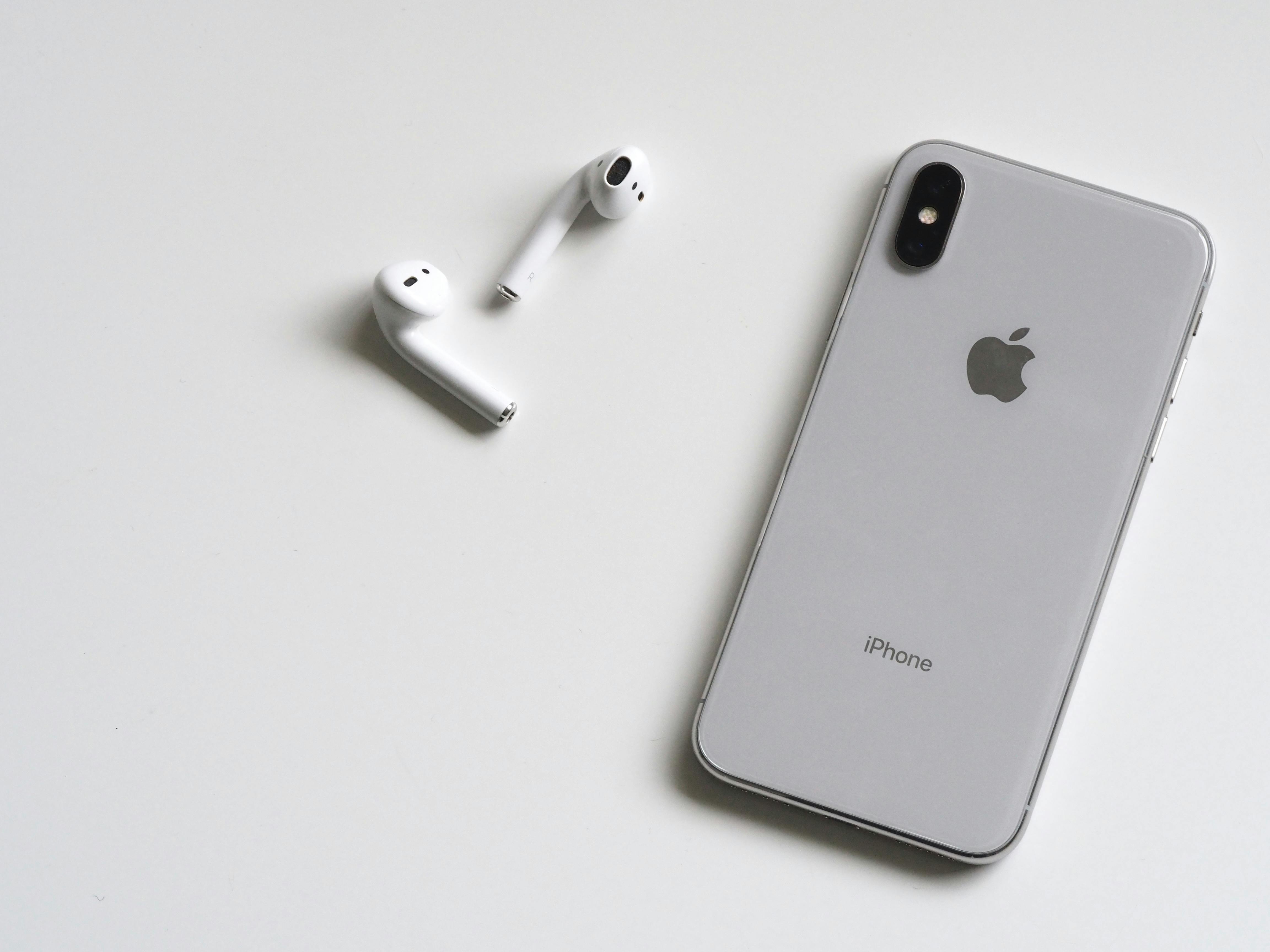
This hybrid architecture—on‑device intelligence plus a tightly controlled “private cloud”—is not just a technical choice. It is a business and product bet: that users will value privacy, responsiveness, and deep OS integration more than access to the very largest cloud models, and that AI can become a primary driver of the next iPhone and Mac upgrade cycle rather than a bolt‑on software feature.
Mission Overview: Apple’s AI Pivot in Context
Apple’s mission is not to win a model‑benchmark arms race; it is to make AI feel invisible, trustworthy, and useful inside everyday workflows. In this framing, the “product” is not a chatbot; it is the entire device experience.
At a high level, Apple’s AI pivot revolves around three intertwined pillars:
- On‑device intelligence using compact models accelerated by the Neural Engine in A‑series and M‑series chips.
- Private cloud inference for heavier tasks, running on Apple silicon in Apple‑controlled data centers.
- Tight platform integration across iOS, iPadOS, macOS, and core apps like Mail, Messages, Photos, and Notes.
This strategy is both defensive and offensive. Defensive, because Apple must counter the narrative that it is “behind in AI.” Offensive, because it can monetize AI primarily via premium hardware and services rather than targeted advertising, reinforcing its long‑standing privacy and design moat.
“Apple doesn’t need the biggest model; it needs the most useful one that runs where the user’s data actually lives—on their device.” — Paraphrasing ongoing commentary across developer communities such as Hacker News and technical coverage in Ars Technica.
Technology: On‑Device Models and Private Cloud Architecture
Under the hood, Apple’s AI strategy is a systems‑engineering story. Instead of pouring everything into one giant frontier model, Apple focuses on specialized, efficient models optimized for its silicon and software stack.
On‑Device Intelligence and the Neural Engine
Since the A11 Bionic, Apple has shipped a dedicated Neural Engine—an inference accelerator designed for machine‑learning workloads. Recent generations of A‑series (for iPhone) and M‑series (for Mac and iPad) chips substantially expand this capability, enabling:
- Low‑latency inference for tasks like predictive text, notification summarization, and photo search.
- Energy‑efficient execution that preserves battery life while running models in the background.
- Enclave‑integrated workflows where sensitive data can be processed without leaving the device’s secure boundary.
Many everyday AI tasks—rewriting an email, summarizing messages, transcribing a voice memo—can be handled by models in the 1–10B parameter range or even smaller, especially when fine‑tuned and quantized for specific use cases.
Private Cloud Compute on Apple Silicon
For heavier workloads, Apple is reported to be deploying a “private cloud” stack powered by its own chips in Apple‑managed data centers. The principles are:
- End‑to‑end control over the full compute chain (hardware, firmware, OS, and runtime), reducing third‑party dependencies.
- Data minimization, where data sent to the cloud is ephemeral, encrypted, and used strictly for inference—not long‑term profiling.
- Consistency of APIs and execution semantics across on‑device and cloud, simplifying developer integration.
In practice, this means some features will dynamically decide whether to run locally or in the private cloud based on:
- Task complexity (multi‑step reasoning, large‑context summarization).
- Device capability (older iPhones vs. latest flagships).
- Network conditions and latency budgets.
System‑Level Integration
Apple’s most powerful differentiator is integration. AI features are likely to permeate:
- Springboard and Notification Center for intelligent summaries and prioritized alerts.
- Mail, Messages, and Notes for context‑aware drafting, rewriting, and summarization.
- Photos for semantic search (“photos of receipts from last month”) and AI‑assisted editing.
- Shortcuts and automation for “do what I mean” workflows that chain multiple apps together.
“The winning AI products will be the ones that disappear into the OS. If you have to think ‘I’m using AI’ every time, something went wrong.” — Sentiment echoed by many UX and AI researchers across professional networks such as LinkedIn.
Scientific Significance: Pushing the Frontier of Edge AI
Apple’s emphasis on local inference contributes to an emerging paradigm in AI research: edge AI, where computations move closer to where data is generated. This has several scientific and engineering implications.
Model Compression and Efficiency
Running complex models on mobile hardware demands aggressive techniques, including:
- Quantization (e.g., 8‑bit or 4‑bit weights) to shrink memory footprint and compute cost.
- Pruning and sparsity to reduce redundant parameters while maintaining accuracy.
- Knowledge distillation, where larger “teacher” models train compact “student” models for deployment.
Advances here feed back into the broader AI ecosystem: methods that make Apple’s on‑device AI possible also benefit other constrained settings like wearables, cars, and IoT devices.
Privacy‑Preserving ML
Keeping data on device aligns with research in:
- Federated learning, where models are improved by aggregating gradients from many devices without raw data leaving user control.
- Secure enclaves and TEEs to isolate sensitive computations.
- Differential privacy to statistically bound what can be inferred from aggregated updates.
While details of Apple’s latest implementations evolve, the scientific thrust is clear: make personalization and intelligence possible without centralized surveillance.

AI and the Next iPhone Cycle
Smartphone markets have largely plateaued; incremental camera updates and modest CPU gains are no longer enough to trigger mass upgrades. AI is being framed by analysts as the next “super‑cycle” catalyst.
Publications like The Verge and TechCrunch highlight several categories of AI‑driven features expected to shape upcoming iPhone releases:
- System‑wide text intelligence for drafting, translating, and summarizing across any app.
- Context‑aware assistance that reads what is on screen and suggests next actions (e.g., creating reminders, extracting travel details).
- Advanced photo and video intelligence with semantic search, object‑level editing, and automated story creation.
- Smarter automation where users can describe workflows in natural language and have Shortcuts or similar systems build them automatically.
If Apple can demonstrate that these capabilities require newer hardware—for responsiveness, battery life, or model size—AI could become the clearest reason in years to upgrade an aging iPhone.
“The question for investors isn’t whether Apple has AI—it does—but whether AI will move units.” — Paraphrased from commentary in business‑focused outlets like Recode and The Information.
Developer Ecosystem and APIs
On more technical forums like Hacker News, the conversation is less about headline features and more about APIs, control, and openness. Developers are asking:
- Will Apple expose robust APIs to integrate system AI into third‑party apps?
- Can developers fine‑tune behaviors or will they be constrained to Apple’s UX decisions?
- How will App Store policies treat AI‑heavy apps, particularly those that compete with first‑party features?
Historically, Apple has favored curated extensibility: powerful APIs, but tightly governed. Expect something similar here—frameworks that allow apps to:
- Request summaries or rewrites of user‑generated content with clear consent prompts.
- Leverage on‑device models for classification, semantic search, or recommendations.
- Offload sanctioned workloads to Apple’s private cloud via standardized endpoints.
A key tension will be balancing user protection (from spammy or abusive AI behaviors) with room for experimentation by indie developers and enterprises.
Milestones: From Quiet Research to Platform Feature
Apple has been investing in machine learning for years, but only recently has the strategy coalesced around generative and large‑language‑model (LLM)‑style capabilities. Key milestones include:
- Neural Engine rollout starting with the A11, laying the hardware foundation for local ML.
- Core ML and on‑device frameworks enabling developers to run models on iOS and macOS.
- Incremental AI features such as Face ID, on‑device dictation, local photo classification, and offline Siri for some tasks.
- Internal LLM research and tooling to support summarization, code understanding, and natural language interfaces across Apple’s own teams.
- Emerging reports of private‑cloud AI architectures, leveraging Apple silicon in data centers for large‑scale inference.
Each step has moved Apple closer to an ecosystem where intelligence is a baseline property of the platform, not an optional add‑on.

Challenges: Technical, Economic, and Political
Apple’s AI pivot is not risk‑free. It faces constraints on multiple fronts: technical scaling, ecosystem dynamics, regulation, and public perception.
Technical Trade‑offs
On‑device AI means:
- Model size limits due to memory, storage, and thermal constraints.
- Difficult upgrades because once shipped, hardware cannot be easily retrofitted for more intensive workloads.
- Fragmentation across device generations—newer devices may support features older ones cannot, complicating developer targeting.
Hybrid execution (device + private cloud) helps, but introduces complexity in routing, synchronization, and user transparency.
Economic and Environmental Costs
Scaling AI inference to hundreds of millions of users—whether on device or in data centers—demands significant energy and capital. Questions raised in technical and investor communities include:
- How much additional capex will Apple commit to AI‑optimized data centers?
- Can efficient on‑device inference reduce aggregate cloud energy compared with pure cloud models?
- How will Apple message environmental sustainability around always‑on AI features?
Privacy, Regulation, and Trust
Apple’s privacy branding is a core asset, but AI complicates the narrative:
- Users may be wary of opaque summarization or ranking algorithms applied to personal content.
- Regulators in the EU, US, and elsewhere are scrutinizing automated decision‑making and data flow.
- Apple must clearly explain when data stays on device, when it goes to the cloud, and under what guarantees.
“AI systems that feel magical but not legible can rapidly erode user trust.” — A recurring warning from AI ethics researchers in public talks and academic panels.
Practical Tools for Curious Consumers and Developers
For users and developers who want to understand or experiment with Apple‑style on‑device AI, several resources and tools are worth exploring.
Developer‑Oriented Resources
- Apple Machine Learning resources provide documentation, sample code, and WWDC session videos on Core ML and the Neural Engine.
- Research‑oriented readers can follow Apple’s AI/ML publications , which cover topics such as efficient inference, privacy, and multimodal understanding.
- For a deeper technical grounding in LLMs and edge ML, Andrej Karpathy’s YouTube channel is a widely recommended educational resource.
Consumer‑Friendly Learning and Hardware
Readers who want to explore AI workflows or app development on Apple hardware may find it useful to invest in capable devices and educational material. For example:
- A modern MacBook with an M‑series chip, such as the MacBook Air with M2 , offers excellent performance per watt for on‑device ML experiments.
- For foundational background, a well‑reviewed introductory book such as “Hands‑On Machine Learning with Scikit‑Learn, Keras, and TensorFlow” can help readers understand the core concepts behind modern AI systems.
Conclusion: A Different Path to Mainstream AI
Apple’s AI pivot embodies a distinct thesis: that the future of AI is not just bigger models in bigger data centers, but personal intelligence woven into the fabric of everyday devices. By pairing optimized on‑device models with a privacy‑preserving private cloud, Apple aims to deliver practical, trustworthy features rather than headline‑grabbing demos.
The success of this strategy will hinge on several questions:
- Can Apple deliver AI experiences that feel genuinely transformative, not merely incremental?
- Will AI become a compelling reason for users to upgrade hardware on a faster cadence?
- Can Apple sustain its privacy promise while competing with more data‑hungry rivals?
- How open will the ecosystem be for developers and alternative AI approaches?
However these questions are answered, Apple’s approach ensures that the AI debate now spans far beyond chatbots and cloud APIs. It reaches into chip design, device lifecycle economics, digital rights, and the daily habits of hundreds of millions of people.
Additional Insights: How to Evaluate AI Claims as a Consumer
As AI becomes a standard marketing term, it helps to have a simple framework for evaluating new features on Apple devices (and beyond).
A Simple Checklist
- Utility: Does this feature save you time, reduce cognitive load, or enable something you could not realistically do before?
- Transparency: Do you understand when and how your data is used to power the feature?
- Control: Can you opt out, adjust sensitivity, or limit access to specific apps or data types?
- Latency and reliability: Is it fast and dependable enough that you will actually use it?
- Privacy posture: Does it run locally, in the cloud, or in a hybrid mode—and what guarantees are provided?
Applying these lenses will help you cut through hype and decide whether Apple’s new AI capabilities—and competing offerings—align with your needs and values.
References / Sources
For deeper reading on Apple’s AI strategy, on‑device ML, and edge computing, see:
- Ars Technica – Apple and hardware‑driven AI coverage
- The Verge – Apple and AI‑related news
- TechCrunch – Apple product and AI ecosystem reporting
- Apple Machine Learning Research
- Apple Developer – Machine Learning
- Andrej Karpathy – Educational videos on deep learning and LLMs
- Papers With Code – Edge device deep learning
