
Inside the AI PC vs ARM Laptop Wars: How NPUs and Efficiency Are Rewriting the Future of Personal Computing
The battle between AI-accelerated PCs and ARM-based laptops is no longer speculative—it is the defining hardware contest of the 2020s. Apple’s M‑series revolution, Qualcomm’s Snapdragon X Elite and X Plus “Copilot+ PC” push with Microsoft, and renewed efforts from Intel and AMD to ship powerful NPUs (Neural Processing Units) are colliding to redefine how laptops handle AI workloads, battery life, and everyday productivity.
Underneath the marketing buzzwords, this shift represents a deep architectural realignment away from “just CPU and GPU” toward heterogeneous computing: CPU, GPU, NPU, image signal processors, media engines, and security enclaves all living on tightly integrated system-on-chips (SoCs). Educated users, developers, and IT buyers are now comparing not just raw CPU benchmarks, but real-world AI performance, thermals, and app compatibility across x86 and ARM ecosystems.
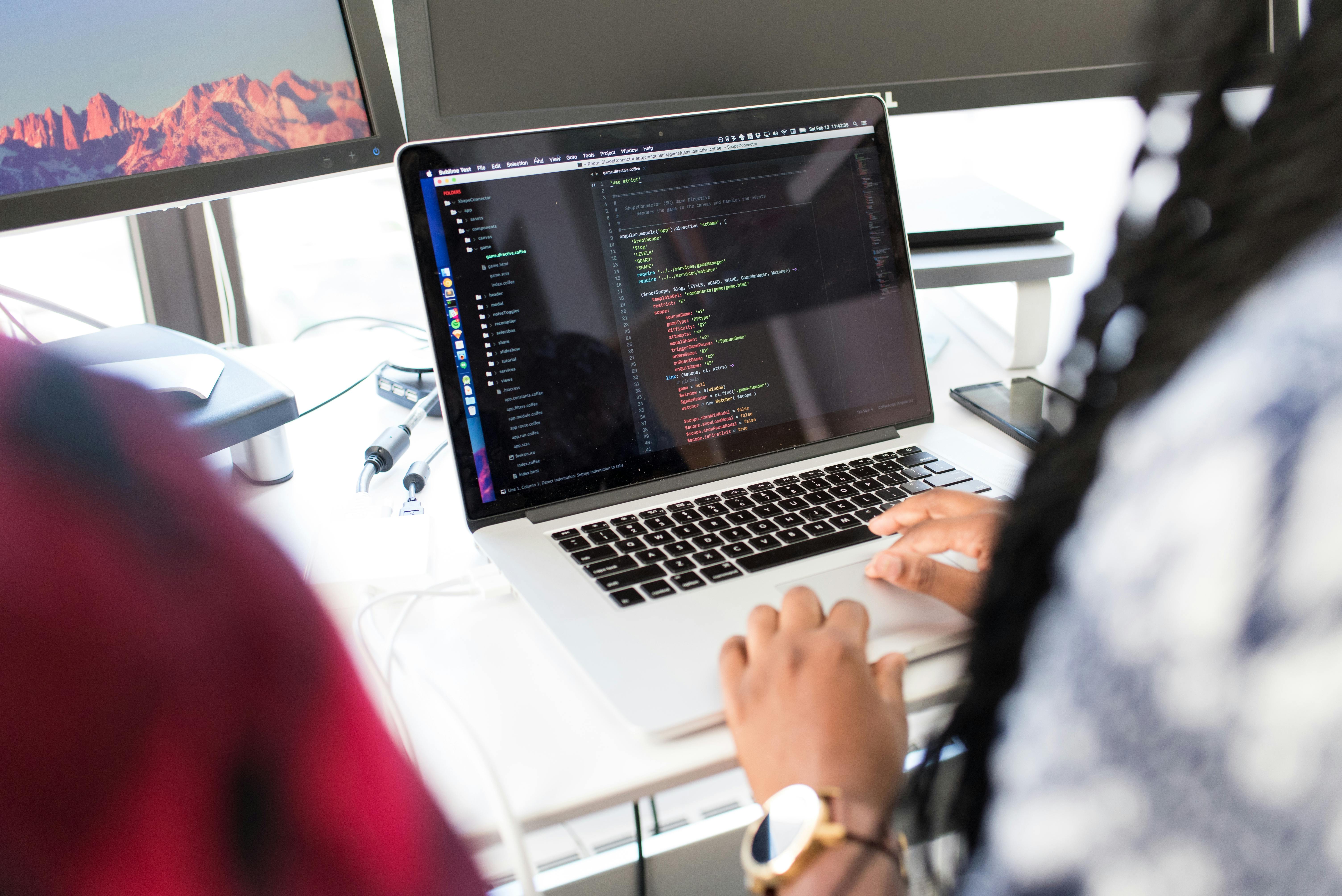
Tech media such as The Verge, Ars Technica, and Wired now routinely pit Apple Silicon MacBooks, Snapdragon-based Windows laptops, and Intel/AMD AI PCs against each other in battery tests, code compilation, 4K video exports, and AI inference benchmarks such as Stable Diffusion or local LLMs.
Mission Overview: Why AI PCs and ARM Laptops Matter Now
The “mission” of this new wave of laptops is straightforward but ambitious: deliver desktop-class performance, all‑day battery life, and rich AI features directly on-device, while reducing dependence on cloud data centers. That mission manifests differently for each ecosystem:
- Apple Silicon (ARM): Maximize performance per watt, unify macOS and iOS-style development, and deliver strong media and GPU performance in thin, silent machines.
- Windows on ARM: Combine ARM efficiency with Windows familiarity and built‑in NPUs for “Copilot+” features, tackling historical app compatibility issues.
- x86 AI PCs (Intel & AMD): Preserve decades of software compatibility while grafting powerful NPUs and improving integrated graphics and power efficiency.
“We are moving from the era of the PC as a general-purpose CPU box to a highly specialized, AI-accelerated personal compute appliance.” — Dr. Ian Cutress, semiconductor analyst and technologist
This shift has implications across performance, privacy, cloud economics, and even how software is written and monetized.
Background: From x86 Dominance to Heterogeneous Computing
For roughly four decades, personal computers were dominated by the x86 architecture, with Intel and AMD iterating on ever-faster CPUs and, later, integrated and discrete GPUs. ARM existed mainly in smartphones, tablets, and embedded devices, where power efficiency trumped raw throughput.
That model began to crack when:
- Mobile SoCs matured: Smartphone-class ARM chips gained sophisticated GPU, ISP, and AI accelerators.
- Cloud AI exploded: Training large models in the cloud made inference a key constraint at the edge.
- Thermal limits hit: Thin-and-light laptops could not dissipate unlimited heat; efficiency became king.
Apple’s M1 launch in 2020 proved that custom ARM SoCs could beat or match high-end x86 laptops in performance per watt, with fanless designs and extraordinary battery life. This forced the PC ecosystem to respond.
“Apple Silicon reset user expectations around what a laptop can deliver in both speed and battery life. The rest of the industry had to catch up.” — AnandTech coverage of Apple M1
Technology: NPUs, ARM SoCs, and the Anatomy of an AI PC
Modern AI PCs and ARM laptops are built around highly integrated SoCs packing multiple specialized engines. Whether ARM or x86, their common blueprint looks similar.
CPU, GPU, and NPU: A Three-Way Partnership
A typical contemporary laptop SoC includes:
- CPU (Central Processing Unit): High-performance and efficiency cores (e.g., Apple’s performance/efficiency clusters, Intel P/E cores, ARM Cortex cores) for general workloads.
- GPU (Graphics Processing Unit): Integrated graphics handling rendering, video, and many parallel compute tasks.
- NPU (Neural Processing Unit): A dedicated accelerator optimized for matrix multiplies and low-precision arithmetic (INT8, FP16, sometimes 4-bit) to run AI inference efficiently.
NPUs excel at tasks such as:
- Real-time transcription and translation
- Background segmentation and blur in video calls
- On-device image generation (e.g., Stable Diffusion variants)
- Running local language models as personal assistants
Apple’s M‑Series: Single-Vendor Vertical Integration
Apple’s M1, M2, and M3 families integrate CPU, GPU, unified memory, media engines, and an increasingly capable Neural Engine. The design emphasizes:
- Unified memory architecture (UMA): CPU, GPU, and NPU share a single, high-bandwidth memory pool, reducing copying overhead.
- Tight OS integration: macOS APIs like Core ML expose NPUs and GPUs in a relatively straightforward way to developers.
- Thermal control: Efficient cores keep fans quiet while sustaining high performance on many workloads.
Benchmarks from outlets like MacRumors and TechRadar consistently show strong performance per watt and class-leading battery life.
Qualcomm Snapdragon X and Windows on ARM
Qualcomm’s Snapdragon X Elite and X Plus represent the most serious push yet for Windows on ARM. These SoCs integrate:
- Custom Oryon CPU cores designed for high performance and efficiency
- Adreno GPU for graphics and compute
- A powerful Hexagon NPU targeting >40 TOPS of AI performance in many configurations
Branded as Copilot+ PCs when paired with Microsoft’s latest Windows 11 builds, these machines are marketed around features like Recall (suspended amid privacy concerns), live captions, and low-latency on-device assistants. Early reviews from Engadget and Ars Technica highlight impressive battery life and silent operation, but emphasize that app compatibility and emulation performance still matter.
Intel Core Ultra and AMD Ryzen AI: x86 Fights Back
Intel’s Core Ultra (Meteor Lake and follow-ons) and AMD’s Ryzen 8040/8050 “Ryzen AI” series integrate NPUs directly into x86 laptop platforms. These chips aim to:
- Maintain near-perfect compatibility with decades of Windows software
- Offer respectable AI throughput without sacrificing CPU and GPU performance
- Improve power management and integrated graphics, narrowing the gap with ARM laptops
Combined with partners like Lenovo, Dell, and HP, these platforms drive the bulk of “AI PC” branded devices shipping into corporate fleets today.
Software and Ecosystem: The Real Battlefield
Hardware innovation means little without software that can exploit it. The AI PC and ARM laptop battle is fundamentally an ecosystem contest.
Windows on ARM: Emulation vs. Native
Historically, Windows on ARM struggled due to:
- Limited native ARM64 applications
- Performance penalties from x86/x64 emulation
- Edge-case incompatibilities in professional workflows
Recent Windows 11 releases improved x64 emulation and added developer tooling, but Hacker News and Reddit threads still detail:
- Which games and pro apps work well via emulation
- Subtle bugs in plugins or drivers
- Performance gaps versus native x86 laptops and M‑series Macs
Apple’s macOS and ARM-First Development
Apple transitioned its entire Mac lineup to ARM in under three years, assisted by:
- Rosetta 2 translation for x86 Mac apps, often with surprisingly low overhead
- Strong incentives for developers to ship universal binaries
- Tight coupling between Xcode, Swift, and Apple’s ML frameworks
As a result, macOS on Apple Silicon feels largely “native first.” Many ML and AI tools now provide ARM builds, though some proprietary enterprise software remains x86-only.
x86 AI PCs: Compatibility as a Strategic Weapon
For Intel and AMD, backward compatibility is a core differentiator. Enterprises can:
- Deploy AI PC refreshes without revalidating every line-of-business application
- Use established virtualization and security tools
- Adopt new AI features while preserving existing workflows
However, x86 vendors must carefully balance power consumption and thermals to compete with ARM-based rivals on battery life and fan noise.
Scientific and Industry Significance: Edge AI at Scale
Moving AI inference from the cloud to personal devices has several significant consequences.
1. Energy and Cloud Economics
If millions of laptops can perform on-device inference for tasks that previously pinged the cloud:
- Cloud providers can reduce per-user inference costs for chatbots, transcription, and vision models.
- Organizations can avoid sending sensitive audio, video, or documents to third-party servers.
- Network latency and bandwidth requirements drop for common tasks.
Analysts at a16z and other venture firms have pointed out that edge inference may meaningfully reshape AI economics, especially for consumer applications.
2. Privacy and Regulatory Compliance
On-device AI helps meet privacy demands by:
- Keeping raw user data local for transcription, summarization, or search
- Reducing legal exposure around cross-border data transfers
- Providing a clearer threat model—compromising the device is harder than intercepting traffic to a cloud endpoint in many scenarios
3. Human-Computer Interaction
Ubiquitous, low-latency AI on laptops enables:
- Context-aware assistants that understand local documents, emails, and codebases
- Real-time accessibility features—live captions, translation, and smart magnification for users with disabilities
- Richer creative tooling, from AI-enhanced video editing to generative design
“Edge AI turns the PC into a personal model host, capable of deeply personalized assistance without sacrificing privacy.” — Dr. Fei-Fei Li, AI researcher (paraphrased from public talks on edge AI)
Benchmarks, Workloads, and Real-World AI Performance
Enthusiast and professional reviewers are stress-testing AI PCs and ARM laptops under realistic conditions, not just synthetic benchmarks.
Key AI Workloads Under Review
- Code and data work: Local LLMs for code completion, SQL generation, and documentation.
- Content creation: Stable Diffusion and similar tools for image generation; generative fill in photo editors.
- Productivity: Meeting transcription, summarization of local PDFs, semantic desktop search.
- Communication: High-quality background blur, eye-gaze correction, and noise suppression in calls.
YouTube creators such as Marques Brownlee (MKBHD), Dave2D, and Hardware Unboxed frequently compare:
- MacBook Air/Pro with M2 or M3
- Snapdragon X Elite Copilot+ PCs
- Intel Core Ultra and AMD Ryzen AI laptops with integrated NPUs
Their findings generally show:
- ARM laptops shining in sustained battery tests under light-to-moderate AI workloads.
- x86 AI PCs often leading in bursty, CPU-heavy workloads and legacy app performance.
- On-device LLM inference now being practical for small and medium models (typically <10–20B parameters quantized).
Milestones in the AI PC and ARM Laptop Transition
Several key milestones mark the trajectory of this architectural shift:
- 2020 – Apple M1: First widely deployed ARM laptop chip to convincingly outperform many x86 rivals in performance per watt.
- 2022–2023 – M2/M3 and broader Apple Silicon rollout: The entire Mac lineup transitions to ARM.
- 2023 – Intel and AMD ship NPUs: Core Ultra and Ryzen AI parts introduce AI accelerators into mainstream Windows laptops.
- 2024 – Snapdragon X Elite / X Plus Copilot+ PCs: Microsoft and Qualcomm push ARM-based Windows as a first-class citizen with strong NPU performance.
- 2025 and beyond: Expected next-generation Apple, Intel, AMD, and Qualcomm chips push TOPS (trillions of operations per second) higher while refining software layers.
These milestones are accompanied by rapid evolution in toolchains—ONNX Runtime, DirectML, Apple’s Core ML, and frameworks like PyTorch and TensorFlow improving ARM and NPU support.
Choosing Between AI PCs and ARM Laptops: Practical Guidance
The best platform depends heavily on your workload, ecosystem preferences, and tolerance for compatibility quirks.
Key Questions to Ask Before You Buy
- Do you rely on niche or legacy Windows software? If yes, an x86 AI PC (Intel/AMD) is safest today.
- Is battery life and silence your top priority? Apple Silicon and Snapdragon-based ARM laptops often lead.
- Are you a developer targeting multiple platforms? Consider where your users are—macOS, Windows x86, or emerging Windows on ARM.
- Do you plan to run local AI models? Evaluate NPU performance, VRAM/RAM, and vendor software support for your tools.
Popular AI-Ready Laptop Examples (USA Market)
Some widely reviewed, AI-focused laptops in the US include:
- Apple MacBook Air 13‑inch (M2 or M3): Excellent battery life and quiet operation, ideal for coding, writing, and light creative work.
Check price on Amazon - Microsoft Surface Laptop (Copilot+ PC, Snapdragon X Elite): Flagship Windows on ARM device showcasing NPU-powered features and long battery life.
View Surface Laptop Copilot+ PC on Amazon - Lenovo Yoga 7i / 9i with Intel Core Ultra: Versatile 2‑in‑1 design with Intel NPU support and strong Windows compatibility.
See Lenovo Yoga 9i with Intel Core Ultra on Amazon - ASUS Zenbook S / Vivobook with AMD Ryzen AI: Thin-and-light laptops leveraging Ryzen’s integrated NPU and capable integrated GPUs.
Browse an NPU-enabled ASUS Zenbook on Amazon

Challenges and Open Questions
Despite rapid progress, several unresolved challenges will shape how the AI PC vs ARM laptop battle plays out.
1. Software Fragmentation and Tooling Complexity
Developers now juggle:
- Multiple CPU architectures (x86-64, ARM64)
- Different NPU APIs (DirectML, Core ML, vendor SDKs)
- Varying quantization formats, model sizes, and deployment stacks
Toolchains are improving, but “build once, run efficiently everywhere” for edge AI is not yet reality.
2. App Compatibility and Emulation Overheads
Windows on ARM still depends on emulation for many legacy apps, which:
- Consumes extra power
- Reduces performance compared to native builds
- Introduces subtle bugs in certain plugins and drivers
Until major ISVs (Independent Software Vendors) fully embrace ARM and NPUs, buyers must check compatibility lists and community reports.
3. Privacy, Telemetry, and User Control
AI features raise questions about:
- What data is processed locally versus sent to the cloud
- How long intermediate data is stored (e.g., snapshots for recall-like features)
- How transparent vendors are about model behavior and updates
4. Benchmark Inflation and Marketing Noise
With every vendor touting TOPS and synthetic scores, interpreting performance becomes harder. Educated buyers must look at:
- Real application benchmarks (video exports, coding tasks, local AI workloads)
- Thermal throttling behavior over long sessions
- Battery life under realistic mixed workloads
Future Directions: Toward a Post-CPU-Centric PC
The next decade of personal computing will likely:
- Increase model specialization: smaller, domain-specific models running locally, larger foundational models in the cloud.
- Standardize AI acceleration APIs: better abstractions across NPUs, GPUs, and CPUs, reducing fragmentation.
- Push contextual computing: operating systems that maintain private, on-device representations of your work to power smart search and assistance.
- Explore hybrid execution: models that partly run on device, partly in the cloud depending on sensitivity and cost.
Researchers are actively studying energy-efficient inference, secure model execution, and human-centric evaluation of AI features on personal devices, ensuring this hardware transformation remains grounded in user benefit rather than pure marketing.
Conclusion: Redefining What “Personal Computer” Means
The AI PC and ARM laptop battle is not a simple platform war; it is a redefinition of the personal computer itself. Instead of a mostly passive machine waiting for keyboard and mouse input, the modern laptop is evolving into an active, context-aware assistant—one that can reason over local data, understand speech and images, and adapt in real time, all while conserving energy.
Whether ARM or x86 “wins” is less important than the broader trajectory: heterogeneous computing, on-device AI, tighter OS–hardware integration, and a renewed focus on efficiency. For users and organizations, the challenge is to navigate this transition wisely—prioritizing compatibility, privacy, and sustainability while taking advantage of the genuinely useful capabilities this new generation of laptops delivers.
“The next PC revolution isn’t about more gigahertz; it’s about where intelligence lives and who controls it.” — Paraphrased from industry commentary across leading tech analysts
Additional Practical Tips for Prospective Buyers
When shortlisting AI PCs or ARM laptops, consider the following checklist:
- RAM and storage: For AI and creative work, aim for at least 16 GB RAM and 512 GB SSD.
- Ports and expansion: Thunderbolt/USB4 or USB‑C with DisplayPort is valuable for external GPUs and monitors.
- Thermals and noise: Look for sustained performance charts, not just peak benchmarks.
- Vendor support: Check update policies—how long will firmware and OS updates be provided?
- Community ecosystem: Active Reddit, Discord, or forum communities can be invaluable for troubleshooting and performance tuning.
For deeper dives into architecture and benchmarks, resources such as Chips and Cheese, SemiAnalysis, and Tom’s Hardware regularly publish highly technical breakdowns of new chips and platforms.
References / Sources
Further reading and sources on AI PCs, ARM laptops, and NPUs:
- Ars Technica – Hands-on with Snapdragon X Elite laptops
- The Verge – Apple’s ARM-based Mac transition explained
- Microsoft – Copilot+ PC overview
- Intel – Core Ultra processors with integrated NPU
- AMD – Ryzen AI technology
- Apple – Machine Learning on Apple platforms (Core ML and Neural Engine)
- Qualcomm – Snapdragon for PCs
- ONNX Runtime – Cross-platform, high-performance ML inferencing
