
Inside the AI Arms Race: OpenAI vs. Google vs. Anthropic in the Foundation Model Showdown
The “foundation model showdown” among OpenAI, Google, and Anthropic has become the central storyline for the next phase of the internet. Their rapidly evolving models now sit in search engines, office suites, smartphones, developer tools, and enterprise workflows, quietly redefining how information flows online. Understanding where each player stands—and where they differ—is critical for developers, product teams, policy‑makers, and anyone whose business depends on search, content, or knowledge work.
Mission Overview: Three Competing Visions for the AI Layer
While all three companies build large‑scale multimodal models, their stated missions and product strategies diverge in important ways.
OpenAI: The Default AI Interface for Everyone
OpenAI’s public mission centers on building artificial general intelligence (AGI) that “benefits all of humanity,” but its near‑term strategy is to be the default AI interface for consumers and developers. ChatGPT has become the face of generative AI, and the GPT series powers:
- Interactive chat and assistants (ChatGPT on web, mobile, and desktop)
- APIs for text, images, code, and now more advanced agentic behaviors
- Enterprise offerings focused on privacy, governance, and compliance
OpenAI’s ecosystem approach—plugins, tools, and tight integrations with productivity and dev platforms—positions GPT models as a foundational “operating layer” that apps can call into rather than re‑implementing intelligence themselves.
Google: AI as the New Interface to the Web
Google’s Gemini family is woven across the company’s massive product portfolio: Search, Workspace, Android, and Chrome. The most disruptive move is AI Overviews in Search, where synthesized answers appear above traditional links.
For Google, AI is less a standalone product and more a pervasive capability:
- Replacing or augmenting blue links with AI‑generated summaries
- Embedding AI co‑pilots inside Gmail, Docs, Sheets, and Slides
- Powering on‑device intelligence for Android and Chrome
This strategy keeps users within Google’s experience and raises existential questions for publishers, SEO professionals, and advertisers.
Anthropic: A Controlled, Enterprise‑Grade AI Colleague
Anthropic’s Claude models emphasize controllability, alignment, and long‑context reasoning. The company describes its mission as building “reliable, interpretable, and steerable AI systems,” foregrounding safety research and constitutional AI.
Claude has become a favorite among:
- Enterprises that need clear safety postures and strong governance
- Developers building complex workflows and multi‑step agents
- Teams handling long, structured documents—contracts, logs, research papers
“We design our systems to be steerable, so that different organizations can shape AI behavior according to their own values and regulatory environments.”
Technology: Architectures, Multimodality, and Agents
All three companies use transformer‑based architectures at massive scale, but their productization philosophies and technical emphases differ.
Foundation Model Families
- OpenAI: GPT‑4‑class and successors, plus specialized variants for speed, cost, and modalities (e.g., high‑throughput models, vision‑capable models, and optimized inference stacks).
- Google: Gemini Ultra, Pro, and Nano tiers, tailored for data centers, general usage, and on‑device inference.
- Anthropic: Claude 3‑class models (Haiku, Sonnet, Opus) optimized along a spectrum of latency, cost, and reasoning depth.
Multimodality: From Text to Vision, Audio, and Video
The next wave of models are natively multimodal—trained end‑to‑end to process text, images, audio, and sometimes video in a single architecture.
- OpenAI: Pushes hard on chat + vision + voice. Demonstrations include conversational voice assistants, real‑time image understanding, and basic video reasoning.
- Google: Integrates image and video understanding deeply into Search and YouTube, and uses Gemini’s multimodal capabilities to interpret screenshots, PDFs, and camera input on phones.
- Anthropic: Emphasizes robust document and image understanding for enterprise workflows (forms, diagrams, dense PDFs), focusing on accuracy and grounded reasoning.
Agents and Tool Use
The cutting edge is shifting from static chat toward agents—systems that can plan, call tools, and act on behalf of users.
- OpenAI: Offers function calling, tool integration, and “assistant” abstractions that can chain actions (e.g., browse, write code, interact with APIs).
- Google: Couples Gemini with Google’s own tools: search, maps, calendars, docs, and a vast index of the web, enabling rich workflows in its ecosystem.
- Anthropic: Focuses on predictable, auditable tool use favored by risk‑sensitive enterprises, with clear system prompts and policies guiding agent behavior.
“We expect AI systems to move from single‑step responses to multi‑step agents that can reliably execute high‑level instructions—while remaining under human oversight.”
For technical practitioners, this means that prompt design, tool schemas, and orchestration frameworks become as important as raw model quality.
Ecosystem Battles: Platforms, Plugins, and Distribution
The foundation model showdown is ultimately an ecosystem war: whoever controls the “AI hub” where users spend their time can shape standards, data flows, and monetization.
OpenAI: API‑First with a Consumer Front Door
OpenAI uses ChatGPT as a consumer magnet while pushing developers and enterprises to its APIs. Key ecosystem moves include:
- Extensible assistants with tools and file handling
- Deep integration into popular IDEs and productivity platforms
- Partnerships that embed GPT into mainstream software stacks
Google: The Incumbent with Search and Android
Google controls two of the most strategic surfaces in technology: search results and the Android OS. By injecting Gemini into both, it can:
- Change how billions of users discover information
- Offer native AI capabilities to app developers on Android
- Blend paid search, shopping, and AI answers in new ad formats
Anthropic: Trusted Partner for Enterprise and Cloud
Anthropic leans into partnerships with major cloud providers and enterprise platforms, positioning Claude as:
- A controllable co‑pilot inside existing SaaS products
- A primary model choice for companies with stricter compliance needs
- A research‑aligned partner for governments and regulators
In parallel, the open‑source ecosystem—especially Meta’s Llama series—is complicating the picture, pushing all three providers to sharpen their value propositions beyond raw model access.
Scientific Significance: Scaling Laws, Reasoning, and Long Context
Beneath the product race lies a deeper scientific contest: who can push the frontier of general‑purpose reasoning while maintaining reliability and safety.
Scaling Laws and Emergent Capabilities
Research over the past few years has consistently shown that:
- Increasing model parameters, data volume, and compute yields smooth improvements in benchmarks.
- Beyond certain thresholds, models exhibit emergent behaviors—qualitatively new abilities in reasoning, coding, and abstraction.
OpenAI, Google, and Anthropic all operate at the cutting edge of this scaling frontier, carefully balancing model size, efficiency, and alignment constraints.
Reasoning and Tool‑Augmented Intelligence
Pure next‑token prediction is surprisingly powerful, but constrained. The current trend is to augment models with:
- External tools: code interpreters, calculators, databases, retrieval systems
- Memory and planning: structured task decomposition and intermediate scratchpads
- Long‑context windows: tens or even hundreds of thousands of tokens to hold full codebases or multi‑document dossiers
Anthropic in particular is known for strong performance on long‑context tasks, and developers often highlight Claude’s ability to handle entire repositories or large knowledge bases in a single session.
“As context windows grow, the boundary between ‘training’ and ‘usage’ blurs: models can effectively learn new tasks in‑session with suitable prompts and examples.”
Safety, Copyright, and Regulation
Every new foundation model release is now scrutinized not only for capability, but for how it handles safety, rights, and accountability.
Constitutional AI and Alignment
Anthropic popularized constitutional AI, where a model is trained to follow a written “constitution” of principles rather than relying solely on human feedback. This:
- Improves consistency of safety behavior
- Makes alignment choices more transparent
- Provides a clearer audit trail for regulators and partners
OpenAI and Google use a mix of reinforcement learning from human feedback (RLHF), safety fine‑tuning, and extensive red‑teaming to reduce misuse and harmful outputs.
Copyright and Data Provenance
Lawsuits by authors, media organizations, and rights holders challenge how training data is collected and used. In response, major labs are:
- Exploring opt‑out mechanisms for content owners
- Experimenting with training on licensed or synthetic data
- Evaluating watermarking and attribution systems for generated content
Regulatory Landscape
Regulators in the EU, US, and UK are converging on requirements around:
- Transparency about capabilities and limitations
- Risk classifications for powerful foundation models
- Reporting obligations for safety incidents and misuse
This regulatory pressure is one reason Anthropic often resonates with risk officers and compliance teams, while OpenAI and Google invest heavily in red‑team exercises and safety evals.
AI Overviews and the Future of Search
Google’s AI Overviews are at the center of debates about the future of the web’s economic model.
By answering many queries directly on the results page, Google improves user convenience but risks:
- Reducing click‑through rates to publishers and independent sites
- Weakening traditional SEO levers and analytics
- Shifting value capture further toward platforms, away from content creators
“If AI Overviews become the default way people get information, the open web as we know it will have to reinvent its business model.”
In parallel, OpenAI’s experiments with web‑answering features in ChatGPT and Anthropic’s work with search partners point toward a broader trend: AI front‑ends that may partially replace or heavily mediate classic search behavior.
Developer Experience and Tooling
For developers and technical teams, the decisive factor is often not the theoretical best model, but which platform provides the smoothest end‑to‑end workflow.
SDKs, APIs, and Orchestration
- OpenAI: Simple, widely adopted APIs with strong language support, hosted tooling for assistants, and rapid iteration on endpoints.
- Google: Deep ties to Google Cloud, Vertex AI, and data warehousing, attractive for organizations standardized on Google infrastructure.
- Anthropic: Clean, developer‑friendly APIs with clear safety scopes, plus partnerships that embed Claude into leading dev and data platforms.
Recommended Reading and Tools
Many teams also pair these APIs with orchestration frameworks, vector databases, and observability tools to build robust retrieval‑augmented generation (RAG) systems and complex production agents.
Milestones: How We Got to the Foundation Model Showdown
Over the last several years, a few key milestones set the stage for the current competition.
Key Milestones in the Foundation Model Era
- Transformer breakthrough: “Attention is All You Need” established the architecture behind modern large language models.
- GPT‑3 and beyond: OpenAI catalyzed mainstream awareness of LLMs and demonstrated the power of large‑scale pretraining.
- Chat interfaces: ChatGPT’s success proved that conversational UX could unlock mass adoption.
- Search integration: Google began embedding generative models into Search, changing how information is presented.
- Constitutional AI and long context: Anthropic advanced practical methods for safer, steerable models that handle vast documents.
Each milestone not only raised technical expectations but also shifted commercial and regulatory pressure, making today’s showdown inevitable.
Challenges: Technical, Economic, and Societal
Even as capabilities surge, significant challenges remain across multiple dimensions.
Technical Challenges
- Hallucinations: Models still confidently produce incorrect or fabricated facts.
- Robustness: Performance can degrade under distribution shifts, adversarial prompts, or noisy inputs.
- Evaluation: Benchmarks lag real‑world tasks; it’s hard to measure reasoning, reliability, and safety at scale.
Economic and Competitive Challenges
- Massive compute and energy costs for training and inference
- Competitive pressure from open‑source models that narrow the gap
- Customer skepticism about lock‑in to single‑vendor APIs
Societal and Ethical Challenges
- Impact on creative professions and knowledge workers
- Bias, fairness, and representation in model outputs
- Potential misuse for disinformation, fraud, or automated cyber‑attacks
“The question is no longer whether we’ll deploy powerful AI systems, but how responsibly—and under what governance.”
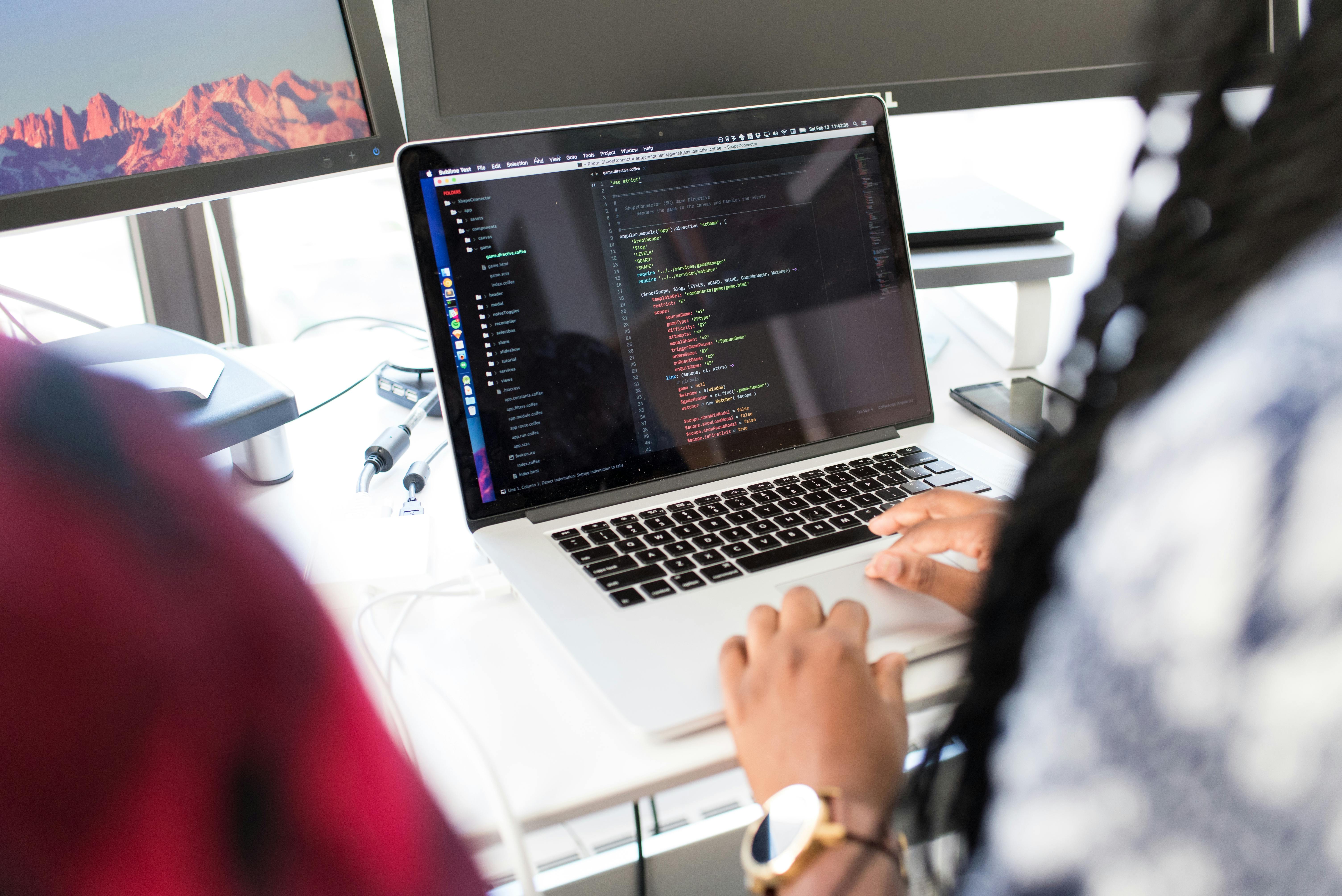
Visualizing the Foundation Model Landscape


Practical Buyer’s Guide: Choosing Between OpenAI, Google, and Anthropic
Selecting a foundation model provider is a strategic decision. While needs vary, the following checklist is a useful starting point:
- Primary use case: chat assistant, coding, content generation, data analysis, or domain‑specific workflows.
- Risk tolerance: required levels of safety controls, auditability, and regulatory compliance.
- Integration surface: fit with your existing stack (e.g., Google Cloud, other clouds, on‑premise constraints).
- Data sensitivity: requirements for data residency, retention policies, and fine‑tuning.
- Cost and performance: latency, throughput, and total cost of ownership at projected scale.
Many organizations now adopt a multi‑model strategy, using:
- One provider for general assistants and creative tasks
- Another for long‑context analytical workloads
- Open‑source models for on‑premise or highly sensitive scenarios
Enhancing Workflow with AI‑Optimized Hardware
Power users working daily with large models often pair cloud APIs with local hardware tuned for rapid experimentation—fast storage, ample RAM, and strong GPUs. While heavy training still happens in the cloud, on‑device performance matters for:
- Running smaller open‑source models locally
- Pre‑ and post‑processing data for RAG pipelines
- Managing large codebases and datasets efficiently
Many practitioners opt for high‑performance laptops or desktops designed with creators and developers in mind, focusing on CPU cores, RAM, and GPU memory to complement cloud‑based foundation models.
Conclusion: A Moving Target and a Shared Infrastructure
The competition between OpenAI, Google, and Anthropic is not a zero‑sum game; their models are quickly becoming shared infrastructure for the digital economy. We are moving from a web of documents and apps to a web of agents, where intelligent intermediaries negotiate between users, data, and services.
Over the next few years, expect:
- More capable multimodal models that blur lines between text, image, audio, and video
- Agents that can reliably execute real‑world tasks under human oversight
- Stronger regulatory frameworks around safety, transparency, and competition
- Hybrid stacks combining closed, open‑source, and domain‑specific models
For builders and decision‑makers, the imperative is clear: understand the strengths and trade‑offs of each provider, design for flexibility, and invest early in governance and observability. The foundation model showdown will continue, but the winners in practice will be those who learn to harness these systems responsibly and creatively.
References / Sources
- OpenAI – Official site
- OpenAI Platform Documentation
- Google DeepMind – Gemini
- Google Cloud Vertex AI
- Anthropic – Official site
- Claude Documentation
- The Verge – AI & Search coverage
- Wired – AI reporting
- arXiv – Preprints on large language models and scaling laws
- European Commission – AI policy resources
For deeper technical dives, follow leading researchers and practitioners on professional networks such as LinkedIn and watch long‑form conference talks on YouTube from NeurIPS, ICML, and major AI safety workshops; these venues often reveal the next wave of innovations before they reach mainstream products.
