
How Quantum Gravity Solves the Black Hole Information Paradox: Firewalls, Wormholes, and Holograms Explained
The black hole information paradox is no longer a niche puzzle reserved for specialists in quantum gravity. Thanks to high‑engagement explainers on YouTube, TikTok, and physics Twitter/X, concepts like Page curves, holographic universes, and replica wormholes now circulate widely among science enthusiasts. At its heart, the paradox is a clash between two pillars of modern physics: Einstein’s general relativity and the unitary evolution demanded by quantum mechanics.
In 2026, a wave of new preprints on arXiv, together with accessible talks by researchers such as Juan Maldacena, John Preskill, and Netta Engelhardt, has refocused attention on how information might escape black holes. Central to this story are three intertwined ideas: firewalls, ER=EPR wormholes, and holography.
Mission Overview: What Is the Black Hole Information Paradox?
The paradox arises from a deceptively simple question: What happens to information that falls into a black hole? According to classical general relativity, anything crossing the event horizon is lost to the outside universe. But quantum theory insists that physical processes are reversible in principle—information should never be fundamentally destroyed.
In the 1970s, Stephen Hawking combined quantum field theory with curved spacetime and discovered that black holes emit thermal radiation—now called Hawking radiation. Over vast timescales, this radiation causes a black hole to evaporate completely.
- Hawking’s calculation says the radiation is perfectly thermal (random) and carries no information about what fell in.
- When the black hole fully evaporates, nothing remains that can encode the initial information.
- Quantum mechanics, however, forbids information loss—evolution should be unitary.
“The information paradox is a paradox because it forces us to confront the tension between the smoothness of spacetime and the quantum nature of information.” — Ahmed Almheiri and collaborators (paraphrased from AMPS firewall paper)
Background: Relativity, Quantum Mechanics, and Entropy
To appreciate the modern debate, it helps to summarize three key ingredients: black hole thermodynamics, quantum entanglement, and entropy.
Black Hole Thermodynamics
In the 1970s, Bekenstein and Hawking realized that black holes behave like thermodynamic objects:
- Temperature: Black holes emit Hawking radiation with a characteristic temperature inversely proportional to their mass.
- Entropy: A black hole’s entropy is proportional to the area of its event horizon, not its volume—hinting at a holographic description.
Quantum Entanglement and Information
Quantum information theory describes how information is stored and transformed in quantum states:
- Entanglement entropy measures the quantum correlations between subsystems.
- Unitarity ensures that entanglement evolves smoothly and that pure states never become fundamentally mixed.
The conflict emerges because Hawking’s semi‑classical calculation predicts that the black hole’s final state is mixed thermal radiation, even if it started in a pure quantum state—seemingly breaking unitarity.
Why the Paradox Is Trending in 2026
Over the last few years, the black hole information paradox has transformed into a cultural phenomenon online. Cutting‑edge theory and compelling visuals—wormholes, holograms, and fiery “firewalls” at the horizon—make it a perfect topic for long‑form science YouTube, TikTok animations, and social‑media threads.
High‑profile communicators, including channels such as Quanta Magazine and PBS Space Time, have published deep‑dive videos on the Page curve, islands, and ER=EPR. On Twitter/X, physicists live‑tweet discussions of new arXiv preprints involving quantum extremal surfaces and replica wormholes, while subreddits like r/Physics host extended Q&A sessions dissecting new results.
“Black holes are where gravity meets quantum mechanics head‑on. Understanding them will tell us something profound about the nature of spacetime itself.” — John Preskill (as often emphasized in talks and interviews)
Technology and Methodology: How We Study Quantum Black Holes
While astrophysical black holes are observed with telescopes like the Event Horizon Telescope and gravitational‑wave detectors such as LIGO/Virgo/KAGRA, the information paradox is primarily tackled through theoretical and computational tools.
Key Theoretical Tools
- Quantum field theory in curved spacetime – forms the foundation of Hawking’s original derivation.
- String theory and AdS/CFT correspondence – provide concrete holographic models where gravity is dual to a non‑gravitational quantum field theory.
- Quantum information theory – supplies concepts like entanglement entropy, Page curves, and quantum error‑correcting codes.
- Replica trick and path integrals – used in modern calculations of the entropy of Hawking radiation including replica wormholes.
Computational & Educational Tools
Researchers and educators increasingly rely on sophisticated computational tools for symbolic manipulation, numerical relativity, and quantum‑information modeling. For those interested in following the math, accessible resources include:
- The textbook “Quantum Computation and Quantum Information” by Nielsen & Chuang, which lays out the language of qubits, entanglement, and unitarity that underpins many modern approaches.
- The popular‑level book “The Black Hole Survival Guide” by Janna Levin, which gives an intuitive feel for black hole physics while remaining grounded in real theory.
Holography and AdS/CFT: A New View of Space and Information
The holographic principle proposes that the maximum amount of information in a region of space is proportional to its surface area, not its volume. This radical idea emerged from black hole thermodynamics and matured in the context of string theory.
AdS/CFT Correspondence
The most precise realization of holography so far is the AdS/CFT correspondence, introduced by Juan Maldacena in 1997. It states that:
- A gravity theory in a (d+1)-dimensional Anti‑de Sitter (AdS) spacetime is mathematically equivalent to
- A conformal field theory (CFT) without gravity living on the d‑dimensional boundary of that spacetime.
In AdS/CFT, a black hole in the bulk corresponds to a hot, thermal state in the boundary CFT. Since the CFT is an ordinary quantum system with manifestly unitary evolution, the dual description strongly suggests that black hole evaporation must be unitary as well.
“If AdS/CFT is correct, then information is manifestly preserved. That means Hawking’s semi‑classical arguments must break down in a subtle but essential way.” — Paraphrasing Juan Maldacena’s explanations in popular interviews
ER=EPR: Wormholes, Entanglement, and Quantum Connectivity
In 2013, Juan Maldacena and Leonard Susskind proposed the provocative conjecture ER=EPR:
- ER refers to Einstein–Rosen bridges—wormholes connecting distant regions of spacetime.
- EPR refers to Einstein–Podolsky–Rosen pairs—entangled quantum particles.
ER=EPR suggests that every entangled pair might be connected by a (typically non‑traversable) wormhole. On this view, geometry and entanglement are two sides of the same coin. This idea has profound consequences for the information paradox:
- The entanglement between the black hole interior and Hawking radiation could be represented geometrically as a network of tiny wormholes.
- Information might not “escape” in a classical sense; rather, the global quantum state could be encoded in a more subtle, non‑local way.
- Quantum teleportation and certain experiments in strongly entangled systems can be reinterpreted using wormhole‑like geometries.
Recent work on “traversable wormholes” in holographic setups—where quantum couplings briefly make a wormhole effectively passable—has provided concrete toy models linking quantum teleportation with wormhole dynamics. These models don’t allow faster‑than‑light communication, but they clarify how information can be re‑routed through highly entangled gravitational systems.
The Firewall Paradox: When Smooth Horizons Burn
In 2012, Almheiri, Marolf, Polchinski, and Sully (AMPS) sharpened the paradox with the firewall argument. They claimed that if you insist on three seemingly reasonable principles:
- Unitarity of quantum mechanics (no information loss),
- The validity of effective field theory outside the horizon, and
- The equivalence principle (an infalling observer experiences nothing special at the horizon),
then you run into a contradiction with basic properties of quantum entanglement.
What Is a Firewall?
AMPS concluded that, to preserve unitarity and effective field theory, the equivalence principle must break down at the horizon. Instead of a smooth crossing, an infalling observer would hit a high‑energy “firewall” destroying them. This dramatic possibility sparked heated debate:
- Many relativists objected, as a firewall violates the classical expectation of a calm horizon.
- Quantum information theorists pointed out that entanglement monogamy is indeed strict—something must give.
- Holographers looked for ways that quantum gravity could subtly modify spacetime to avoid firewalls.
“The message of the firewall paradox is that black hole complementarity, as originally formulated, is not sufficient.” — AMPS, 2012 (summarized)
Quantum Extremal Surfaces and Islands: The Page Curve Returns
A major breakthrough came around 2019–2021 with the application of quantum extremal surfaces and the island formula to black hole evaporation. Building on ideas from holography, researchers including Geoff Penington, Netta Engelhardt, Ahmed Almheiri, and others showed how to compute the entropy of Hawking radiation in a way that reproduces the expected Page curve.
The Page Curve
Don Page predicted in the 1990s that if black hole evaporation is unitary:
- Entropy of the radiation first rises as the black hole radiates thermally.
- At the Page time, roughly when half the black hole’s entropy has been radiated, the entropy peaks.
- Afterward, entropy decreases, heading back to zero when the black hole fully evaporates—indicating a final pure state.
Islands and Replica Wormholes
The island formula modifies how we calculate entanglement entropy in gravitational systems. Key ideas include:
- Quantum extremal surfaces (QES): generalized surfaces whose area and quantum corrections extremize a certain entropy functional.
- Islands: regions inside the black hole that must be included as part of the radiation’s entanglement wedge when computing its entropy.
- Replica wormholes: additional saddle points in the gravitational path integral that connect different “replica” copies of the system used in entropy calculations.
When islands are included, the calculated entropy of Hawking radiation follows the unitary Page curve, strongly suggesting that information is encoded in the radiation. In other words, semi‑classical gravity, supplemented by a careful accounting of quantum extremal surfaces, is consistent with unitarity.
“The new calculations don’t quite solve the paradox, but they change the terms of the debate.” — Quanta Magazine’s summary of the island results
Scientific Significance: Toward a Theory of Quantum Gravity
The black hole information paradox is not just about astrophysical objects; it is a testing ground for any proposed theory of quantum gravity. A successful resolution must:
- Respect quantum unitarity (no fundamental information loss),
- Recover general relativity in appropriate limits,
- Explain how semi‑classical calculations like Hawking’s must be modified, and
- Clarify the role of entanglement and spacetime geometry.
Growing consensus among many theorists is that:
- Information is preserved in black hole evaporation.
- Holography and quantum information theory are central to understanding spacetime.
- Spacetime may emerge from entanglement, with bulk geometry encoded in boundary quantum states.
These insights feed directly into broader programs like It from Qubit, which seek to reconstruct spacetime and gravitational dynamics from purely quantum‑informational building blocks.
Key Milestones in the Black Hole Information Story
From Hawking’s revelation to the recent island revolution, the field has advanced through a sequence of conceptual milestones:
- 1970s – Hawking radiation and black hole entropy
Black holes are recognized as thermodynamic objects with temperature and entropy. - 1990s – Information paradox and Page curve
Don Page and others sharpen the paradox in quantum‑informational terms. - 1997 – AdS/CFT correspondence
Maldacena’s duality suggests black hole evaporation is unitary in holographic settings. - 2012 – AMPS firewall paradox
The firewall argument forces theorists to reconsider the consistency of smooth horizons with unitarity. - 2013 – ER=EPR
Entanglement and wormholes are proposed as deeply connected, pointing toward geometry from entanglement. - 2019–2024 – Islands and replica wormholes
Calculations reproduce the Page curve, providing strong evidence that Hawking radiation is information‑rich.
Open Challenges and Competing Perspectives
Despite dramatic progress, major conceptual and technical challenges remain.
What Exactly Is the Microscopic Mechanism?
Islands and replica wormholes tell us that semi‑classical calculations must be supplemented by new gravitational saddles, but:
- We still lack a universally accepted, microscopic description valid beyond special holographic models.
- The precise mapping between interior degrees of freedom and Hawking radiation remains subtle.
Do Firewalls Really Exist?
The community is divided on whether the horizon is truly smooth for an infalling observer:
- Some believe that a refined notion of complementarity plus islands resolves the paradox without firewalls.
- Others suspect that some version of a firewall—or at least strong quantum effects at the horizon—may remain.
Beyond AdS and Idealized Models
Most detailed calculations use anti‑de Sitter space and simplified lower‑dimensional models (such as JT gravity). Extending these insights to realistic, asymptotically flat spacetimes like our universe is an active research frontier.
Visualizing the Paradox: Holograms, Wormholes, and Firewalls
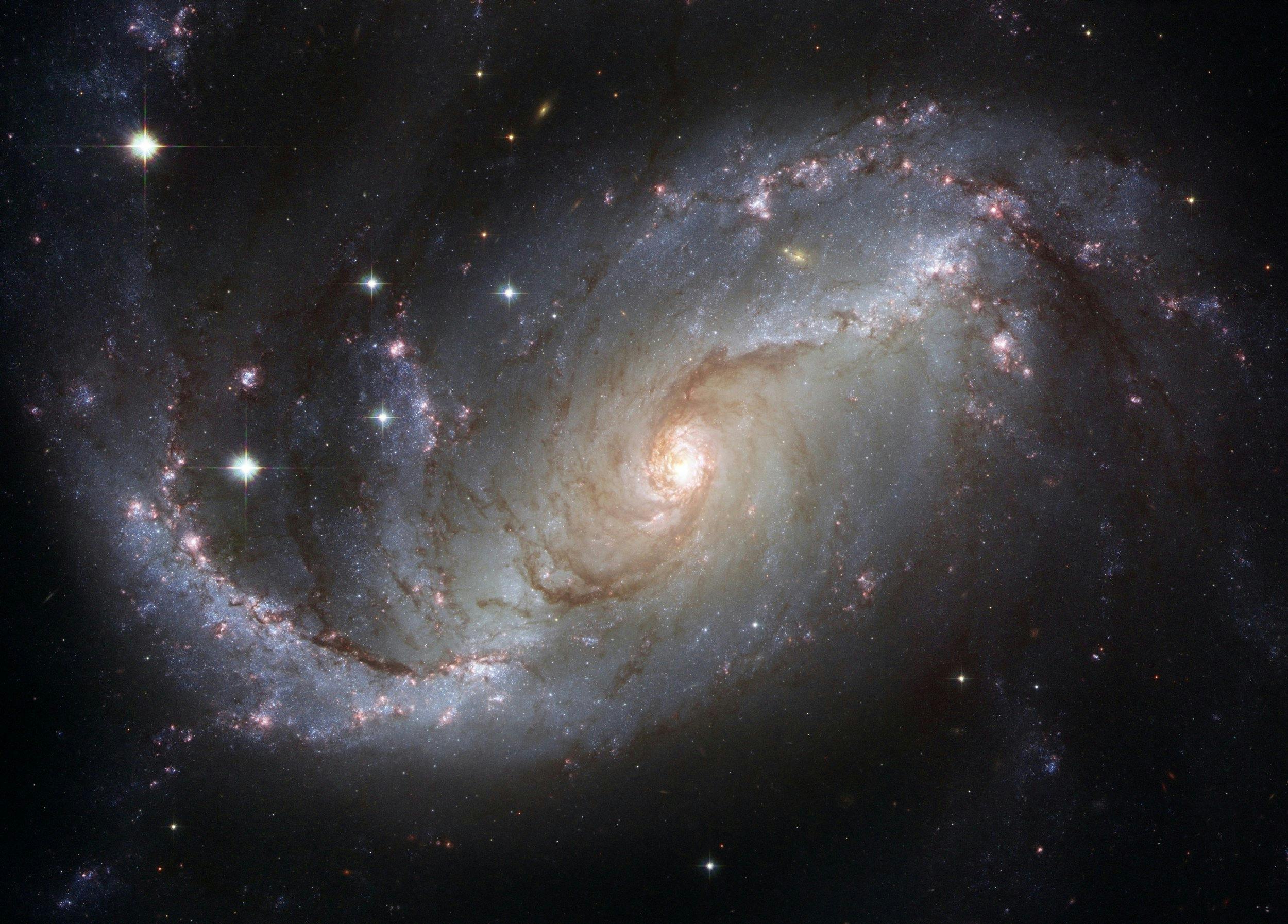
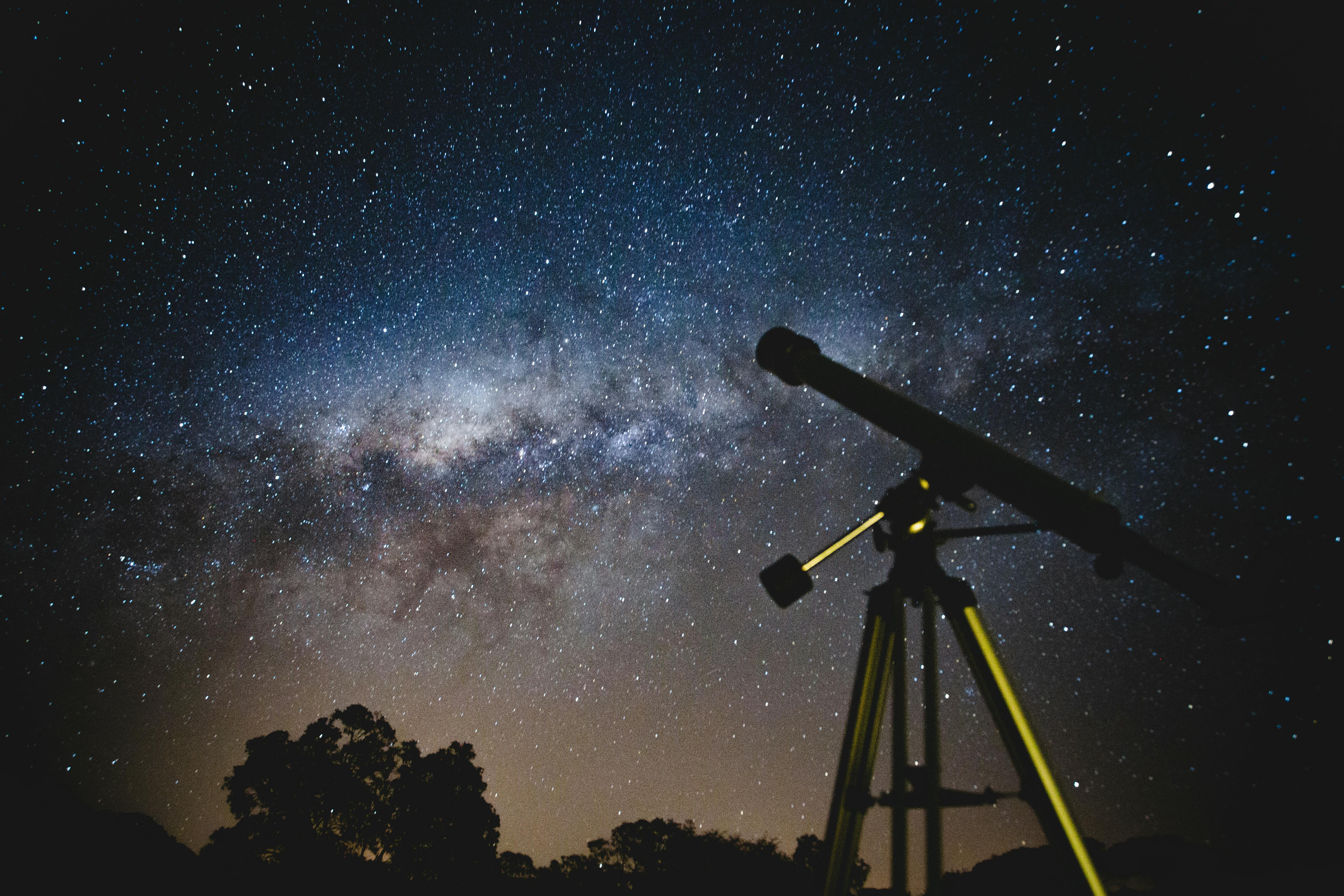
High‑quality visualizations play a crucial role in helping both experts and enthusiasts build intuition for these abstract concepts. Below are several illustrative, royalty‑free images that are widely used in educational and outreach contexts.

How to Learn More: From Popular Videos to Technical Papers
With so much attention on the black hole information paradox, there are excellent entry points for different levels of background.
For Curious Enthusiasts
- Watch Sean Carroll’s public lectures on black holes and information for a concept‑driven overview.
- Explore Quanta Magazine’s explainer “How the Black Hole Paradox Finally Fell”, which summarizes island results with clear visuals.
For Students and Early Researchers
- Study Leonard Susskind’s online lecture series on General Relativity and Black Holes, which gradually builds up the necessary background.
- Read introductory reviews such as “Islands in the Stream of Hawking Radiation” for a technical but accessible presentation of recent progress.
Conclusion: What Black Holes Teach Us About Reality
The renewed attention to quantum gravity and the black hole information paradox in 2026 reflects more than just a fascination with cosmic mysteries. It signals a deeper shift: information, entanglement, and computation are becoming central to how we think about spacetime itself.
Firewalls challenge our intuitions about smooth horizons, ER=EPR blurs the line between geometry and entanglement, and holography suggests that our three‑dimensional world may, in some sense, be a projection from a lower‑dimensional quantum system. Island calculations and replica wormholes, meanwhile, show that unitarity and semi‑classical gravity can coexist—if we are willing to reinterpret what “inside” and “outside” really mean.
As new preprints appear on arXiv and viral explainers translate them for broader audiences, the black hole information paradox continues to serve as a beacon guiding us toward a consistent, testable theory of quantum gravity. Whether the final story involves subtle quantum hair, wormhole networks, or something entirely unexpected, black holes are teaching us that the universe is far more deeply quantum‑informational than classical intuition would suggest.
Additional Value: Practical Ways to Engage With Quantum Gravity Research
For readers who want to move beyond passive consumption of explainers and begin engaging with the subject more actively, there are several concrete steps:
- Mathematical preparation: Strengthen your background in linear algebra, complex analysis, and differential geometry; these are the languages of quantum theory and relativity.
- Learn quantum information: Even if your ultimate interest is gravity, quantum information provides many of the conceptual tools driving current progress.
- Follow seminars and workshops: Many institutes (Perimeter, IAS, KITP, CERN) stream talks on YouTube, often archived for asynchronous viewing.
- Read review articles first: Before tackling research papers, look for review articles or lecture notes that summarize the landscape and terminology.
By combining solid mathematical foundations with exposure to current research via talks, preprints, and online courses, you can build the toolkit needed to appreciate (and eventually contribute to) the next generation of breakthroughs on quantum gravity and the black hole information paradox.
References / Sources
Selected accessible and technical resources related to the topics discussed:
- J. Maldacena, “The Large N Limit of Superconformal Field Theories and Supergravity”
- A. Almheiri et al., “Black Holes: Complementarity or Firewalls?”
- J. Maldacena and L. Susskind, “Cool Horizons for Entangled Black Holes” (ER=EPR)
- G. Penington, “Entanglement Wedge Reconstruction and the Information Paradox”
- A. Almheiri et al., “The Entropy of Hawking Radiation”
- Quanta Magazine, “How the Black Hole Paradox Finally Fell”
- PBS Space Time: “Do Black Holes Destroy Information?”
- Sean Carroll public lecture on black holes and information
