
How AI-Designed Proteins Are Rewriting the Rules of Biology and Chemistry
Following DeepMind’s AlphaFold revolution in protein-structure prediction, the life sciences have entered a new phase: AI systems no longer just predict what proteins look like—they can now design proteins and enzymes from scratch. Generative models such as RFdiffusion, Chroma, and proprietary platforms from biotech startups and pharmaceutical giants are learning the “language of proteins,” proposing amino acid sequences that fold into specific three-dimensional shapes with desired functions.
This rapidly evolving field sits at the intersection of biology, chemistry, genetics, and machine learning. It promises:
- Faster discovery of therapeutics, including custom enzymes for gene editing and precision biologics.
- Green chemistry catalysts that replace energy-intensive industrial processes.
- Smart biosensors and diagnostics for point-of-care medicine and environmental monitoring.
- Novel biomaterials and programmable nanoscale machines.
At the same time, policy experts and biosecurity researchers are examining how to ensure these tools are used safely and responsibly. Understanding how AI-designed proteins work—and where the technology is heading—is now essential for anyone following the future of science and technology.
Mission Overview: What Is AI-Driven Protein Design?
Proteins are the molecular workhorses of life. They catalyze reactions (enzymes), recognize pathogens (antibodies), transmit signals (receptors), and form structures (collagen, cytoskeleton). Every protein is built from a linear chain of amino acids that spontaneously folds into a 3D shape, and that shape largely determines its function.
Traditional protein engineering relied on two main approaches:
- Directed evolution: introduce random mutations, screen thousands or millions of variants, and keep the ones that work better.
- Rational design: use human intuition plus limited structural data to tweak residues in known proteins.
Both methods are powerful but slow and experimentally expensive. AI is changing the equation by learning from:
- Massive sequence databases (hundreds of millions of natural proteins).
- Structural repositories such as the Protein Data Bank and AlphaFold DB.
- Functional assays and fitness landscapes from high-throughput experiments.
“We are entering an era where protein design can be done with the same ease that we design digital circuits or software.” — David Baker, Institute for Protein Design
The mission of AI-driven protein design is straightforward but ambitious: generate amino acid sequences that adopt target structures and perform specific molecular tasks—ideally with minimal trial-and-error in the lab.
Technology: How Do AI Models Design Proteins and Enzymes?
Modern AI protein-design pipelines integrate several model classes, many conceptually related to large language models (LLMs) and image-generation systems:
1. Protein Language Models
Protein language models (PLMs) treat amino acid sequences like sentences. Using transformer architectures similar to GPT, they learn statistical rules of “grammar” and “syntax” from billions of residues.
- Pretraining: self-supervised learning on large sequence corpora.
- Capabilities: predict mutation effects, generate plausible new sequences, embed proteins into vector spaces that correlate with structure and function.
- Examples: ESM (Meta), ProtT5, ProGen.
2. Diffusion Models for 3D Protein Design
Diffusion models, popularized in image generation (e.g., Stable Diffusion), are now repurposed for protein backbones and side chains.
- RFdiffusion: generates 3D backbones that satisfy design constraints, such as binding pocket geometry.
- Chroma (by Generate Biomedicines): co-designs sequence and structure to satisfy multiple objectives.
- Interface design: create complementary surfaces for antibodies, binders, or assembly interfaces.
3. Structure Predictors as Oracles
Tools like AlphaFold2, RoseTTAFold, and OpenFold serve as “oracles” in the design loop:
- Generate candidate sequences.
- Predict their structures.
- Score how closely they match the desired fold.
- Iterate, often with gradient-based or reinforcement learning optimization.
4. Multi-Objective and Conditional Design
Many design tasks need to balance several constraints at once:
- Thermostability and solubility.
- Binding affinity to one target and selectivity against others.
- Expression in specific hosts (bacteria, yeast, mammalian cells).
Conditional generative models allow researchers to specify these properties as inputs—akin to prompts in text generation—and obtain sequences predicted to satisfy them.
5. Wet-Lab Integration and Active Learning
The AI pipeline does not stop at in silico design. Experimental feedback closes the loop:
- DNA synthesis and expression to produce designed proteins.
- High-throughput assays to measure binding, activity, or stability.
- Model retraining or fine-tuning on new experimental data.
“The tight coupling of generative models with rapid synthesis and testing is what turns protein design into an engineering discipline.” — Frances Arnold, Nobel Laureate in Chemistry
Visualizing AI-Designed Proteins
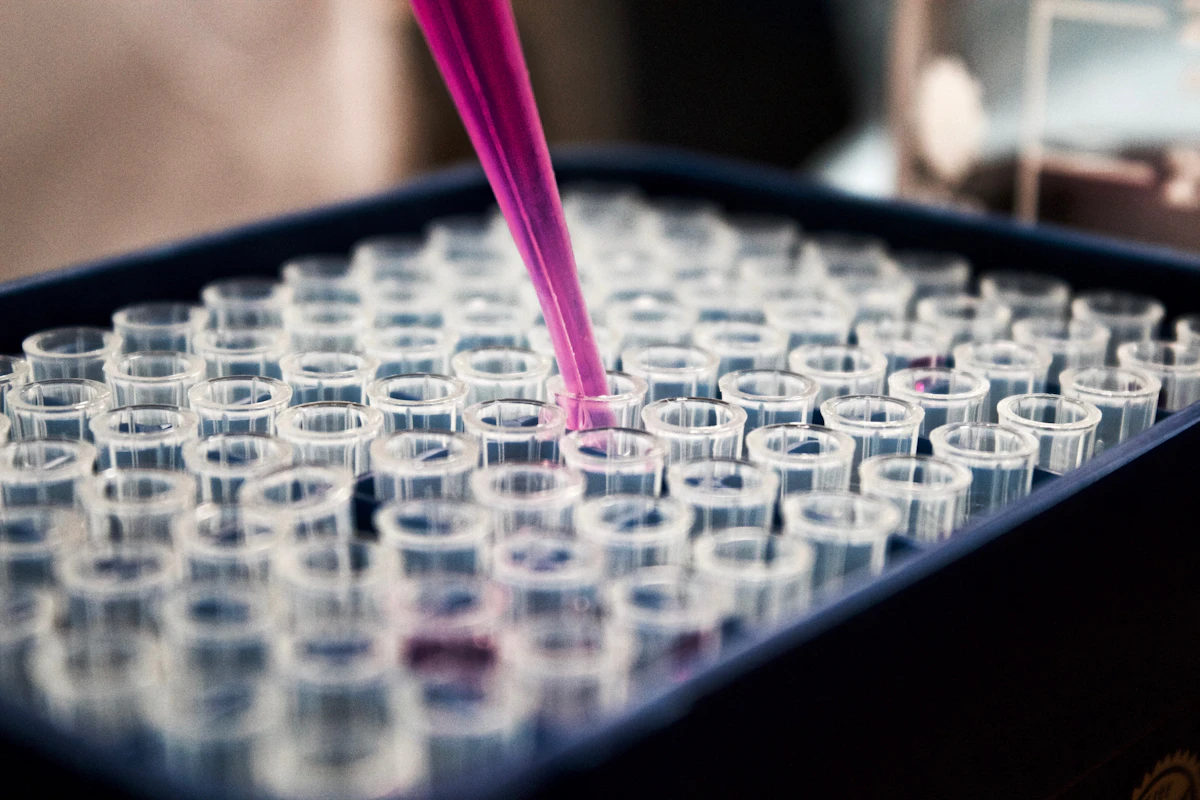
High-quality structural visualizations are essential for validating and communicating AI-designed proteins and enzymes.


Scientific Significance and Key Applications
The ability to design functional proteins on demand is reshaping several domains at once: drug discovery, green chemistry, diagnostics, and materials science.
1. New Therapeutics and Precision Biologics
AI-designed proteins are already impacting drug discovery pipelines:
- Binders and antibodies: bespoke binding proteins that target viral spikes, cancer neoantigens, or inflammatory cytokines.
- Enzymes for gene editing: novel nucleases, base editors, and prime editors with improved specificity and reduced off-target effects.
- Targeted protein degraders: designed binders that recruit E3 ligases to eliminate disease-driving proteins.
Many of these applications converge with CRISPR, mRNA therapeutics, and cell therapies. For example, AI-designed enzymes can be packaged in viral vectors or lipid nanoparticles to correct mutations in vivo.
2. Green Chemistry and Industrial Biocatalysis
Industrial chemistry has long leveraged enzymes for starch processing, detergents, and textiles. AI design extends this to harder problems:
- Enzymes that replace precious metal catalysts in organic synthesis.
- Lignin- and cellulose-degrading enzymes for sustainable biofuels.
- Biocatalysts that operate at mild temperatures, cutting energy usage and waste.
“AI-designed enzymes can be tuned for conditions where natural proteins fail, unlocking entirely new biomanufacturing routes.” — Jens Nielsen, Systems and Synthetic Biology Researcher
3. Sensors and Diagnostics
Designer proteins make highly specific biosensors:
- Fluorescent proteins whose brightness changes when they bind small molecules like glucose or neurotransmitters.
- Binding domains embedded in nanopores for single-molecule diagnostics.
- Point-of-care assays where designed binders replace traditional antibodies.
These tools are particularly important in global health, where low-cost, robust diagnostics enable rapid response to outbreaks.
4. Novel Biomaterials and Molecular Machines
Researchers are also using AI to design:
- Self-assembling nanocages and lattices for targeted drug delivery.
- Protein-based hydrogels and scaffolds for tissue engineering.
- Switchable “molecular machines” that change conformation in response to light or ligand binding.
These materials blur the boundary between biology and engineering, enabling responsive systems that can sense, compute, and act at the nanoscale.
Milestones: From AlphaFold to Lab-Validated Designs
Within a few years, AI-designed proteins have progressed from theory to experimentally validated reality.
Key Milestones
- AlphaFold2 (2020–2021): near-experimental accuracy in protein structure prediction for many targets; structures released through AlphaFold DB.
- Massive PLMs (2021–2023): models like ESM and ProGen showed emergent understanding of structure and function directly from sequence data.
- Diffusion-based design (2022–2024): RFdiffusion and related tools generated new folds and functional interfaces that were experimentally confirmed.
- First AI-designed binders and enzymes in the lab: multiple peer-reviewed articles and preprints demonstrated designed proteins binding to targets or catalyzing reactions as predicted.
- Commercial pipelines: biotech companies reported preclinical candidates whose cores were AI-designed rather than human-modified natural sequences.
Conference talks and preprints in 2024–2026 continue to push the envelope, including:
- De novo enzymes for previously inaccessible chemistries.
- Highly stable scaffolds for vaccines and multivalent display.
- Proteins designed to probe evolutionary questions—such as how far a sequence can deviate from nature while remaining functional.
Challenges, Safety, and Ethical Questions
Despite the excitement, AI-designed proteins come with serious challenges that span technical, ethical, and regulatory domains.
1. Model Limitations and Failure Modes
Even the best models can be confidently wrong:
- Predicted folding may not match the true experimental structure.
- Subtle dynamics and allosteric effects are often poorly captured.
- In vivo behavior (immune response, degradation, toxicity) is still difficult to predict.
Rigorous experimental validation remains essential, particularly for clinical applications.
2. Biosafety and Dual-Use Concerns
The prospect of designing harmful proteins or enhancing existing toxins is a central topic in current policy debates. However:
- Practical wet-lab execution, including synthesis, expression, and handling, still requires deep expertise and infrastructure.
- Many generative platforms incorporate safety filters and screening pipelines to block obviously hazardous outputs.
- Governments and scientific bodies are developing guidelines for responsible release of code, models, and datasets.
“Responsible innovation in AI and biology means building in safeguards from the start, not bolting them on later.” — Megan Palmer, Biosecurity Policy Expert
3. Data Governance and Equity
Large biological datasets raise questions about:
- Access disparities between well-funded institutions and under-resourced labs or regions.
- Benefit-sharing when models leverage data derived from biodiversity-rich countries.
- Intellectual property frameworks for sequences generated by AI rather than found in nature.
4. Regulatory Pathways
Regulators must adapt to molecules whose provenance includes generative AI:
- How should preclinical data be structured when molecules are de novo designed?
- What additional safety studies are necessary compared with natural or modestly engineered proteins?
- How do we ensure transparency without revealing proprietary algorithms?
Practical Tooling: How Researchers Work With AI-Designed Proteins
In practice, AI-driven protein design is a workflow that connects computational tools, lab automation, and analytical instruments.
Typical Workflow
- Define the design goal: e.g., an enzyme that catalyzes a particular step or a binder targeting a disease marker.
- Choose a model: PLM-based generation, diffusion-based backbone design, or hybrid approaches.
- Generate candidates: often thousands of sequences with varying constraints.
- In silico filtering: structure prediction, stability scoring, aggregation propensity, and immunogenicity prediction.
- DNA synthesis and expression: selected candidates are synthesized and expressed in an appropriate host system.
- Functional assays: measure binding affinity, catalytic rate, thermal stability, and other metrics.
- Iterative refinement: use experimental data to refine models and generate improved variants.
Many labs complement their design work with high-quality computational and experimental equipment. For example, molecular biologists and biochemists often rely on:
- Workstations optimized for deep-learning workloads.
- Reliable pipettes, microplate readers, and incubators for consistent assays.
- DNA synthesis services and next-generation sequencing for library characterization.
For researchers or advanced hobbyists building a compact in silico setup at home or in small labs, a powerful yet cost-effective GPU workstation—such as a system based on NVIDIA RTX 40-series cards—can accelerate structure prediction tasks. Prebuilt desktops like the HP OMEN Gaming Desktop with RTX 4080 offer sufficient compute for many open-source protein-modeling workflows, while remaining accessible for research groups that cannot maintain large clusters.
Implications for Genetics, Evolution, and Fundamental Biology
AI-designed proteins are more than just engineering tools; they are experimental probes into the rules of life.
Exploring the Protein Fitness Landscape
By generating and testing many variants, researchers can map how sequence changes affect:
- Folding stability and misfolding risk.
- Enzymatic efficiency and substrate specificity.
- Interaction networks in cells.
This helps answer long-standing questions such as:
- How densely packed is functional sequence space?
- How many distinct folds can support a given function?
- What constraints shaped natural evolution compared with what is theoretically possible?
Synthetic Genomes and Orthogonal Biology
As DNA synthesis costs fall, it becomes feasible to encode AI-designed proteins into synthetic chromosomes or orthogonal genetic systems. This can:
- Create minimal cells with fully designed proteomes for specific tasks.
- Implement “genetic firewalls” where designed proteins only function in engineered organisms, improving biosafety.
- Probe how robust life is to radical changes in its molecular building blocks.
Learning More: Talks, Papers, and Online Resources
For readers who want to dive deeper into AI-designed proteins, a range of high-quality educational resources are available.
- Nature and Nature Biotechnology collections on protein design summarize breakthroughs and review articles.
- DeepMind’s overview of AlphaFold on Nature (Jumper et al., 2021) explains the original structural prediction leap.
- The Institute for Protein Design (led by David Baker) shares updates and talks on its official site and on YouTube .
- Many computational biologists and ML researchers discuss cutting-edge work on Twitter/X and LinkedIn—for example, follow @DeepMind and David Baker on LinkedIn .
- Technical deep dives can be found in conference talks from NeurIPS, ICML, and ISMB, often posted on YouTube .
For hands-on experimentation with structure visualization and basic modeling, affordable tools like the Logitech MX Master 3S mouse can make intensive 3D navigation in molecular graphics software smoother and more ergonomic during long design sessions.
Conclusion: A New Era for Protein Engineering
AI-designed proteins and enzymes mark a turning point for the life sciences. What once required years of iterative mutagenesis and selection can now begin with a design prompt and a generative model, followed by targeted experimental validation.
The field is still young, and critical challenges remain—accurate function prediction, robust safety frameworks, equitable access, and transparent governance. Yet the trajectory is clear: proteins and enzymes are becoming programmable components, much like circuits in electronics or modules in software.
For students, researchers, policymakers, and technologists, understanding AI-driven protein design is increasingly essential. It is not only a catalyst for new drugs and green chemistry, but also a powerful lens for exploring what life can be when we are no longer constrained to the limited catalogue of proteins found in nature.
Additional Value: How to Stay Current in a Fast-Moving Field
Because AI-driven protein design evolves quickly, staying current requires a combination of literature tracking, community engagement, and selective hands-on practice.
- Set alerts: Use tools like Google Scholar alerts for terms such as “de novo protein design,” “RFdiffusion,” and “protein language models.”
- Follow key labs: Subscribe to newsletters or RSS feeds from leading institutes (e.g., the Institute for Protein Design, EMBL-EBI, and major biotech companies’ research blogs).
- Join online communities: Participate in specialized Slack or Discord groups, and follow computational biology threads on platforms like Reddit’s r/computationalbiology.
- Practice with open tools: Explore freely available notebooks for AlphaFold, OpenFold, or small PLMs to understand how these models are used in practice.
By combining conceptual understanding with periodic hands-on experimentation, you can build an intuition for what AI-designed proteins can and cannot do—and be well positioned to evaluate new claims as the field advances.
References / Sources
- Jumper, J. et al. “Highly accurate protein structure prediction with AlphaFold.” Nature (2021) .
- Watson, J. L. et al. “De novo design of protein structure and function with RFdiffusion.” bioRxiv preprint .
- Madani, A. et al. “ProGen: Language Modeling for Protein Generation.” Nature Biotechnology .
- Rives, A. et al. “Biological structure and function emerge from scaling unsupervised learning to 250 million protein sequences.” PNAS .
- Institute for Protein Design, University of Washington. https://www.ipd.uw.edu .
- AlphaFold Protein Structure Database. https://alphafold.ebi.ac.uk .
- Generate Biomedicines – Chroma and AI-enabled protein design. https://generatebiomedicines.com .
