From Keto to Metabolic Flexibility: Smarter Low‑Carb, Carb Cycling & GLP‑1‑Friendly Eating Explained
From Strict Keto to Metabolic Flexibility
Strict ketogenic diets once ruled the nutrition world, but in 2026 a gentler, smarter trend is taking over: flexible low‑carb eating, carb cycling, and a focus on “metabolic flexibility”—training your body to comfortably burn both fats and carbohydrates as fuel. This shift is especially visible among fitness enthusiasts and people using GLP‑1 medications who want steady energy, blood‑sugar control, and a way of eating they can actually enjoy for years.
Instead of rigid carb bans, today’s low‑carb approach emphasizes whole foods, protein‑anchored meals, and strategic use of carbs around activity and appetite. It’s less about dieting identity and more about living, training, and socializing without feeling like every bite is a moral test.

Why Strict Keto Is Fading
If you scroll through social media in 2026, you’ll notice fewer “keto or bust” declarations and more “carb‑conscious” or “insulin‑smart” captions. Several forces are driving this evolution:
- Keto fatigue: Years of ultra‑low carb living can be isolating and hard to maintain. Many people report burnout, social stress, and weight regain when they inevitably relax the rules.
- Performance goals: Strength athletes and runners have learned that very low carbs can blunt high‑intensity performance. They’re using carb cycling to fuel big training days without living on pasta 24/7.
- GLP‑1 awareness: With GLP‑1 medications in the spotlight, there’s rising interest in blood sugar stability and appetite control. Moderate, well‑timed carbs fit that story better than endless deprivation.
In practice, the new wave of low‑carb isn’t anti‑carb; it’s anti‑mindless carb. The focus is shifting from extremes to intention.
What Is “Metabolic Flexibility”?
Metabolic flexibility is your body’s ability to smoothly switch between burning fat and carbohydrate for fuel. Think of it like having a hybrid engine: you can cruise on fat most of the day, then reach for carbs when you need extra power.
In this framework, the “best” diet isn’t permanently very low carb or very low fat. Instead, it:
- Keeps protein high and consistent at most meals.
- Uses whole‑food carbs (fruit, potatoes, oats, rice, beans) strategically—often around workouts or busy periods.
- Relies on healthy fats like extra‑virgin olive oil, avocado, nuts, seeds, and fatty fish.
- Cycles between slightly higher‑ and lower‑carb days to support insulin sensitivity and appetite control.
Carb Cycling Explained (Without the Math Headache)
Carb cycling simply means varying your carbohydrate intake across the week instead of eating the exact same amount daily. It is often organized around your training:
- High‑carb leg or sprint days: Oats, rice bowls, potatoes, and fruit clustered around your workout.
- Moderate‑carb upper‑body days: A couple of carb‑rich meals, but not all day long.
- Low‑carb rest days: Eggs, fish, salads, non‑starchy vegetables, nuts, and olive oil.
For many, this pattern feels kinder than rigid keto: you still enjoy warm rice under a stir‑fry or roasted sweet potatoes on lifting days, but your overall carb intake remains lower than a typical Western diet.
GLP‑1‑Friendly Low‑Carb: Eating for Blood Sugar & Satiety
People using GLP‑1 medications (and those who simply care about stable energy) are gravitating toward “GLP‑1‑friendly” low‑carb or moderate‑carb patterns. These emphasize:
- Non‑starchy vegetables at most meals for fiber and volume.
- Lean proteins like fish, poultry, eggs, Greek yogurt, tofu, or tempeh.
- Healthy fats to support fullness and hormone health.
- Strategic carbs when appetite is naturally higher (often after activity or earlier in the day).
Paired with GLP‑1 meds, this style of eating can make it easier to listen to subtle hunger and fullness cues, because blood sugar swings and cravings are less dramatic.
A Sample Week of Flexible Low‑Carb Eating
Here’s how a week might look when you prioritize metabolic flexibility instead of perfection. Think of this as inspiration, not strict rules:
- Monday – High‑carb leg day: Protein oats for breakfast, a rice and chicken bowl post‑workout, roasted potatoes with salmon at dinner.
- Tuesday – Moderate‑carb upper‑body: Greek yogurt with berries, quinoa salad at lunch, veggie‑heavy stir‑fry over cauliflower rice at night.
- Wednesday – Low‑carb rest: Omelet with vegetables, big salad with grilled shrimp, zucchini noodles with pesto and chicken.
- Thursday – Moderate‑carb training: Similar to Tuesday with one or two starchy carb servings around your workout.
- Friday – High‑carb performance day: Whole‑grain toast at breakfast, fruit smoothie, hearty chickpea or bean‑based dinner.
- Weekend – Flexible: Often slightly lower carb with room for social meals—think bunless burgers plus a shared dessert or a sushi night balanced by lighter meals earlier in the day.

Recipe: GLP‑1‑Friendly Carb‑Smart Salmon Power Bowl
To bring all these ideas to your plate, here’s a vibrant, flexible low‑carb bowl that fits beautifully into carb‑cycling or GLP‑1‑friendly eating. It’s high in protein, rich in healthy fats, and lets you dial carbs up or down based on your day.
Prep time: 20 minutes
Cook time: 20 minutes
Total time: 40 minutes
Servings: 2 bowls
Difficulty: Easy–Moderate
Ingredients
For the salmon and vegetables
- 2 salmon fillets (about 4–5 oz / 115–140 g each), skin‑on or skinless
- 1 tbsp extra‑virgin olive oil
- 1 tsp smoked paprika
- 1/2 tsp garlic powder
- 1/2 tsp sea salt, plus more to taste
- 1/4 tsp freshly ground black pepper
- 1 small head broccoli, cut into small florets (about 2 cups)
- 1 small zucchini, sliced into half‑moons
- 1 red bell pepper, sliced into strips
For the base (carb‑flexible)
- 1 cup cooked quinoa or cauliflower rice (or a mix; use more quinoa on high‑carb days, more cauliflower on low‑carb days)
- 2 cups mixed salad greens or baby spinach
For the avocado yogurt dressing
- 1 ripe avocado
- 1/2 cup plain Greek yogurt (or unsweetened coconut yogurt for dairy‑free)
- 1 tbsp fresh lemon juice
- 1 small garlic clove, finely grated or minced
- 2 tbsp chopped fresh herbs (parsley, dill, or cilantro work beautifully)
- Pinch of sea salt, to taste
- 1–2 tbsp water to thin, as needed
Optional toppings
- 1 tbsp pumpkin seeds or sliced almonds, for crunch
- Lemon wedges, for serving
- Extra chopped herbs
Equipment
- Large baking sheet
- Parchment paper (optional, for easier cleanup)
- Sharp chef’s knife and cutting board
- Mixing bowls
- Fork or whisk for dressing
Step‑by‑Step Instructions
- Preheat and prepare the pan.
Heat your oven to 400°F (200°C). Line a large baking sheet with parchment paper if you’d like a smoother cleanup.
- Prep the vegetables.
Chop the broccoli, zucchini, and bell pepper into bite‑sized pieces. Add them to a bowl, toss with about half of the olive oil plus a pinch of salt and pepper, then spread them over one half of the baking sheet.
- Season the salmon.
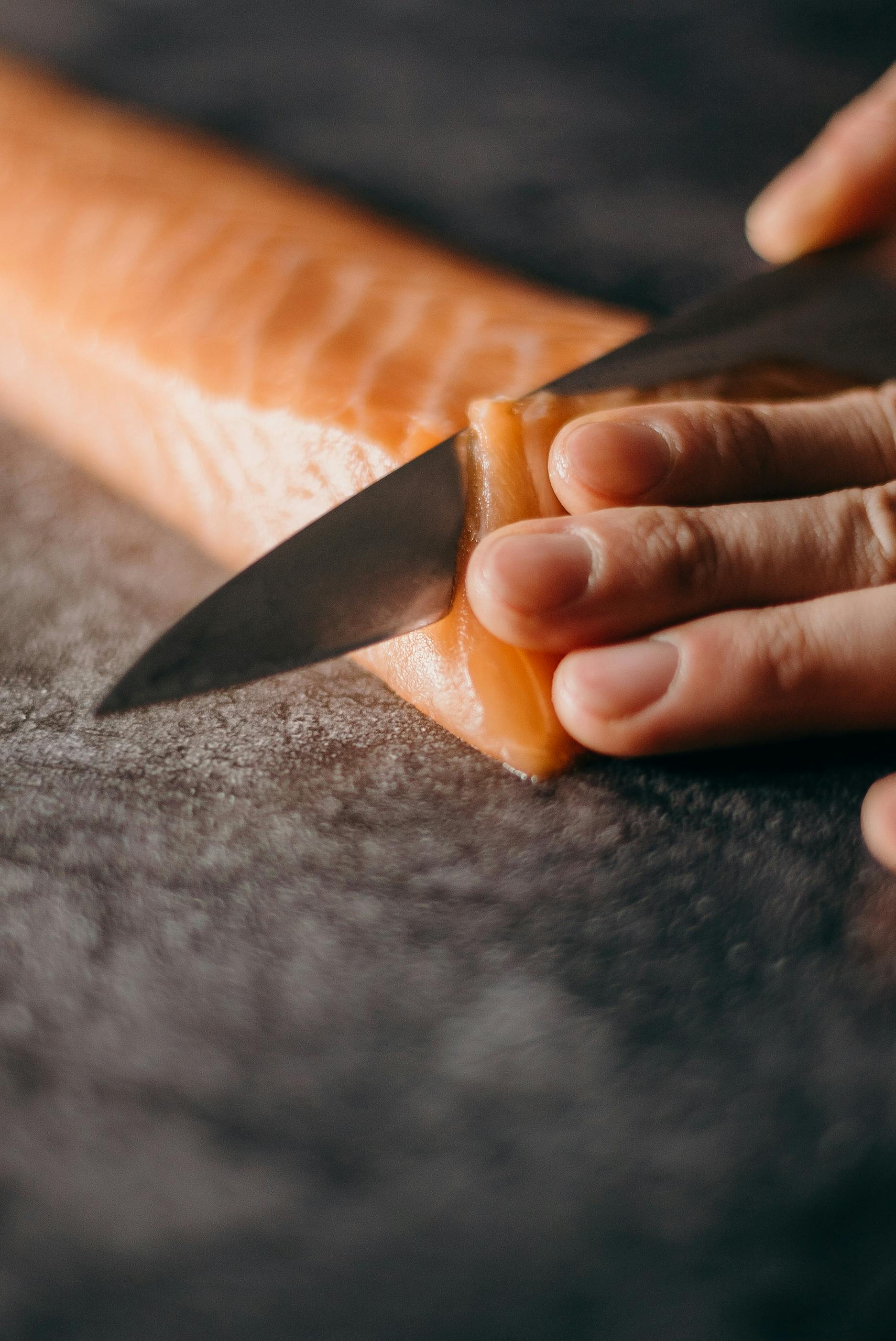
Pat the salmon dry with paper towels. Place the fillets on the other half of the baking sheet. Brush with the remaining olive oil and sprinkle evenly with smoked paprika, garlic powder, salt, and pepper.
- Roast to tender perfection.
Slide the tray into the oven. Roast for 12–15 minutes, until the vegetables are tender and the salmon flakes easily with a fork. Thinner fillets may cook faster; thicker ones may need another 2–3 minutes.
- Make the avocado yogurt dressing.
While the salmon roasts, scoop the avocado into a bowl and mash with a fork. Stir in the Greek yogurt, lemon juice, grated garlic, herbs, and salt. Add a tablespoon or two of water to reach a creamy, drizzleable consistency.
- Build your flexible base.
Divide the salad greens between two bowls. Add a scoop of quinoa if it’s a higher‑carb or post‑workout day, or mostly cauliflower rice if you’re aiming for lower carbs.
- Assemble the bowls.
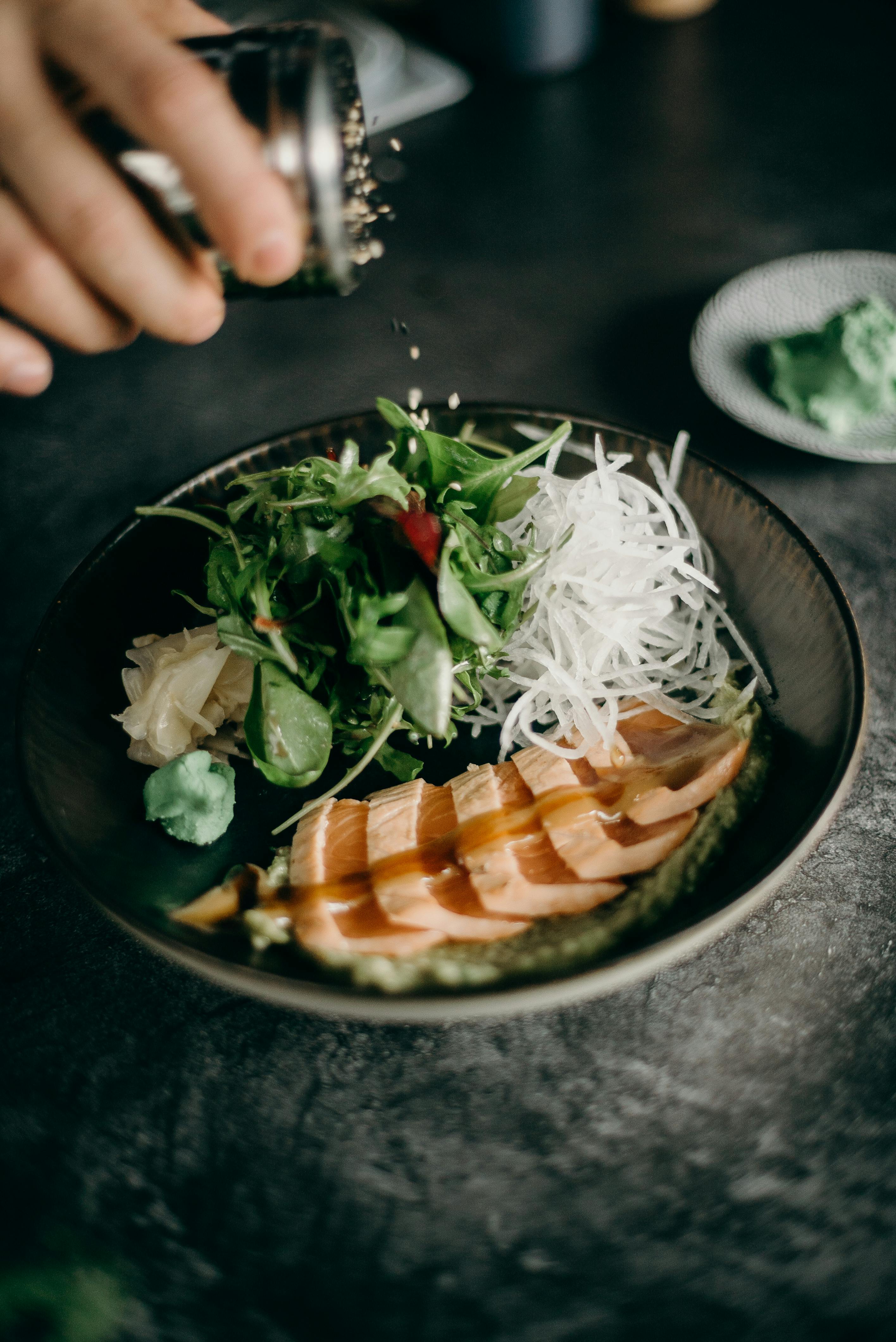
Top each bowl with half of the roasted vegetables and one salmon fillet. Spoon or drizzle the avocado yogurt dressing over the top. Finish with pumpkin seeds or almonds, extra herbs, and a squeeze of lemon if you like.
Storage, Meal Prep & Reheating Tips
This salmon power bowl is wonderfully meal‑prep friendly and fits neatly into a carb‑cycling routine.
- Fridge: Store cooked salmon, vegetables, and base in separate airtight containers for up to 3 days. Keep the dressing in its own jar.
- Freezer: The salmon and roasted veggies can be frozen for up to 2 months. Thaw overnight in the fridge before reheating. Make dressing fresh.
- Reheating: Gently reheat salmon and veggies in a covered skillet over low heat or in the oven at 300°F (150°C) until just warmed. Avoid microwaving salmon on high to keep it moist.
- On‑the‑go meal: Pack bowls in a leak‑proof container, adding dressing right before eating to keep greens crisp.

Serving Suggestions & Complementary Dishes
To round out your metabolic flexibility menu, pair this bowl with simple, seasonal sides that respect your carb goals for the day:
- Low‑carb pairings: Cucumber and tomato salad, garlic sautéed greens, or a clear vegetable soup.
- Moderate‑carb pairings: A small baked sweet potato, a slice of whole‑grain sourdough, or a cup of lentil soup.
- High‑carb training nights: Add a warm bowl of brown rice or barley pilaf alongside, or serve fruit salad for dessert.
However you serve it, let this recipe remind you that low‑carb, GLP‑1‑friendly eating doesn’t have to be joyless. With colorful vegetables, satisfying textures, and thoughtfully chosen carbs, you’re not just “being good”—you’re training your metabolism for a flexible, energetic life.