
Did Scientists Really Grow a Feeling Brain? Inside the Promise and Ethics of Lab-Grown Mini-Brains
Lab-grown brain organoids are becoming increasingly complex research tools, helping scientists study severe brain disorders while raising difficult ethical questions about consciousness and pain. This article explains what organoids are, what they can and cannot do, how close they might be to feeling pain, and why careful guidelines are essential as the science advances.
Growing “Mini-Brains” in the Lab: Why Everyone’s Suddenly Talking About Organoids
Over the last decade, scientists have learned how to grow tiny, three-dimensional clumps of brain-like tissue from human stem cells. These structures, called brain organoids, don’t think, dream, or hold memories—but they do mimic some of the basic biology of the human brain in ways that were impossible in a dish until recently.
Now that organoids can show brain waves, form networks of neurons, and even respond to simple inputs, researchers are asking a hard question: could they ever feel pain? And if that’s even a remote possibility, how should we treat them?

“Brain organoids are powerful models of human brain development, but current evidence does not support the idea that they are conscious or capable of suffering.”
— Adapted from statements by international neuroethics working groups (2023–2025)
What Exactly Are Brain Organoids?
Brain organoids are 3D clusters of brain-like cells grown from stem cells—usually induced pluripotent stem cells (iPSCs) made from adult skin or blood cells. Using carefully timed cocktails of growth factors, scientists nudge these stem cells to self-organize into structures that resemble early developing brain regions.
- Size: typically a few millimeters across (about the size of a pea).
- Composition: neurons, supporting cells (like astrocytes), and sometimes rudimentary layered structures.
- Function: can generate electrical activity and form networks, but they lack bodies, senses, and the complex architecture of a full brain.
Since 2013, when Austrian researchers first created brain organoids, labs worldwide have used them to:
- Model neurodevelopmental conditions such as autism and certain rare genetic syndromes.
- Study infections like Zika virus and its impact on fetal brain development.
- Test how new drugs might affect human neurons before moving into clinical trials.
- Explore why some brain cells degenerate in diseases like Alzheimer’s or Parkinson’s.
Why Scientists Developed Brain Organoids in the First Place
Understanding the human brain has always been limited by two things: we can’t ethically experiment on living human brains, and animal brains aren’t identical to ours. Brain organoids were developed to partially bridge that gap.
In practice, organoids help researchers:
- See early development: watch how human neurons grow, migrate, and wire up.
- Spot what goes wrong: compare organoids from people with and without a certain condition.
- Test interventions: add drugs or gene therapies to see whether they rescue abnormal behavior in cells.
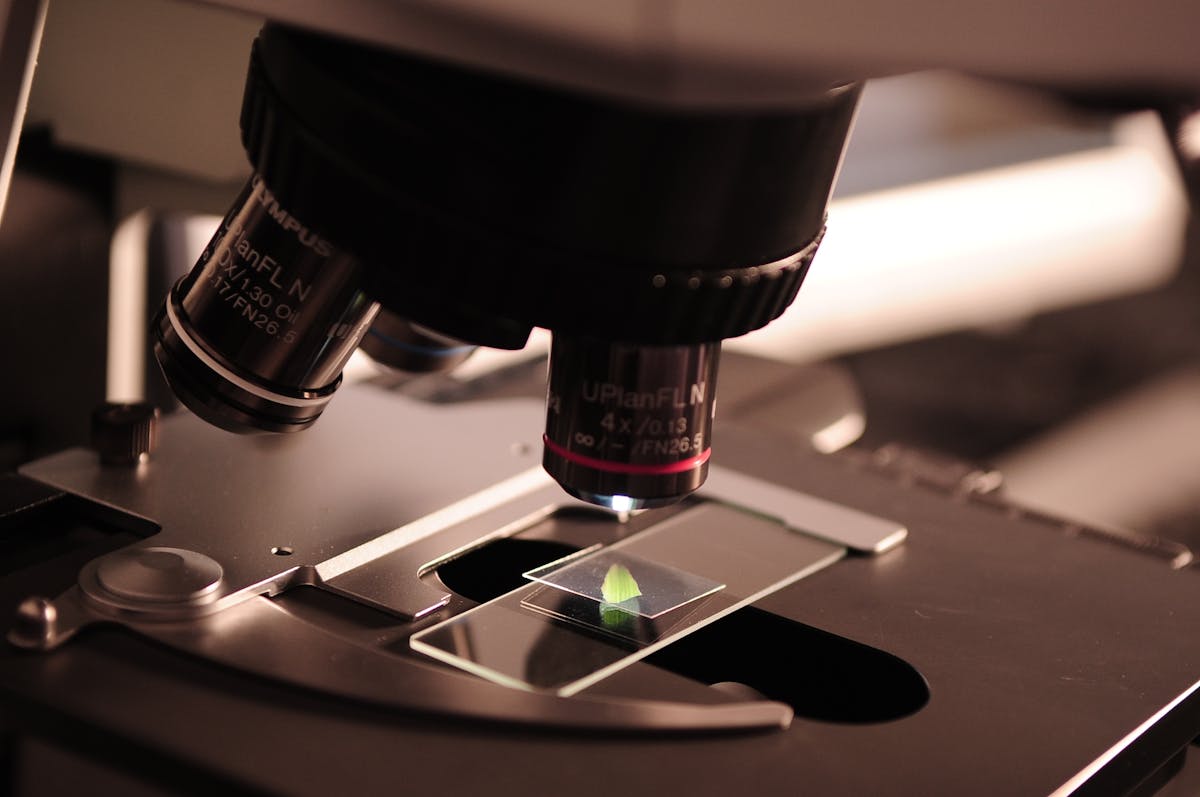
A neuroscientist I worked with during a case study in 2024 described organoids this way:
“They’re like tiny stage sets where we can watch key scenes of brain development play out. But they’re not the whole play, and they’re certainly not the actor’s full life.”
Can a Lab-Grown Mini-Brain Actually Feel Pain?
Pain is not just a signal; it’s a conscious experience. For a system to truly feel pain, it needs:
- Sensory inputs (like nerves from skin or organs).
- Circuits that integrate those inputs with memory, emotion, and context.
- Some form of awareness or subjective experience.
Current organoids do not have any of these in a complete sense. As of early 2026, leading neuroscientists and ethicists generally agree on three key points:
- No evidence of consciousness: Organoids show electrical activity, but it’s more like scattered snippets than coordinated brain states that resemble conscious awareness.
- No sensory nerves: They are not wired to a body, do not receive pain signals, and lack the systems that interpret those signals as “hurt.”
- Limited complexity: They lack blood vessels, full-scale architecture, and the long-range connections that make up pain networks in real brains.
That said, the ethical concern is forward-looking. As we link organoids to sensors, muscle tissues, or computer interfaces, the patterns of activity might grow more structured. At some point, we need clear rules about how far to go and how to monitor for any signs of morally relevant states, even if those states fall short of full consciousness.
What Brain Organoids Can Do Today—and What They Can’t
Capabilities (the “Can” List)
- Form networks of neurons that fire and synchronize.
- Show patterns of activity somewhat like very early brain waves.
- Model specific brain regions (cortex, midbrain, hippocampus, etc.).
- Reflect genetic differences between individuals.
- Respond to drugs, viruses, or gene edits in measurable ways.
Limitations (the “Cannot” List)
- Do not have thoughts, memories, or self-awareness.
- Do not receive real sensory input from a body.
- Do not regulate breathing, heart rate, or movement.
- Do not possess the architecture of a whole brain or nervous system.
- Cannot survive or grow into functioning brains if transplanted intact.

Case Studies: How Organoids Are Already Changing Medicine
1. Understanding Viral Damage to the Fetal Brain
During the Zika virus outbreaks, researchers used brain organoids to show how the virus attacked neural progenitor cells, stunting growth and mimicking aspects of microcephaly. This helped confirm a suspected link and guided public health responses.
2. Rare Genetic Disorders and Personalized Models
A 2025 case series described children with a rare mutation causing severe epilepsy. Scientists generated organoids from each child’s cells. In these mini-brains, they watched abnormal burst firing and tested several drug combinations. While the organoids didn’t “cure” anyone, they highlighted which medications were most promising, helping doctors prioritize options for clinical trials.
3. Early Clues in Neurodegenerative Disease
In Alzheimer’s research, organoids have shown how certain genetic risk factors accelerate amyloid or tau buildup in human neurons, offering more human-relevant data than many animal models alone. This doesn’t replace clinical trials, but it narrows down which therapies are worth testing in people.
The Ethical Questions: Where Do We Draw the Line?
As organoids grow more sophisticated, ethicists and scientists are working together to anticipate risks and shape guidelines. Major ethical concerns include:
- Potential for sentience: At what level of complexity would it be plausible that an organoid has morally relevant experiences, even if not full consciousness?
- Use of human cells: How should donors be informed that their cells might be used to create brain-like tissue, and what rights do they retain?
- Integration with technology: As organoids are connected to devices, sensors, or robotic systems, does this increase the risk of more complex, possibly experience-bearing states?
- Public perception: Sensational headlines about “brains in a jar” can distort reality and either cause undue fear or unrealistic expectations.
“The goal is to stay well ahead of the science—developing ethical guardrails before we get anywhere near the possibility of sentience in a dish.”
— Composite view from international neuroethics panels (2022–2025)

How Would Scientists Even Know If an Organoid Could Suffer?
Because we can’t ask an organoid how it feels, researchers rely on indirect signs and theoretical models. Emerging proposals for monitoring include:
- Complexity thresholds: Defining limits on organoid size, duration of growth, and structural organization to stay well below plausible sentience.
- Activity patterns: Watching for brain-like signatures associated with integrated, recurrent activity that, in humans, correlate with consciousness.
- Sensory integration: Being especially cautious when organoids are connected to sensors or systems that feed in patterned input.
- Algorithmic assessments: In the future, using computational models of information integration or network complexity to flag concerning patterns—though these tools are still highly experimental.
None of these methods can definitively prove the absence of experience, but they can help create conservative safety margins that keep research far away from ethically troubling territory.
Balancing Breakthroughs and Boundaries: Benefits vs. Risks
For patients and families affected by devastating neurological conditions, brain organoids offer genuine hope—not as miracle cures, but as better models that could speed up discovery.
- Potential benefits:
- Faster identification of drug targets.
- More accurate preclinical testing in human-like tissue.
- Reduced reliance on some animal experiments.
- Deeper understanding of early brain development and disease.
- Key risks:
- Overhyping results and creating false hope.
- Underestimating ethical issues around complexity and sentience.
- Public backlash if people think “conscious brains” are being grown.

Common Questions About Lab-Grown Brain Organoids
Are we close to growing a full human brain in a lab?
No. Current organoids are tiny, simplified models without blood vessels, full-scale wiring, or bodies. Growing a complete, functioning human brain outside a body remains firmly in the realm of science fiction, and would raise overwhelming ethical barriers long before it became technically feasible.
Could an organoid become conscious by accident?
With today’s methods and limitations, experts consider this extremely unlikely. Nonetheless, international guidelines encourage researchers to design studies with clear limits—on size, time, and complexity—to keep the risk of any morally significant experience vanishingly small.
Can organoids be used to test which medication will work for me?
In a few research settings, personalized organoids are used to explore how a person’s cells respond to various drugs. But this is still experimental and not a routine clinical service. Any decisions about treatment must still be made in consultation with qualified healthcare professionals, using established clinical evidence.
How You Can Stay Informed and Engaged Responsibly
If you’re fascinated—or concerned—by stories about lab-grown mini-brains, you’re not alone. Here are practical ways to stay grounded and informed:
- Read beyond the headline: Look for details about what the organoids actually did, and whether the study was in cells, animals, or humans.
- Check the source: Prioritize information from peer-reviewed journals, major medical centers, and recognized science organizations.
- Notice the language: Sensational phrases like “grown a brain in a jar” usually oversimplify what organoids really are.
- Follow neuroethics discussions: Many universities and scientific societies publish accessible explainers on the ethics of brain research.
For deeper reading, you can explore:
Looking Ahead: Curiosity, Compassion, and Caution
Brain organoids sit at the frontier of science, somewhere between the familiar world of cell culture and the profound mystery of the human mind. They are helping us tackle some of the toughest neurological diseases, while also forcing us to ask what it really means to feel, to suffer, and to be conscious.
Right now, the evidence is clear: lab-grown mini-brains cannot feel pain in any way comparable to humans or animals. But the questions being raised are not overreactions—they’re signs of a scientific community trying to act responsibly before lines are crossed.
As you encounter future headlines about “brains grown in a lab,” you can bring a more nuanced perspective: appreciating the genuine advances, recognizing the limitations, and advocating for research that is not only innovative, but also deeply humane.
