
Connie Britton Calls Her Rooster Role ‘Revolutionary’ In Sharp HBO Comedy With Steve Carell
Thirty years after Spin City, Connie Britton has circled back to creator Bill Lawrence for HBO’s new comedy Rooster, and Episode 5 is where her character really takes flight. Playing the ex-wife of Steve Carell’s faded sitcom star, Britton leans into a role she’s calling “revolutionary” — not because it’s loud or flashy, but because it quietly rewrites what TV usually does with exes of a certain age.
Connie Britton, Bill Lawrence, and a ‘Revolutionary’ Ex-Wife on HBO’s Rooster
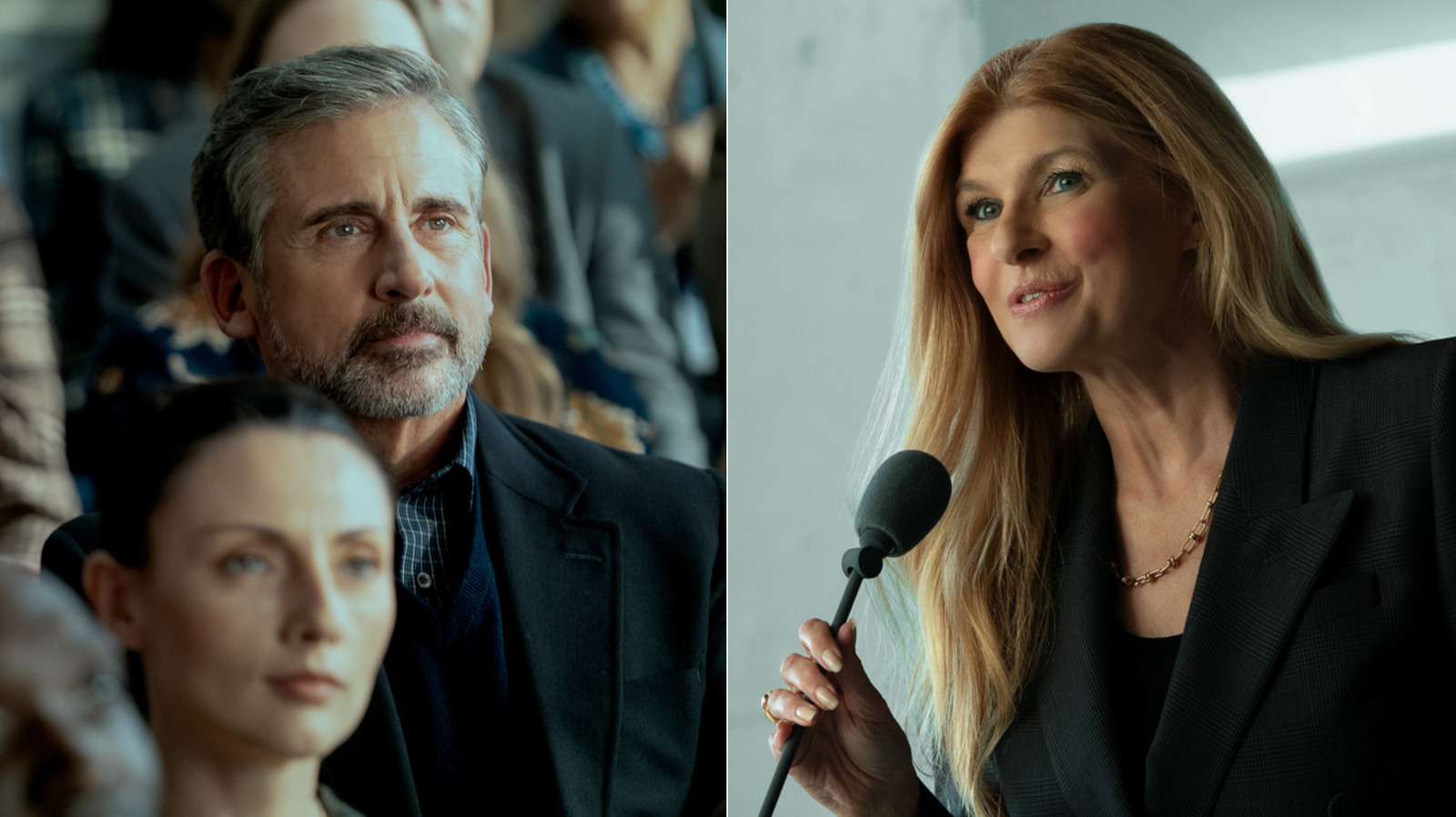
In a conversation with TVLine, Britton reflects on reuniting with Lawrence, finding an instant creative shorthand, and why this particular ex-wife might feel quietly radical in 2020s television comedy.
Reuniting After Spin City: Connie Britton and Bill Lawrence’s Creative Shorthand
For anyone who remembers Britton’s turn as the smart, underused Nikki Faber on ABC’s Spin City, Rooster feels like a full-circle moment. Back then, Bill Lawrence was the up-and-coming showrunner who’d later define early-2000s comedy with Scrubs and, more recently, Ted Lasso.
“We hadn’t worked together in decades, but it was like we picked up the same language again,” Britton told TVLine, describing the reunion as both nostalgic and surprisingly fluid.
That “same language” matters. Lawrence has a knack for balancing broad comedy with emotional specificity, and Britton has built a post–Friday Night Lights career on characters who feel lived-in rather than sketched. Their overlap in Rooster is less about punchlines than about tone: a comedy that lets middle-aged characters be funny, flawed, and still evolving.
- History together: Spin City (late-’90s ABC political workplace sitcom)
- Lawrence since then: Scrubs, Cougar Town, Ted Lasso, Shrinking
- Britton since then: Friday Night Lights, Nashville, 9-1-1, The White Lotus

Episode 5 of Rooster: When the Ex-Wife Becomes the Center of Gravity
Without diving into heavy spoilers, Episode 5 is the moment Rooster stops treating Britton’s character as backstory and starts letting her define the present. The episode reframes the show’s emotional stakes: Carell’s character is no longer the only person whose past with fame and family matters.
Structurally, the episode leans into:
- Dual perspective: Scenes that play differently depending on whose version of history you believe.
- Quiet confrontation: No spectacular blow-ups, but layered, slightly awkward honesty that feels closer to real divorced-parents dynamics.
- Emotional callbacks: Hints of how their old chemistry as a couple bleeds into their co-parenting and mutual resentment.
Britton describes the episode as the point where “the audience is finally allowed to understand that she didn’t just react to his life, she built her own — and she did it on purpose.”

Why Connie Britton Calls the Role ‘Revolutionary’
The word “revolutionary” in TV interviews is usually code for “slightly less derivative than usual,” but Britton’s take here has teeth. On American TV, the ex-wife of a famous man has historically been:
- The bitter punchline
- The saintly co-parent
- The regret fantasy the hero wants back
Rooster nudges past those boxes. Britton’s character:
- Has her own career and agency that are not simply reactively anti-him.
- Is allowed to be funny without being cruel, and disappointed without being tragic.
- Refuses to act as her ex-husband’s moral compass or soft landing pad.
“We’ve all seen the ex who’s there to tell the man how he ruined everything,” Britton notes. “This time, she’s not auditioning for his redemption arc. She’s busy living her own.”
In the broader culture of prestige comedy — think Better Things, Somebody Somewhere, and even Hacks — Rooster slides into an ongoing course correction: stories about middle-aged women that don’t treat them as narrative leftovers once the man’s career starts to wobble.

Playing Off Steve Carell: Comedy Timing Meets Emotional Weariness
Steve Carell is in that career phase where he can flip between cringe comedy and dramatic melancholy in a single line — the aftershock of The Office, Foxcatcher, and The Morning Show. Rooster leans into that dissonance, and Britton turns it into fuel.
Their scenes together in Episode 5 carry a specific energy:
- History you can feel: The way they pause before jokes land implies years of practicing how not to fight.
- Comic undercurrent: Even in tense exchanges, there’s a rhythm that lets the audience exhale with a laugh.
- Power balance: The show doesn’t pretend he’s the only one who sacrificed for fame, and Britton makes that clear without monologuing.
Critics have already started calling their dynamic “the rawest, funniest divorced couple HBO’s had in years,” noting how neither actor lets the other off the hook.
Strengths and Weaknesses: Does Rooster Earn Its Prestige-Comedy Aura?
Even as Connie Britton’s Episode 5 showcase solidifies what the series is trying to do, Rooster isn’t immune to the usual prestige-comedy pitfalls.
What Works
- Character focus: The show lets its leads be unglamorous, self-sabotaging, and occasionally petty, without moralizing.
- Industry commentary: There’s a subtle but pointed look at how aging male stars are indulged while the women in their orbit are quietly expected to adapt.
- Performance depth: Britton brings a weariness that plays beautifully against Carell’s manic, defensive charm.
Where It Stumbles
- Pacing: Some viewers may find the early episodes too gentle, waiting for the show to snap into focus — which, arguably, doesn’t fully happen until this fifth episode.
- Familiar beats: The “washed-up sitcom star reckoning with his past” framework isn’t new, so when the show leans on familiar industry-insider jokes, it can feel overly safe.
- Limited ensemble usage: Side characters are often sketched as types; Britton’s expanded presence only highlights how underwritten others still are.

Where Rooster Fits in the Connie Britton TV Universe
It’s impossible not to place Rooster alongside Britton’s previous work. From Tami Taylor in Friday Night Lights to Rayna Jaymes in Nashville, she’s specialized in women who are authoritative but not invincible, romantic but not defined by romance.
The Rooster role feels like a quieter evolution of that arc:
- Less aspirational, more lived-in: This isn’t a hero mom or superstar; it’s someone who decided not to orbit a famous man forever and is dealing with what that costs.
- Emotionally off-center: She’s not the protagonist, which lets Britton play against expectations — dropping in and out with impact instead of carrying every scene.
- Meta resonance: Watching her opposite Carell inevitably recalls the ’90s and 2000s TV era they both came from, adding an unspoken layer of nostalgia and critique.

Final Take: A Quietly Subversive Turn in a Familiar Hollywood Story
Episode 5 of Rooster doesn’t reinvent television, but Connie Britton’s presence sharpens the entire series. By letting her ex-wife character claim narrative space without becoming either villain or saint, the show makes its best argument for why stories about aging fame — and the collateral damage it leaves behind — still matter.
If the rest of the season lives up to the emotional clarity and uneasy humor of this episode, Rooster could settle into the same lane as other late-career, semi-autobiographical-feeling comedies: not essential for everyone, but essential for the people who recognize themselves in its midlife negotiations.
For now, Britton’s “revolutionary” tag feels earned — not because the character is unprecedented, but because, in a landscape that still sidelines ex-wives once the pilot is over, simply letting her be this complex, this late in the game, is its own quiet act of rebellion.
4/5 – Smart performances and emotionally grounded writing elevate a familiar premise, with Episode 5 as the show’s clearest statement of intent so far.
