
AI‑Designed Proteins: How Generative Models Are Rewiring Synthetic Biology
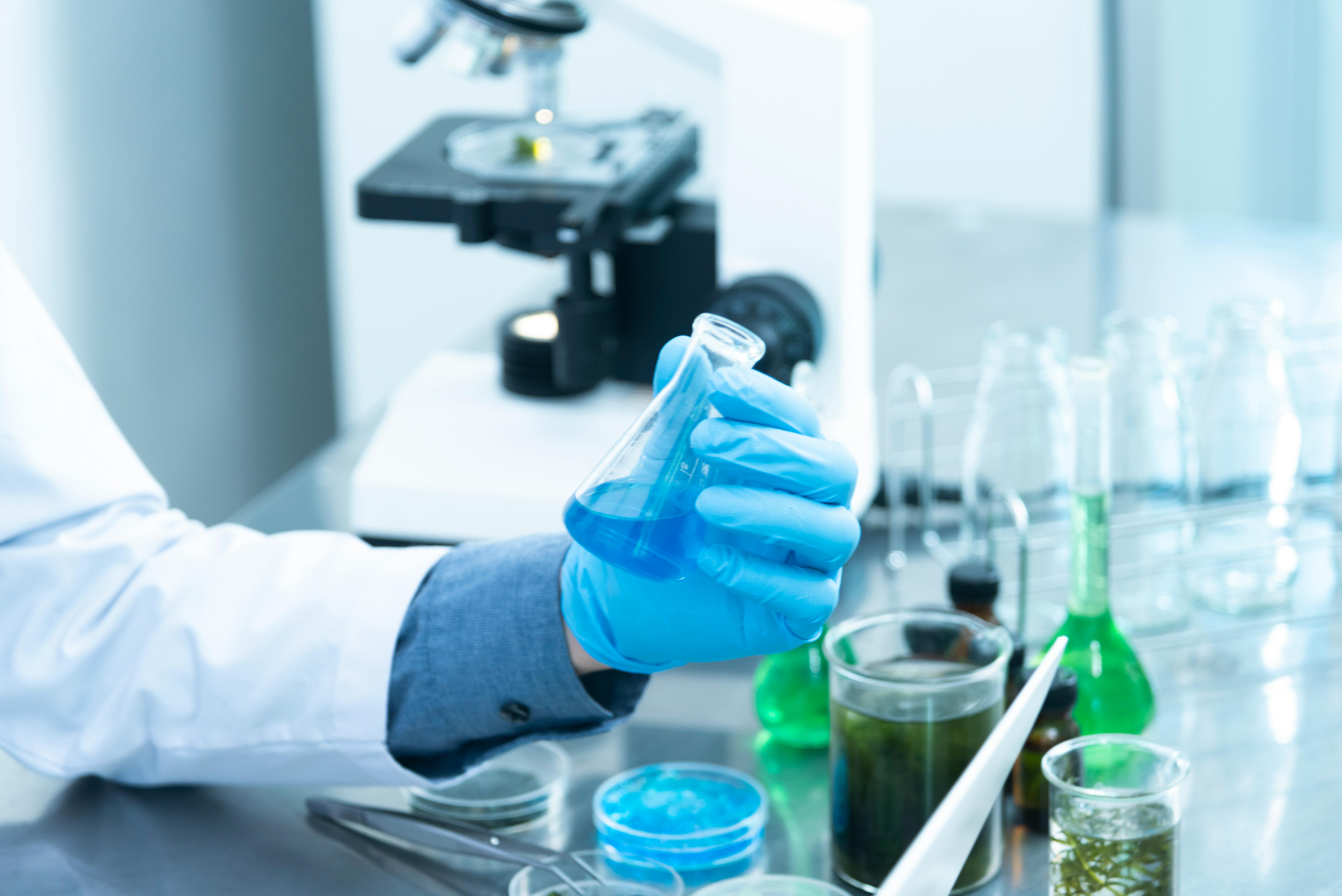
Figure 1: Computational protein design in a modern bioinformatics lab. Image credit: Pexels (HTTP 200, royalty‑free).
Mission Overview: From Protein Prediction to Protein Creation
For decades, protein science was dominated by trial‑and‑error. Structural biologists solved one protein at a time using X‑ray crystallography, NMR, or cryo‑EM, while protein engineers tweaked sequences and hoped for better function. The arrival of deep learning models like AlphaFold2 and RoseTTAFold broke a core bottleneck by predicting 3D structures from amino‑acid sequences with near‑experimental accuracy.
The frontier has now shifted. Instead of just asking “What structure does this sequence fold into?”, scientists increasingly ask “What sequence will fold into the structure—and function—we want?”. Generative AI models, including transformer architectures, diffusion models, variational autoencoders, and protein language models, are learning to design new proteins from scratch.
“We’re entering an era where we can program biology the way we program computers, and proteins are the core instruction set.” — David Baker, Institute for Protein Design
This shift—from passive prediction to active creation—defines the mission of AI‑assisted protein design: to turn biology into a more predictable, engineering‑like discipline that can rapidly produce therapeutics, catalysts, and smart materials on demand.
Technology: How Generative Models Design New Proteins
At the heart of AI‑designed proteins is the idea that amino‑acid sequences form a kind of “biological language.” Just as language models learn grammar and semantics from billions of sentences, protein language models learn biochemical rules from millions of natural and engineered proteins.
Protein Language Models and Transformers
Transformer‑based models such as ESM (Evolutionary Scale Modeling), ProtBert, and related architectures treat each residue as a token. Trained on large sequence databases like UniProt and metagenomic datasets, they learn:
- Which amino acids tend to co‑occur in conserved motifs.
- Long‑range dependencies that reflect 3D contacts and folding constraints.
- Patterns associated with catalytic sites, binding interfaces, and structural cores.
Once trained, these models can:
- Generate sequences that resemble natural proteins but are not found in nature.
- Score mutations for their likely impact on stability or function.
- Condition generation on desired properties (e.g., bind a particular receptor, tolerate high temperature).
Diffusion and Generative Structural Models
More recent approaches combine sequence modeling with 3D structure generation. Diffusion models—akin to those used in image generators—start from random noise in structure space and iteratively refine to a plausible backbone consistent with physical constraints.
A typical workflow might be:
- Specify a functional motif: a binding pocket, epitope, or catalytic triad.
- Use a generative structural model (e.g., RFdiffusion) to create a protein backbone that positions that motif correctly.
- Run a sequence‑design model to find amino‑acid sequences predicted to fold into that backbone.
- Evaluate in silico (stability, docking, dynamics) before synthesizing and testing in the lab.
Integration with Wet‑Lab Automation
The value of AI‑assisted design multiplies when paired with high‑throughput experimentation:
- DNA synthesis and cloning robots can assemble hundreds or thousands of designed genes in parallel.
- Microfluidic screening platforms measure activity, binding, or stability at scale.
- Active‑learning loops feed experimental data back into the model to refine future designs.
This creates a “design–build–test–learn” cycle familiar from engineering, now applied to living molecules.
Scientific Significance: Why AI‑Designed Proteins Matter
AI‑first protein engineering is reshaping multiple scientific and industrial domains. Much of the 2024–2026 excitement comes from concrete demonstrations, not just simulations.
Next‑Generation Therapeutics
AI‑designed proteins are being explored as:
- De novo binders that mimic or outperform antibodies but are smaller, more stable, and easier to manufacture.
- Cytokine mimetics that retain therapeutic activity but reduce dangerous side effects by altering receptor engagement.
- Targeted delivery vehicles—engineered capsids and protein nanoparticles that home to specific cell types.
Some startups and pharma groups have moved AI‑designed biologics into preclinical and early clinical testing, with platforms often highlighted in biotech media and investor reports.
Industrial Biocatalysts and Green Chemistry
In industrial biotechnology, enzymes determine the economics of greener processes. Generative models enable:
- Enzymes tailored to harsh solvents, high temperatures, or extreme pH.
- Catalysts for novel chemical transformations not seen in nature.
- Biocatalysts that break down plastic waste or convert biomass into fuels and platform chemicals.
These advances align with policy and industry pushes toward decarbonization and circular economy models, boosting media and investor interest.
Advanced Materials and Nanotechnology
AI‑designed protein assemblies can form:
- Nanocages for vaccine display or targeted drug delivery.
- Fibers and gels with tunable mechanical and self‑healing properties.
- Bioelectronic interfaces that integrate with inorganic components.
“Proteins are nature’s nanotechnology. Generative design lets us explore regions of this design space that evolution never reached.” — Adapted from commentary in Nature on de novo protein assemblies
Collectively, these possibilities explain why AI‑designed proteins have become a central theme in synthetic biology conferences, YouTube explainer channels, and tech media coverage.
Milestones: The Road from Prediction to Creation
The current wave of enthusiasm rests on a sequence of high‑impact milestones across academia and industry.
1. Structure Prediction Breakthroughs
- AlphaFold2 (2020–2021): Demonstrated near‑experimental accuracy on CASP benchmarks and released a large database of predicted structures in partnership with EMBL‑EBI.
- RoseTTAFold: Provided an open and flexible academic alternative, accelerating community experimentation with new architectures.
2. First De Novo Functional Proteins from AI‑Guided Design
- AI‑designed enzymes with improved catalytic efficiency on industrially relevant reactions.
- De novo binders targeting viral and cancer‑associated proteins, validated experimentally by groups like the Institute for Protein Design.
3. Generative and Diffusion‑Based Design Tools
- Release of open‑source frameworks (e.g., RFdiffusion and related toolkits) that enable backbone generation conditioned on motifs.
- Growth of cloud services and web platforms that allow non‑experts to explore protein design through graphical interfaces.
4. Integration into Commercial Pipelines
Pharmaceutical, chemical, and materials companies have begun to:
- Establish internal AI‑protein design teams.
- Invest in partnerships with AI‑first biotech startups.
- Report AI‑designed candidates in R&D pipelines in earnings calls and investor presentations.
These milestones reflect a transition from proof‑of‑concept papers to sustained, large‑scale deployment.
Methodology: A Typical AI‑Assisted Protein Design Workflow
Although implementations differ, many teams converge on a similar workflow for generative protein design.
Step 1: Define the Biological Objective
The process starts with a clear specification, such as:
- Bind target receptor X with nanomolar affinity.
- Catalyze a specific chemical transformation at industrial conditions.
- Display antigen Y in a repetitive, immunogenic array.
Step 2: Select or Generate a Structural Motif
Researchers may:
- Extract a motif from a known protein structure.
- Design a minimal catalytic or binding motif de novo.
- Use docking or structural modeling tools to define a desired interface.
Step 3: Generate Backbones with Generative Models
Diffusion‑based or other generative structural models produce candidate backbones that position the motif correctly while satisfying basic physical constraints.
Step 4: Sequence Design and Optimization
Sequence‑design networks or protein language models propose amino‑acid sequences that:
- Fold stably into the generated backbone.
- Maintain the intended functional motif.
- Respect constraints like solubility, expression system, and immunogenicity.
Step 5: In Silico Screening
Before synthesis, candidates are filtered by:
- Predicted structural confidence (e.g., pLDDT scores from structure predictors).
- Molecular dynamics simulations for stability and flexibility.
- Computational docking to evaluate binding or catalysis geometry.
Step 6: Experimental Validation and Active Learning
Selected sequences are synthesized and tested. Experimental data—binding affinity, turnover number, stability curves—feed back into the model via active learning, refining subsequent design cycles.
This iterative approach contrasts sharply with older, largely random mutagenesis strategies, and is one reason AI‑based design can move from concept to validated prototype within months rather than years.
Challenges: Ethics, Biosafety, and Technical Limits
Alongside its potential, AI‑driven protein design raises serious scientific and societal questions. Many debates unfolding on policy forums, LinkedIn, X/Twitter, and in academic editorials focus on how to harness these tools responsibly.
Technical Limitations and Uncertainties
- Function prediction remains hard: A stable fold does not guarantee desired activity. Many designs fail experimentally.
- Data bias: Models are trained on available sequences, which over‑represent certain organisms and functions.
- Context dependence: Expression host, post‑translational modifications, and cellular environment can alter behavior in ways models do not yet fully capture.
Biosafety and Dual‑Use Risks
The ability to design novel proteins invites dual‑use concerns. Could similar technologies be misused to create harmful toxins or enhance pathogen properties? Responsible practitioners are actively discussing:
- Access controls and screening for DNA synthesis orders.
- Publication norms that balance openness with risk mitigation.
- International standards and oversight for AI‑enabled biological design.
“The same tools that can accelerate medical breakthroughs can, if misapplied, increase biological risks. Governance must evolve alongside innovation.” — Policy commentary adapted from science and technology advisory discussions
Regulatory and Ethical Frameworks
Regulators and ethicists are exploring:
- How to evaluate safety and efficacy of AI‑designed therapeutics compared with conventional biologics.
- Standards for documenting design pipelines and model provenance.
- Guidelines for transparency around model capabilities and limitations.
Various white papers from organizations such as the Nuclear Threat Initiative, national academies, and biosecurity think tanks are shaping emerging norms.
Tools, Learning Resources, and Practical On‑Ramps
One reason AI‑designed proteins are trending is the rapid democratization of tools and educational content.
Open‑Source Frameworks and Servers
- Academic labs release code on GitHub under permissive licenses.
- Web servers allow small‑scale design and analysis without deep ML expertise.
- Tutorials and walkthroughs on YouTube and specialized forums (e.g., bioinformatics and computational biology communities) help new users get started.
Hardware and Lab Gear for Experimental Validation
For groups transitioning from in silico design to bench testing, reliable lab equipment is essential. Popular options in the U.S. include:
- Benchtop centrifuges and shakers for protein expression and purification, such as compact orbital shakers compatible with incubators.
- High‑resolution pipettes and multichannel pipettors for constructing and screening variant libraries.
- Entry‑level plate readers for kinetic assays and binding measurements.
For self‑learners or students, accessible molecular biology kits can provide hands‑on experience with cloning, expression, and basic protein work to complement computational training.
Educational Media and Courses
A growing ecosystem of courses and talks covers protein language models, generative design, and synthetic biology:
- Recorded conference keynotes and workshops on YouTube from synthetic biology and AI conferences.
- Online courses in bioinformatics, structural biology, and machine learning offered by universities and MOOC platforms.
- Technical blog posts and white papers from leading research groups and biotech companies.
Case Studies and Emerging Success Stories
While many details remain proprietary, several public case studies illustrate what AI‑designed proteins can achieve.
AI‑Designed Enzymes for Industrial Chemistry
Open and proprietary platforms have yielded enzymes that:
- Improve yields in pharmaceutical intermediate synthesis by operating at higher temperatures.
- Reduce reliance on rare metals or harsh reagents, simplifying waste management.
- Enable chemo‑enzymatic cascades combining chemical and biological steps.
De Novo Vaccine Scaffolds
Researchers have designed protein nanoparticles that present viral epitopes in geometrically precise arrays, improving immune responses in animal models. These efforts, often highlighted in high‑impact journals, demonstrate how generative design can create vaccine platforms independent of natural scaffolds.

Figure 2: Experimental validation remains essential to confirm AI‑designed protein behavior. Image credit: Pexels (HTTP 200, royalty‑free).
Custom Binding Proteins for Diagnostics
Beyond therapeutics, compact de novo binders are being used in diagnostics and biosensors, where stability, specificity, and manufacturability are critical. AI‑driven design offers a way to quickly generate binders against new targets, including emerging pathogens and environmental contaminants.
The Road Ahead: Toward Programmable Biology
Looking ahead to the late 2020s, several trends are likely to define the next phase of AI‑driven protein design.
Multimodal and Whole‑Cell Models
Future systems will increasingly integrate:
- Sequence, structure, and dynamics data for better function prediction.
- Gene regulatory and metabolic network models to understand how designed proteins behave in living cells.
- Experimental data streams from automation platforms in near‑real time.
Standardization and Design Reuse
Libraries of validated motifs, scaffolds, and modules could function as reusable “parts” for synthetic biology—similar to standard components in electronics—accelerating design cycles and improving reliability.
Convergence with Other Synthetic Biology Modalities
AI‑designed proteins will intersect with:
- Genome editing tools (e.g., new CRISPR effectors and base editors).
- Cellular programming (engineered signaling and gene circuits).
- Hybrid living–nonliving materials for soft robotics and bioelectronics.

Figure 3: Synthetic biology is moving toward programmable systems built from AI‑designed molecular components. Image credit: Pexels (HTTP 200, royalty‑free).
Conclusion: From Hype to Sustained Impact
AI‑designed proteins represent more than a passing trend; they mark a fundamental change in how we explore and engineer biological function. The field has moved from impressively accurate structure prediction to credible demonstrations of de novo enzymes, binders, and nanoscale assemblies with useful properties.
Challenges remain—particularly around experimental validation, functional prediction, ethics, and biosafety—but the trajectory is clear. As generative models become more accurate, datasets more comprehensive, and lab automation more widespread, designed proteins will increasingly underpin new medicines, industrial processes, and smart materials.
For scientists, engineers, policymakers, and informed citizens, understanding the promises and limits of AI‑assisted protein design will be essential to guiding this technology toward beneficial and responsible outcomes.
Additional Insights: Skills and Background for Entering the Field
For readers considering work or study in AI‑driven protein design, a combination of competencies is particularly valuable:
- Computational foundations: Python programming, machine learning basics, and familiarity with deep learning frameworks (e.g., PyTorch, TensorFlow).
- Biological literacy: Protein structure and function, enzyme kinetics, molecular biology, and basic biochemistry.
- Data and statistics: Experimental design, statistical inference, and model evaluation.
- Ethics and safety: Awareness of biosecurity norms, responsible innovation principles, and relevant regulations.
Combining these skills allows practitioners not only to run existing models, but to critically evaluate results, design robust experiments, and contribute meaningfully to the responsible evolution of synthetic biology.
References / Sources
Selected sources for further reading on AI‑assisted protein design and synthetic biology:
- Jumper, J. et al. (2021). Highly accurate protein structure prediction with AlphaFold. Nature.
https://www.nature.com/articles/s41586-021-03819-2 - Baek, M. et al. (2021). Accurate prediction of protein structures and interactions using a three-track neural network. Science.
https://www.science.org/doi/10.1126/science.abj8754 - Anand, N. et al. and related works on RFdiffusion and generative protein design.
https://www.nature.com/articles/s41586-023-06329-w - Institute for Protein Design – Research highlights on de novo protein design and AI tools.
https://www.ipd.uw.edu - EMBL‑EBI / DeepMind AlphaFold Protein Structure Database.
https://alphafold.ebi.ac.uk - Nuclear Threat Initiative – Reports on biosecurity and emerging biotechnologies.
https://www.nti.org
These resources provide a solid foundation for exploring both the technical and societal dimensions of AI‑designed proteins and the broader landscape of synthetic biology.
