
AI-Discovered Materials Are Reinventing Clean Energy and Quantum Technology
Mission Overview
The traditional pipeline for discovering new materials has been painfully slow: propose a compound, synthesize it, test its properties, and then repeat thousands of times. AI-driven materials discovery inverts this logic by using data-driven models to scout vast chemical and structural spaces first, so that experiments focus only on the most promising candidates. This acceleration is particularly crucial for climate technologies such as batteries and catalysts, and for quantum materials that may underpin future computing and sensing.
At the heart of this mission is the convergence of machine learning with computational chemistry, solid-state physics, and high-throughput experimentation. Models trained on large databases of known materials—such as the Materials Project, OQMD, and NOMAD—can now predict key properties like formation energy, bandgap, ionic conductivity, and catalytic activity with remarkable speed. Researchers then use robotics and automated labs to synthesize and test AI-suggested candidates, creating a feedback loop that steadily improves the models.
“AI lets us flip the script from Edisonian trial-and-error to targeted, hypothesis-driven discovery across millions of possibilities.”
— Kristin Persson, Director of the Materials Project
This “self-driving lab” paradigm is now being adopted by national labs, startups, and major tech companies, who see AI-discovered materials as a strategic lever for decarbonization and advanced computing.
Visualizing AI-Driven Materials Discovery
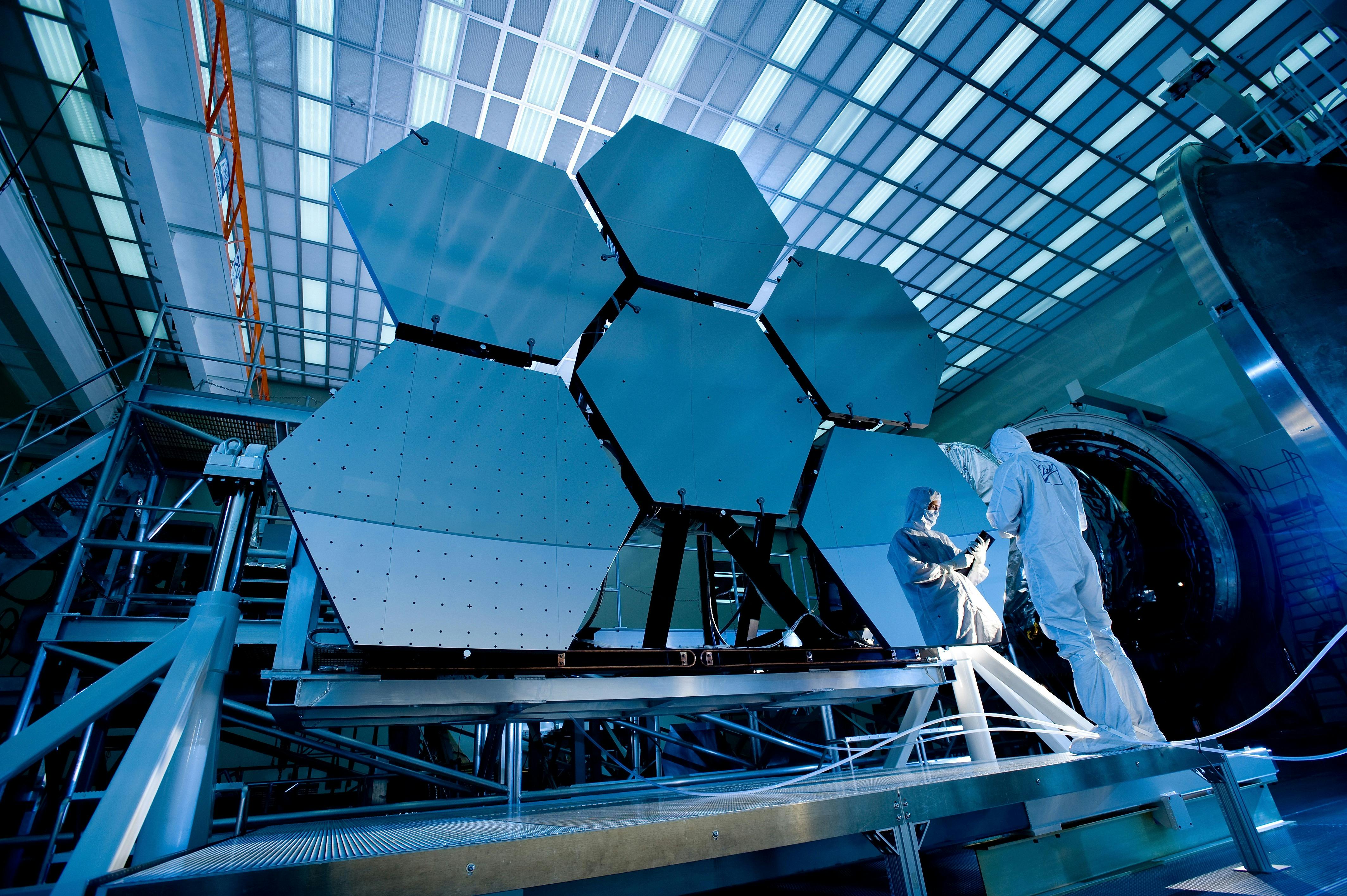
The following images illustrate how AI, robotics, and quantum materials research intersect in modern laboratories and supercomputing centers.

AI for Energy Storage: Batteries and Solid-State Electrolytes
Energy storage is one of the most visible beneficiaries of AI-driven materials discovery. From electric vehicles to grid-scale storage, the performance and safety of batteries are dictated by their electrode and electrolyte materials.
Key Objectives in Battery Materials Discovery
- Increase energy density (more energy per unit mass or volume).
- Enhance safety by developing non-flammable, stable electrolytes.
- Extend cycle life and reduce capacity fade.
- Lower dependence on scarce or geopolitically sensitive elements (e.g., cobalt, nickel).
How AI Models Accelerate Battery Research
Modern AI models for battery materials often combine graph neural networks (GNNs) with domain-specific descriptors:
- Structure-aware representations: GNNs take atomic graphs—nodes as atoms, edges as bonds or neighbor interactions—and learn embeddings that correlate with properties such as ionic conductivity and diffusion barriers.
- Large language models for chemistry: Foundation models trained on millions of chemical formulas, patents, and publications can propose new compositions or interpret experimental protocols, acting as intelligent copilots for materials chemists.
- Active learning loops: AI models propose candidate materials; the most uncertain or promising ones are prioritized for simulation or synthesis, and the new data is fed back into the models for continual improvement.
“For solid-state batteries, AI is beginning to do what combinatorial chemistry did for pharmaceuticals: screen enormous design spaces and narrow them to a handful of high-value targets.”
— Battery materials researcher, paraphrased from recent literature
AI-Discovered Solid-State Electrolytes
Solid-state batteries replace flammable liquid electrolytes with solid materials that conduct ions while blocking electrons. AI has been used to:
- Predict Li-ion and Na-ion conductivity in thousands of crystal structures.
- Identify frameworks that remain stable against high-voltage cathodes and lithium metal anodes.
- Design dopant schemes that open fast-ion pathways without destabilizing the lattice.
Several AI-guided discoveries have reported solid electrolytes with conductivities approaching or surpassing state-of-the-art sulfides and oxides, and with improved electrochemical stability windows. While many remain at the prototype stage, the pipeline from prediction to pouch cell is getting shorter every year.
For readers interested in practical battery technology and design principles, books like Lithium Batteries: Science and Technology offer a rigorous overview of electrochemistry and materials fundamentals that underlie AI-driven advances.
AI-Optimized Catalysts for Green Chemistry
Catalysts are central to both classical chemical industry and emerging green technologies. AI is being deployed to design catalysts that make processes more energy-efficient and less carbon-intensive, particularly for:
- CO2 reduction to fuels and chemicals.
- Nitrogen fixation (ammonia synthesis) under milder conditions.
- Electrolytic hydrogen production (water splitting).
Data-Driven Catalyst Discovery Workflow
A typical AI-catalyst pipeline integrates computation, experimentation, and ML:
- High-throughput DFT calculations: Density functional theory is used to compute adsorption energies, activation barriers, and reaction pathways for many catalyst compositions and surfaces.
- Feature engineering or learned representations: Catalysts may be encoded via composition, surface descriptors, electronic structure features, or learned embeddings of local environments.
- Surrogate modeling: ML models approximate the DFT or experimental results, enabling rapid screening over millions of hypothetical catalysts.
- Bayesian optimization and reinforcement learning: Advanced algorithms search for catalysts that maximize activity and selectivity while minimizing cost and environmental impact.
“Machine learning is becoming an essential lens through which we view catalytic reaction networks, revealing trends that are invisible to traditional descriptor-based analyses.”
— Paraphrased from recent reviews in catalysis and AI
From CO2 Electroreduction to Ammonia Synthesis
AI-discovered catalysts have led to:
- Identification of copper-based and single-atom catalysts with improved selectivity for specific CO2 reduction products (e.g., ethylene, ethanol).
- New nitride and carbide systems for electrochemical nitrogen reduction, though overcoming competing hydrogen evolution remains a challenge.
- Optimization of nickel-iron and cobalt-based catalysts for alkaline water electrolysis and overall water splitting.
Popular science channels such as the Two Minute Papers YouTube channel frequently cover these breakthroughs, translating dense technical results into accessible explainers that highlight AI’s role.
AI and Quantum Materials: Superconductors, Topological Phases, and Qubits
Quantum materials exhibit electronic behaviors that defy classical intuition—superconductivity, topological protection, exotic magnetism, and correlated electron phenomena. AI is increasingly used to sift through candidate compounds and to analyze experimental data from techniques like angle-resolved photoemission spectroscopy (ARPES) and neutron scattering.
Searching for New Superconductors and Topological Materials
The discovery of high-temperature superconductors and topological insulators has motivated massive computational searches. AI helps by:
- Predicting electronic band structures or key features such as band inversion from minimal input.
- Classifying materials as likely topological, trivial, or strongly correlated using ML classifiers trained on known examples.
- Using generative models to propose new crystal structures that may host unconventional superconductivity.
“By training on the growing catalog of known topological materials, machine learning models can recognize the subtle signatures of topology far faster than manual analysis.”
— Insights inspired by topological materials research communities
Quantum Materials for Qubits
Quantum computers rely on qubits that are highly coherent yet controllable. Materials challenges include:
- Minimizing defect-induced decoherence in superconducting qubits.
- Engineering materials that host Majorana modes or other non-Abelian excitations.
- Designing color centers in semiconductors (e.g., diamond NV centers, silicon carbide defects) with tailored optical and spin properties.
AI tools are now used to predict defect formation energies, optical transition energies, and spin properties, guiding experimentalists toward materials and fabrication conditions that yield more stable qubits. Tech companies such as IBM and Google routinely publish on these topics, with many results summarized in accessible posts on platforms like LinkedIn and in blog articles by quantum hardware teams.
Technology and Methodology: From Foundation Models to Self-Driving Labs
Under the hood, AI-driven materials discovery relies on a sophisticated technology stack that blends data, models, and automation.
Key Components of the AI Materials Stack
- Materials databases: Curated repositories like the Materials Project, OQMD, and NOMAD provide computational and experimental data on hundreds of thousands of materials.
- Representation learning: Graph neural networks, message passing schemes, and equivariant neural networks represent atomic structures in a way that respects symmetries and local environments.
- Generative models: Variational autoencoders (VAEs), generative adversarial networks (GANs), and diffusion models generate new crystal structures, polymers, or molecules with targeted properties.
- Foundation models for chemistry: Large transformer models trained on SMILES strings, InChI keys, and text corpora help with reaction planning, synthesis route generation, and property prediction.
- Automated labs and robotics: Robotic platforms mix reagents, control furnaces, operate characterization tools, and return data to the AI orchestrator.
The Self-Driving Lab Loop
A self-driving lab typically cycles through:
- Design: AI proposes materials or experiments based on a target objective.
- Execution: Robots carry out synthesis, processing, and characterization.
- Measurement: Sensors and instruments capture structural, electronic, and performance data.
- Learning: Data flows back into the AI model, updating it and influencing the next batch of experiments.
For researchers or engineers wanting a hands-on introduction to these methods, resources like Materials Informatics: Methods, Applications, and Prospects provide detailed practical guidance that bridges materials science with modern data science.
Scientific Significance and Real-World Impact
AI-discovered materials are not just an academic curiosity; they have the potential to reshape multiple technology verticals.
Clean Energy and Decarbonization
- Cheaper and safer batteries can accelerate the adoption of electric vehicles and enable high-penetration renewable energy on the grid.
- Efficient CO2 and nitrogen reduction catalysts could make carbon-neutral fuels and fertilizers economically viable, reducing reliance on fossil fuels.
- Next-generation photovoltaics discovered with AI could surpass the efficiency and stability limits of current silicon and perovskite technologies.
Quantum Technologies and Advanced Computing
- Discovery of low-defect superconductors and new topological phases may underpin more robust quantum computers and sensors.
- AI-guided spintronic and neuromorphic materials could enable low-power, brain-inspired computing architectures.
Influential researchers such as Anubhav Jain and Kristin Persson’s group frequently share updates on AI-for-materials progress, making platforms like X/Twitter and LinkedIn vital for staying current.
Milestones and Recent Breakthroughs
The field has accelerated dramatically over the last decade, with several notable milestones:
- Foundation models for materials: Multiple labs and companies have released large models trained on millions of chemical structures and materials entries, analogous to language models but for atoms.
- AI-designed solid electrolytes and cathodes: Several high-profile papers have reported AI-suggested compositions that match or outperform state-of-the-art materials after experimental validation.
- Robotics-integrated discovery platforms: Self-driving labs have demonstrated the autonomous optimization of thin-film materials, perovskite solar absorbers, and photocatalysts within days instead of months.
- Quantum materials identification: ML classifiers trained on band structures and symmetry data have rapidly expanded catalogs of candidate topological insulators and superconductors.
Many of these results are summarized in white papers and technical blogs from organizations such as Google DeepMind, Microsoft Research, and Lawrence Livermore National Laboratory.
Challenges, Risks, and Open Questions
Despite the excitement, AI-discovered materials face significant scientific, technical, and societal challenges.
Data Quality and Bias
- Materials databases reflect experimental and computational biases—certain chemistries and structure types are heavily overrepresented.
- Inconsistent reporting of synthesis conditions, processing history, and measurement uncertainty can mislead models.
- Negative results (failed syntheses, poor stability) are rarely published but are critical for robust learning.
Model Interpretability and Trust
For high-stakes applications like grid storage or aerospace, it is not enough for a model to be accurate; researchers must understand why a candidate looks promising. This has spurred work on:
- Attribution methods that highlight which atoms, bonds, or structural motifs drive predictions.
- Sensitivity analyses and uncertainty quantification to flag risky recommendations.
- Hybrid models that integrate physical constraints into neural architectures.
Scaling from Discovery to Deployment
Many AI-discovered materials are initially identified under idealized conditions—perfect crystals, small-scale cells, or lab-grade precursors. Scaling them up requires:
- Assessing raw material availability and supply chain risks.
- Ensuring compatibility with industrial manufacturing processes.
- Long-term reliability testing under realistic environmental stresses.
“A model can point us toward a marvelous material that is impossible to manufacture at scale. Bridging that gap remains one of the grand challenges of AI-guided discovery.”
— Comment frequently echoed in industrial R&D circles
How Researchers, Students, and Professionals Can Engage
The AI–materials ecosystem is unusually open, with many datasets, codes, and tutorials freely available.
For Materials Scientists and Chemists
- Explore open-source tools like Matminer and Atomistic Machine Learning packages for feature engineering and modeling.
- Contribute curated datasets—including negative results—to community repositories.
- Collaborate with data scientists to integrate ML into ongoing experimental campaigns.
For Data Scientists and ML Engineers
- Learn domain basics from texts and review articles on solid-state physics, electrochemistry, and catalysis.
- Apply advanced model architectures (e.g., equivariant GNNs, diffusion models) to public materials datasets.
- Participate in materials informatics competitions and workshops organized by academic and industrial consortia.
A practical entry point into the intersection of ML and science is the book Interpretable Machine Learning , which, while not materials-specific, covers techniques that are directly applicable to making AI-based materials predictions more transparent.
Conclusion: AI as a New Lens on the Materials Universe
AI-discovered materials for clean energy and quantum technologies embody a profound shift in how we do science. Rather than relying solely on human intuition and incremental experimentation, researchers now deploy data-driven models that can scan and reason over chemical spaces too vast for any lab to explore manually.
The most transformative impact is likely to come not from AI replacing scientists, but from AI augmenting human creativity—suggesting hypotheses, revealing hidden trends, and orchestrating autonomous experiments at scales that were previously unimaginable. As we confront global challenges such as decarbonization and the limits of conventional computing, this new discovery paradigm may prove to be one of the most consequential applications of artificial intelligence.
For ongoing updates, consider following specialized venues like npj Computational Materials, Materials Today, and community-driven newsletters on AI-for-science and materials informatics.
Additional Insights and Future Directions
Looking forward, several trends are poised to intensify:
- Multi-scale modeling: Integrating atomistic simulations with continuum-scale models to predict not only intrinsic material properties but also device-level performance and degradation.
- Closed-loop industrial R&D: Embedding AI discovery loops directly into manufacturing lines to continuously optimize processes and formulations.
- Ethical and sustainable design: Training models to explicitly account for environmental impact, recyclability, and critical material usage, not just performance metrics.
- Cross-domain foundation models: Unifying text, structure, spectra, and imaging data into multimodal AI systems that understand materials across representations.
For practitioners, combining robust domain knowledge, curated data, and carefully validated models will be key to avoiding hype and achieving truly impactful AI-discovered materials that make it from simulation, to lab bench, to factory floor, and finally into everyday technologies.
References / Sources
Further reading and key resources on AI-driven materials discovery:
- Materials Project: https://materialsproject.org/
- OQMD – Open Quantum Materials Database: https://oqmd.org/
- NOMAD Laboratory: https://nomad-lab.eu/
- npj Computational Materials: https://www.nature.com/npjcompumats/
- Materials Today: https://www.sciencedirect.com/journal/materials-today
- Google DeepMind AI for Science Blog: https://deepmind.google/discover/blog/?category=Science
- Lawrence Livermore National Laboratory News – Materials & Chemistry: https://www.llnl.gov/news
- Two Minute Papers YouTube Channel (AI & Science explainers): https://www.youtube.com/@TwoMinutePapers
