
AI-Designed Proteins: How Generative Models Are Rewriting the Language of Life
From Predicting Proteins to Writing Them
In just a few years, artificial intelligence has pushed protein science from a largely descriptive discipline into a design-driven engineering field. After DeepMind’s AlphaFold demonstrated that AI could predict the 3D structure of proteins from their amino acid sequences with near-experimental accuracy, researchers quickly turned to the next question: if we can read and predict proteins, can we write them? The answer, increasingly, is yes.
Today, generative models inspired by natural language processing—transformers, diffusion models, and graph neural networks—treat amino acid sequences as a “language of life.” Trained on millions of natural proteins, they can propose entirely novel sequences predicted to fold into stable, functional molecules. This shift is transforming drug discovery, industrial biocatalysis, materials science, and synthetic biology, and it is happening at a pace that is forcing scientists, regulators, and ethicists to rethink what is possible in the life sciences.
Mission Overview: What AI-Designed Proteins Aim to Achieve
The core mission of AI-driven protein design is to make biology programmable. Instead of slowly tweaking existing proteins via directed evolution, scientists want to specify a desired function—such as binding a cancer-associated receptor, degrading a plastic polymer, or catalyzing a green chemical process—and have AI propose candidate proteins that perform that task.
Concretely, the goals include:
- Compressing years of trial-and-error protein engineering into weeks or even days.
- Exploring vast regions of protein “sequence space” that evolution has never sampled.
- Designing proteins with targeted properties: stability, solubility, specificity, and catalytic efficiency.
- Enabling synthetic biological systems that are more sustainable, controllable, and safe.
“We are entering an era where we don’t just discover proteins, we author them.” — Paraphrased from leading synthetic biology researchers discussing generative protein design.
This mission is not just academic. Dozens of startups and large biopharma companies now pitch themselves as “AI-native” protein design platforms, integrating computation and automated labs into continuous design–build–test–learn cycles.
Background: From Protein Folding to Generative Design
Protein engineering historically relied on two main strategies:
- Rational design: using structural and biochemical knowledge to make targeted mutations. Powerful but limited by our imperfect understanding of sequence–structure–function relationships.
- Directed evolution: introducing random mutations, screening or selecting for improved variants, and iterating. Effective but slow and resource-intensive.
AlphaFold and similar tools removed a major bottleneck—knowing 3D structure—but they did not, by themselves, specify how to choose sequences for desired functions. That gap paved the way for generative models, which draw heavily from techniques developed for language and image generation.
The conceptual leap is to see protein sequences as:
- A discrete alphabet (20 canonical amino acids, plus occasionally non-natural ones).
- A syntax: motifs, domains, and evolutionary constraints.
- A semantics: function, stability, dynamics, and interaction partners.
Generative models learn this mapping statistically, then sample new sequences that obey the learned constraints while venturing beyond natural evolution’s trajectory.
Technology: How Generative AI Designs Proteins
Modern AI protein design platforms typically combine several model classes and data sources:
Transformer Models as Protein Language Models
Transformers, the backbone of large language models, are trained on massive protein sequence databases such as UniProt, BFD, and MGnify. Notable examples include:
- ESM (Evolutionary Scale Modeling): Facebook/Meta’s family of protein language models, including ESM-2 and ESMFold, which learn representations linking sequence and structure.
- ProtT5 and ProtBERT: transformer models trained on millions of sequences to capture evolutionary and functional patterns.
These models can:
- Score the “likelihood” of sequences (useful for assessing plausibility).
- Generate new sequences by sampling from the learned distribution.
- Provide embeddings used for downstream tasks such as stability prediction or function classification.
Diffusion Models for Structure and Sequence Co-Design
Diffusion models, popular in image generation (e.g., Stable Diffusion), are now adapted to protein design. Systems like RFdiffusion generate 3D protein backbones and sometimes sequences by iteratively denoising random structures toward target constraints, such as:
- A specified binding pocket for a small molecule or antibody.
- A particular symmetry for self-assembling nanomaterials.
- A geometrically precise interaction interface between proteins.
Graph Neural Networks (GNNs) for Structural Reasoning
Proteins can be represented as graphs, with amino acids as nodes and spatial or chemical relationships as edges. GNNs are well-suited for:
- Predicting the effect of mutations on stability or binding affinity.
- Optimizing sequences around a given backbone.
- Capturing long-range interactions that are hard to encode in sequence-only models.
Closed-Loop Design–Build–Test–Learn Systems
The cutting edge is not just in silico creativity, but feedback. Integrated pipelines connect:
- Design: AI models generate thousands to millions of candidate sequences.
- Build: DNA synthesis and expression systems produce these proteins in microbes, cell-free systems, or mammalian cells.
- Test: High-throughput assays measure activity, stability, binding, or toxicity.
- Learn: Experimental data update the models, improving the next round.
Companies like Absci, Insilico Medicine, and academic consortia are increasingly deploying such automated “self-driving labs.”
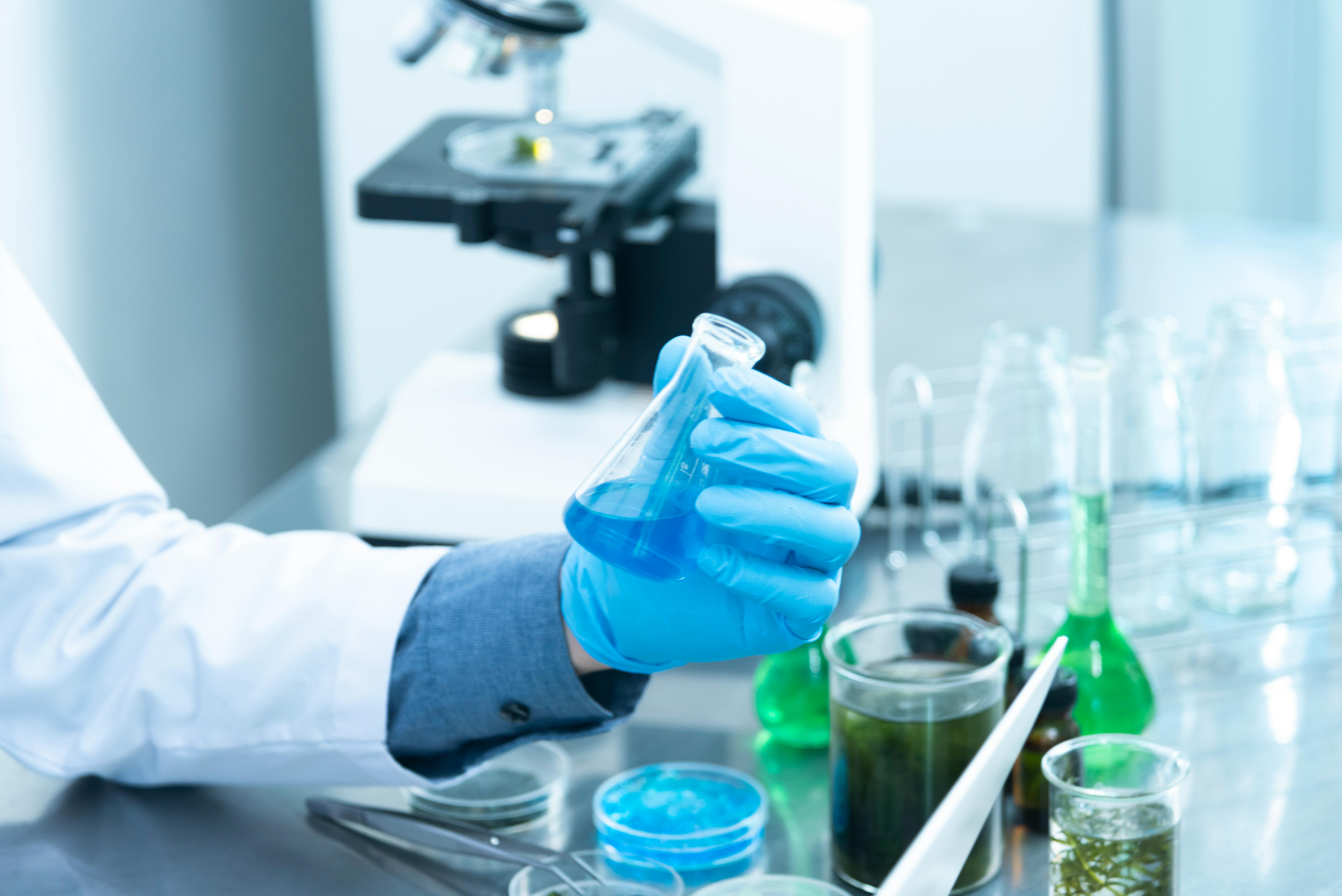
Visualizing AI-Designed Proteins

Scientific Significance and Key Applications
1. Biomedicine and Therapeutic Proteins
AI-designed proteins are reshaping how we think about drugs. Rather than only screening natural antibodies or enzymes, models can propose:
- De novo antibodies and binders targeting cancer antigens, viral proteins, or auto-immune markers.
- Cytokines and signaling proteins engineered to avoid off-target toxicity while retaining efficacy.
- Protein scaffolds that present epitopes for next-generation vaccines.
For example, the research group around David Baker at the University of Washington has published multiple Science and Nature papers on de novo designed protein binders, some generated with diffusion-based models.
“Designing new proteins that rival or surpass natural antibodies could fundamentally change the economics and speed of biologic drug development.” — Perspective from leading protein designers.
2. Greener Industrial Biocatalysis
Enzymes can replace harsh chemical processes with low-energy, water-based reactions. AI-designed enzymes are being explored for:
- Plastic degradation: enhancing PETases and related enzymes to break down PET and other plastics at ambient conditions.
- Carbon capture: designing enzymes that accelerate CO₂ hydration or fixation.
- Fine chemical synthesis: tailoring enzymes to perform selective transformations for pharmaceuticals and agrochemicals.
Industrial players are integrating AI protein design into biomanufacturing pipelines to improve yield, temperature tolerance, and substrate scope, opening possibilities for more sustainable supply chains.
3. Synthetic Metabolic Pathways and Bio-Based Materials
Synthetic biology aims to rewrite microbial and cellular metabolisms to produce:
- Biofuels and commodity chemicals.
- Bioplastics and biomaterials with tailored mechanical properties.
- Specialty molecules such as flavors, fragrances, and nutraceuticals.
AI-designed enzymes can fill “missing links” in metabolic pathways where no suitable natural enzyme exists, closing loops that were previously theoretically attractive but practically unreachable.
4. Biosensors and Diagnostics
De novo proteins can be engineered to:
- Bind small-molecule disease biomarkers with high specificity.
- Change fluorescence or electrochemical signal upon binding.
- Integrate into wearable or environmental sensing platforms.
This opens the door to portable, highly sensitive diagnostic tools for infectious diseases, chronic conditions, and environmental monitoring.
Milestones: Recent Breakthroughs and Trends
Several developments between 2022 and early 2026 highlight how quickly AI-designed proteins are advancing:
- AlphaFold and AlphaFold3 expansion: After the original AlphaFold’s open release, updated models (including AlphaFold3) expanded predictions to complexes, ligands, and nucleic acids, giving designers richer structural context.
- RFdiffusion and diffusion-based design: Academic groups demonstrated that diffusion models can design functional proteins such as metal-binding cages, enzyme-like folds, and nanoparticle scaffolds.
- Startups reaching the clinic: Multiple AI-first biologics companies announced preclinical candidates, with some AI-designed antibodies and enzymes moving toward IND-enabling studies.
- Open-source tools and community platforms: Projects like ColabFold, ESM, and several GitHub-hosted design frameworks democratized access to powerful models.
- Public awareness and social media engagement: YouTube explainers such as “DeepMind’s AlphaFold: The Protein Folding Revolution” and popular science articles on AI bio-design brought the topic into mainstream discussion.
Methodology: How AI-Driven Protein Design Pipelines Work
While implementations vary, many AI protein design workflows follow a similar structure:
- Define the design objective.
Examples: “bind to the PD-1 receptor with nanomolar affinity,” “catalyze ester hydrolysis at 70°C,” or “form a tetrahedral nanoparticle.”
- Constrain structure or function.
Designers may fix a backbone shape, specify contact maps, or define active-site residues that must be present.
- Generate candidate sequences.
Transformers, diffusion models, or hybrid architectures propose sequences that satisfy the constraints while remaining plausible and stable.
- In silico filtering.
Scoring functions assess candidates for folding stability, aggregation risk, epitope content, predicted binding, or off-target interactions.
- Experimental validation.
Top candidates are synthesized and tested in vitro and, where appropriate, in cells or model organisms.
- Iterative refinement.
Experimental data are fed back to retrain or fine-tune the models, improving future designs.
For laboratory teams looking to get practical, resources like Protein Engineering: Principles and Practice and hands-on wet-lab kits can be useful complements to computational work. For example, molecular biology starter kits and high-fidelity DNA polymerases available through platforms like New England Biolabs’ Q5 High-Fidelity DNA Polymerase are widely used in academic and industrial labs for cloning AI-designed sequences.
Challenges, Risks, and Ethical Considerations
Despite its promise, AI-designed protein technology comes with substantial scientific and societal challenges.
Scientific and Technical Limitations
- Gap between prediction and reality: AI can mis-predict subtle structural features, dynamics, or post-translational modifications that critically impact function.
- Limited training data for rare functions: Some catalytic activities or binding specificities appear only sparsely in nature, making them difficult to learn from existing datasets.
- Context dependence: A protein’s behavior depends on its cellular environment, partner proteins, and expression system—factors that are hard to fully capture in silico.
Biosecurity and Dual-Use Concerns
As with any powerful enabling technology, AI-designed proteins could be misused. Concerns include:
- Designing proteins that enhance pathogenicity or immune evasion.
- Creating novel toxins or delivery systems.
- Lowering barriers for less-experienced actors to attempt risky experiments.
To address this, leading organizations advocate:
- Access controls and tiered model release: Similar to the way some language models are released with usage restrictions, advanced bio-design models may need controlled access.
- Sequence screening and monitoring: DNA synthesis companies and repositories already screen orders against databases of regulated agents; AI tools can strengthen such screening.
- Standards and oversight: reports from groups like the U.S. National Academies of Sciences and policy groups such as the Center for Security and Emerging Technology outline frameworks for responsible innovation.
Regulatory and Clinical Pathways
Regulators are only beginning to grapple with questions such as:
- How to evaluate the safety of de novo proteins with no natural analog.
- What documentation of AI design processes and training data should be required.
- How to balance transparency with proprietary algorithms and models.
Collaborative efforts between regulators, industry, and academia will be essential to create predictable, science-based pathways for AI-designed biologics.
Building a Practical Workflow: Tools and Learning Resources
For researchers, students, or engineers looking to engage with AI-driven protein design, a pragmatic path includes:
- Foundational knowledge.
Strengthen background in biochemistry, structural biology, and machine learning. Texts on protein structure and deep learning, as well as online courses, provide a solid basis.
- Hands-on with open models.
Experiment with tools like ESM, ProtTrans, or Colab notebooks that wrap AlphaFold and design frameworks. Many labs share starter code on GitHub.
- Wet-lab collaboration.
Pair computational work with lab validation. Starter molecular biology toolkits and equipment—from micropipettes to benchtop incubators—can often be sourced via mainstream vendors and platforms like Amazon.
- Stay informed on ethics and safety.
Follow guidance from organizations such as the WHO, NIH, and national biosecurity agencies to ensure responsible experimentation.
For those equipping small teaching or research labs, widely used essentials like the Eppendorf Research Plus adjustable micropipette can support accurate liquid handling when testing AI-designed constructs.
Conclusion: Writing the Next Chapter of Synthetic Biology
AI-designed proteins represent a profound shift in how we approach biology. Instead of treating life’s molecular machinery as a fixed library to be read and modestly edited, we are beginning to author new components—enzymes, receptors, scaffolds, and sensors—tailored to human-defined goals.
In the coming years, expect to see:
- More AI-designed drugs enter clinical pipelines.
- Industrial processes swap out harsh chemistries for enzyme-driven steps.
- New materials and diagnostic tools built from de novo proteins.
- Deeper integration of AI with robotics and high-throughput experimentation.
Realizing this potential safely will require rigorous experimental validation, transparent reporting, and robust governance. But if managed well, generative protein design could make biology as programmable and creative as software, unlocking solutions to challenges in health, energy, environment, and beyond.
Further Reading, Media, and Communities
To go deeper into AI-designed proteins and synthetic biology, consider the following resources:
- Key Papers and Reviews
- Books and Overviews
- “Cellular Computing and Synthetic Biology” — conceptual foundations for programmable biology.
- Videos and Talks
- Communities and Experts to Follow
- Frances Arnold on LinkedIn — Nobel laureate in directed evolution.
- David Baker on LinkedIn — pioneer in computational protein design.
- DeepMind and Institute for Systems Biology for updates on AI in biology.
Staying engaged with these sources will help researchers, students, policymakers, and informed citizens track how AI-designed proteins evolve from cutting-edge experiments to everyday tools in medicine, industry, and environmental stewardship.
References / Sources
- Jumper, J. et al. (2021). Highly accurate protein structure prediction with AlphaFold. Nature.
- Watson, J.L. et al. (2023). De novo protein design using structure prediction and diffusion models. Nature.
- Baker Lab publications on de novo protein design. Nature.
- Meta AI — ESM: Evolutionary Scale Modeling of proteins.
- ColabFold: Making protein folding accessible.
- Science articles on de novo protein binders and AI design.
- Cell Reports Physical Science reviews on AI in protein engineering.
- National Academies of Sciences (2018). Biodefense in the Age of Synthetic Biology.
- DeepMind — AlphaFold project page.
- CSET reports on AI and biosecurity.
