
Why Streaming Feels Like Cable All Over Again: Bundles, Price Hikes, and the Battle for Your Attention
The global streaming ecosystem—spanning video, music, and games—is in the middle of a structural reset. Slowing subscriber growth, higher content costs, and investor pressure for profits are driving platforms like Netflix, Disney+, Max, Prime Video, Spotify, Apple Music, and others to retool their business models. The result: steeper prices, ad-supported plans, new kinds of bundles, and an intensifying fight for your limited attention.
At the same time, users are voicing “subscription fatigue” across Twitter/X, TikTok, Reddit, and forums. Many now discover that their monthly stack of streaming bills can rival (or exceed) the old cable bundle they thought they escaped. Meanwhile, short‑form platforms like TikTok and YouTube Shorts, plus gaming and social feeds, are competing for the same finite hours of engagement, pushing streaming companies to rethink not only what they sell, but how they present, personalize, and monetize it.
Mission Overview: How Streaming Entered Its Next Phase
In the 2010s, streaming’s promise was clear: on‑demand, ad‑free access to huge libraries at a fraction of cable’s cost. Through the early 2020s, companies prioritized rapid subscriber growth, often underpricing their services and burning cash on aggressive content spending.
By 2023–2024, that era gave way to profitability and retention. Major moves included:
- Price hikes across nearly every major service, often annually.
- Ad-supported tiers designed to capture price‑sensitive users while opening a new revenue stream.
- Crackdowns on password sharing, particularly by Netflix, to convert “free riders” into paying users.
- Bundling experiments across telecoms, hardware makers, and streaming platforms themselves, echoing—but not exactly replicating—the cable era.
“We’re watching the streaming market mature in real time. Growth at any cost is out; sustainable, diversified revenue is in.” — Media analyst quoted in The Verge
The New Streaming Landscape: Video, Music, and Games
Today, “streaming” is not just Netflix or Disney+. It spans:
- Video streaming (Netflix, Disney+, Max, Prime Video, Hulu, Apple TV+, Peacock, Paramount+).
- Music streaming (Spotify, Apple Music, YouTube Music, Amazon Music).
- Game streaming and subscriptions (Xbox Game Pass, PlayStation Plus, Nvidia GeForce NOW, cloud gaming offerings).
Each segment is grappling with similar economics: high content or licensing costs, user churn, and a ceiling on how many separate subscriptions people will tolerate. Still, their strategies differ:
- Video platforms lean heavily on exclusive series, sports rights, and originals.
- Music platforms compete mostly on catalog completeness, recommendations, and creator tools.
- Game subscriptions emphasize a rotating library of titles and cloud play across devices.
Price Hikes and the Return of Ads
One of the clearest signs of streaming’s next phase is near‑universal price inflation. Many major platforms have raised prices multiple times since 2022, often pairing those hikes with the launch or expansion of ad-supported tiers.
Why Prices Are Rising
- Content is expensive: Originals, live sports, and global licensing deals can cost billions annually.
- Growth is slowing: In many mature markets, almost everyone who wants streaming already has at least one service.
- Investors want profit: Public companies must show not just subscriber growth, but sustainable revenue and margins.
The Logic of Ad-Supported Tiers
Ad tiers allow platforms to:
- Offer a lower entry price for price‑sensitive users.
- Generate dual revenue streams (subscriptions + advertising).
- Collect more detailed ad performance data to refine targeting and pricing.
“Streaming is converging with traditional television economics, where advertising and bundling are fundamental pillars instead of optional extras.” — Analysis in Ars Technica
Bundles: The New Cable, With a Twist
As subscription fatigue grows, bundles are emerging as a primary way to keep users engaged and reduce churn. But unlike legacy cable, today’s bundles often cross categories and industries.
Types of Modern Streaming Bundles
- Telecom bundles — Mobile or broadband plans that include one or more streaming services (for example, phone plans that include music and video streaming).
- Platform bundles — A single provider offering multiple services at a discount (e.g., music + video + cloud storage).
- Hardware bundles — Smart TVs, streaming sticks, or gaming consoles offering extended trials or discounted subscriptions.
Publications like TechCrunch and The Verge have closely followed experiments where a single phone bill or device purchase now unlocks an ecosystem of entertainment services.
For users, bundles can:
- Lower effective costs per service.
- Simplify billing and account management.
- Create a feeling of a “default stack” — the bundle you keep while you churn through one‑off services around it.
For platforms, they:
- Reduce churn by hiding individual subscription prices in a larger package.
- Increase lock‑in, as canceling becomes more complex.
- Enable cross‑promotion and data‑sharing partnerships.
Technology: Algorithms, Ad Tech, and Generative AI
Underneath price and packaging changes lies a deeper technical shift. The streaming stack now spans encoding and delivery, recommendation systems, ad technologies, and increasingly, generative AI in both product and production.

Recommendations and the Attention Economy
Recommendation algorithms are now central to the competition for attention. Platforms optimize for:
- Session length and total watch/listen time.
- Churn risk signals (e.g., long periods of inactivity, frequent searching without selecting content).
- Content diversity vs. personalization depth.
“Every feed is essentially a negotiation between what you might enjoy and what keeps you from leaving.” — Commentary in The Next Web on the attention economy
Ad Tech, Tracking, and Privacy
As ads return, the industry is revisiting long‑running debates on tracking and privacy. Questions under active scrutiny by outlets like Wired and Ars Technica include:
- How much behavioral data is collected across services and devices?
- What kinds of cross‑app tracking are permitted under evolving regulations (GDPR, CCPA, etc.)?
- Can users meaningfully opt out without losing core functionality?
Generative AI in Streaming Workflows
Generative AI is increasingly being used to:
- Create localized artwork, thumbnails, and trailers optimized for specific regions.
- Generate summaries and metadata to improve search and discovery.
- Assist in scriptwriting, editing, and dubbing, raising questions about creative labor and credit.
This technological layer is invisible to most viewers but fundamental to how content is discovered, monetized, and even conceived in the first place.
Creators, Musicians, and the Algorithmic Middleman
While users face subscription fatigue, creators face algorithm fatigue. On Spotify and YouTube, musicians and video creators debate opaque recommendation systems and changing revenue splits.
Revenue Splits and Payout Models
- Pro‑rata models pool subscription revenue and distribute it by total streams, favoring top stars.
- User‑centric models (still rare) distribute your subscription fee only to what you actually listen to.
- Short‑form bonuses and creator funds (e.g., YouTube Shorts revenue sharing) add yet another layer.
“Algorithms decide whether your song lives or dies in the first 24 hours.” — Commentary from independent artists on YouTube and TikTok

Short-Form vs. Long-Form: The Attention Tug-of-War
Platforms like TikTok and YouTube Shorts compete directly with traditional streaming for time. Their design favors:
- Ultra‑short clips with high novelty.
- Endless scrolling and rapid feedback loops.
- Remixable content (duets, stitches, memes) that turns audiences into participants.
Long‑form platforms have responded by:
- Adding their own short‑form rails or highlight clips.
- Investing in live events, sports, and appointment viewing.
- Experimenting with interactive formats and user‑generated channels.
Hardware Gatekeepers: Smart TVs, Sticks, and Consoles
The device you use to stream—smart TV, streaming stick, game console—has become a powerful gatekeeper. Home screens increasingly prioritize:
- Promoted tiles for new shows and films.
- Paid placement for apps or featured content.
- Upsells to higher tiers or additional services.
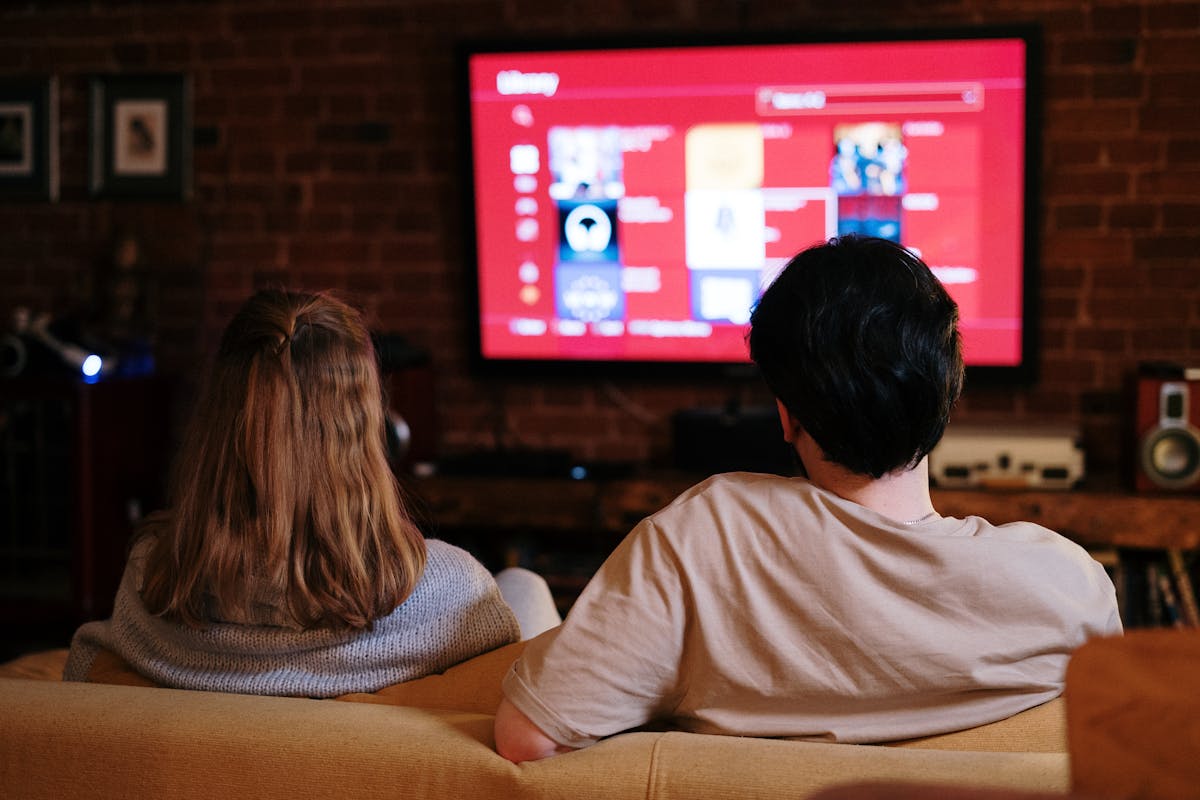
Tech reviewers now critique not just display quality and sound, but:
- How accessible and non‑intrusive the interface is.
- Whether users can disable autoplay previews and intrusive ads.
- How easy it is to reach non‑default apps like smaller niche streamers.
This interface layer is a new battleground: if your app is buried three rows down, you may never be launched, regardless of how strong your catalog is.
Scientific and Economic Significance: The Attention Economy
From a research perspective, streaming is a live experiment in the “attention economy”—the study of how finite human attention is allocated across competing stimuli. Publications like Recode by Vox and The Next Web connect streaming trends to broader questions in behavioral economics, cognitive science, and information theory.
Key Concepts in the Attention Economy
- Limited cognitive bandwidth: No one can watch or listen to everything, so recommendation systems act as filters.
- Algorithmic curation: Software decides which options you see, in what order, and at what moment.
- Engagement optimization: Platforms fine‑tune their UX and algorithms to maximize watch time, potentially at the expense of well‑being.
For policymakers and researchers, streaming data offers a window into:
- Shifts in cultural consumption and global taste.
- The impact of personalization on media diversity.
- How pricing and bundling affect digital inclusion and access to information.
Key Milestones in Streaming’s Business Evolution
Over roughly a decade and a half, a handful of milestones have defined how streaming operates today:
- Launch of subscription video platforms and the first wave of cord‑cutting.
- Global expansion into dozens of markets with localized content.
- Originals and exclusives becoming the main differentiator between platforms.
- Entry of legacy media and tech giants, turning streaming into a winner‑takes‑most market.
- Roll‑out of ad‑supported tiers and multiple price points per service.
- Bundling and cross‑industry partnerships as tools to stabilize revenue.
Together, these milestones mark the transition from experimentation to consolidation—where a smaller number of large ecosystems compete on depth rather than simple subscriber count.
User Strategies: How to Survive Subscription Fatigue
Users are not passive in this evolution. Many are developing sophisticated strategies to manage costs and attention.
Practical Tips for Viewers and Listeners
- Rotate subscriptions: Keep only one or two “always on” services; rotate others monthly based on what you actually plan to watch or listen to.
- Use free and ad‑supported options: Many platforms now offer free tiers; consider whether the trade‑off in ads is acceptable for you.
- Audit subscriptions quarterly: Check for services you haven’t used in the last 30 days and pause or cancel.
- Share family plans within household rules and platform policies to reduce per‑person cost.
Tools like budgeting apps or simple spreadsheets can help track what you’re paying and how much you actually use each service.
For better sound and picture quality from your chosen services, some users invest in hardware that outlives any individual subscription—for example, a solid streaming device or soundbar. If you are looking for a reliable, streaming‑focused device, products like the Fire TV Stick 4K with Alexa Voice Remote can centralize your apps and provide consistent performance even as you churn between services.
Challenges and Risks in Streaming’s Next Phase
As streaming evolves, it brings a new set of challenges for consumers, creators, and regulators.
For Consumers
- Cost creep: Bundles can obscure real costs; incremental price hikes add up.
- Privacy concerns: More ad tiers mean more data collection and tracking pressure.
- Choice overload: Too many options can paradoxically make it harder to decide what to watch.
For Creators
- Platform dependency: Income is vulnerable to algorithm changes and policy shifts.
- Revenue compression: As more creators join platforms, per‑stream payouts can shrink.
- AI competition: Generative tools may commoditize certain creative tasks.
For Platforms and Regulators
- Antitrust and competition: Large bundles can raise questions about market power.
- Content moderation: Global platforms must handle differing legal and cultural norms.
- Infrastructure costs: High‑resolution streaming strains networks and data centers.
Tools and Technologies for an Optimal Streaming Setup
A well‑chosen home setup can make streaming more enjoyable and accessible, even as services change. Consider:
- Dedicated streaming devices (sticks or boxes) that receive frequent updates.
- Quality headphones or speakers to improve audio, particularly for music and cinema‑style content.
- Universal remotes or voice assistants to simplify navigation for all users, including those with accessibility needs.
For example, noise‑cancelling headphones like Sony WH‑1000XM5 Wireless Headphones are popular among U.S. users who regularly stream music and films in shared or noisy environments.

Conclusion: Is Streaming Still Delivering on Its Promise?
Streaming has transformed how we watch, listen, and play, but its original promise—simple, affordable, ad‑free entertainment—has been diluted. Today’s reality is more complex: layered pricing, bundles that resemble cable, ad‑tech‑driven personalization, and a constant battle for attention.
Yet, the fundamental advantages remain: unprecedented choice, global catalogs, and the convenience of on‑demand access across devices. The challenge for the next decade is to balance:
- Profitability with fairness to users and creators.
- Personalization with privacy and media diversity.
- Engagement with digital well‑being and time well spent.
For users, the most powerful tools are literacy and intentionality—understanding how these systems are designed, and then choosing which bundles, devices, and habits genuinely serve their lives rather than simply consuming their time.
Additional Resources and Further Reading
To dive deeper into the evolving streaming ecosystem, consider exploring:
References / Sources
Selected open sources and media analyses used to inform this overview:
