
Why the Right-to-Repair Wave Is Reshaping Consumer Tech Forever
The “right-to-repair wave” is colliding with consumer tech at exactly the moment when devices have become thinner, more integrated, and more locked down than ever. Legislators are mandating access to parts and manuals, big brands are rolling out carefully structured repair programs, and a global community of tinkerers is proving that far more can be fixed than manufacturers often admit. At stake is a deceptively simple question: when you buy a device, do you truly own it—or are you renting functionality on a sealed platform?

Mission Overview: What Is the Right-to-Repair Movement?
Right-to-repair (R2R) is a policy, engineering, and consumer-rights movement that argues people should be able to diagnose, maintain, and repair the products they own—especially electronics—without facing legal, technical, or economic lock‑ins. It intersects with:
- Consumer protection and ownership rights
- Environmental and e‑waste reduction strategies
- Competition and antitrust in after‑sales markets
- Cybersecurity and product safety regulation
Over the past few years, tech outlets such as Ars Technica, The Verge, and Wired have documented how a once‑niche cause has become a mainstream tech policy battle. What began as farmers fighting locked‑down tractors has expanded into a global debate covering iPhones, gaming consoles, laptops, and even smart appliances.
“Right to repair is not about fixing stuff for free. It is about the basic ability to choose where, how, and by whom your property is serviced.”
— Louis Rossmann, independent repair advocate and founder of the Repair Preservation Group
New Legislation and Regulations: The Legal Backbone
Lawmakers in the United States, the European Union, and beyond are increasingly codifying right-to-repair principles into statute. These laws differ in scope and strength, but they all move toward the same outcome: making repair information and parts more accessible.
Key Legislative Developments in the US
As of 2025–2026, multiple US states have enacted or advanced right‑to‑repair laws, particularly for consumer electronics and appliances:
- New York Digital Fair Repair Act: The first broad US electronics R2R law (passed in 2022, refined in 2023) requires manufacturers to make parts, tools, and documentation available for many digital electronic products sold in the state.
- Colorado and Minnesota initiatives: These states have passed repair laws that include agricultural equipment and consumer devices, challenging long‑standing OEM control of diagnostics and firmware.
- Federal attention: The Biden administration’s 2021 Executive Order on Promoting Competition explicitly encouraged the Federal Trade Commission (FTC) to address repair restrictions, leading to the FTC’s 2021 “Nixing the Fix” report and subsequent enforcement actions.
These laws typically require manufacturers to:
- Provide access to official repair manuals and schematics.
- Sell spare parts and specialized tools at “fair and reasonable” terms.
- Avoid software‑based restrictions that arbitrarily block third‑party repair—within safety and security limits.
European Union: A Systemic, Sustainability‑Driven Approach
The EU is linking right-to-repair tightly with its Green Deal and circular‑economy strategy:
- Eco‑design rules and repairability scores: Regulations already require certain household appliances to be repairable for many years after sale and to provide spare parts to professionals.
- Smartphones and tablets: The EU has moved toward requirements for user‑replaceable or at least more accessible batteries, and standardization around charging (e.g., USB‑C), which simplifies repair and extends device lifespans.
- Proposed “Right to Repair” Directive: Aims to explicitly prioritize repair over replacement within warranty periods and give consumers rights to affordable repairs afterward.
“If something can be fixed, we must make it easier and cheaper to repair rather than replace it. This is essential for consumers and for achieving our climate goals.”
— European Commission statement on the proposed Right to Repair Directive
Despite progress, many laws include carve‑outs—for example, allowing manufacturers to limit access to certain security‑sensitive components—or they apply only to products released after a future date. Analysts at iFixit’s news team and policy organizations like U.S. PIRG are closely watching how enforcement actually plays out.
Technology: How Design Choices Enable or Block Repair
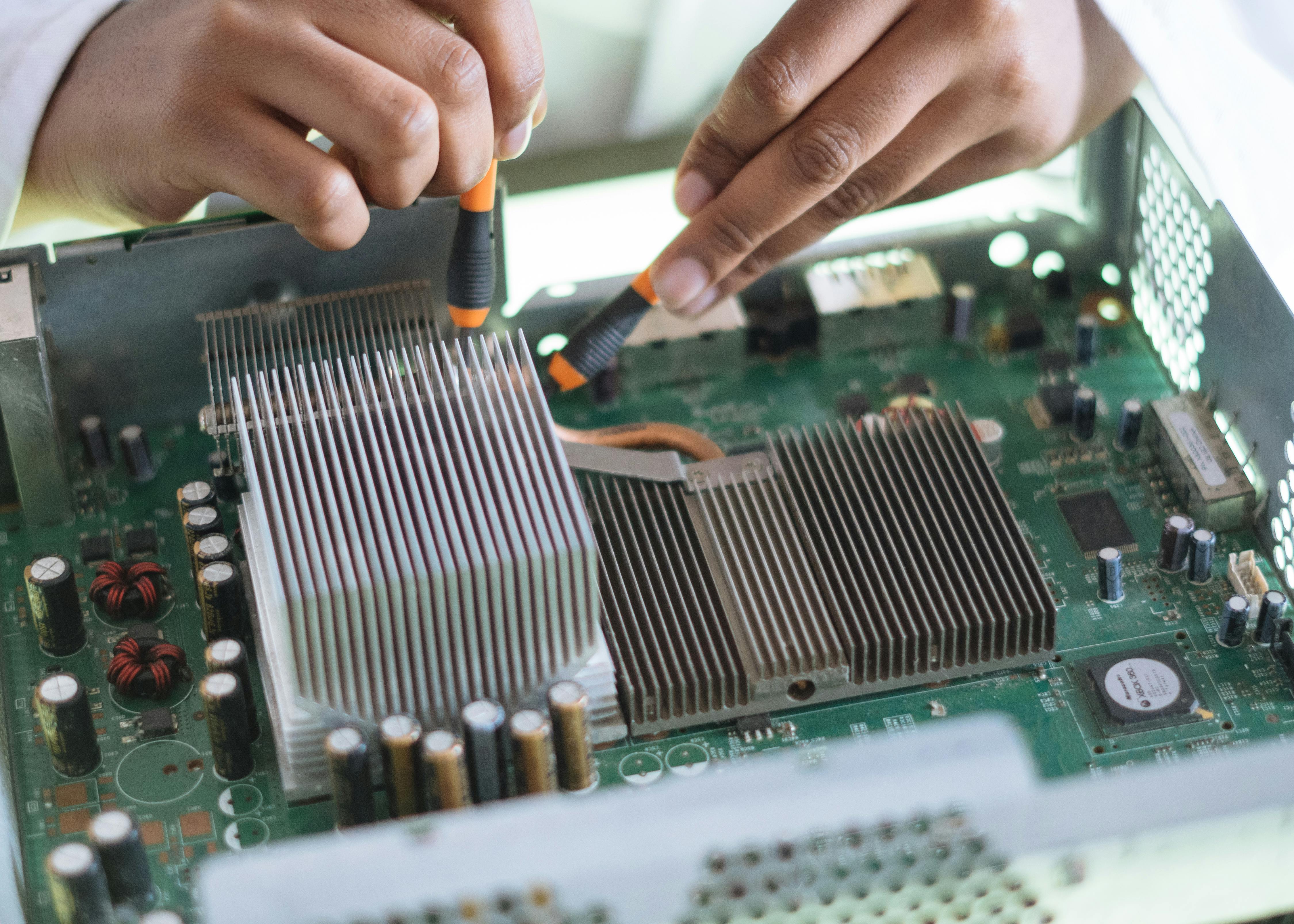
At the hardware level, right-to-repair is fundamentally about engineering trade‑offs. Modern consumer devices pack extreme performance into incredibly small volumes. That has often led to glued‑together designs, proprietary screws, and highly integrated components that are difficult to replace individually.
From Glue and Glass to Modular Components
iFixit’s teardowns and repairability scores have shown clear trends:
- Battery accessibility: Early unibody smartphones buried batteries under layers of glue and fragile flex cables. Newer models—from Apple, Samsung, and others—are increasingly adopting pull‑tab adhesives and clearer access paths, driven partially by regulatory pressure.
- Modular sub‑assemblies: Instead of soldering ports, buttons, and speakers directly to mainboards, some current designs group them into replaceable modules that can be swapped individually.
- Standardized fasteners: A move away from obscure proprietary screws to more standard Torx or Phillips increases real‑world repairability.
Software, Serialization, and Parts Pairing
Hardware is only half the story. Many major manufacturers increasingly “pair” components to a device’s serial number using cryptographic checks. This can limit or break functionality when a part is replaced outside official channels:
- Face ID / biometric modules that disable secure features after third‑party replacement.
- Batteries that show “Unknown part” warnings or degrade performance if not vendor‑approved.
- Cameras and screens that lose advanced features due to missed calibration data or paired firmware.
While some level of pairing can protect users against counterfeit or low‑quality components, critics argue that the implementation is often broader than strictly necessary. Policy discussions on Hacker News and in security podcasts (for example, the Security Ledger) frequently ask whether such measures are technical safeguards or business strategies dressed up as safety.
Tools, Diagnostics, and Documentation
True repairability requires:
- Physical tools (e.g., screwdrivers, spudgers, heat mats, microscopes).
- Diagnostic software and calibration utilities.
- Service manuals and schematics describing disassembly, troubleshooting, and reassembly.
This is where new manufacturer initiatives and third‑party ecosystems intersect.
Shifts by Major Manufacturers: Genuine Change or Tactical Concessions?
Under combined regulatory and reputational pressure, major tech firms have begun rolling out repair programs and revising product designs.
Apple, Samsung, Microsoft, and Self‑Service Repair
In recent years:
- Apple Self Service Repair launched, initially in the US and then expanded to Europe. Consumers can rent professional‑grade toolkits and purchase genuine parts and manuals for select iPhone and Mac models directly from Apple.
- Samsung partnered with iFixit and other providers in some regions to supply parts for Galaxy phones and tablets, accompanied by official step‑by‑step guides.
- Microsoft improved the repairability of its Surface line, moving away from fully glued interiors and offering parts through authorized channels, following shareholder and environmental‑group pressure.
However, there are recurring criticisms:
- High parts pricing that can make DIY repair nearly as expensive as replacement.
- Limited model coverage, focusing only on the latest or most popular devices.
- Complex procedures that may be technically “possible” but remain daunting for ordinary consumers.
“Offering parts is a good first step, but when prices rival a full refurb and software pairing disables features, calling it ‘right to repair’ is generous at best.”
— Commentary from iFixit’s repair policy coverage
Designing With Repairability as a Feature
Some companies are using repairability as a selling point:
- Framework Laptop: A fully modular laptop designed around replaceable mainboards, ports, and even bezels, showing that high performance and repairability can coexist. (See Framework Computer.)
- Fairphone: Smartphones built with easily swappable modules and spare parts available online, popular among sustainability‑focused consumers, particularly in Europe.
These projects demonstrate that with careful industrial design, devices can remain slim and high‑performance while still allowing users to replace common failure points like batteries, ports, and screens.
Environmental and E‑Waste Significance
Consumer electronics generate tens of millions of tons of e‑waste annually. Much of this waste results from devices being discarded not because they are fundamentally obsolete, but because a single component failed, a battery wore out, or a screen cracked.
Extending Device Lifespans
Environmental groups and outlets such as TechRadar emphasize two key facts:
- The majority of a device’s carbon footprint is embedded in its manufacturing and supply chain.
- Extending device lifespan by even 1–2 years can significantly reduce its overall environmental impact.
By making batteries user‑replaceable and screens affordable to fix, right‑to‑repair policies indirectly reduce demand for new devices and the associated emissions from mining, refining, and global logistics.
Repair Culture Meets Sustainability Culture
On YouTube and TikTok, creators share:
- Refurbishing old iPhones and Android devices and reselling them.
- Breathing new life into “vintage” laptops with SSD and RAM upgrades.
- Restoring game consoles that manufacturers declared “beyond repair.”

This content often references campaigns by organizations like The European Right to Repair Campaign, turning abstract policy debates into visual, emotionally resonant stories about waste and renewal.
Security and IP: Legitimate Concerns or Lock‑In Strategies?
Industry lobbies frequently argue that unrestricted access to parts, diagnostics, and firmware could:
- Compromise cybersecurity (e.g., tampered components introducing backdoors).
- Increase counterfeiting of branded parts.
- Expose proprietary know‑how and intellectual property embedded in service manuals.
These arguments are not purely rhetorical. For example, malicious replacement components have been documented in high‑security environments. But the key policy question is proportionality: how much restriction is necessary to mitigate real risks, versus how much primarily protects manufacturers’ aftermarket revenue?
“There is scant evidence to support manufacturers’ justifications for repair restrictions. The burden of proof is on companies to show that their practices are truly necessary for safety or security.”
— Summary of findings from the US Federal Trade Commission’s “Nixing the Fix” report
Balancing Repair and Safety
Reasonable safeguards may include:
- Requiring secure authentication for firmware updates but not for basic hardware swaps.
- Clearly labeling non‑genuine parts and potential performance or safety implications.
- Providing detailed manuals while redacting only narrowly defined proprietary information.
Policy forums and podcasts such as Lawfare’s cybersecurity series often highlight that effective security should rely on robust system design, not obscurity of basic repair information.
Consumer Power, Culture Shift, and Buying Decisions
Perhaps the most profound change is cultural. Repair is moving from a niche hobby to a mainstream expectation, especially among technically literate consumers who see disposable design as both wasteful and insulting.
Repair Cafés and Community Workshops
Around the world, volunteer‑run spaces invite people to bring in malfunctioning devices and learn how to fix them:
- Repair cafés mix social space with hands‑on diagnostics and soldering.
- Hackerspaces and makerspaces provide shared tools like microscopes, hot air stations, and 3D printers for fabricating replacement parts.
- Online forums and Discord communities share schematics, known‑issues databases, and troubleshooting flows for specific devices.
Viral videos of “unrepairable” devices restored by independent technicians feed a sense of frustration—and empowerment—among viewers who realize how often official repair channels default to “replace the device” for minor issues.
Repairability Scores as Buying Criteria
Increasingly, consumers consult:
- iFixit repairability scores for phones, tablets, and laptops.
- EU repairability labels and eco‑scores where available.
- Long‑term support and spare‑parts commitments published in product datasheets.
This shift nudges companies toward:
- Designing devices to hit minimum regulatory scores.
- Marketing longer software‑support windows as a sustainability and value feature.
- Offering official refurbished models instead of pushing only brand‑new hardware.
Practical Technology: Tools, Skills, and Starter Gear
For consumers and small workshops looking to participate in the right-to-repair wave, the barrier to entry is lower than it appears. With a modest toolkit and reliable guides, many common failures—battery wear, cracked screens, sticky buttons—are fixable at home.
Essential Starter Toolkit
A minimal but capable electronics repair setup typically includes:
- Precision screwdriver set with Torx, Pentalobe, and tri‑point bits.
- Plastic spudgers and guitar‑pick‑style opening tools.
- Anti‑static mat and wrist strap.
- Magnetic project mat or parts tray.
- Fine‑tip tweezers and isopropyl alcohol for cleaning.
For readers in the US, highly rated kits like the iFixit Pro Tech Toolkit bundle most of these essentials with clear labeling, and are widely used in professional and hobbyist environments.
Learning Resources
High‑quality repair education is increasingly accessible:
- Step‑by‑step guided repairs at iFixit, covering thousands of devices.
- YouTube channels like Louis Rossmann and This Does Not Compute for board‑level and retro‑tech repairs.
- Maker‑oriented platforms such as Instructables for DIY electronics projects that build foundation skills.
As always, readers should follow safety guidelines—especially when working with lithium‑ion batteries or mains‑powered appliances—and understand warranty implications before opening devices.
Milestones in the Right-to-Repair Wave
The movement’s rise is marked by a series of influential moments that crystallized public and regulatory attention.
Key Historical and Recent Milestones
- Farm equipment battles (2010s): Farmers challenged locked‑down diagnostics on tractors, pushing state‑level debates about what “ownership” means for complex machines.
- Mass‑market attention via tech press: Deep‑dive pieces in publications like Wired and The Verge reframed the issue as central to everyday devices.
- FTC “Nixing the Fix” report (2021): A US federal body formally questioned manufacturer justifications for repair restrictions.
- New York’s Digital Fair Repair Act (2022–2023): The first broad US digital right‑to‑repair law for consumer electronics.
- Major OEM self‑service programs (2021–2024): Apple, Samsung, and Microsoft pivoted to at least partial support for consumer and independent repair.
- EU Right to Repair proposals (2023–2025): Integrated repairability into binding eco‑design and consumer‑protection frameworks.
Each milestone has expanded the Overton window of what policymakers and consumers see as normal: repair‑friendly design is no longer a fringe ask but an increasingly mainstream expectation.
Challenges and Unresolved Questions
Despite momentum, the right-to-repair wave faces structural, technical, and political obstacles.
Technical and Economic Barriers
- Highly integrated designs: System‑on‑chip packages and densely stacked boards are intrinsically harder to repair at the component level.
- Economics of scale: In low‑cost devices, parts and labor for repair can approach or exceed the cost of replacement hardware, particularly when original design did not prioritize repair.
- Supply‑chain constraints: Ensuring long‑term availability of genuine spare parts has real logistical and inventory costs.
Policy and Enforcement Gaps
Laws on the books do not automatically translate into practical repair outcomes:
- Ambiguous definitions of “fair and reasonable” prices for parts and tools.
- Weak or slow enforcement mechanisms against non‑compliant manufacturers.
- Exceptions that can be stretched to cover broad categories under the guise of safety or IP.
Consumer Awareness and Risk
Even when repair is possible, consumers may:
- Be unaware of their rights or available options.
- Fear voiding warranties or damaging devices further.
- Lack local access to trustworthy independent repair shops.
Addressing these issues will require not only better laws, but also education campaigns, certification schemes for independent shops, and transparent warranty policies that respect lawful repair.
Conclusion: Ownership, Longevity, and the Future of Consumer Tech
The right-to-repair wave is fundamentally about redefining ownership in a digital, networked world. As hardware and software blur, and as cloud services become central to everyday devices, the old notion of “I bought it, therefore I control it” has eroded. Right-to-repair pushes back, insisting that:
- Devices should be designed with repair and longevity as explicit goals.
- Consumers and independent shops deserve fair access to information and parts.
- Environmental and social costs of disposable tech must be part of design and policy decisions.
Over the next decade, the outcome of ongoing legal battles, lobbying campaigns, and engineering choices will directly shape how long our devices last, how much e‑waste we generate, and how much real autonomy end‑users have over the tools they depend on.
For consumers, the most powerful actions remain straightforward: favor products with high repairability scores and long support windows, support local repair ecosystems, and stay informed about your legal rights. Every battery replaced instead of discarded is not just a cost saved—it is a small but concrete vote for a more sustainable and user‑empowering technology landscape.
Additional Resources and Next Steps for Curious Readers
For those who want to go deeper into the technical, legal, and practical aspects of right-to-repair, the following resources are highly recommended:
- iFixit – Right to Repair hub for news, campaigns, and teardown insights.
- U.S. PIRG – Right to Repair for US policy updates and advocacy actions.
- Right to Repair Europe for EU‑focused policy tracking and explainer guides.
- YouTube – Right to Repair playlists featuring talks, debates, and repair demonstrations.
If you work in product design, procurement, or IT fleet management, incorporating repairability criteria into internal guidelines—such as minimum parts availability windows, battery replaceability, and service manual access—can materially shift demand and signal to manufacturers that longevity and openness are now baseline requirements, not niche preferences.
References / Sources
Selected articles, reports, and resources used to inform this overview:
- FTC – “Nixing the Fix: An FTC Report to Congress on Repair Restrictions” (2021)
- Ars Technica – Coverage of New York’s Digital Fair Repair Act
- The Verge – Right to Repair coverage hub
- Wired – “What Is Right to Repair?” explainer
- European Commission – Right to Repair initiative
- TechRadar – Right to Repair and sustainability coverage
- iFixit News – Repairability scores and industry analysis
