
Why Perovskite Tandem Solar Cells Could Rewrite the Future of Clean Energy
In this deep dive, we unpack how perovskite chemistry works, why perovskite‑silicon tandems are smashing efficiency records, what it will take to make them stable in the real world, and how these breakthroughs could reshape everything from rooftop systems to solar windows and electric vehicles.
Perovskite solar cells are based on a family of materials that share a crystal structure similar to the mineral perovskite (ABX3). What makes them extraordinary is how easily their composition can be tuned: by swapping organic and inorganic cations (A), metal centers (B, often lead or tin), and halides (X = iodide, bromide, chloride), researchers can precisely engineer bandgaps, absorption profiles, and defect landscapes. Unlike crystalline silicon, which requires energy‑intensive high‑temperature processing, many perovskites can be deposited from solution at relatively low temperatures, using techniques similar to printing or coating.
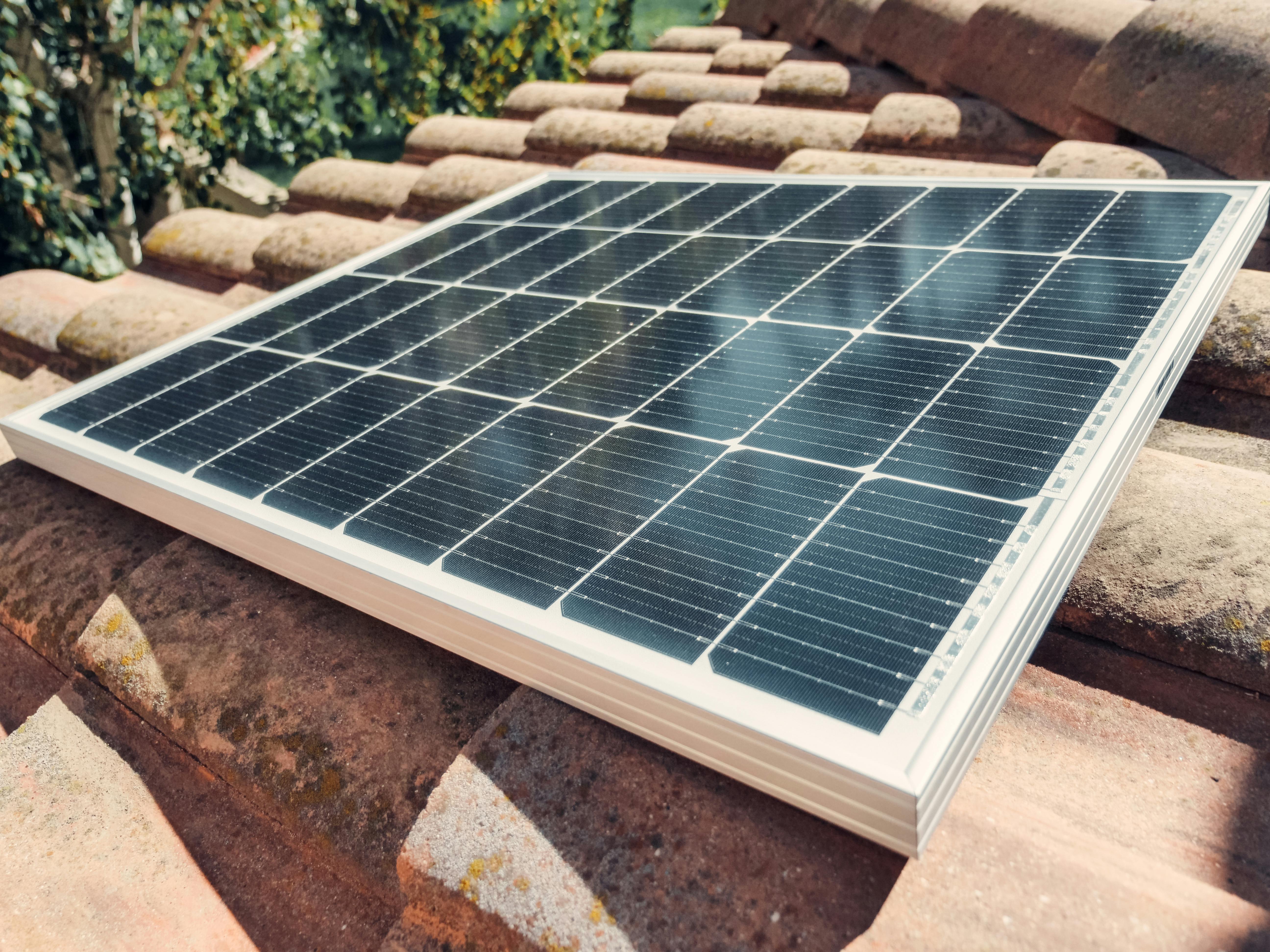
In laboratory devices, single‑junction perovskite cells have already exceeded 26% power‑conversion efficiency, while perovskite‑silicon tandems have crossed the 33% mark in 2024 under standard test conditions, according to certification data from institutes such as the National Renewable Energy Laboratory (NREL). These rapid gains are fueling intense interest across chemistry, materials science, photovoltaics (PV) engineering, and cleantech investment circles.
“Perovskites have demonstrated an unprecedented pace of efficiency improvement in photovoltaics, compressing decades of progress into roughly ten years.” — Extracted from reviews in Nature Energy and Joule.
At the same time, perovskites face well‑known challenges: environmental stability, toxicity management (for lead‑based systems), scalable manufacturing, and long‑term reliability under field conditions. The current wave of research focuses on solving these issues without sacrificing efficiency or cost advantages.
Mission Overview: Why Perovskites and Tandem Photovoltaics Matter
The overarching mission of perovskite and tandem photovoltaics is to deliver more electricity per unit area, material, and cost than incumbent technologies can offer—while remaining durable enough for decades‑long deployment in harsh outdoor environments.
From a systems perspective, every percentage‑point gain in module efficiency cascades through the entire solar value chain:
- Fewer panels are needed for the same power output, reducing land use and balance‑of‑system costs (racking, wiring, labor).
- Higher power density enables new applications such as vehicle‑integrated PV, lightweight portable power, and building‑integrated photovoltaics (BIPV).
- Improved efficiency reduces the levelized cost of electricity (LCOE), which strengthens the economics of storage, green hydrogen, and full‑grid decarbonization.
Tandem photovoltaics—especially perovskite‑on‑silicon tandems—are designed to surpass the Shockley–Queisser limit of single‑junction cells by splitting the solar spectrum between two (or more) absorbers with different bandgaps. Silicon remains the workhorse bottom cell, while perovskites serve as the spectrally optimized top cell.

Technology: Inside Perovskite and Tandem Solar Architectures
At the device level, most perovskite solar cells follow a layered architecture in which each functional layer plays a specific role in light absorption, charge separation, and charge extraction. Common configurations include the “n–i–p” and “p–i–n” stacks, where the perovskite serves as the intrinsic (i) absorber sandwiched between electron‑transport layers (ETLs) and hole‑transport layers (HTLs).
Perovskite Composition and Bandgap Engineering
Typical high‑performance perovskites are hybrid organic–inorganic lead halides, such as:
- Formamidinium lead iodide (FA PbI3)
- Methylammonium/formamidinium mixed cation systems (MA/FA‑based)
- Triple‑cation formulations (Cs/FA/MA) with mixed halides (I/Br)
By adjusting the halide ratio (I/Br/Cl) and cation composition, researchers can tune the bandgap from about 1.2 eV to over 2.3 eV. For tandem applications:
- The perovskite top cell typically targets a bandgap between ~1.7–1.9 eV to efficiently harvest blue and green photons.
- The silicon bottom cell (bandgap ~1.12 eV) captures red and near‑infrared photons.
Device Structures in Tandem Photovoltaics
Tandem devices can be realized in several configurations:
- Monolithic (2‑terminal) tandems where perovskite and silicon are electrically connected in series and share a common current.
- Mechanically stacked (4‑terminal) tandems where each sub‑cell operates independently and outputs are combined at the module level.
- Perovskite‑on‑perovskite tandems targeting fully thin‑film stacks without silicon, promising ultra‑lightweight modules.
“The elegance of perovskite–silicon tandems lies in leveraging silicon’s long‑established industrial base while adding a spectrally optimized perovskite top absorber that can be processed at low temperatures.” — Paraphrased from leading tandem PV groups at EPFL, Oxford, and KAUST.
Processing and Manufacturing Approaches
A major attraction of perovskites is their compatibility with low‑cost, scalable deposition techniques, including:
- Blade‑coating and slot‑die coating of perovskite inks on glass or flexible substrates.
- Vacuum evaporation or hybrid vapor/solution processes for high‑uniformity films.
- Roll‑to‑roll (R2R) printing for high‑throughput manufacturing of flexible modules.
For readers interested in laboratory‑scale experimentation and characterization, advanced solar simulators and source‑measure units (SMUs) are commonly used. Instruments similar to the Newport Oriel solar simulator allow precise measurement of current–voltage (J–V) curves under standardized illumination.
Scientific Significance: Chemistry Driving Climate Technology
Perovskite photovoltaics are a showcase for how modern chemistry and materials science can rapidly reshape an applied technology landscape. In roughly a decade, the community has moved from sub‑4% efficiencies to >26% single‑junction and >33% tandem records, far outpacing the historical progress of silicon.
Defect Physics and Passivation
Perovskite absorbers exhibit a defect‑tolerant electronic structure: many intrinsic defects form shallow levels that do not act as strong non‑radiative recombination centers, preserving open‑circuit voltage. Nonetheless, defects at grain boundaries and interfaces can severely impact device stability and fill factor.
To address this, researchers deploy:
- Surface passivation molecules (e.g., alkylammonium iodides, Lewis bases) to coordinate under‑coordinated ions.
- Polymer interlayers to smooth interfaces and reduce shunting pathways.
- Low‑dimensional perovskite capping layers (2D/ quasi‑2D) that enhance moisture resistance and suppress ion migration.
Stability Engineering
Historically, perovskite cells could degrade within hours under humidity, heat, and UV exposure. Today, compositional engineering (e.g., mixed cation/halide formulations), improved encapsulation, and interface stabilization have pushed operational stability toward thousands of hours in accelerated tests—approaching commercial requirements.
Key degradation pathways include:
- Ion migration and interdiffusion at interfaces.
- Phase segregation in mixed‑halide perovskites under illumination.
- Thermal and photo‑oxidation of organic cations and transport layers.
Addressing these pathways requires coordinated advances in synthesis, device architecture, encapsulation, and reliability testing. Long‑term field trials, rather than just accelerated lab tests, are increasingly central to current research programs.
“If perovskite–silicon tandems can demonstrate silicon‑like durability in the field, they have a strong chance of becoming the next mainstream PV architecture.” — Perspective based on analyses from NREL and IEA PVPS reports.
Milestones: From Lab Curiosity to Pilot Lines
The story of perovskite and tandem PV is punctuated by rapid, well‑documented milestones. While exact numbers evolve, several key trends stand out:
Efficiency Records
- ~2009–2012: First perovskite solar cells with efficiencies below 4–10%.
- 2015–2018: Single‑junction records jump past 20%, attracting global attention.
- 2020–2024: Certified single‑junction perovskites exceed ~26%, while monolithic perovskite‑silicon tandems climb beyond 33%.
Scaling and Module Demonstrations
Several startups and industrial consortia have announced:
- Pilot manufacturing lines for perovskite top cells integrated onto standard silicon wafers.
- Flexible perovskite modules for portable power and BIPV prototypes.
- Demonstrator projects on building façades and semi‑transparent “solar windows.”
On social media and platforms like YouTube and TikTok, science channels frequently feature:
- The visually striking colors of perovskite films and interference patterns.
- Flexible, rollable demonstration cells powering LEDs or small devices.
- Concepts for transparent or tinted solar glazing in office towers and homes.
For a technically detailed overview of recent milestones, readers can explore review articles in journals such as Joule and Nature Energy, as well as research highlights shared by leading groups on professional networks like LinkedIn.
Emerging Applications: From Solar Windows to Vehicle-Integrated PV
Perovskite and tandem technologies enable design spaces that are difficult or impossible for conventional silicon modules to occupy, especially where weight, flexibility, or aesthetics matter.
Building-Integrated Photovoltaics (BIPV)
Perovskites can be processed as colored or semi‑transparent films, making them well suited to:
- Solar windows and skylights that generate electricity while admitting natural light.
- Architectural façades with customizable colors and patterns.
- Lightweight rooftop laminates on structures with limited load capacity.
Mobility and Portable Power
The high power‑to‑weight ratio of thin‑film perovskite modules makes them attractive for:
- Vehicle‑integrated photovoltaics (VIPV) on cars, trucks, and even aircraft surfaces.
- Backpack‑integrated or rollable chargers for remote power in fieldwork or emergency response.
- IoT devices and sensors that harvest ambient light indoors or outdoors.
Enthusiasts experimenting with small solar chargers and off‑grid kits often rely on commercially available components such as foldable solar panels and Li‑ion battery packs. Products akin to the Jackery Explorer portable power station demonstrate how higher‑efficiency PV could extend runtime and reduce form factor for mobile energy systems.
Challenges: Stability, Scalability, and Sustainability
Despite headline‑grabbing efficiencies, perovskite and tandem solar technologies must clear several critical hurdles before achieving wide‑scale bankability.
Environmental and Operational Stability
Perovskites are intrinsically sensitive to:
- Moisture and oxygen, which can induce decomposition and phase change.
- Thermal stress from day–night cycling and elevated module temperatures.
- UV radiation that can break chemical bonds in both perovskites and organic transport layers.
Advanced encapsulation strategies—leveraging multilayer barrier films, UV‑filtering coatings, and robust edge seals—are being adapted from the OLED and display industries to protect perovskite stacks.
Lead Toxicity and End-of-Life Management
Most state‑of‑the‑art perovskites still rely on lead, raising concerns about potential environmental release during manufacturing, operation (e.g., hail or fire damage), and end‑of‑life disposal. While the absolute mass of lead per watt is small compared with some existing electronics, robust risk‑mitigation strategies are required:
- Encapsulation designs that prevent leaching even under severe damage scenarios.
- Collection and recycling pathways for decommissioned modules.
- Research into high‑performance, lead‑free perovskite analogues, such as tin‑based systems.
Manufacturing Scale-Up and Cost
Translating cell‑scale performance into gigawatt‑scale manufacturing involves:
- Uniform large‑area coating with tight control over crystallization dynamics.
- Process windows compatible with existing silicon production lines (for tandems).
- Quality‑control and inline metrology to detect defects, pinholes, and non‑uniformity in real time.
“The scalability question is less about fundamental physics now and more about engineering reproducible, high‑yield fabrication processes.” — Summary of perspectives from industrial PV roadmaps and conference talks.
Conclusion: A Pivotal Decade for Perovskite and Tandem Solar
Perovskite solar cells and perovskite‑silicon tandems embody a rare convergence: cutting‑edge chemistry, compelling visual demonstrations, and immediate relevance to one of the defining challenges of the 21st century—decarbonizing the energy system. Their rapid ascent from lab curiosity to front‑page clean‑tech topic underscores how quickly materials innovations can migrate toward real‑world impact when performance, cost, and manufacturability align.
Over the next decade, the key questions will be less about breaking new efficiency records and more about validating multi‑decade reliability, optimizing system‑level integration, and establishing sustainable, circular manufacturing and recycling pathways. If those hurdles are cleared, perovskite‑based tandems are well positioned to become a mainstream PV architecture, reshaping rooftop systems, utility‑scale farms, buildings, vehicles, and portable electronics alike.
For practitioners, staying current with the rapidly evolving perovskite landscape means following not only peer‑reviewed literature but also patent filings, industrial roadmaps, and pilot‑project data. For students and enthusiasts, perovskites offer a vivid, hands‑on gateway into modern materials chemistry, device physics, and climate technology.
Additional Value: How to Learn More and Stay Current
To deepen your understanding of perovskite and tandem photovoltaics, consider the following types of resources:
- Review articles and white papers summarizing state‑of‑the‑art research, such as:
- Comprehensive reviews in Progress in Photovoltaics and ACS Nano.
- Technology roadmaps from organizations like NREL and IEA PVPS.
- Video explainers and conference talks, including:
- YouTube channels focused on solar technology and perovskites, which often feature accessible breakdowns of tandem concepts.
- Recorded keynotes from conferences such as the IEEE PVSC and the European PV Solar Energy Conference (EU PVSEC).
- Educational kits and lab equipment for hands‑on learning, including small solar cell kits and benchtop characterization tools similar to lux meters for light‑intensity measurements.
Following leading scientists and research groups on platforms like LinkedIn, X (Twitter), and ResearchGate is also an efficient way to track preprints, new efficiency records, and commercial announcements as they happen.
References / Sources
Selected reputable sources for further reading:
- National Renewable Energy Laboratory (NREL) Best Research-Cell Efficiency Chart: https://www.nrel.gov/pv/cell-efficiency.html
- IEA PVPS Task reports on emerging PV technologies: https://iea-pvps.org
- Nature Energy – Perovskite and tandem photovoltaics collection: https://www.nature.com/collections/fhbhcgfggd
- Joule – Perovskite solar cell review articles: https://www.sciencedirect.com/journal/joule
- Progress in Photovoltaics – Special issues on perovskites and tandems: https://onlinelibrary.wiley.com/journal/1099159x
These references provide up‑to‑date efficiency tables, stability analyses, and in‑depth discussions of perovskite chemistry, device physics, and commercialization pathways as of early 2026.
