
Why Cartoon Saloon’s ‘Kindred Spirits’ Could Be the Next Great Animated Epic
Cartoon Saloon’s Kindred Spirits Trailer: History, Myth, and a Different Kind of Western
Cartoon Saloon has dropped the first trailer for Kindred Spirits, Tomm Moore’s new animated feature about an Irish refugee and a Choctaw boy traveling across 1840s America. Rooted in the real-life bond formed when the Choctaw Nation donated aid to Ireland during the Great Famine, the film weaves historical solidarity into a magical road movie that looks equal parts art film, folk tale, and revisionist Western.
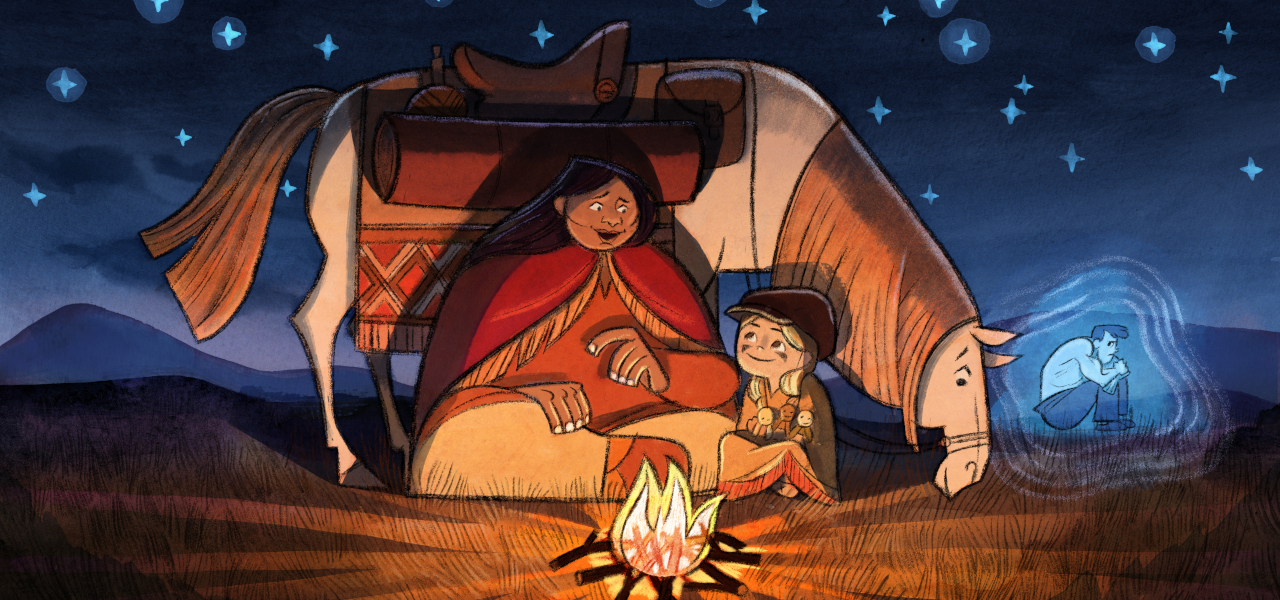
Coming from the studio behind Song of the Sea, The Secret of Kells, The Breadwinner, and Wolfwalkers, this project arrives with serious expectations. The trailer suggests a film that’s less about spectacle and more about empathy, memory, and how two colonized peoples saw reflections of each other across an ocean.
The Real History Behind Kindred Spirits: Choctaw Aid and the Irish Famine
The emotional core of Kindred Spirits isn’t invented for the sake of drama; it comes from a striking historical footnote that’s become a symbol of cross-cultural solidarity.
In 1847, the Choctaw Nation—only a decade removed from the horrors of forced removal and the Trail of Tears—raised funds for people suffering in the Great Famine in Ireland. Reports vary on the exact amount, but the gesture, coming from a community still reeling from dispossession, has echoed for generations.
“They heard about the Great Hunger in a place they’d never seen, and they remembered what it felt like when no one came. So they sent what they could.”
That story has already inspired a sculpture in County Cork titled Kindred Spirits, a series of stainless-steel feathers shaped like a protective circle. Cartoon Saloon’s film borrows the title and the spirit of that memorial but imagines a more intimate, character-driven narrative in 1840s America itself.
Plot Setup: An Irish Refugee, a Choctaw Boy, and a Mythic America
From what Moore teased at Cartoon Movie and what we glimpse in the trailer, Kindred Spirits follows:
- An Irish girl fleeing famine and colonial rule, carrying grief and survivor’s guilt across the Atlantic.
- A Choctaw boy navigating life in the aftermath of displacement, trying to understand what “home” means when the land remembers everything.
- A magical journey through 1840s America, where folklore bleeds into landscape and ancestral spirits are never far away.
Unlike a typical frontier story—where Indigenous characters are decorative at best and demonized at worst—this film re-centers the marginalized. It’s a dual perspective narrative in which colonization isn’t backdrop; it’s the weather both children are forced to live in.
Tonally, the trailer walks a careful line: there are lyrical, almost dreamlike sequences of rivers and forests, but also imagery that hints at violence and injustice. Cartoon Saloon has tackled heavy themes before in The Breadwinner, and here they seem determined to speak honestly to younger audiences without exploiting trauma for drama.

Visual Style: From Celtic Knots to Choctaw Patterns
Cartoon Saloon’s signature is 2D animation that feels hand-carved rather than digitally smoothed. With Kindred Spirits, the studio seems to be evolving that language again, moving from Celtic forests and medieval manuscripts into a visual conversation between Irish and Choctaw art.
Expect:
- Layered, painterly backgrounds depicting plains, rivers, and forests that evoke both 19th-century illustration and modern graphic novels.
- Motifs from Celtic and Choctaw design, potentially blended in scenes where the kids’ inner worlds and ancestral stories surface.
- Controlled, almost theatrical staging that feels closer to storybook tableaux than mainstream animation’s constant motion blur.

Tomm Moore has long talked about “flattened” perspective as an aesthetic choice—to make his films feel like living tapestries rather than CG worlds.
“We’re not trying to pretend the camera is flying through a 3D space,” Moore has said in past interviews. “We want every frame to look like something you could hang on a wall.”
That philosophy seems intact here, but the cultural palette is wider. If The Secret of Kells was a moving illuminated manuscript, Kindred Spirits looks like a cross between a famine-era engraving, Choctaw beadwork, and a 21st-century art book.
Themes: Colonization, Memory, and Transatlantic Solidarity
The hook—an Irish refugee and a Choctaw boy—isn’t just narrative convenience. It’s an explicit attempt to map the connective tissue between different experiences of empire and dispossession.
The trailer quietly foregrounds a few big ideas:
- Shared experience of colonization. Both protagonists live in the long shadow of policies made far away and enforced on their bodies and land.
- Intergenerational memory. Spirits, dreams, and stories appear less as fantasy and more as cultural memory insisting on being heard.
- Reciprocity and recognition. The “kindred spirits” idea is not just about charity; it’s about seeing yourself in another community’s suffering.
This is ambitious territory for a family-oriented animated film. It’s also very on-brand for Cartoon Saloon, which has consistently used folklore as a lens on climate anxiety, war, and cultural erasure.

Indigenous Representation: Promise and Pressure
Anytime a non–Native-led studio creates a story involving First Nations or Indigenous communities, questions of authorship and collaboration matter just as much as artistry.
While full production details are still emerging, Moore has indicated at industry events that the team has been working with Choctaw advisors to ground the film in community perspectives, not just Wikipedia research. That’s increasingly non-negotiable in contemporary animation.
“If we’re going to tell a story that touches on Indigenous history, consultation isn’t a box-tick, it’s the foundation. We want Choctaw audiences to recognize themselves, not feel extracted.”
The success of shows like Reservation Dogs and films like Smoke Signals has raised the bar for Indigenous representation in screen media. Kindred Spirits enters that conversation from a European art-house angle, which is exciting—but it will also be judged on how respectfully it shares the spotlight.

The upside is clear: if done well, this becomes a widely accessible story about Indigenous resilience and cross-cultural care, not just another backdrop of “Native suffering” for a European protagonist’s growth.
Where Kindred Spirits Fits in Cartoon Saloon’s Filmography
For animation fans, part of the fun is placing this trailer in the studio’s larger arc.
- The Secret of Kells (2009) – Medieval Ireland, illuminated manuscripts, spiritual awe.
- Song of the Sea (2014) – Modern Dublin and coastal myth, grief, selkies.
- The Breadwinner (2017) – Afghanistan, war, survival, storytelling as resistance.
- Wolfwalkers (2020) – Cromwellian Ireland, colonialism, environmentalism, shapeshifters.
Kindred Spirits feels like the next logical step: taking the studio’s interest in colonization and ecology and stretching it across the Atlantic, explicitly linking Irish history to Indigenous American history.

If Wolfwalkers was their big cinematic swing at the mythology of resistance, Kindred Spirits might be their attempt at a more explicitly transnational, relational mythology—less “our story” and more “our stories, in conversation.”
Early Verdict: Strengths, Risks, and Open Questions
It’s still early—we’re judging from a trailer and industry previews—but a few likely strengths and potential pitfalls are already visible.
What’s Looking Strong
- Visual identity: Distinctive, painterly 2D animation in a market still dominated by CG and IP recycling.
- Emotional hook: A friendship story that carries real historical weight without leaning on romance.
- Cultural resonance: A timely look at solidarity across borders in an era obsessed with walls and difference.
What Could Be Tricky
- Balancing education and enchantment: Lean too hard on history and you risk didacticism; lean too hard on fantasy and you trivialize real suffering.
- Representation politics: The film will be scrutinized by Indigenous critics for how it handles agency, voice, and spiritual imagery.
- Audience positioning: Cartoon Saloon films often sit between “for kids” and “for cinephiles,” which can confuse distributors and marketing teams.
None of these are deal-breakers, but they explain why Kindred Spirits feels like both an artistic opportunity and a tightrope walk.
Trailer and First Look: How to Watch
The official trailer for Kindred Spirits is currently circulating via animation outlets and social media, including Cartoon Brew’s coverage and Cartoon Saloon’s own channels. It’s worth watching on the largest screen you have—the color gradients and line work lose something on a phone, even if that’s where most of us will encounter it first.
While the studio hasn’t locked in every distribution detail publicly yet, expect a festival run (Annecy and Toronto are obvious contenders) followed by a broader theatrical and/or streaming release, mirroring the rollout of Wolfwalkers.
For the latest official materials, keep an eye on:
- Cartoon Saloon’s official site
- YouTube search for “Kindred Spirits Cartoon Saloon”
- Cartoon Brew’s news page for follow-up interviews and production notes
Final Thoughts: A Myth for the Age of Mutual Aid
If earlier Cartoon Saloon films were about reclaiming Irish myth and memory, Kindred Spirits looks like an attempt to place that memory in solidarity with others. It’s an animated feature about how grief travels, how generosity crosses oceans, and how two kids caught in the machinery of empire might still find magic—and each other.
In a pop culture landscape where “shared universe” usually means superheroes and spin-offs, Kindred Spirits is quietly building a different kind of shared universe: one where an Irish famine, a Choctaw donation, and a 21st-century audience can all be part of the same story about showing up for strangers.
If the finished film delivers on the trailer’s promise, it won’t just be another beautifully drawn entry in Cartoon Saloon’s catalog; it might become a go-to text for how animated cinema can handle colonial history with tenderness, intelligence, and, yes, a little bit of magic.
