
Why Apple’s On‑Device AI Is About to Redefine the Smartphone and Laptop
Apple’s generative AI strategy is no longer theoretical. With the latest versions of iOS and macOS, Apple is deploying a family of on-device models that can summarize notifications and web pages, draft and rewrite emails, generate and edit images, and power a more context-aware system assistant—all while keeping as much data as possible on the device. This “local-first AI” vision leverages the company’s vertically integrated hardware–software stack: custom silicon, tightly optimized operating systems, and a controlled app ecosystem.
In practice, Apple’s AI stack follows a hybrid pattern. Lightweight models run entirely on-device for everyday tasks; more demanding workloads can escalate to Apple’s cloud infrastructure, which uses end-to-end encryption and data minimization so that even Apple claims it cannot inspect user prompts or outputs. This architecture directly challenges the cloud-centric approaches pioneered by OpenAI, Google, and Microsoft and could reset user expectations about what AI should do offline.
Developers, meanwhile, are gaining new APIs that expose system-level AI capabilities—much like they once gained access to multitouch, cameras, and sensors. The open question is whether this AI layer becomes another quasi-immutable part of the Apple ecosystem, reinforcing lock-in while making high-quality AI features broadly available to app makers.
Mission Overview: Apple’s Local‑First AI Vision
Apple’s AI “mission” is not to build the largest model or chase raw benchmark scores. Instead, the company is positioning itself as the champion of personal AI: tools that are deeply embedded into everyday workflows, respect privacy, and feel like a natural extension of the device.
Core objectives of Apple’s AI push
- Privacy by design: Keep sensitive data—messages, photos, documents, health metrics—on the device whenever possible.
- Low-latency interaction: Deliver near-instant responses without the round-trip to distant data centers.
- Context-rich assistance: Use the user’s on-device history (apps, notes, documents) to power more relevant suggestions while maintaining strict access controls.
- Tight hardware integration: Exploit Neural Engine accelerators, unified memory, and storage throughput for efficient AI inference.
- Developer leverage: Provide high-level APIs so third-party apps can add AI features without training their own models.
“We believe the most powerful AI is the one that knows you and protects your privacy. That’s why we’re building AI that runs on the device you carry with you every day.”
— Attributed to Apple executives in recent keynote messaging
This framing matters. While OpenAI and others race to build “frontier models,” Apple is optimizing for reliability, integration, and trust. The result is a portfolio of medium-sized, efficiently quantized models that can run comfortably on phones and laptops rather than solely in hyperscale data centers.
Privacy vs. Cloud AI: Why On‑Device Matters
Traditional cloud-based AI pipelines send user data—prompts, documents, speech, and images—to remote servers for processing. Even with strong security practices, this introduces risks: data interception, misconfiguration, or misuse for model training. Apple’s answer is to invert the default: run the AI next to the data instead of moving the data to the AI.
How Apple’s hybrid AI architecture works
- On-device first: The system attempts to fulfill requests with a local model (e.g., summarizing notifications, rewriting text, offline translation).
- Capability check: If the on-device model is too small or lacks relevant capabilities (e.g., complex multi-step reasoning or large document analysis), the OS evaluates whether to escalate.
- Secure cloud fallback: For escalated tasks, data is encrypted client-side, processed on hardened Apple servers, and discarded according to strict minimization policies.
- No profiling or training on user data (by default): Apple publicly emphasizes that user-specific data is not used to train generalized models.
“On-device AI is one of the few scalable ways to align powerful models with user privacy. You move computation to the edge instead of dragging the edge into the cloud.”
— Paraphrasing themes discussed by security expert Bruce Schneier
This approach has practical UX benefits:
- Offline operation: Tasks like text rewriting or local file search work on airplanes, in subways, or in poor connectivity regions.
- Predictable latency: Response time is anchored to local compute, not network congestion or server load.
- Lower recurring costs: Because inference happens at the edge, Apple can reduce ongoing cloud compute expenses and environmental impact.
However, there are trade-offs. On-device models are, by necessity, smaller and more resource-constrained than giant data-center models. Apple’s challenge is to close the perceived capability gap while maintaining its privacy-first stance.
Technology: Apple Silicon as the AI Engine
Apple’s aggressive AI move is only possible because of its long-term investment in custom silicon. The A‑series chips in iPhones and iPads and the M‑series chips in Macs include specialized Neural Engines designed for high-throughput, low-power matrix operations—the backbone of modern neural networks.
Key hardware enablers
- Neural Engine: Dedicated AI accelerator cores optimized for dense linear algebra, often measured in trillions of operations per second (TOPS).
- Unified memory architecture (UMA): CPU, GPU, and Neural Engine share high-bandwidth memory, reducing the overhead of moving large model tensors around.
- Advanced process nodes: Energy-efficient transistors allow sustained AI workloads without thermal throttling, especially on newer iPhones and fanless MacBooks.
Communities like Ars Technica and AnandTech have been dissecting what these specs imply for real-world models:
- How large an LLM (in billions of parameters) can fit into unified memory without swapping?
- Which quantization schemes (e.g., 4‑bit, 8‑bit, mixed-precision) is Apple likely using to squeeze models into mobile devices?
- How does performance compare to locally running LLaMA-family models on desktop GPUs?
“The real story isn’t just about the Neural Engine’s TOPS, but about memory bandwidth and how efficiently Apple can keep the accelerator fed with data.”
— Analysis frequently echoed in Ars Technica–style hardware deep dives
To developers, Apple abstracts most of this complexity. Through frameworks like Core ML and high-level AI APIs, they can invoke powerful capabilities with a few lines of code, letting the OS schedule workloads across CPU, GPU, and Neural Engine as appropriate.
Ecosystem Lock‑In and Developer Tools
Apple’s AI layer is being exposed through system frameworks that any authorized app can call. This is reminiscent of the historical pattern where Apple integrated features like Touch ID, Face ID, and Apple Pay via controlled APIs that quickly became de facto standards within the ecosystem.
New AI capabilities available to developers
- Text intelligence APIs: Summarization, rewriting, tone adjustment, and translation integrated into text fields.
- Image generation and editing: On-device diffusion or generative models for stylization, background replacement, and content-aware fills.
- Semantic search: APIs that let apps query across documents, emails, notes, and media based on meaning rather than keywords.
- Context-aware suggestions: System surfaces that propose next steps, app shortcuts, or content based on recent activity.
Independent developers who currently integrate third-party APIs from OpenAI, Anthropic, or Google must decide how to respond:
- Adopt Apple’s native AI APIs for privacy and tight OS integration.
- Maintain multi-provider strategies to keep access to larger, more capable cloud models.
- Specialize in domain-specific models (e.g., for medical, legal, or financial data) that complement rather than compete with Apple’s general-purpose models.
“If Apple’s AI layer becomes the default way users interact with text and images, third-party providers risk being pushed one layer deeper into the stack.”
— Commentary along the lines seen on The Verge and TechCrunch
This dynamic raises significant platform power questions. If Apple effectively owns the main “surface area” through which users experience AI on iOS and macOS, then it can shape which models and services are economically viable on its platforms.
Competition with ChatGPT, Gemini, and Copilot
Apple’s move doesn’t happen in a vacuum. OpenAI’s ChatGPT, Google’s Gemini, and Microsoft’s Copilot have already conditioned users to expect natural language interfaces that answer questions, write code, and generate media. The question is how Apple’s on-device assistant compares in real-world use.
Key comparison dimensions
- Latency: On-device responses feel nearly instantaneous for lightweight tasks, often beating cloud assistants that suffer network jitter.
- Depth of knowledge: Cloud LLMs trained on internet-scale corpora still tend to outperform smaller on-device models for broad factual and reasoning tasks.
- Offline capability: Apple’s assistant can continue to function without connectivity for many local tasks; cloud assistants largely cannot.
- Integration: Apple’s model has privileged hooks into system apps, private device state, and hardware features, offering a more seamless UX.
On forums like Hacker News and X/Twitter, you’ll find:
- Unofficial benchmarks comparing Apple’s models to open-source LLaMA, Mistral, and Phi derivatives.
- Reverse-engineering of Apple’s quantization schemes and prompt formats.
- UX comparisons of Apple’s assistant vs. ChatGPT mobile apps on the same devices.
Apple does not need to “beat” GPT‑4 or its successors on raw IQ to succeed. If its assistant is “good enough” for 80% of daily tasks—drafting messages, summarizing reading, organizing notes—and is more convenient, many users will default to it and only occasionally invoke third-party apps for complex tasks.
Regulatory and Antitrust Angles
As Apple interweaves AI with operating systems, app distribution, and hardware, regulators in the US and EU are taking notice. The concern is not merely about privacy but about market structure: whether Apple’s control over the stack gives it an unfair advantage over competitors.
Emerging regulatory questions
- Is bundling AI assistants with the OS analogous to earlier antitrust battles over bundled browsers or media players?
- Does Apple’s control over AI APIs allow it to favor its own services or partners over third-party providers?
- How do EU Digital Markets Act (DMA) rules apply to AI-driven recommendations and ranking systems within iOS and macOS?
“Generative AI does not exist outside competition law. When an AI capability is only realistically accessible through a single gatekeeper, we have to ask hard questions.”
— Reflecting themes raised by US and EU competition authorities
Expect future legal debates over:
- Default status: Whether users have meaningful choice to set alternative AI assistants as system-level defaults.
- API access and parity: Whether Apple’s own apps get privileged AI capabilities unavailable to rivals.
- Data portability: Whether AI-derived user data (embeddings, preferences) can be exported to competing services.
How Apple navigates these issues will influence not just its own strategy but also how other platform companies—Google with Android, Microsoft with Windows—structure their AI integrations.
Milestones: From Neural Engine to System‑Wide AI
Apple’s current AI capabilities are the result of a multi-year progression rather than an overnight pivot. Several milestones stand out:
Key historical steps
- Introduction of the Neural Engine (A11 and beyond): First appeared as a dedicated block for accelerating machine learning on iPhones.
- Core ML and on-device ML toolchains: Enabled developers to deploy optimized models directly on iOS and macOS.
- Transition to Apple Silicon on Mac: Brought Neural Engine acceleration and UMA to laptops and desktops.
- System-level features using ML: Face recognition in Photos, on-device speech recognition, and autocorrect improvements.
- Full generative AI integration: On-device LLMs and image models powering assistant-style interactions, text tools, and creative workflows.
Each step has increased the proportion of computation that Apple can keep on-device. Generative AI is simply the latest—and most visible—layer on top of a long-standing machine-learning foundation.
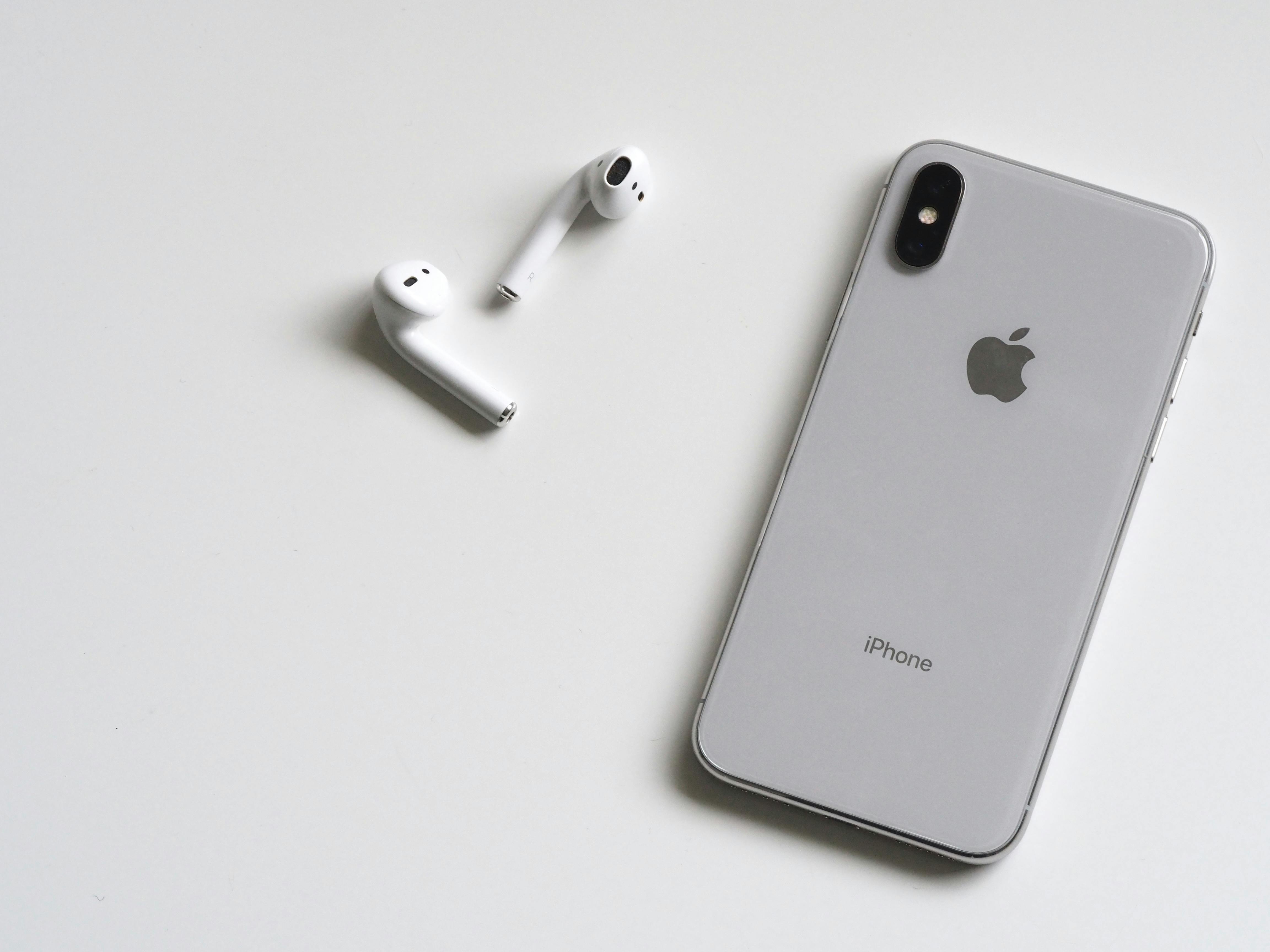
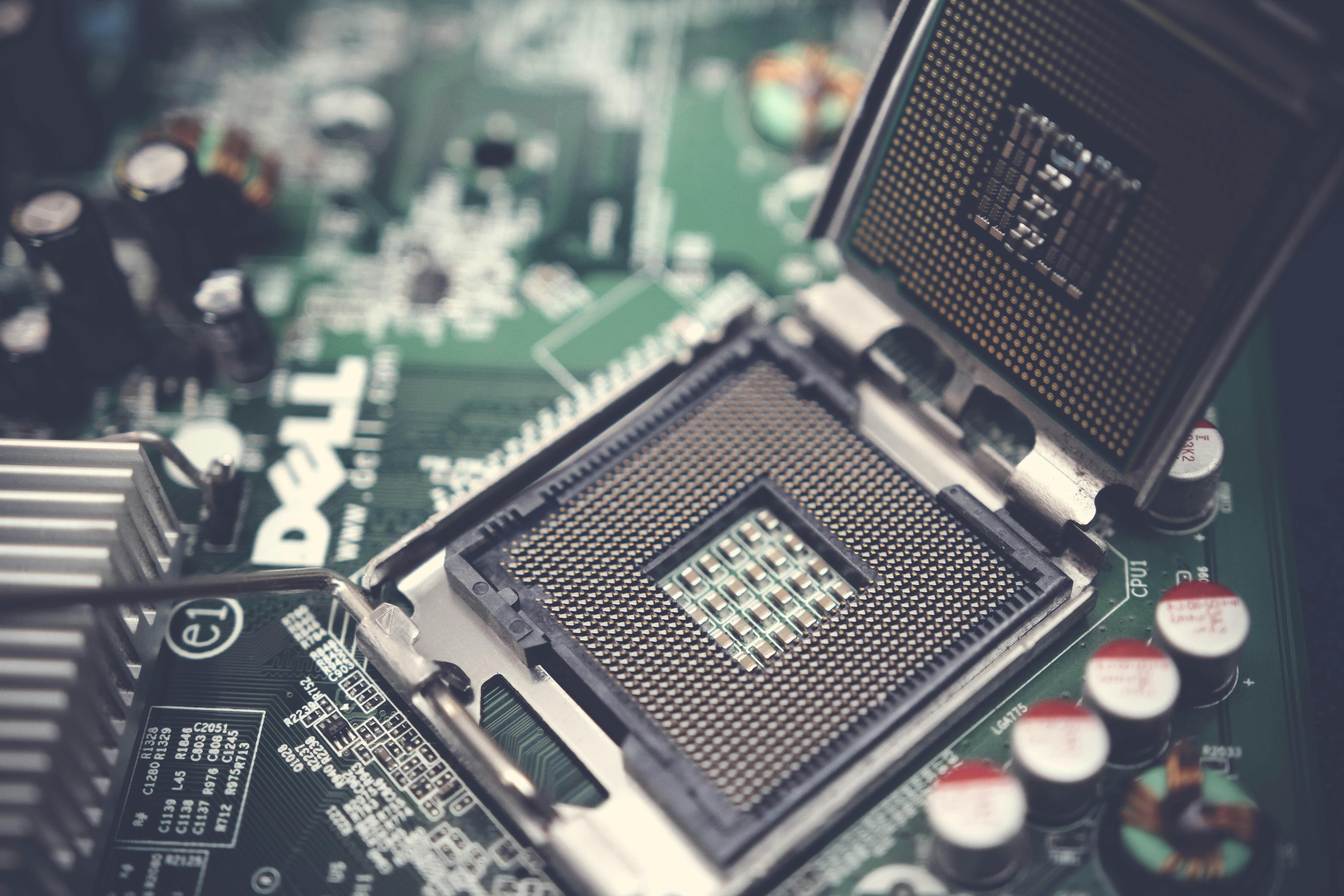
Visualizing Apple’s On‑Device AI Ecosystem
The following images illustrate the hardware, software, and user experience trends behind Apple’s AI strategy.


Challenges: Technical, Ethical, and Strategic
Despite impressive progress, Apple’s AI roadmap faces real constraints and open problems—from model scaling to responsible deployment.
Technical challenges
- Model capacity: Fitting increasingly capable models into the memory and power envelope of mobile devices remains difficult.
- Continual learning: Updating models with user-specific preferences locally, without exposing private data, is an active research problem.
- Multimodality: Integrating vision, audio, and text at scale on-device pushes hardware and software to their limits.
Ethical and safety challenges
- Hallucinations: Even smaller, on-device models can generate plausible but incorrect information, especially in high-stakes contexts.
- Bias and fairness: The training data and objective functions used for Apple’s models determine how they treat different demographic groups.
- Transparency: Limited visibility into model architecture, training data, and alignment strategies makes external auditing difficult.
Strategic challenges
- Keeping up with frontier models: As OpenAI, Google DeepMind, Anthropic, and others ship more capable models, Apple must decide how much to lean on partners vs. its own stack.
- Balancing openness and control: Allowing alternative AI engines without fragmenting the UX or compromising security is non-trivial.
- Regulatory compliance: Ensuring AI products meet evolving transparency, safety, and competition rules across multiple jurisdictions.
“AI safety is not a one-time patch; it’s an ongoing process of iteration, red-teaming, and feedback loops.”
— A principle echoed across major AI labs and highly relevant for on-device systems
Developer and User Tools: Building with and Around Apple’s AI
Whether you are a developer or a power user, Apple’s AI pivot offers new tooling and workflows. For developers, integrating native AI can reduce costs and latency; for users, the goal is to build sustainable, privacy-respecting productivity stacks.
Practical tips for developers
- Use high-level system APIs first: They inherit OS-level privacy and performance optimizations.
- Provide graceful degradation: Design features to work in offline or low-resource scenarios, falling back to simpler logic when AI is unavailable.
- Offer user control: Give toggles for cloud escalation, data sharing, and logging.
- Benchmark locally: Measure latency and energy usage on representative devices, not just top-end models.
Helpful learning resources and references
Recommended Hardware and Reading for On‑Device AI Enthusiasts
If you want to experiment with on-device AI—whether via Apple’s own stack or cross-platform tools—having capable hardware and the right references makes a substantial difference.
Hardware that handles local AI workloads well
- Apple M‑series laptops: Devices like the MacBook Air and MacBook Pro with M2 or newer chips are excellent for local model experimentation and development.
- High-performance external SSDs: Large local models benefit from fast storage for swapping and data.
For example, developers and power users frequently pair an M‑series MacBook with a high-speed portable SSD like the SanDisk 2TB Extreme Portable SSD to store datasets, fine-tuning checkpoints, and local models for experimentation.
Further reading on edge and on-device AI
- arXiv.org — search for “on-device AI”, “edge inference”, and “model quantization”.
- MIT Technology Review — frequent coverage of AI hardware and privacy.
- IEEE Spectrum — engineering-focused analysis of AI accelerators and systems.
Conclusion: The Future of Personal Computing Is Locally Intelligent
Apple’s AI push is not just about catching up to headline-grabbing chatbots. It signals a deeper shift in how intelligence is distributed across networks: away from pure cloud centralization toward a hybrid model where capable devices collaborate with powerful data centers under strict privacy and security constraints.
If successful, this strategy will redefine baseline user expectations. Instead of thinking of AI as a website or standalone app, people will come to expect that their phone or laptop is always ready to help them write, summarize, organize, and create—instantly, privately, and contextually. The competition among Apple, Google, Microsoft, and open-source communities will determine how open, interoperable, and user-controlled this future becomes.
For developers, the message is clear: design for a world where AI is an ambient utility, not a monolithic destination. For users, the opportunity is to harness these tools thoughtfully—leveraging the power of on-device models without surrendering control over personal data. Apple’s bet is that this balance of usefulness and privacy will be the winning formula for the next era of personal computing.
Additional Insights: How to Stay Informed and Experiment Safely
To track Apple’s evolving AI roadmap, it helps to follow a mix of official channels, independent researchers, and critical journalists. Consider:
- Apple Developer News for API and framework updates.
- LinkedIn posts from prominent AI researchers and Apple engineers discussing edge and on-device AI.
- Hacker News threads analyzing each new AI feature, system prompt, and benchmark.
- Long-form pieces in Wired, The Verge, and Financial Times Technology on the regulatory and societal impact.
When experimenting with AI features—especially those that touch personal or sensitive information—treat them like any powerful tool:
- Understand which operations are on-device versus cloud-based.
- Review privacy settings and consent dialogs carefully.
- Test with non-sensitive data before integrating into critical workflows.
- Regularly update your devices to receive the latest security and safety fixes.
References / Sources
The analysis in this article synthesizes reporting, technical documentation, and expert commentary from multiple reputable sources:
- Apple Newsroom — official announcements and product details.
- Apple Machine Learning — frameworks, sample code, and technical sessions.
- Machine Learning Research at Apple — peer-reviewed papers and blog posts.
- Ars Technica — hardware deep dives and Apple Silicon analysis.
- AnandTech — historical coverage of Apple SoCs and performance.
- The Verge and TechCrunch — ecosystem and developer impact coverage.
- Wired — privacy, regulation, and AI ethics reporting.
- Hacker News — community discussion and informal benchmarks.
- IEEE Spectrum — technical pieces on AI accelerators and edge computing.
- arXiv — preprints on on-device inference, quantization, and edge AI.
