
What the New BA.3.2 COVID Variant Means for Michigan in 2026
If you live in Michigan, you’ve probably seen headlines about a “new COVID variant” called BA.3.2 and wondered whether it’s time to worry again. After years of shifting guidance, changing variants, and pandemic fatigue, it’s understandable to feel a mix of skepticism and anxiety whenever a new strain appears.
As of late March 2026, health officials have identified the BA.3.2 variant, a member of the Omicron lineage, in at least 25 U.S. states, including Michigan. Early data suggest that while BA.3.2 shows some potential for immune escape, it is not expected to cause a major shift in overall public health risk compared with recent Omicron subvariants. In other words: this is something to be aware of, not to panic about.
In this guide, we’ll break down what BA.3.2 is, what Michigan health experts are seeing in the data (including wastewater monitoring), and how you can make calm, informed choices for yourself and your family—without adding unnecessary stress to your life.
What Is the BA.3.2 COVID Variant and Why Is It in the News?
BA.3.2 is a newer subvariant of SARS-CoV-2, the virus that causes COVID-19. Like many recent strains, it belongs to the Omicron family. Viruses constantly mutate, and most of these changes are minor. BA.3.2 has drawn attention because:
- It has been detected in at least 25 states, including Michigan.
- Some of its mutations may help it partially evade immunity from past infections or vaccination (often called immune escape).
- It has been picked up in wastewater surveillance, a key tool for detecting changes in community transmission early.
Based on current evidence cited by public health agencies and early reporting, BA.3.2:
- Is not expected to dramatically increase overall COVID risk compared with other recent Omicron subvariants.
- May lead to modest increases in cases, especially among people whose immunity has waned.
- Does not currently show clear signs of causing more severe disease on a population level.
“What we’re seeing with BA.3.2 so far is an evolution within Omicron, not a brand-new crisis. It’s a reminder that COVID is still with us, but also that our vaccines, treatments, and surveillance tools are much better than they were a few years ago.”
— Infectious disease specialist, summarizing early findings from U.S. public health data
How Michigan Is Tracking BA.3.2: Wastewater, Labs, and Real-World Data
One of the biggest differences between 2020 and 2026 is how we track COVID. Instead of relying only on reported test results, health departments now use a layered approach to understand what’s happening in communities.

For BA.3.2, health officials in Michigan are relying on three main tools:
- Wastewater surveillance
Viral fragments from SARS-CoV-2 end up in sewage. By sampling wastewater from treatment plants, scientists can:- Detect increases in overall COVID levels.
- Identify genetic signatures of variants like BA.3.2.
- Spot trends days to weeks before hospitalizations rise.
- Laboratory sequencing
A portion of positive COVID tests are sent for genomic sequencing, which confirms:- What share of cases are BA.3.2 versus other variants.
- Whether BA.3.2 is outcompeting earlier Omicron strains.
- Hospital and outcome data
Officials watch:- Emergency visits and hospital admissions.
- ICU use and deaths.
- Whether people with BA.3.2 are getting sicker than with prior variants.
BA.3.2 Risk in Michigan: Who Should Pay Extra Attention?
Even when a variant is labeled “low additional risk” at the population level, individual risk can vary a lot. BA.3.2’s possible immune escape means it might more easily infect people whose protection has faded, but current data do not show a major jump in severity.
People who may want to be especially cautious include:
- Adults over 65, especially with other health conditions.
- People with chronic illnesses (heart disease, diabetes, lung disease, kidney disease).
- Those with weakened immune systems, including from medications or medical treatments.
- Unvaccinated individuals or those far out from their last COVID shot.
- Caregivers and household members of high-risk individuals.
For most healthy, vaccinated adults, BA.3.2 is more likely to mean:
- A possible bump in mild to moderate infections.
- Breakthrough cases that feel like a bad cold or flu in many (but not all) cases.
- Ongoing background COVID activity rather than a dramatic new surge.
Does BA.3.2 Cause Different Symptoms?
So far, BA.3.2 appears to produce a symptom pattern similar to other recent Omicron subvariants. Most reported cases present like an upper respiratory infection.
Commonly reported symptoms with Omicron-lineage variants include:
- Sore or scratchy throat
- Runny or stuffy nose
- Cough (dry or productive)
- Headache
- Fatigue or low energy
- Muscle or body aches
- Fever or chills
- Occasionally, loss of taste or smell (less common than with early variants)
Symptoms can still become serious, especially in higher-risk groups. Watch urgently for:
- Difficulty breathing or shortness of breath.
- Persistent chest pain or pressure.
- New confusion or inability to wake or stay awake.
- Bluish lips or face, or very pale/gray skin (depending on skin tone).
Immune Escape: What It Actually Means for You
You may have seen the phrase “immune escape” linked to BA.3.2. It simply means that, due to its mutations, the variant may be better at infecting people who have some existing immunity—from vaccines, previous infection, or both—compared with earlier strains.

Importantly, immune escape does not mean:
- That vaccines are useless.
- That everyone will get severely ill.
- That prior infection offers no protection at all.
Real-world studies with other Omicron subvariants have consistently found:
- Vaccine effectiveness against infection may drop over time or with newer variants.
- Protection against severe disease, hospitalization, and death remains significantly stronger, especially after updated booster doses.
- “Hybrid immunity” (vaccination plus prior infection) often provides broader protection, though it is not risk-free to acquire.
“Think of vaccines less as an invisible shield that always blocks the virus and more as a high-quality helmet and seatbelt. You might still ‘crash’—get infected—but your odds of walking away without serious harm are much better.”
— Public health communicator explaining immune escape
Practical Ways to Protect Yourself from BA.3.2 Without Burning Out
Many people in Michigan are tired of hearing about COVID, and that fatigue is very real. The goal now isn’t to live in constant fear; it’s to use a few high-impact habits that fit your life and risk level.
1. Keep Your Vaccination Status Up to Date
Staying current with recommended COVID vaccines, including updated boosters, remains one of the best tools against severe illness. By 2026, formulas have been periodically updated to better match circulating variants.
- Check state or CDC guidance for your age group and health status.
- If it’s been many months since your last shot, ask your clinician whether you’re due for a booster.
- High-risk individuals may qualify for additional doses or early treatment if they test positive.
2. Use Testing Strategically
Instead of testing constantly, focus on moments when your decisions affect others:
- Before visiting an older relative or someone who is medically vulnerable.
- If you have respiratory symptoms, even mild ones.
- After a known exposure, especially if you live with someone high-risk.
3. Layer Protection in Higher-Risk Settings
Instead of trying to control every exposure, you can focus on situations where simple steps make a big difference:
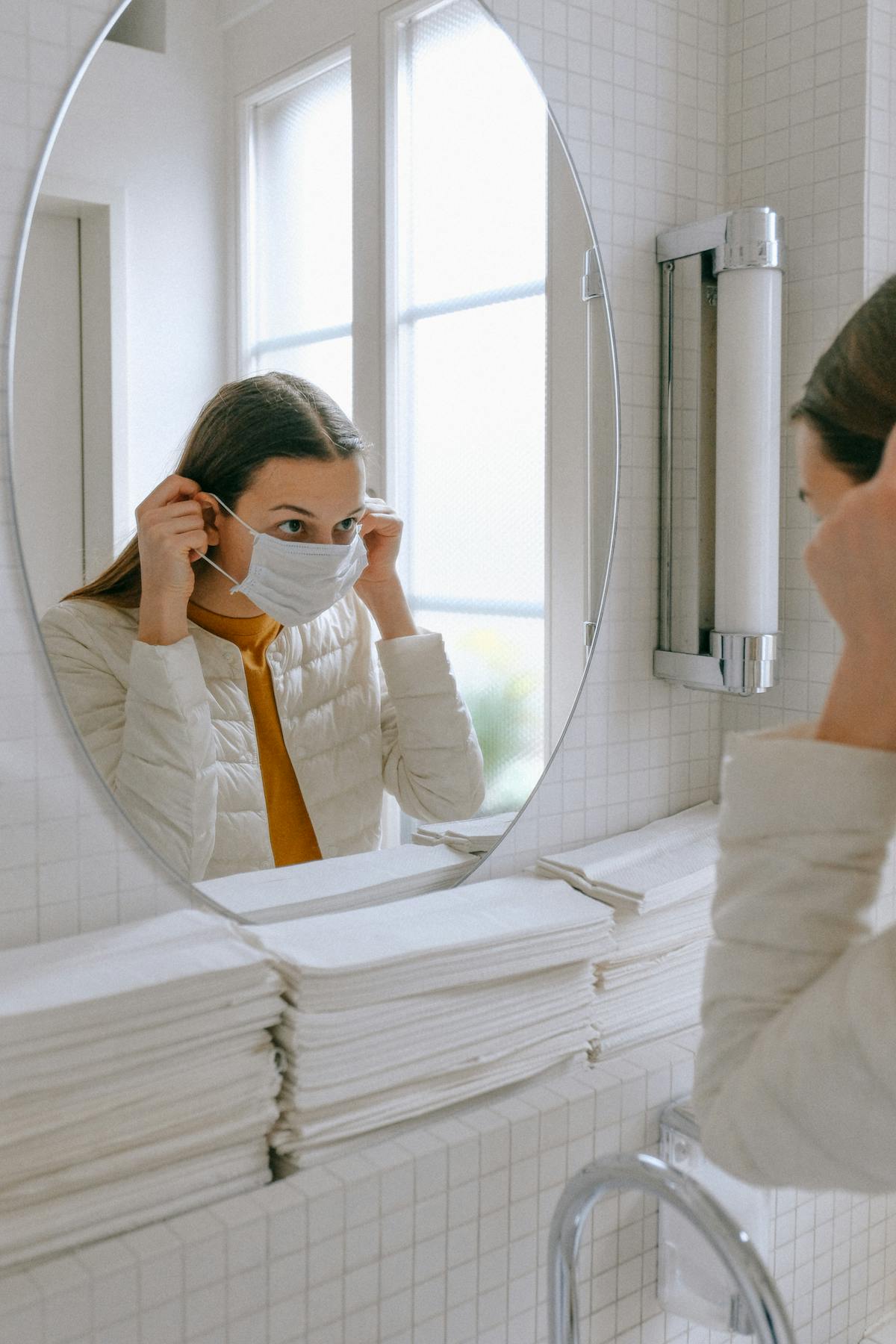
- Wear a well-fitted mask (such as a high-filtration mask) in crowded indoor spaces, especially during local surges.
- Improve ventilation: open windows, choose outdoor meetups when possible, or use HEPA filters in busy indoor areas.
- Avoid going to work, school, or large gatherings when you are sick, even if you suspect “just a cold.”
4. Plan Ahead for Treatments
Antiviral treatments can lower the risk of severe outcomes for higher-risk patients when started early after symptom onset. Ask in advance:
- Where you would get tested quickly if you developed symptoms.
- Which urgent care, telehealth service, or primary care practice you would contact for evaluation.
- Whether any of your medications could interact with COVID treatments and what your alternatives might be.
Common Frustrations and How to Navigate Them
It’s hard to process new variant news when you’re already stretched thin. People commonly describe:
- Pandemic fatigue: feeling emotionally done with hearing or thinking about COVID.
- Information overload: so many headlines that it’s unclear what really matters.
- Family conflict: disagreements about how cautious to be.
1. Filter Your Information Sources
Instead of following every headline about BA.3.2, pick 1–3 trusted sources and check them periodically, for example:
- Your state or local health department website.
- National public health agencies.
- Major medical centers or universities known for infectious disease expertise.
2. Use “Risk Budgets” Instead of All-or-Nothing Rules
Rather than trying to avoid risk entirely (which isn’t realistic), you can think in terms of a “risk budget.” For instance:
- You might choose to attend a few key events (a family wedding, a graduation) and be more cautious for a week before and after.
- You might skip some optional large indoor gatherings during times of higher community spread, especially if you care for someone vulnerable.
3. Communicate Boundaries Clearly
If you’re more or less cautious than friends or family, simple, respectful scripts can help, such as:
- “I’m trying to be extra careful right now because of someone at home with health issues—could we meet outdoors or in a quieter café instead?”
- “I’m comfortable with this gathering, but I plan to wear a mask on the bus there and back.”
What the Science and Experts Are Watching Next
While BA.3.2 currently appears to pose low additional public health risk beyond existing Omicron subvariants, scientists are monitoring several key questions:
- Growth advantage: Does BA.3.2 spread faster than other circulating variants?
- Severity: Are people infected with BA.3.2 more likely to be hospitalized, after adjusting for age and health?
- Vaccine performance: How well do current and updated vaccines protect against severe outcomes caused by BA.3.2?
- Reinfection patterns: Are reinfections more common among people who had earlier Omicron infections?

As more data accumulate, recommendations may be refined. For now, major health agencies and regional experts have not signaled that BA.3.2 requires a fundamentally different approach than other recent Omicron variants.
Putting BA.3.2 in Perspective: Calm, Informed, and Prepared
New variants like BA.3.2 are a reminder that COVID-19 has not disappeared, but they do not automatically mean we are back at square one. In Michigan and across the U.S., stronger tools—vaccines, treatments, and smarter surveillance like wastewater monitoring—put us in a better position than in the early years of the pandemic.
For most people, the most reasonable response to BA.3.2 is:
- Stay informed through reliable local and national health sources.
- Stay up to date with vaccination recommendations for your age and health.
- Use targeted precautions in higher-risk settings or around higher-risk people.
- Plan ahead for testing and treatment, especially if you or a loved one is at increased risk.
You don’t need to follow every headline or change your life for every mutation. Instead, think of BA.3.2 as one more nudge to keep your basic protections in good working order, just as you would with your seatbelts, smoke alarms, or winter tires.
If you’re unsure how this variant affects your personal situation—especially if you have underlying conditions—consider using this article as a conversation starter with your healthcare provider. Ask what they recommend for:
- Your next vaccine or booster timing.
- When to test and when to stay home if you feel sick.
- How to access treatment quickly if you test positive.
Taking these steps can help you move through the BA.3.2 news cycle—and the ones that come after it—with more confidence, less fear, and a clear plan tailored to your life in Michigan.
