
Valerie Cherish Takes on AI, Streaming, and Stardom in ‘The Comeback’ Season 3 Premiere
‘The Comeback’ Season 3 Premiere Recap: Val Gives ’Em the Old Razzle-Dazzle
HBO’s The Comeback returns for season three with a premiere that tackles AI anxiety, streaming overload, and the bruised ego of Valerie Cherish, proving the cult comedy still understands Hollywood’s shifting landscape better than most. This new episode, recapped by Vulture, finds Lisa Kudrow’s Valerie once again trying to stay relevant just as the entertainment industry itself feels increasingly unsure of its own future.
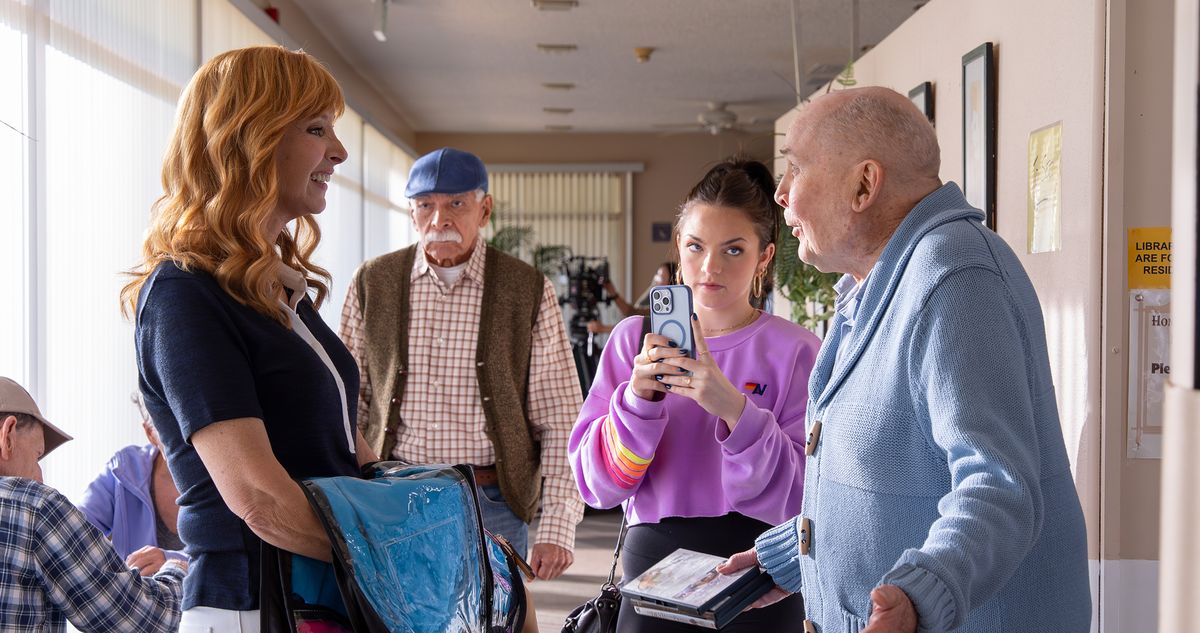
Why The Comeback Still Feels Weirdly Ahead of Its Time
When The Comeback first aired on HBO back in 2005, reality TV was still figuring out how cruel it was willing to be. The show’s mockumentary format, following Valerie Cherish as she tried to reboot her career on a humiliating reality series, felt like a niche experiment. Two decades and one revival later, season three arrives in an era when self‑branding, constant filming, and public meltdowns are just another Tuesday on social media.
That’s partly why critics routinely call the series “ahead of its time.” It anticipated the collision of fame, surveillance, and self‑commodification with almost uncomfortable precision. Where other shows about Hollywood chase glamour, The Comeback has always been more interested in the flop sweat behind the smile.
“I don’t want to see that!” — Valerie’s immortal catchphrase, now doubling as a commentary on the ways we curate and recoil from our own public image.
Season three leans into that legacy by folding in contemporary anxieties—namely AI, algorithmic decision‑making, and the streaming content glut that has turned even established stars into data points.
The Season 3 Premiere: AI Anxiety Meets Streaming Glut
In the premiere recapped by Vulture, Valerie navigates an industry that now talks less about ratings and more about “engagement” and “discoverability.” Her latest comeback vehicle bumps up against the cold logic of streamers and the eeriness of AI tools that promise to make entertainers more “efficient”—and, implicitly, more replaceable.
The episode works because it doesn’t turn AI into pure sci‑fi horror. Instead, it treats machine‑generated scripts, synthetic performances, and algorithm‑driven notes as just one more flavor of indignity for Valerie to endure. The comedy lands in the small humiliations: executives citing data over instinct, assistants hiding behind phrases like “the algorithm didn’t respond,” and the creeping suspicion that Valerie’s decades of experience can be summarized in a dashboard chart.
- AI script tools that “polish” Valerie’s voice beyond recognition.
- Streaming notes that reshape her show to chase trends.
- A constant fear of being swapped out for something cheaper, younger, or digital.
It’s less about killer robots and more about a death by a thousand algorithmic cuts.

Valerie Cherish vs. the Algorithm: Character Work in the Premiere
Lisa Kudrow’s performance remains the show’s not‑so‑secret weapon. In this premiere, Valerie is still the same mixture of desperate, upbeat, and oddly principled. She wants relevance, but she also wants to believe that craft and hard work still matter—even if everyone around her is staring at a spreadsheet.
The episode plays her against a younger, more fluent generation of Hollywood strivers who speak in TikTok metrics and pitch decks. Valerie’s instinctive, old‑school approach clashes with a culture trained to treat vulnerability as content.
“You can’t put that in the show. That’s private… which is why it would get you a really great clip.” — A very 2020s note that nails the new logic of “authenticity.”
What keeps Valerie from becoming a cartoon is Kudrow’s ability to let flashes of hurt and self‑awareness poke through the obliviousness. She recognizes, on some level, that show business has moved on without her. The tragedy—and the comedy—is that she still believes that one more perfectly framed moment could turn it all around.
Finger on a Weakening Pulse: What the Episode Says About Today’s TV Industry
One of the most striking ideas in the Vulture recap is the suggestion that The Comeback now has “its finger on the weakening pulse of the entertainment industry.” Twenty years ago, the target was the cruelty of network TV and the voyeurism of early reality shows. Now the series points to something more existential: what happens when the system that created a Valerie Cherish stops believing in its own future.
The episode folds in:
- Streaming fatigue — so many shows, so little cultural memory.
- Brand over artistry — platforms care more about “stickiness” than stories.
- Automation creep — from scheduling to script revisions, everything can be “optimized.”
Against that backdrop, Valerie’s relentless optimism feels less delusional and more like a survival mechanism. She’s an avatar for every mid‑career creative trying to adapt to a landscape where the rules keep changing and the goalposts are invisible.
Mockumentary Style in the Age of Influencers
Formally, The Comeback hasn’t changed as much as the world around it has. The mockumentary framework—crew members, confessionals, intrusive cameras—now plays less like a parody of reality TV and more like a dramatization of how everyone lives online.
In 2005, the cameras were a gimmick. In 2026, they’re basically an unremarkable part of daily life. That’s where the show finds new tension: Valerie still performs as if the camera is an event, while her younger peers treat it as permanent background noise.
The premiere uses this dissonance for both humor and critique. Confessionals feel closer to Instagram Stories; the “raw” moments are suspiciously well‑lit; and the constant awareness of being watched mirrors how people now think twice before saying anything unscripted—on or off set.

What Works in the Premiere (and What Doesn’t)
From the Vulture recap and early reactions, the season three premiere lands strongest when it leans into character and industry satire rather than trying to predict the future of AI. The writing understands how corporate jargon and “innovation” can be used to disguise old‑fashioned exploitation—especially for performers whose leverage is slipping.
Strengths:
- Lisa Kudrow’s performance keeps Valerie painfully, hilariously human.
- Sharp observations about streaming culture and short attention spans.
- A continued willingness to let Valerie be unlikeable without condemning her.
Potential weaknesses:
- The AI material risks feeling on‑the‑nose if future episodes don’t deepen it beyond tech buzzwords.
- The mockumentary form is now so ubiquitous that some stylistic beats feel less novel than in earlier seasons.
- Viewers who haven’t seen seasons 1 and 2 may miss some emotional context.
Still, the episode suggests the show has more to say than just “technology is scary.” The real subject is how easily human beings will twist any new tool—AI, social platforms, streaming algorithms—into another way to chase status and validation.

AI, Labor, and the Shadow of Recent Hollywood Strikes
The timing of this season three premiere is no accident. It arrives in the long tail of the Hollywood labor disputes over AI and streaming pay, where writers and actors pushed back against the idea that their work could be sliced, scanned, and repurposed indefinitely.
While The Comeback is a comedy, it brushes against the same questions:
- Who owns a performer’s likeness and “data”?
- Can an algorithm really measure artistic value?
- What happens to mid‑tier working actors when studios chase cost‑cutting automation?
Valerie’s worry that she might be outmoded or digitally replaced taps into a broader industry fear: that the next wave of technology isn’t about empowering artists but about minimizing how many of them need to be paid.
Where to Watch and What to Revisit Before Season 3
If the premiere recap has you curious—or if you just haven’t checked in on Valerie Cherish since her last awards campaign meltdown—it’s worth starting from the beginning. The slow burn of her character arc is part of the show’s payoff.
- Official HBO page for The Comeback
- The Comeback on IMDb
- The original Vulture recap of “Val Gives ’Em the Old Razzle-Dazzle” can be found on Vulture’s TV hub.
If you’re jumping in fresh, it’s still possible to enjoy the season three premiere on its own. But knowing Valerie’s long history of almost‑successes and televised humiliations makes every small win—and every new AI‑era indignity—hit harder.
Final Take: Still Cringe, Still Cutting
The season three premiere of The Comeback suggests the show hasn’t lost its nerve. It’s still committed to making viewers wince, laugh, and occasionally want to look away. By filtering AI anxiety and streaming fatigue through Valerie Cherish’s relentlessly upbeat POV, it sidesteps preachiness and lands somewhere more interesting: a portrait of a working actor trying to survive an industry that no longer knows what kind of stories it wants to tell—or how long it will keep telling them.
Whether the season can sustain that balance remains to be seen, but as a re‑entry point, “Val Gives ’Em the Old Razzle-Dazzle” proves that this once‑canceled, twice‑resurrected series still has something smart (and deeply uncomfortable) to say about fame in the algorithm age.
