
The Next Wave of AR/VR: How Mixed‑Reality Headsets Are Winning the Battle for Spatial Computing
After a decade of boom‑and‑bust hype cycles, augmented reality (AR) and virtual reality (VR) are being rebranded and rebuilt under the broader banner of mixed reality (MR) and spatial computing. Flagship devices like the Apple Vision Pro, Meta Quest 3, and high‑end PC‑tethered headsets are no longer pitched merely as gaming accessories. Instead, they are framed as general‑purpose computers that can pin windows to your living‑room wall, stretch virtual monitors above your desk, and bring full‑fidelity 3D models into your physical workspace.
Tech publications such as The Verge, TechCrunch, and Engadget are documenting this transition in real time, highlighting the rapid maturation of hardware, richer software ecosystems, and more credible use cases — alongside persistent skepticism about price, comfort, and long‑term value.
Mission Overview: From VR Headsets to Spatial Computers
The “mission” of today’s mixed‑reality push is explicit: create a computing platform that is as foundational as the PC and the smartphone, but natively three‑dimensional and spatial. Instead of staring at apps on a flat rectangle, users inhabit a canvas that fills their entire field of view.
In this paradigm, a spatial computer is any device that:
- Understands the geometry of your environment in real time (walls, furniture, people).
- Anchors digital content (windows, 3D objects, UI elements) stably into that environment.
- Lets you interact with that content using natural inputs: gaze, hands, voice, and body movement.
“Spatial computing is not just about placing screens in 3D; it’s about making computation inherently aware of people, places, and things.”
Apple’s marketing for Vision Pro, Meta’s “Quest for work” messaging, and Microsoft’s earlier HoloLens efforts all converge on this same idea: your environment becomes the desktop, and the headset becomes both the monitor and the input device.
Technology: Hardware Maturation Under the Hood
Modern mixed‑reality headsets represent a stack of tightly integrated technologies. Incremental refinements across optics, displays, tracking, and compute are what make longer, more comfortable sessions and high‑fidelity passthrough possible.
Optics and Displays
Flagship headsets now commonly feature:
- High‑resolution micro‑OLED or fast‑switch LCD panels with pixel densities approaching or exceeding 20 pixels per degree, reducing the “screen‑door” effect.
- Wide color gamut and HDR, improving realism for both cinematic content and detailed 3D scenes.
- Pancake or aspheric lenses that enable slimmer profiles, better edge‑to‑edge clarity, and reduced chromatic aberrations compared with older Fresnel designs.
Sensor Arrays and Tracking
Mixed‑reality devices rely on dense sensor arrays:
- Inside‑out tracking cameras capture the environment to estimate headset and controller pose with six degrees of freedom.
- Depth sensors or LiDAR (in some models) build a live 3D mesh of your room for stable spatial anchoring.
- Eye‑tracking cameras monitor gaze for foveated rendering and hands‑free UI selection.
- Inertial measurement units (IMUs) combine accelerometers and gyroscopes to provide low‑latency motion data.
Custom Silicon and Thermal Management
To keep weight low and battery life usable, mixed‑reality headsets increasingly rely on custom system‑on‑chips (SoCs). Apple’s Vision Pro blends an M‑series application processor with an auxiliary R1 chip to handle sensor fusion at extremely low latency. Meta’s Quest line leverages Qualcomm XR‑optimized Snapdragon chips.
Teardowns by iFixit and coverage on Ars Technica show elaborate thermal designs: vapor chambers, heat spreaders, and carefully placed vents to keep the device cool without noisy fans near the ears.
Ergonomics and Comfort
Comfort is not just about weight; it’s about weight distribution, padding, strap design, and material choices. Newer devices:
- Shift more mass to the sides or back of the head to relieve facial pressure.
- Offer modular straps and light‑seal options for different head shapes and prescription inserts.
- Integrate spatial audio into the band, reducing the need for separate headphones.

The Spatial Computing Paradigm
Spatial computing reframes headsets from “screens on your face” to context‑aware companions. The system recognizes surfaces, distances, and objects, then uses that understanding to place content logically and persistently.
Core Spatial Experiences
- Infinite virtual displays: Replace or extend physical monitors with curved or flat virtual screens pinned around your real desk.
- Room‑scale workspaces: Arrange apps around your room — a browser near your couch, a code editor above your desk, a reference window beside a physical whiteboard.
- 3D object interaction: Manipulate CAD models, data visualizations, or architectural mock‑ups as if they were physical prototypes.
Apple’s visionOS, Meta’s Horizon OS, and other emerging platforms all aim to provide a coherent spatial UI layer: windows and panels that can live anywhere, but behave predictably and respect accessibility guidelines, including font scaling, contrast, and input alternatives.
“We believe spatial computing will unlock experiences that are simply not possible on any other device.”
Content and Use Cases: Beyond Gaming
Gaming remains a major adoption driver, but the most strategically important applications for mixed reality lie in productivity, design, training, and collaboration.
Productivity and Knowledge Work
Early adopters have begun experimenting with “work from headset” setups:
- Developers running multiple virtual monitors for code, logs, and documentation.
- Writers and analysts spreading reference materials across an expansive virtual desktop.
- Remote workers joining mixed‑reality meetings with spatialized participants and shared artifacts.
YouTube creators regularly post experiments where they use devices like the Quest 3 or Vision Pro as their primary workstation for days at a time, documenting benefits — focus, immersion — and downsides such as eye strain and social isolation.
Design, Engineering, and Visualization
For architects, engineers, and industrial designers, spatial computing offers:
- True‑to‑scale visualization of buildings, factories, or vehicles before ground is broken or hardware is built.
- Collaborative review sessions, where teams on different continents walk through the same virtual prototype.
- Integration with existing CAD and BIM tools, enabling round‑trip workflows between desktop and headset.
Education and Training
Mixed reality is particularly powerful for procedural and spatial learning:
- Medical students can practice surgeries on detailed anatomical models with real‑time feedback.
- Manufacturing workers can follow step‑by‑step overlays for complex assembly tasks.
- Pilots and technicians can rehearse rare but critical emergency scenarios safely.
Studies referenced by outlets like Nature Scientific Reports suggest that immersive training can improve retention and confidence relative to traditional methods, particularly in fields where 3D spatial reasoning is key.
Consumer Media and Entertainment
Spatial video, immersive concerts, narrative VR films, and interactive exhibitions blur the line between cinema and simulation. Platforms like YouTube and specialized MR streaming apps host:
- 360° experiences and volumetric video.
- Mixed‑reality live events with virtual stages anchored in your room.
- Fitness experiences that blend game mechanics with full‑body workouts.
Developer Ecosystem and Open Standards
A viable spatial computing platform depends on a sustainable developer ecosystem, spanning hobbyists, indie studios, and large enterprises. Tooling has improved dramatically since the early VR days.
SDKs, Engines, and Tools
Developers now have access to:
- Unity and Unreal Engine integrations for rapid prototyping and deployment to multiple platforms.
- Platform‑specific SDKs such as Apple’s visionOS SDK and Meta’s Mixed Reality SDK with scene understanding, passthrough compositing, and hand‑tracking APIs.
- WebXR and WebGPU for browser‑based spatial experiences that don’t require native app installs.
OpenXR and Interoperability
To avoid the fragmentation that plagued early VR, industry leaders and the Khronos Group have developed OpenXR, an open standard that abstracts hardware details behind a common API. This lets developers target one runtime and run across multiple headsets, at least in theory.
“OpenXR aims to provide a future‑proof foundation for XR platforms and applications to flourish without being locked into vendor‑specific APIs.”
UX Best Practices in Mixed Reality
Designing for spatial computing requires new heuristics:
- Respecting comfort zones to avoid placing content too close or too far.
- Minimizing rapid acceleration or camera motion to prevent motion sickness.
- Providing accessible alternatives for users who cannot rely on hand‑ or eye‑tracking alone, in line with WCAG 2.2’s emphasis on multiple input modalities and error prevention.
Conference talks at events like GDC and SIGGRAPH, along with lively discussions on forums such as Hacker News, continue to refine best practices as new devices launch.
Social and Cultural Questions
As mixed‑reality headsets grow more capable, they also become more sensitive. The same sensors that power foveated rendering and room‑scale understanding can, in principle, be used for fine‑grained surveillance and behavioral profiling.
Privacy, Data, and Ethics
Spatial computing raises several pressing questions:
- Who owns the 3D map of your home or office?
- How is eye‑tracking data stored, and can it be used to infer intent or emotional state?
- Will context‑aware ads turn every wall into potential ad inventory?
Outlets like Wired and policy‑focused research groups at universities such as Stanford and MIT have warned that spatial computing could become “the most invasive consumer technology yet” if strong guardrails are not enforced.
Social Norms and Public Spaces
There is also an unresolved cultural question: Will people actually wear these in public? Smartphone adoption reshaped public behavior over a decade; mixed reality could demand an even larger shift, as faces are partially obscured and eye contact is mediated by cameras and displays.
Employers must consider:
- When headsets are appropriate in shared workspaces versus meetings.
- How to handle recording and environmental capture in offices with sensitive information.
- Health and safety considerations for prolonged use, including eye strain and posture.
Competition and Market Viability
The mixed‑reality space is defined by a handful of major players with different strategies:
Meta: Mass Market Through Subsidized Hardware
Meta’s Quest line aims squarely at affordability, often pricing hardware aggressively relative to its bill of materials. The goal is to grow a massive user base, bootstrap a creator ecosystem, and position Horizon OS as a mainstream app platform.
Apple: Premium Spatial Computing for Productivity
Apple’s Vision Pro takes the opposite approach, launching at a premium price and focusing on fidelity, comfort, and integration with the existing Apple ecosystem. Spatial computing is pitched as the future of personal computing for professionals and enthusiasts rather than a mass‑market gaming device.
The Rest of the Field
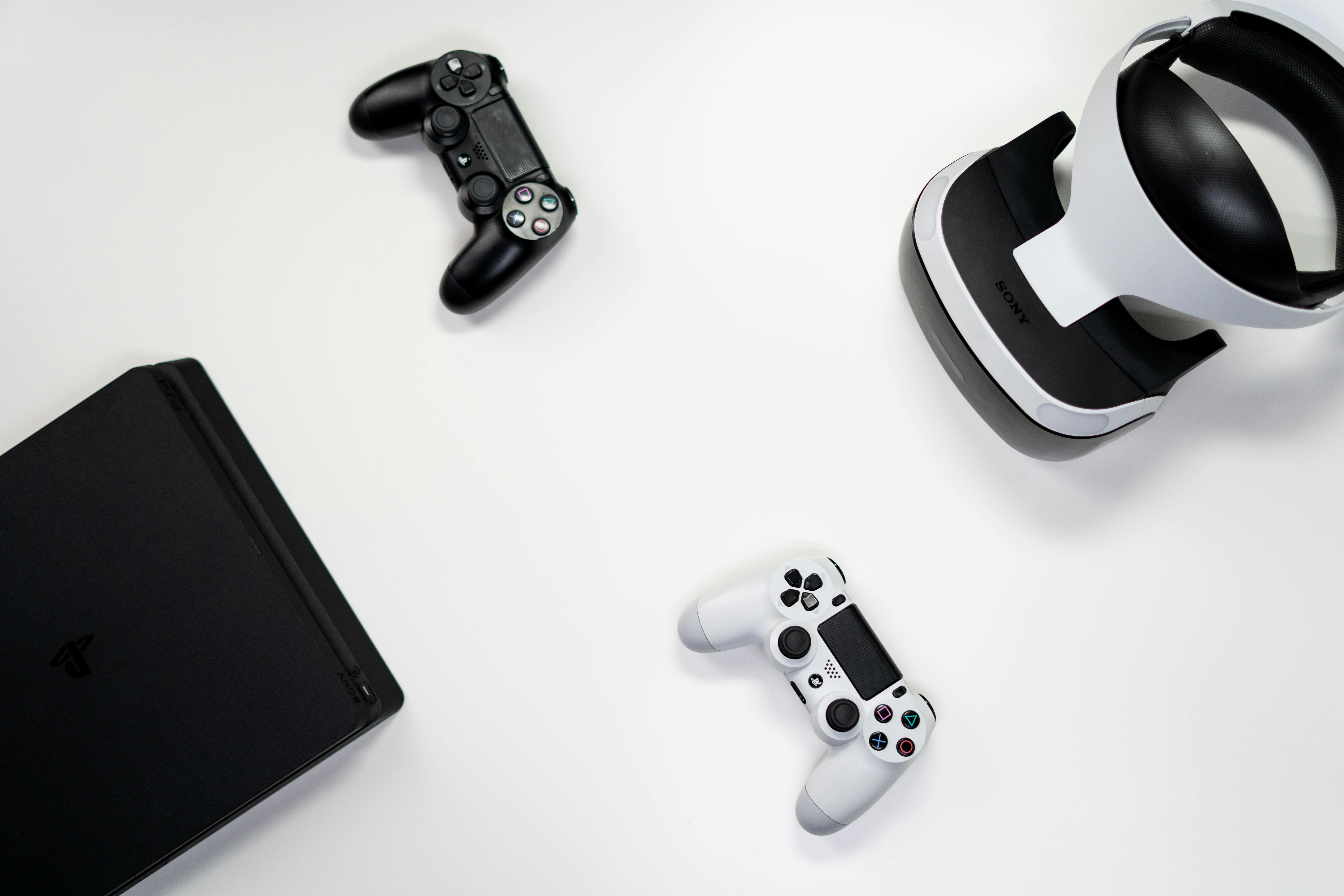
Companies including Sony, HTC, Varjo, and Lenovo continue to serve niches from high‑end simulation and enterprise training to console‑linked VR. Analysts debate whether the market can sustain so many hardware SKUs, or whether we’ll ultimately converge on a smaller set of cross‑compatible platforms.
“The battle for spatial computing is less about who sells the most headsets this year, and more about who defines the default operating system for 3D applications.”
Milestones: How We Got Here
The current wave of mixed reality builds on decades of research and several key commercial inflection points.
Historical Milestones
- 1960s–1990s: Foundational AR/VR research, head‑mounted displays in labs, and early flight simulators.
- 2012–2016: Oculus Kickstarter, HTC Vive, and Sony PlayStation VR spark the modern consumer VR boom.
- 2016–2019: Microsoft HoloLens and Magic Leap 1 push optical see‑through AR for enterprise, while mobile AR (ARKit/ARCore) proliferates on smartphones.
- 2020–2023: Standalone VR (Oculus/Meta Quest series) lowers friction; mixed‑reality passthrough features improve rapidly.
- 2024 onward: Apple Vision Pro and advanced Meta headsets elevate “spatial computing” as a mainstream concept in tech media.
Each generation improved comfort, tracking, or content libraries, but the convergence of high‑quality passthrough, robust software ecosystems, and clearer use cases is what differentiates the present moment.
Challenges on the Road to Ubiquity
Despite spectacular demos, spatial computing still faces significant technical, social, and economic barriers.
Technical Challenges
- Bulk and battery: Achieving all‑day wearability requires dramatic improvements in optics, batteries, and low‑power compute.
- Visual comfort: Vergence‑accommodation conflict and eye strain remain unsolved in most devices; varifocal or light‑field displays are still emerging.
- Environment robustness: Tracking and passthrough quality can degrade in low light, bright sunlight, or feature‑poor spaces.
Content and Business Models
Developers and studios need sustainable revenue to keep investing:
- Install bases are still relatively small compared with smartphones.
- Cross‑platform portability is improving but not yet seamless.
- Monetization models (one‑time purchase, subscriptions, in‑app purchases) are still being tested.
Human Factors and Social Acceptance
For many potential users, the idea of wearing a headset for hours a day remains unappealing. Glasses‑like AR devices could shift that perception, but they currently lag in immersion and compute capability.
Researchers and product teams must balance:
- Immersion vs. awareness of the real world.
- Presence vs. isolation from nearby people.
- Novelty vs. utility, ensuring that MR adds clear value over laptops and phones.
Practical Buying Guide: Who Should Consider a Mixed‑Reality Headset?
For readers considering a headset today, it’s helpful to align purchase decisions with realistic use cases rather than abstract hype.
Enthusiasts and Gamers
If your primary interest is gaming, fitness, and light experimentation with mixed‑reality apps, a mid‑range standalone device is the most pragmatic choice. Meta’s current consumer flagship, the Meta Quest series, offers strong content libraries and regular updates. (Check current models and pricing directly on Amazon or Meta’s official store before purchasing.)
Professionals and Creators
Developers, 3D artists, architects, and video professionals may benefit more from higher‑end headsets with superior displays, comfort, and integration with desktop workflows. These devices are expensive and often best justified as work tools rather than entertainment gadgets.
Enterprises and Educational Institutions
Organizations exploring training, digital twins, and remote collaboration should start with focused pilots:
- Identify one or two high‑impact scenarios (e.g., safety training, field service guidance).
- Work with experienced XR solution providers.
- Plan for device management, hygiene, and data governance from day one.
Conclusion: The Battle for Spatial Computing Has Begun
Mixed‑reality headsets and the broader notion of spatial computing are transitioning from speculative concept to concrete platform. Hardware maturation — higher‑resolution displays, precise tracking, better passthrough, and more ergonomic designs — is converging with richer software ecosystems and clearer use cases in work, education, and entertainment.
Yet, questions remain: Will headsets become as ubiquitous as smartphones, or will they settle into a high‑end niche used primarily by professionals and enthusiasts? How will privacy, safety, and accessibility be safeguarded as devices capture ever more intimate behavioral data?
Over the next five to ten years, the most important developments may not be the flashiest demos, but the slow, steady refinement of standards, UX patterns, and social norms. In that sense, the next wave of AR/VR is less a single breakthrough and more a cumulative shift — one that could fundamentally redefine how we compute, collaborate, and perceive digital information in the physical world.
Additional Insights and Resources
To stay current with the latest advances in mixed reality and spatial computing, it’s useful to follow a blend of technical, business, and policy perspectives:
- Road to VR and UploadVR for in‑depth headset reviews and developer‑oriented coverage.
- XR Safety Initiative (XRSI) for privacy and safety guidelines specific to XR technologies.
- Immersive Learning News for case studies in education and corporate training.
- Talks and interviews with XR researchers on YouTube channels like Stanford HCI and MIT CSAIL.
As with any emerging platform, the most impactful applications of spatial computing are likely those we have not yet imagined. For now, the best approach is deliberate experimentation, critical thinking about ethics and accessibility, and a willingness to treat headsets not just as gadgets, but as early windows into a new era of human‑computer interaction.
References / Sources
- The Verge — Virtual Reality and Mixed Reality Coverage
- TechCrunch — VR / AR Articles
- Engadget — VR News
- Ars Technica — Gadgets & Mixed Reality Coverage
- iFixit — VR Headset Teardowns
- Khronos Group — OpenXR Overview
- Wired — VR and AR Reporting
- Nature Scientific Reports — Example Study on VR‑Based Training
- XR Safety Initiative — XR Privacy & Safety Resources
