
Should You Trust RFK Jr.’s New Food Pyramid? A Dietitian & Doctor Break It Down
Reviewed by a Registered Dietitian and Internal Medicine Physician
Updated
When nutrition advice keeps changing, how do you know what to trust?
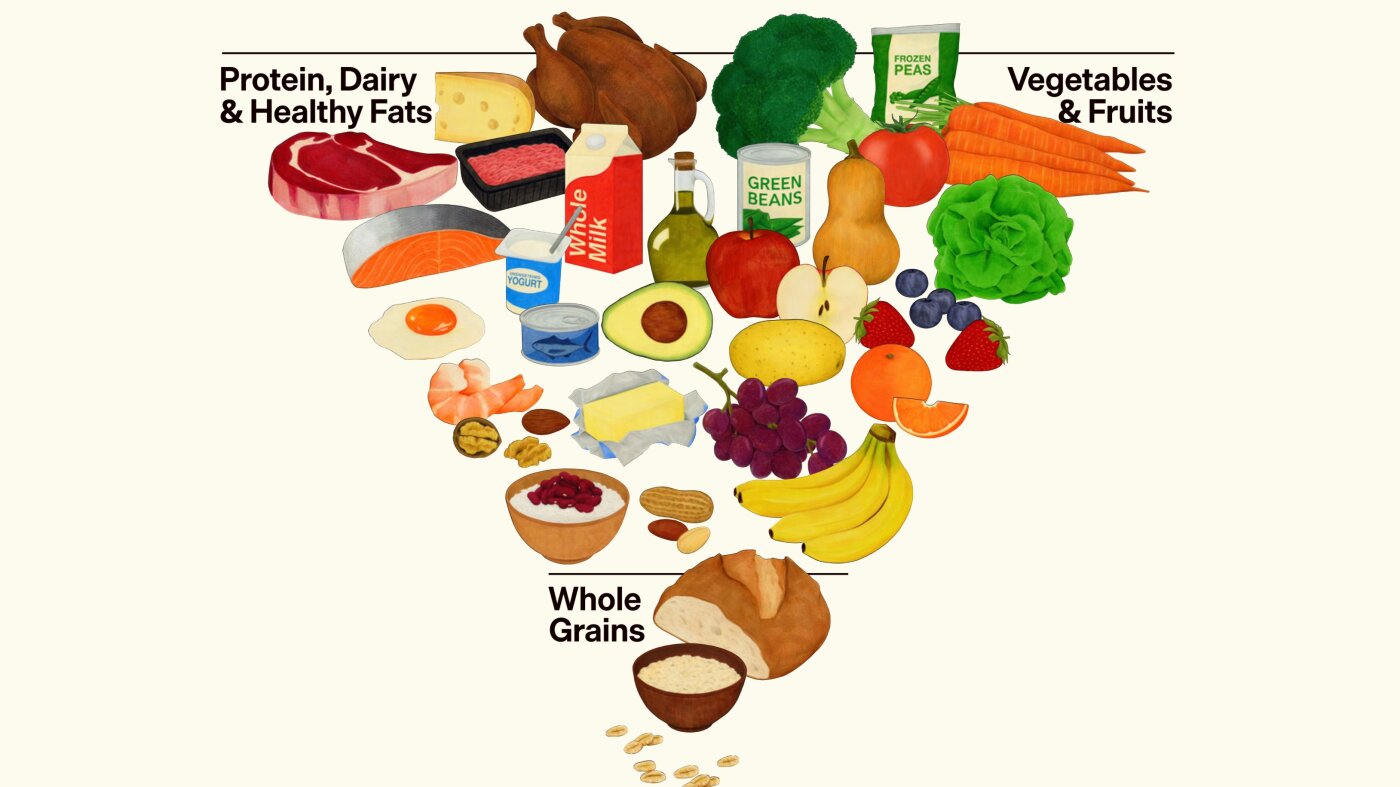
If you’ve ever stood in front of your fridge wondering whether you’re “supposed” to be avoiding carbs, loading up on butter, or drinking whole milk now, you’re not alone. The new food pyramid, promoted this year by Health and Human Services Secretary Robert F. Kennedy Jr., flips the classic grain-heavy pyramid upside down. It puts protein, full‑fat dairy and what he calls “healthy fats” at the base.
Because these guidelines influence school lunches, food labeling and public messaging, they have real consequences for families, especially kids. In this article, a registered dietitian and an internal medicine physician walk through what’s in this new pyramid, what current science actually supports as of 2026, and—most importantly—how you can build a balanced way of eating without getting caught in the political crossfire.
What exactly did RFK Jr.’s new food pyramid change?
Earlier U.S. food guides, like the 1990s pyramid and later MyPlate, emphasized:
- Grains (especially whole grains) as the base of the diet
- Plenty of fruits and vegetables
- Moderate amounts of lean protein and low‑fat dairy
- Smaller amounts of fats and added sugars
RFK Jr.’s new pyramid, as discussed on NPR’s Short Wave and other outlets, reshuffles that stack. While details may evolve, its key emphases are:
- Protein as the foundation – especially animal protein like meat, eggs and dairy.
- Full‑fat dairy – whole milk, cheese, butter and yogurt are moved toward the base.
- “Healthy fats” – including olive oil and some animal fats, promoted more strongly.
- Grains and starches – pushed higher up, implying a smaller role.
“When you re‑engineer a national food guide, you’re not just changing pictures on a poster. You’re shifting what children are served in cafeterias, how products are labeled and what families think is ‘normal’ at the dinner table.”
— Board‑certified pediatrician & public health researcher
The question isn’t whether protein and fats matter—they absolutely do. The question is whether this pyramid reflects the weight of scientific evidence, or mainly ideology and short‑term trends.
What does current nutrition science actually support?
Nutrition science is complex, but there’s more consensus than social media suggests. Drawing on large cohort studies and guideline panels through 2025 (e.g., Dietary Guidelines for Americans, American Heart Association, and major meta‑analyses), some stable points emerge:
- Dietary patterns matter more than single nutrients. Mediterranean‑style and DASH‑style eating patterns are consistently linked to lower heart disease, better blood pressure and longer life.
- Plants are protective. Higher intake of vegetables, fruits, whole grains, beans, nuts and seeds is associated with lower rates of chronic disease.
- Protein is important, but more isn’t always better. Getting enough protein supports muscle, metabolism and satiety. For most adults, that’s about 1.0–1.6 g per kg of body weight per day, adjusted for health status and goals.
- Fat quality beats fat quantity alone. Unsaturated fats (olive oil, canola, nuts, seeds, fatty fish) appear heart‑protective. Very high intakes of saturated fat, especially from processed meats, are still linked with higher cardiovascular risk in many—but not all—studies.
- Highly processed foods are the real villains. Diets rich in ultra‑processed foods (chips, sugary drinks, candy, fast food, many packaged snacks) are consistently tied to weight gain and poorer metabolic health.
Is making protein the base of the pyramid a good idea?
RFK Jr.’s pyramid heavily emphasizes protein. There are some real upsides here—but also caveats.

Where the science agrees:
- Higher‑protein diets can help with appetite control and weight maintenance for many people.
- Older adults often need proportionally more protein to protect muscle mass.
- Including protein at each meal (not just at dinner) supports blood sugar control and fullness.
Where caution is needed:
- Very high intakes of red and processed meat are linked with higher colorectal cancer and heart disease risk.
- People with kidney disease, some liver diseases or certain genetic conditions may need to limit protein and must follow medical advice.
- Focusing only on protein can crowd out fiber‑rich foods like beans, whole grains and vegetables that protect gut and heart health.
So centering protein more prominently isn’t inherently harmful and may help many people feel more satisfied. The key is how you get that protein: favoring fish, poultry, yogurt, beans, lentils, nuts and seeds over daily large portions of processed or fatty meats.
Full‑fat dairy and “healthy fats”: how much is too much?
One of the most controversial aspects of RFK Jr.’s food pyramid is its embrace of full‑fat dairy and animal fats. Here the evidence is nuanced—and often misrepresented in headlines.
Full‑fat dairy:
- Recent cohort studies (through 2024) suggest that moderate full‑fat dairy intake is not clearly associated with higher heart disease risk and may be neutral or slightly beneficial in some populations.
- Fermented dairy (yogurt, kefir, some cheeses) appears more consistently beneficial than butter or heavy cream.
- For children, whole milk can support growth, but overall diet, physical activity and family history still matter.
“Healthy fats”:
- Monounsaturated and polyunsaturated fats (from foods like olive oil, avocados, nuts, seeds and fatty fish) support heart and brain health.
- Replacing refined carbs and trans fats with these oils is reliably associated with improved cholesterol profiles.
- Very high intakes of saturated fats (e.g., large daily amounts of butter, lard, high‑fat processed meats) still raise LDL (“bad”) cholesterol in most people.
What about grains and carbs—are they really the enemy?
The new pyramid pushes grains higher up, implying they should be eaten less frequently. This resonates with low‑carb trends, but it oversimplifies the difference between a bowl of steel‑cut oats and a donut.
What research supports:
- Whole grains (oats, brown rice, quinoa, whole‑wheat bread, barley) are linked with lower risk of heart disease, type 2 diabetes and some cancers.
- Refined grains and added sugars (white bread, pastries, many breakfast cereals, sugary drinks) contribute to blood sugar spikes and weight gain when eaten often.
- Children and active adults often do better with some quality carbohydrates for energy, mood and performance.
“In my clinic, I rarely see problems from someone eating too many lentils, sweet potatoes and oats. The issues almost always come from sugary drinks, ultra‑processed snacks and lack of movement.”
— Internal medicine physician
So rather than asking “carbs: yes or no?”, a more useful question is “Which carbs, and in what portions, work for my body and lifestyle?”
A real‑life example: When the pyramid clashes with your plate
A few months ago, a 42‑year‑old teacher I’ll call “Maria” came to see me after her school district started piloting menus influenced by the new pyramid. Overnight, her cafeteria options shifted to more full‑fat dairy and meat‑heavy entrees, with fewer whole‑grain sides.
Maria has a strong family history of heart disease and slightly elevated LDL cholesterol. She was confused: “The school says this is healthier now, but my cardiologist told me to watch my saturated fat. Who do I listen to?”
We worked out a middle ground that honored both science and her reality:
- Choosing yogurt over cheese most days when dairy was the main protein.
- Filling half her tray with available vegetables or salad, even if that meant grabbing extra from the salad bar.
- Bringing a small container of nuts and fruit from home to round out her lunch.
- Limiting red meat entrees to about once per week and favoring poultry or vegetarian options.
After three months, her LDL dropped slightly, her energy improved, and—importantly—she felt less anxious about conflicting nutrition stories because her plan was tailored to her risk factors and preferences.
How to eat well when the guidelines keep changing
Whatever you think of RFK Jr.’s pyramid, you don’t need to overhaul your life every time a new graphic appears. Here’s a practical, evidence‑aligned way to build meals at home or at school.

Use the “Balanced Plate” method most of the time:
- Fill half your plate with vegetables and fruit.
Aim for a variety of colors over the week—fresh, frozen and canned (rinsed or in water) all count. - Reserve about one‑quarter for protein.
Rotate fish, poultry, eggs, beans, lentils, tofu, yogurt, nuts and modest amounts of lean red meat. - Use the remaining quarter for whole‑grain or starchy foods.
Think brown rice, quinoa, whole‑wheat pasta, corn, potatoes, or whole‑grain bread. - Add healthy fats in small, deliberate amounts.
A drizzle of olive oil, a few slices of avocado or a small handful of nuts is usually plenty.
Common obstacles—and realistic ways around them
You might understand what a healthy plate looks like and still feel stuck. That’s normal. Here are some frequent challenges my patients describe, and strategies that actually fit real life.
- “My school or workplace is serving higher‑fat options now.”
Use portion control instead of all‑or‑nothing rules. Pair a small serving of a richer main dish with extra vegetables or salad and skip sugary drinks. - “Healthy food feels too expensive.”
Lean on frozen vegetables, dried beans, lentils, eggs, canned fish and store‑brand whole grains. These often cost less than processed snacks per serving. - “I’m confused by conflicting headlines.”
When in doubt, default to: more plants, mostly minimally processed foods, adequate protein, and attention to portions. Trends can change; this foundation rarely does. - “My family won’t eat ‘diet’ food.”
Avoid labeling. Instead of “we’re eating healthy now,” say “let’s try this new taco recipe.” Make gradual swaps: whole‑grain tortillas, half‑beans half‑meat filling, extra veggies, and everyone chooses their own toppings.
From old pyramid to new—and to something more sustainable

Think of national food pyramids as broad, imperfect road signs, not exact directions. They can nudge schools and food companies, but they can’t possibly capture every person’s cultural background, medical history or budget.
Instead of aligning yourself with an old or new pyramid, consider a different “before and after”:
- Before: Most meals built from convenience foods and sugary drinks.
After: Most meals built from basic ingredients with water or unsweetened drinks. - Before: Protein only at dinner.
After: A source of protein at every meal and most snacks. - Before: Vegetables as an afterthought.
After: Vegetables or fruit present at least two meals per day, then three. - Before: Eating by rules you don’t fully understand.
After: Eating by principles you’ve chosen with your own health in mind.
How experts suggest you evaluate new food guidelines
Before you re‑organize your pantry around any new pyramid, plate or influencer graphic, run it through these quick filters:
- Is it supported by multiple independent sources?
Check organizations like: - Does it demonize entire food groups without medical necessity?
Outside of allergies, celiac disease or specific medical needs, be wary of any plan that says “never eat” whole categories like all grains or all fruit. - Does it promise dramatic cures or guaranteed results?
Evidence‑based nutrition is about shifting risk and supporting overall health, not guaranteeing outcomes. - Can it flex for your culture, budget and preferences?
If a guideline makes your traditional foods “wrong” by default, talk to a culturally sensitive dietitian about adapting it rather than abandoning your heritage.
Finding calm in the noise: build your own evidence‑based plate
You don’t have to choose between the old grain‑heavy pyramid and RFK Jr.’s protein‑and‑fat‑heavy version. You can choose something steadier: a pattern of eating that emphasizes whole and minimally processed foods, plenty of plants, enough protein, mostly unsaturated fats and room for joy.
If you feel overwhelmed by changing guidelines, remember: the basics of healthy eating have shifted far less than the headlines suggest. Start with small, concrete changes you can maintain for a month, not rules you can follow for only a week.
If you’re able, consider booking one or two sessions with a registered dietitian or a trusted health professional to tailor these ideas to your lab results, medications and history. And when the next pyramid or plate comes along, you’ll have the skills to evaluate it calmly instead of starting from scratch.
Your next step:
- Pick one meal tomorrow—breakfast, lunch or dinner—and build it using the Balanced Plate method.
- Notice how you feel 2–3 hours later: energy, hunger, focus, mood.
- Use that feedback, not politics, to guide your next small adjustment.
