
Jon Stewart’s 14 Seconds of Silence: The Daily Show Moment That Roasted Trump’s Iran War Rhetoric
Jon Stewart, 14 Seconds of Silence, and Trump’s Iran Rhetoric: When Late Night Becomes a Fact-Check
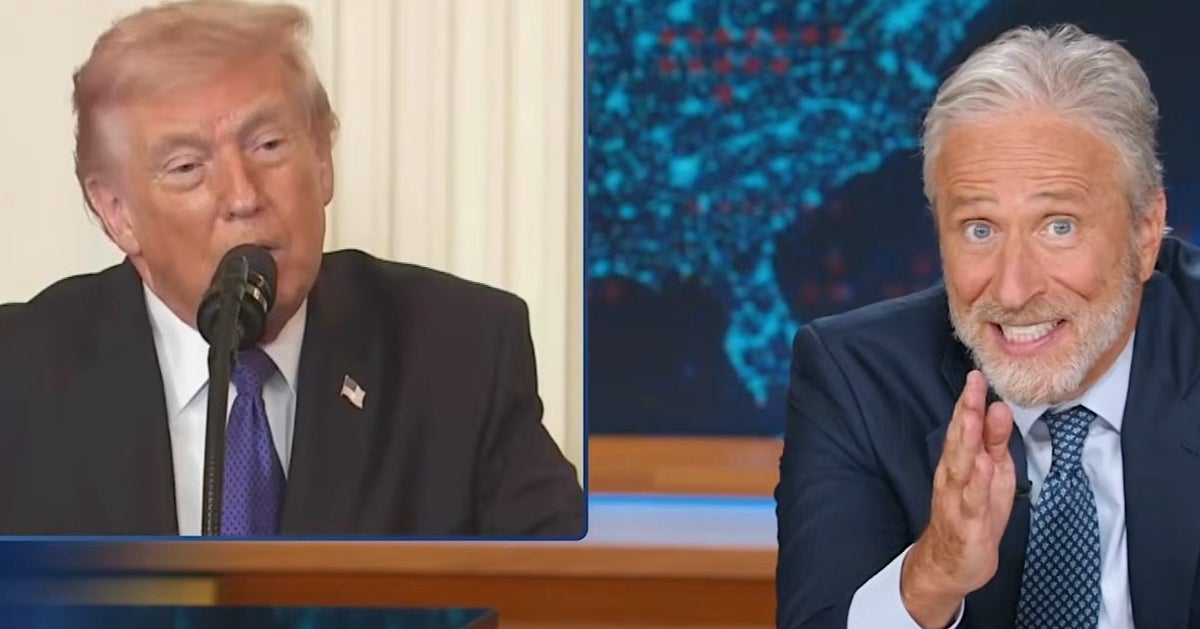
Jon Stewart’s return to The Daily Show gave late-night TV one of its most talked‑about political moments: a full 14 seconds of dead air, as he stared at the camera after airing Donald Trump’s meandering defense of the U.S. conflict with Iran. In a media landscape saturated with hot takes and partisan spin, that silence landed louder than any punchline, crystallizing how badly the president struggled to justify a march toward war.
How We Got Here: Trump, Iran, and a War No One Could Explain
To understand why Stewart’s reaction resonated, you have to rewind to the tense U.S.–Iran standoff under Donald Trump. After pulling out of the Iran nuclear deal and ramping up “maximum pressure” sanctions, the administration edged toward direct confrontation. Strikes, threats, and fiery speeches created the sense of a looming or ongoing war, yet the White House struggled to present a coherent narrative that the public—or even Congress—could follow.
This is the space where Stewart has always been most effective: the gap between what leaders say and what actually makes sense. When Trump and his media surrogates tried to frame the conflict as inevitable, justified, and even “easy,” Stewart seized on the mismatch between that swagger and the administration’s inability to clearly outline goals, strategy, or legal authority.
The Viral Moment: Trump’s Bizarre Babble and Stewart’s 14 Seconds of Silence
The segment that lit up social media was structurally simple. Stewart played a clip of Trump attempting to explain or defend his Iran policy—a rambling mix of self‑congratulation, grievance, and half‑finished talking points. Instead of cutting in with a joke, Stewart just stopped. No graphic, no quip. Just 14 seconds of him staring at the viewer, eyebrows slowly climbing, as if to say, “You heard that too, right?”
In comedy terms, it’s an old trick: let the absurdity speak for itself. But in a political context, that pause functioned like a verdict. It framed Trump’s rhetoric not as complex policy, but as incoherent word salad, unworthy of the usual Beltway euphemisms about “messaging” or “strategy.”
“Sometimes the most honest thing you can do is just roll the tape and get out of the way.”
— Jon Stewart, reflecting on how political clips often demolish themselves

Calling Out MAGA Media: Stewart vs. the Ecosystem Around Trump
Stewart didn’t stop at Trump. A major part of the segment was his critique of the MAGA media ecosystem—cable hosts, pundits, and loyal members of Congress—who repeated the administration’s talking points with more confidence than clarity. His argument was less about ideology and more about intellectual honesty: if you’re going to help sell a war, you should at least be able to explain what it’s for.
- On Congress: Stewart zeroed in on lawmakers who rubber‑stamped executive power while claiming to defend the Constitution.
- On cable news: He mocked the shift from skepticism during past wars to cheerleading when it was Trump at the helm.
- On “toughness” branding: He skewered the way hawkishness is marketed as strength, regardless of whether the arguments hold up.
“If the case for war is so strong, why does it sound like everyone’s just making it up on the spot?”
— Paraphrased from Stewart’s critique of pro‑war talking points
Why This Daily Show Clip Hit So Hard in the Culture
Stewart’s 14 seconds of silence fit neatly into a broader media moment: audiences are exhausted by spin and hungry for someone—anyone—to call nonsense what it is. The clip ricocheted across X (Twitter), TikTok, and YouTube, not just as a joke but as a kind of emotional shorthand for how many viewers felt listening to Trump’s Iran explanations.
It also underscored how late‑night comedy has evolved into a parallel news ecosystem. For a generation raised on cable chaos and algorithm‑driven feeds, The Daily Show and its peers function as an informal fact‑check, reframing political spectacles with context, editing, and humor. Stewart’s choice to let silence carry the message showed a confidence that the audience no longer needs every beat explained—they just need someone to confirm that what they’re hearing is, in fact, not normal.
Strengths and Weaknesses of Stewart’s Approach
As a piece of television, the segment is razor‑sharp: tightly edited, emotionally resonant, and perfectly timed for the social media era. Still, it’s worth weighing what the bit does well—and where it may fall short—as political commentary.
What the Segment Nails
- Clarity through contrast: Placing Trump’s babble next to stark silence exposes how flimsy the argument for conflict sounds.
- Media accountability: By dragging MAGA media and compliant politicians, Stewart widens the frame beyond one man.
- Cultural timing: The bit speaks directly to public frustration with endless wars and vague justifications.
Where It’s Limited
- Complexity gets compressed: The geopolitics of U.S.–Iran relations are far more intricate than a 5‑minute segment can capture.
- Preaching to the choir: Viewers already skeptical of Trump cheer; supporters are unlikely to be persuaded.
- Emphasis on performance: The spectacle of Trump’s incoherence may overshadow sober discussion of policy alternatives.
“Satire is great at puncturing lies, less great at building consensus on what to do next.”
— Media critic on the limits of late-night political comedy
From Bush to Trump: Stewart’s Long War on Bad War Arguments
Part of why this moment felt so loaded is Stewart’s history. During the George W. Bush years, The Daily Show became a central hub of anti‑Iraq War skepticism, replaying administration talking points about “weapons of mass destruction” and juxtaposing them with on‑the‑ground reality. The Trump–Iran segment plays like a sequel: same genre, different cast.
- Continuity: Stewart has consistently targeted the ways presidents use vague or misleading language to sell military action.
- Evolution: Under Trump, the language is less polished but more chaotic, making satire both easier and darker.
- Legacy: Newer hosts—Trevor Noah, John Oliver, Hasan Minhaj—borrow Stewart’s template of archival clips plus cutting commentary.

Industry Insight: Why Bits Like This Are Gold for Late-Night TV
From an entertainment industry perspective, Stewart’s Iran–Trump segment checks every box for modern late‑night success. It’s short, easily clipped for social feeds, politically pointed without requiring niche policy knowledge, and anchored by a striking visual gag—the wordless stare—that plays even on mute.
Networks and streamers now program late‑night with virality in mind. Segments like this are designed not just for the live audience but for the afterlife on YouTube and TikTok. The combination of Trump’s bizarre babble and Stewart’s silence is tailor‑made for reaction videos, stitches, and duets, extending the cultural half‑life of a single night’s show into weeks of commentary.
Accessibility, Representation, and the Ethics of Political Comedy
There’s also an ethical dimension to segments like this. War isn’t just an abstract debate; it’s a real‑world crisis that affects civilians, veterans, journalists, and diasporas. Stewart’s comedic framing walks a line between mocking those in power and respecting those who would bear the cost of their decisions. The choice to focus on Trump’s rhetoric and his media allies—rather than on suffering itself—helps keep the targets clear.
From an accessibility standpoint, the clip’s power doesn’t depend heavily on fast, dense dialogue. The visual of Stewart silently absorbing Trump’s words is legible across languages and hearing abilities, especially when paired with captions. It’s a reminder that political satire can be both sophisticated and broadly accessible when it leans on strong, simple imagery instead of rapid‑fire in‑jokes.

Final Thoughts: When Silence Becomes the Sharpest Punchline
In a sea of noise around Trump’s Iran policy, Jon Stewart’s 14 seconds of silence on The Daily Show managed to cut through. By refusing to dress up the president’s rambling defense as serious argument, he turned a late‑night bit into a compact piece of media criticism—aimed not just at the White House, but at every outlet and official willing to nod along.
As the U.S. continues to wrestle with how it enters, exits, and explains wars, moments like this will likely keep surfacing in our cultural memory. They’re reminders that sometimes the most powerful commentary isn’t another speech or another op‑ed—it’s simply holding up a mirror, hitting play, and letting the silence say what everyone else is too cautious to admit.
