
John Lithgow Turns Roald Dahl Into a Monster You Can’t Look Away From in ‘Giant’
‘Giant’ Review: John Lithgow Turns Roald Dahl Into One of His Own Monsters
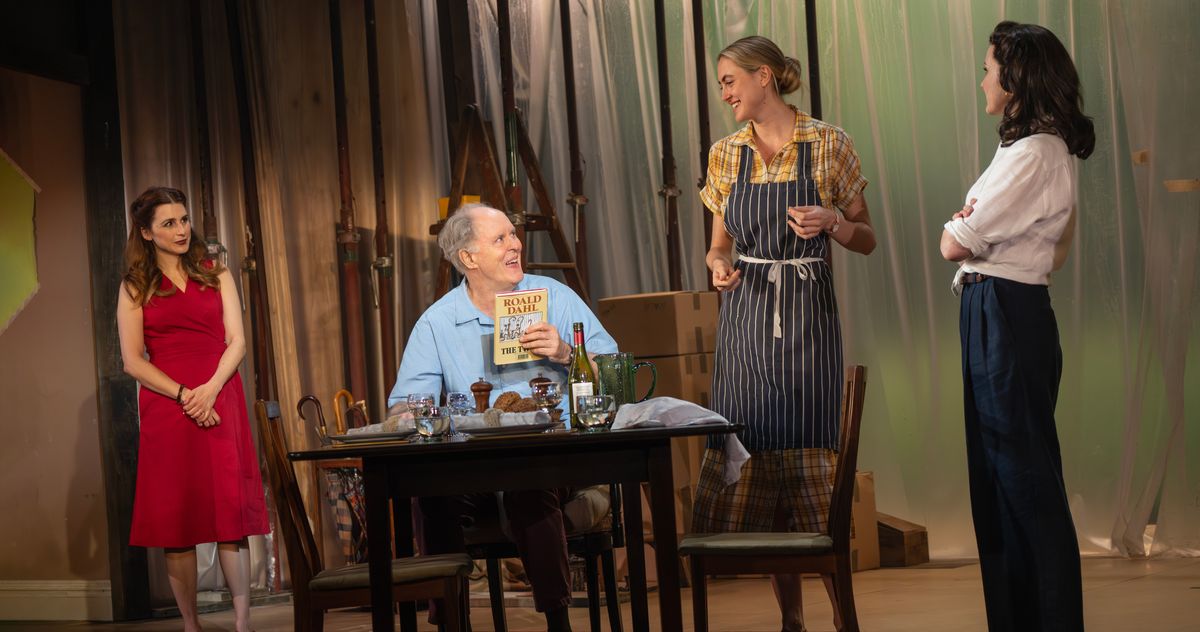
John Lithgow’s performance as Roald Dahl in Giant doesn’t just dramatize a famous writer’s bad behavior; it turns Dahl into something closer to his own Vermicious Knids – a shape-shifting, increasingly nasty creature whose menace feels uncomfortably familiar in 2020s pop culture. The result is a sharp, unsettling, and unexpectedly funny stage portrait that asks whether we can still love the stories that shaped us once we truly look at the person who wrote them.
Roald Dahl on Trial: Why Giant Lands Now
Dahl has never really gone away. His books keep cycling through pop culture in fresh adaptations – from Tim Burton’s Charlie and the Chocolate Factory to Netflix’s Matilda the Musical – while his legacy keeps getting reevaluated. The last few years have seen renewed attention on Dahl’s antisemitic remarks, bullying streak, and general nastiness, prompting public apologies from his estate and heated debate about “canceling” childhood favorites.
Giant drops directly into this charged atmosphere. Rather than politely “separating the art from the artist,” the play leans into Dahl’s contradictions: the imaginative father of misfit kids and candy worlds, and the petty, cruel man behind the typewriter. Lithgow’s Dahl is charming one minute and casually vicious the next, embodying the very instability that makes Dahl so hard to shelve neatly.
“If you are going to get anywhere in life you have to read a lot of books,” Dahl once said.
Giant quietly adds: and then you have to decide what to do with the people who wrote them.
John Lithgow as a Human Vermicious Knid
The hook of Giant is simple: John Lithgow plays Dahl as though he were one of Dahl’s own monsters, a Vermicious Knid. They’re the amorphous space villains from Charlie and the Great Glass Elevator, defined by their ability to stretch, contort, and menace. Lithgow takes that idea and runs with it, physically and psychologically.
Onstage, he’s all elasticity – stooped one second, looming the next, voice sliding from avuncular warmth to a reptilian hiss. It’s a performance that understands Dahl as a creature of appetite, particularly for control: over his stories, his family, and the children who devour his books.
Lithgow has made a career out of playing men whose charm barely hides something unnerving – think his serial killer in Dexter or his comedic alien naif in 3rd Rock from the Sun. Giant lets him braid those two modes together: the performer who can have a room in stitches and then, with a tiny adjustment, make that laughter feel like complicity.
Inside the Play: Structure, Staging, and Tone
Formally, Giant plays like a cross between a confession and a ghost story. Dahl prowls through episodes from his life – wartime injuries, literary triumphs, marital strain, sharp-edged encounters with his children – while the set and lighting gradually tilt toward the surreal, as if we’ve slipped into the more nightmarish corners of his imagination.
- Nonlinear storytelling: The play hops across timelines, mirroring the way memories and grudges surface rather than marching through a neat biopic chronology.
- Storybook textures: Projections, oversized props, and lighting cues wink at Dahl’s books without turning the stage into a full-blown theme park.
- Shifting tone: The mood curls from mischievous to sinister in seconds, making the audience feel the volatility that surrounded Dahl in real life.

That tonal slippage is the production’s secret weapon. Giant trusts that audiences can handle moral ambiguity, and it lets discomfort sit in the room without over-explaining. It’s less a courtroom drama than a haunted-house tour of Dahl’s ego, guided by someone who knows exactly how to time each jump scare.
Dahl’s Dark Legacy: Antisemitism, Cruelty, and the Children Who Read Him
No serious portrait of Dahl can dodge his public record. Over the years, he made openly antisemitic remarks in interviews, cultivated a reputation for bullying collaborators, and could be breathtakingly unkind to the people closest to him. That ugliness complicates his status as a patron saint of oddball kids and righteous rage.
Giant doesn’t soften that history. Instead, it connects Dahl’s prejudices and nastiness to the acid that runs through his fiction – the glee with which adults are humiliated, the thin line between justice and cruelty in his punishments. The play asks a quietly queasy question: when we cheer the comeuppance of Miss Trunchbull or Augustus Gloop, are we tapping into something liberating, or something meaner that Dahl himself indulged?
“I’m certainly anti-Israeli and I’ve become antisemitic,” Dahl once told a reporter, a line that has dogged his legacy ever since.
In the wake of those remarks, Dahl’s estate issued a public apology in 2020, calling the comments “incomprehensible” and “at odds with the man we knew.” Giant doesn’t attempt such retroactive PR. It lets the ugliness stand and then turns back to the audience: what do you do with an artist like this when his work is woven into your childhood?
Performance vs. Playwriting: Where Giant Soars and Stumbles
The clearest strength of Giant is Lithgow; the play is engineered as a star vehicle, and he drives it like a pro. The writing gives him enough sharp turns and tonal pivots to showcase everything he can do, and the direction leans into close-ups of his face and voice rather than distracting spectacle.
The script itself is a bit more uneven. At times, it lands on gorgeously precise insights about how children’s literature weaponizes fantasy. At others, it slips into familiar “tortured genius” beats that feel imported from a dozen other bio-plays. When the show tips toward didactic monologue – explaining what we’ve already felt – it briefly flattens the queasy, complicated energy that makes it so compelling.
- Strengths: A ferocious lead performance; rich thematic terrain; a willingness to leave questions unanswered.
- Weaknesses: Occasional over-explaining; a structure that sometimes feels like a greatest-hits reel of Dahl’s worst moments.
Still, even the clunkier passages are carried by the sheer conviction of the central performance. When the writing underlines a theme a little too heavily, Lithgow usually finds a way to smuggle in a complicating glance or a throwaway line that roughens the edges again.
Children’s Authors, Dark Sides, and the Culture of Reassessment
Giant doesn’t exist in a vacuum; it’s part of a broader trend of reexamining the people who shaped childhood pop culture. From renewed scrutiny of J.K. Rowling to conversations around Dr. Seuss’s racist imagery and beyond, audiences are revisiting what once felt safely nostalgic and finding more complicated stories underneath.
The play’s comparison of Dahl to a Vermicious Knid is more than a clever metaphor. It gestures toward the way public figures, especially writers for children, seem to morph in front of us as new information comes to light – stretching to fit the narratives we want, then snapping back in ways that reveal their sharper edges. Giant asks whether that slipperiness was always there, encoded in the work, waiting for us to notice.

Rather than offering a clean answer about cancellation or forgiveness, the production leans into the discomfort of living with both truths at once: the stories that saved you, and the author you might not want to invite into your home.
How to Approach Giant: For Fans, Skeptics, and the Dahl-Curious
Depending on your relationship with Dahl, Giant will hit differently. The production seems acutely aware of this, and it plays to a wide spectrum of audience reactions: nostalgia, anger, curiosity, even a bit of guilt.
- If you grew up on Dahl: Expect a complicated homecoming. The show might confirm the unease you’ve felt reading his work as an adult.
- If you’re already out on Dahl: Giant won’t redeem him, but it may deepen your understanding of how cruelty and creativity intertwined in his life.
- If you’re coming in cold: The play works as a character study of toxic charm and artistic ego, even if you’ve never opened The BFG.
Verdict: A Riveting, Uneasy Portrait You’ll Keep Turning Over
Giant is not a definitive biographical takedown or a stealth defense of Roald Dahl. It’s something knottier: a theatrical wrestling match between our love of stories and our discomfort with the people who tell them. Anchored by John Lithgow’s remarkable, grotesquely magnetic performance, the play digs into the thrilling, toxic charisma of a man who has lived in the imaginations of millions of children without ever really being invited in.
As a piece of theater, it’s gripping, often very funny, and willing to be genuinely disturbing. As a cultural artifact, it slots neatly into our era of reassessment, not to offer closure but to leave audiences sitting with the mess. That might be the most honest move Giant makes: refusing to tidy up a legacy built on the idea that adults are never quite as safe or simple as they seem.
Rating: 4/5
