
Inside Apple’s On‑Device AI Revolution: How “Apple Intelligence” Is Rewriting the Future of Private Computing
In this deep dive, we unpack Apple’s on-device AI strategy, the technology behind it, what it means for developers and users, and how it could redefine the next decade of mobile and personal computing.
Apple’s late but aggressive move into generative AI—crystallized in its “Apple Intelligence” initiative and deep integration into iOS, iPadOS, and macOS—is rapidly becoming one of the defining stories of the AI era. Unlike many rivals who built their AI offerings around hyperscale cloud infrastructure, Apple is betting heavily on on-device inference: running powerful language and vision models locally on A‑series and M‑series chips, and only escalating to the cloud when absolutely necessary.
This approach touches every dimension of modern computing: chip design, operating system architecture, privacy regulation, developer ecosystems, and even how we think about assistants like Siri. It also raises critical questions: Can Apple deliver cutting-edge AI while preserving its privacy-first reputation? Will third-party developers get equal access to these capabilities? And how will this shift expectations for AI experiences across the industry?
Mission Overview: Why Apple Is Pushing Hard Into On‑Device Generative AI
Apple’s mission in generative AI is not simply to compete with ChatGPT or Gemini as destination apps. Instead, it is to embed AI as ambient infrastructure across the Apple ecosystem—quietly infusing system apps and workflows with intelligence while preserving user trust.
Over the last few years, Apple has:
- Shipped A‑series (iPhone) and M‑series (Mac, iPad) chips with increasingly capable Neural Engines, optimized for transformer workloads and large language models (LLMs).
- Invested in large multimodal models and smaller distilled variants capable of running fully on-device for everyday tasks like summarization, rewriting, and basic reasoning.
- Positioned AI as a natural extension of its privacy-centric brand—emphasizing that “your data should stay on your device whenever possible.”
“We believe AI’s most powerful form is deeply personal—grounded in your context, running on your device, and designed so your data remains under your control.” – Attributed to Apple executives in recent AI briefings
In practical terms, Apple aims to make generative AI:
- Invisible when it should be – quietly handling notifications, summarizing content, and organizing information.
- Available everywhere – integrated into Siri, Spotlight, Messages, Mail, Photos, and third‑party apps through system APIs.
- Trustworthy by design – minimizing data sharing, securing model updates, and being transparent about when cloud inference is used.
Technology: How Apple’s On‑Device AI Stack Is Built
Under the hood, Apple’s generative AI strategy is a tight coupling of custom silicon, operating system optimizations, and model design. The company is leveraging its vertical integration—hardware, software, and services—to make AI feel native and low-friction.
Custom Silicon: A‑Series and M‑Series Neural Engines
Each generation of Apple Silicon has boosted the performance and efficiency of the Neural Engine, a dedicated block optimized for matrix operations and transformer-style workloads:
- High TOPS throughput (trillions of operations per second) enables real-time inference for tasks like language generation, image editing, and speech recognition.
- Low-power design allows continuous on-device intelligence without destroying battery life.
- Tight memory hierarchy (unified memory on M‑series chips) reduces latency when models access large parameter sets.
For readers who want a hardware-deep dive, the book Chip War: The Fight for the World’s Most Critical Technology is a highly regarded overview of the chip industry shaping this moment.
Model Design: Large, Distilled, and Multimodal
Apple is reportedly training large foundation models similar in spirit to GPT‑class systems, but exposing them through a tiered architecture:
- Small on-device models for:
- Summarizing notifications and emails
- Rewriting messages and documents
- Local image enhancement and simple generative edits
- Contextual suggestions in apps and the keyboard
- Cloud-boosted models for:
- Complex reasoning and multi-step planning
- Rich multimodal queries that span photos, files, and web content
- Heavy-duty creative generation (e.g., long-form text, detailed imagery)
The distilled on-device models are optimized via:
- Quantization (e.g., 8‑bit or lower precision) to fit within mobile memory constraints.
- Pruning to remove redundant parameters.
- Knowledge distillation from larger teacher models to maintain quality.
Software Stack: Core ML, on‑device APIs, and Developer Hooks
For developers, the key lies in how Apple exposes these capabilities through:
- Core ML and related frameworks optimized for transformer inference, model compression, and hardware acceleration.
- High-level system APIs for tasks like:
- Text summarization and rewriting
- Code completion and refactoring assistance
- Speech-to-text and text-to-speech
- Vision tasks such as object recognition and scene understanding
- Privacy-preserving personalization using on-device learning and techniques like differential privacy where needed.
“Our goal is to make advanced machine learning ubiquitous and invisible, so developers can focus on experiences, not infrastructure.” – Adapted from Apple machine learning research communications
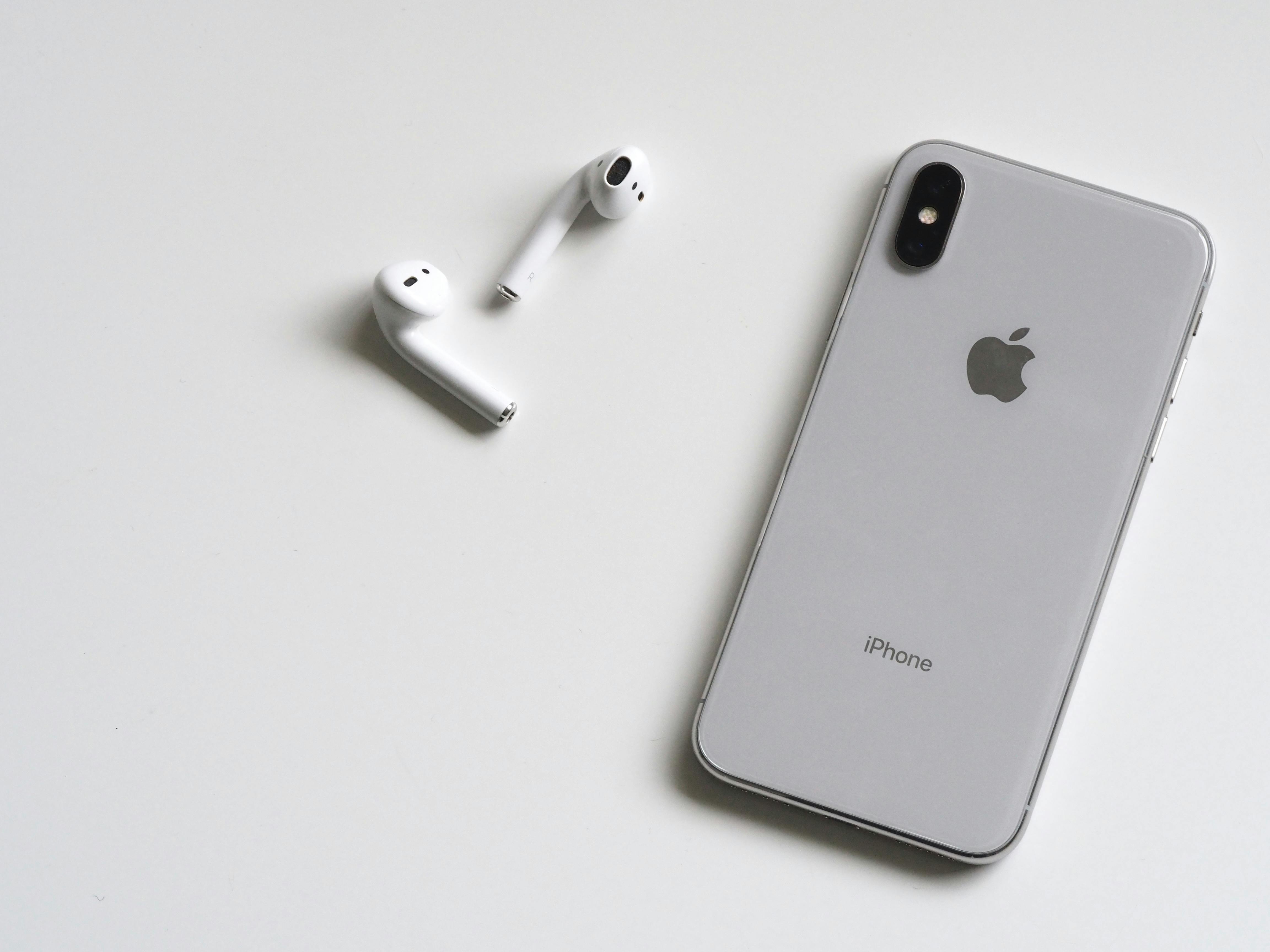
Visualizing the On‑Device Intelligence Race
The on-device AI wave is tightly coupled to advances in mobile and laptop hardware, as well as shifts in software design that make generative models part of the core operating system.


Scientific Significance: From Cloud-Centric AI to Ambient, Personal Intelligence
Apple’s strategy highlights a broader scientific and engineering pivot: moving inference closer to the data. While large-scale training will remain in data centers, the execution of everyday tasks is increasingly happening at the edge—on phones, tablets, and laptops.
This shift has several important implications:
- Latency: On-device inference eliminates round trips to the data center, enabling real-time interactions that feel instantaneous.
- Cost: Running inference locally offloads work from expensive GPU clusters, potentially lowering per-user serving costs.
- Privacy and compliance: Keeping data on the device simplifies compliance with regulations like GDPR and emerging AI safety rules.
- Robustness: AI features remain usable even with poor connectivity, critical for mobile-first markets.
“The future of AI is not just in bigger models, but in smarter deployment—putting intelligence where the data already lives.” – Paraphrasing ideas frequently shared by AI researchers such as Andrew Ng on LinkedIn and public talks
Research communities are increasingly focusing on:
- Edge AI and federated learning to personalize models without centralizing raw data.
- Efficient transformers and state-space models that reduce computational and memory footprint.
- Private information retrieval and secure enclaves for safe model queries and updates.
For a deeper research-oriented overview, you can explore open-access surveys on arXiv.org focusing on edge AI and on-device large language models.
Developer Ecosystem: Opportunities and Concerns
Developers are watching Apple’s moves closely because system-level AI will profoundly shape what is possible in third‑party apps. If Apple exposes rich APIs, small teams could ship sophisticated AI experiences without managing their own inference infrastructure.
Potential Opportunities for Developers
- No inference backend needed for many use cases—Apple’s on-device and cloud-boosted models handle the heavy lifting.
- Consistent UX across apps, since system-provided AI features (e.g., text rewrite, summarization) feel familiar to users.
- Enhanced accessibility, with generative AI assisting users with reading, writing, and interacting with content.
Key Concerns and Open Questions
- Capability parity: Will third-party apps access the same models Apple uses in its own apps, or will there be a “first-party advantage”?
- Policy constraints: How tightly will Apple regulate acceptable uses of generative AI within the App Store guidelines?
- Monetization and differentiation: If core AI features are baked into the OS, what is the moat for specialized AI apps?
Many developers discuss these trade-offs on communities like Hacker News and in technical posts on LinkedIn as they experiment with Apple’s evolving ML frameworks.
For individual developers and students, external hardware such as the NVIDIA Jetson Nano Developer Kit can be a useful way to prototype edge AI ideas that conceptually align with Apple’s on-device approach.
Milestones: How Apple Reached This Point
Apple’s generative AI moment did not appear overnight; it is the culmination of a decade of strategic bets in hardware, software, and privacy.
Key Milestones in Apple’s AI Journey
- Early 2010s – Siri and on-device ML primitives
- Siri introduced mainstream users to voice assistants, initially with heavy server-side processing.
- Apple began quietly deploying small on-device models for speech and keyboard predictions.
- Mid–late 2010s – Neural Engine and Core ML
- Introduction of dedicated Neural Engine in A‑series chips.
- Launch of Core ML, giving developers a path to run models locally on iOS devices.
- 2020s – Apple Silicon and transformer optimization
- M‑series chips brought desktop-class AI performance to Macs and iPads.
- Developer documentation began referencing transformer optimizations and larger local models.
- Generative AI era – Apple Intelligence and beyond
- Growing evidence of large multimodal models trained internally.
- WWDC announcements and job postings signaling deep generative AI integration across the ecosystem.
Technology media such as The Verge, TechCrunch, and Ars Technica have documented this arc, highlighting how each WWDC hint and silicon release nudged Apple closer to full-fledged generative AI.
Challenges: Privacy, Regulation, and Platform Power
Although Apple’s on-device emphasis aligns naturally with its privacy narrative, generative AI introduces novel risks and trade-offs that both users and regulators are scrutinizing.
Privacy and Data Governance
- Personalization vs. data minimization: Effective assistants benefit from personal context (messages, emails, photos), but this must be balanced with minimization and user control.
- Model updates: Delivering new model weights over the air raises questions about telemetry, rollback, and integrity verification.
- Cloud offload transparency: Users need clear indicators when tasks leave the device and what data is transmitted.
Privacy advocates and regulators in the EU, US, and elsewhere will likely examine whether Apple’s implementation truly adheres to principles of purpose limitation, data minimization, and informed consent.
Antitrust and Ecosystem Fairness
As Apple bakes AI deeply into the OS, competition authorities may ask whether:
- System-provided AI unfairly advantages Apple’s own apps over third‑party alternatives.
- Restrictions on third‑party models (e.g., for safety or performance reasons) inadvertently entrench platform dominance.
- Developers have meaningful ways to differentiate when core AI primitives are commoditized by the OS.
“When AI becomes part of the operating system, questions about neutrality, choice, and competition move to the forefront.” – Synthesizing commentary from tech policy analysts featured in outlets like WIRED and Ars Technica
Technical Constraints
Even with cutting-edge silicon, there are hard constraints:
- Model size vs. battery: Larger models consume more power and memory, forcing trade-offs between capability and efficiency.
- Context window limits: Mobile-friendly models may handle shorter context windows than their cloud counterparts.
- Security: Protecting model files, preventing adversarial attacks, and mitigating prompt injection across system contexts remain active research areas.
Real-World Applications: How On‑Device AI Will Show Up in Everyday Use
For end users, the success of Apple’s generative AI push will be measured not by parameter counts, but by whether everyday tasks become smoother, faster, and more intuitive.
System-Level Experiences
- Smarter Siri: Better understanding of natural language, richer follow-up questions, and more reliable execution of multi-step tasks.
- System-wide writing assistance: Suggestions, rewrites, and tone adjustments across Mail, Messages, Notes, and third‑party apps.
- Context-aware notifications: Automatic prioritization and summarization of alerts, meeting invitations, and chat threads.
- Photos and media: Generative edits, semantic search across personal photo libraries, and smarter album creation.
Impact on Crypto, Web3, and dApps
For crypto and Web3 communities following outlets like The Next Web or dedicated crypto news sites, Apple’s AI shift matters indirectly:
- Wallets and dApps on iOS will be compared against system-native AI UX—users will expect smart, context-aware interfaces.
- On-device AI could help with phishing detection, suspicious transaction warnings, and educational overlays in wallets.
- Decentralized social apps may integrate generative tools for content creation, moderation assistance, and discovery, leveraging Apple’s APIs where allowed.
Product teams already explore these ideas in public conversations on platforms like X (formerly Twitter) and in long-form breakdowns on YouTube.
Tools and Learning Resources for Practitioners
Engineers, product managers, and researchers who want to understand or build on top of Apple’s approach can combine official documentation with independent study resources.
Key Learning Resources
- Apple’s official Machine Learning & Core ML documentation.
- Academic and industry talks on YouTube about edge AI, transformer optimization, and on-device LLMs.
- Technical newsletters and blogs by AI leaders such as Andrew Ng on LinkedIn and Andrej Karpathy’s website and videos.
For readers who prefer a structured introduction to deep learning fundamentals that underpin Apple’s models, Deep Learning (Adaptive Computation and Machine Learning series) is widely regarded as a classic technical reference.
Conclusion: Apple’s Role in the Next Phase of the AI Boom
Apple’s generative AI push signals a turning point: AI is moving from standalone, cloud-based tools to embedded, on-device infrastructure that shapes every interaction with our personal devices. The company’s emphasis on privacy, hardware-software co-design, and seamless UX could set a template for the next decade of computing—or expose new tensions between innovation, competition, and regulation.
Over the coming years, expect debates across Wired, Ars Technica, Hacker News, and policy forums worldwide to focus on:
- How much intelligence can practically and safely live on-device.
- What data must (or must not) leave the device for richer AI experiences.
- How platform power and developer freedom are balanced in an AI-first OS.
Whether Apple ultimately becomes the exemplar of trustworthy, ambient AI or a cautionary tale will depend on how transparent, interoperable, and accountable its evolving AI stack proves to be.
Practical Takeaways for Different Audiences
To make this shift actionable, here are tailored takeaways depending on your role.
For Users
- Expect more “invisible help” in your daily workflows—summaries, smart replies, and photo tools that just appear in apps you already use.
- Watch for clear indicators when data leaves your device; review privacy settings for new AI features.
- Use on-device features where possible if you prioritize privacy and offline capability.
For Developers and Startups
- Design experiences that compose with system-level AI rather than duplicating it.
- Identify niche, domain-specific intelligence that goes beyond general-purpose OS features.
- Stay current with Apple’s ML frameworks and WWDC sessions to understand new hooks and constraints.
For Policy Makers and Researchers
- Treat Apple’s deployment as a live case study for responsible, large-scale on-device AI.
- Study the interplay of privacy promises, actual data flows, and user comprehension.
- Encourage transparent disclosures and independent audits of AI systems embedded at the OS level.
References / Sources
Selected public sources and further reading:
- Apple Developer – Machine Learning & Core ML
- Apple Machine Learning Research
- The Verge – Apple and AI coverage
- TechCrunch – Apple news and AI articles
- Ars Technica – Apple, silicon, and AI analysis
- Wired – Artificial Intelligence coverage
- arXiv – Research papers on edge AI and on-device LLMs
- Hacker News – Community discussions on Apple’s AI strategy
