
Inside Apple’s On‑Device AI Revolution: How ‘Private AI’ Is Rewriting the Rules of Mobile Intelligence
Apple’s move to tightly integrate generative AI directly into iOS, iPadOS, and macOS marks a pivotal shift away from cloud‑only AI toward what many now call “private AI” or “on‑device AI.” Instead of sending every prompt, photo, and voice command to remote servers, Apple is betting on compact, highly optimized models that run locally on the Neural Processing Units (NPUs) inside iPhones, iPads, and Macs. This change is already influencing how chipmakers design silicon, how developers architect apps, and how users think about data privacy.
At the heart of this strategy is a simple observation: a large share of useful AI tasks—summarizing notifications, rewriting emails, generating or editing images, transcribing audio, or surfacing context‑aware suggestions—does not actually require a massive cloud‑scale foundation model if the device is sufficiently powerful. Apple’s newer devices now deliver tens of trillions of operations per second (TOPS) on their NPUs while staying within tight mobile power budgets.
This article unpacks the mission behind Apple’s on‑device AI push, the underlying technology, the scientific and societal significance, the key milestones so far, the challenges that remain, and where “private AI” is headed next.
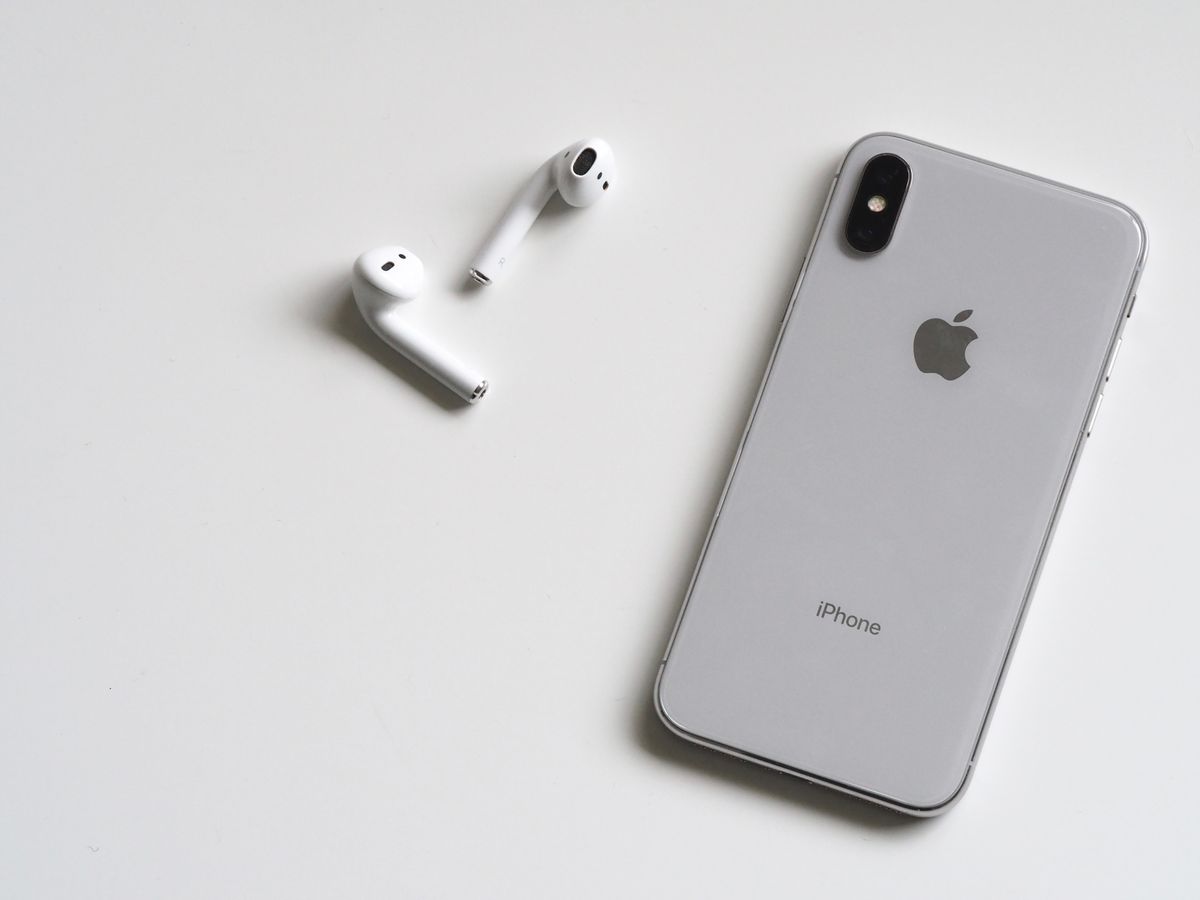
The transition from pure cloud AI to hybrid and on‑device AI is not just a product feature; it is a structural change in how intelligence is distributed across the network edge. Apple’s strategy is helping to crystallize what a privacy‑preserving, low‑latency AI ecosystem could look like at scale.
Mission Overview: What Is Apple Trying to Achieve?
Apple’s mission with on‑device AI can be summarized in three intertwined goals:
- Maximize user privacy by keeping as much processing as possible on the device.
- Deliver real‑time intelligence with minimal latency and smooth UX.
- Scale sustainably by reducing dependence on expensive, energy‑intensive cloud inference.
Where earlier AI assistants often acted like thin clients to server‑side models, Apple is repositioning the device itself as a powerful AI node. iPhones and Macs are no longer just endpoints that display the output of a remote model; they increasingly host the models, manage the context, and decide what—if anything—needs to be sent to the cloud.
“The best AI is the one that knows you deeply without having to know your data,” a sentiment echoed in Apple’s privacy‑first messaging around on‑device intelligence.
Practically, this mission translates into system‑level features like:
- Notification and email summarization that runs locally.
- On‑device transcription and translation for voice notes and calls.
- Camera‑based object and scene understanding for accessibility and AR.
- Context‑aware suggestions that draw from messages, files, and apps without uploading that content.
Technology: How On‑Device and “Private AI” Actually Work
Under the hood, Apple’s on‑device AI push depends on several interlocking layers: custom silicon, optimized model architectures, and OS‑level frameworks that expose AI capabilities to apps while enforcing strict privacy controls.
Apple Silicon and the Rise of Mobile NPUs
At the hardware level, Apple’s A‑series (for iPhone and iPad) and M‑series (for Mac) chips include increasingly powerful NPUs—often branded as “Neural Engines”—engineered for dense linear algebra workloads used in deep learning. Recent Apple NPUs reach tens of TOPS while maintaining mobile‑class thermal envelopes.
Key NPU characteristics relevant to on‑device AI include:
- High throughput for matrix operations (e.g., GEMM), crucial for transformer models.
- Low‑precision compute support (INT8, sometimes 4‑bit) to accelerate quantized models.
- Tight integration with CPU/GPU, reducing overhead when mixing traditional and neural workloads.
Model Compression, Quantization, and Edge‑Optimized Architectures
Running generative models on phones and laptops requires making them dramatically smaller and more efficient than frontier‑scale cloud models. The broader research community, alongside Apple and chip vendors, is heavily invested in:
- Quantization – reducing weight precision from 16‑bit or 32‑bit floating point to 8‑bit or 4‑bit integers while managing accuracy loss.
- Pruning and sparsity – removing redundant weights and exploiting sparse matrix multiplications.
- Knowledge distillation – training compact “student” models to mimic the behavior of larger “teacher” models.
- Architectural tweaks – using efficient transformer variants or mixture‑of‑experts schemes tailored for edge compute.
This wave of efficiency work is visible across the industry in projects like Meta’s Llama variants optimized for mobile, Qualcomm’s AI Engine demos, and a growing ecosystem of edge‑oriented models on platforms like Hugging Face. Apple’s own models follow similar principles but are deeply integrated into the OS and hardware.
Hybrid Inference: When the Cloud Still Matters
Apple is not eliminating the cloud; it is selectively using it. A typical hybrid flow looks like this:
- Local pre‑processing – the device cleans, summarizes, or filters data using an on‑device model.
- Policy decision – the OS evaluates whether the task meets privacy and complexity thresholds for local‑only processing.
- Optional cloud escalation – if the user approves or a more complex task is required (e.g., long‑form creative writing, heavy image generation), a privacy‑hardened cloud model is invoked with minimized, sometimes anonymized context.
- Local post‑processing – the device integrates the result back into the user’s context and UI.
As Andrew Ng has framed the trend more broadly, “AI is the new electricity, but edge AI is the new grid”—with intelligence distributed between devices and the cloud to balance performance, privacy, and cost.
Scientific Significance: Why Private AI Matters
Apple’s on‑device AI strategy is not just a product differentiator; it is reshaping research priorities in machine learning, systems design, and human‑computer interaction.
Privacy as a Core Design Constraint
Early AI systems assumed access to effectively unlimited user data. Today, privacy regulations (GDPR, CCPA, sector‑specific health and finance rules) and growing user skepticism have transformed privacy from a compliance afterthought into a primary architectural constraint.
- Data minimization – only the data required for a given task is processed, preferably on‑device.
- Local context modeling – the device can build rich embeddings of user behavior and content without ever transmitting raw data.
- Regulatory alignment – on‑device processing reduces legal exposure around cross‑border data transfer and data retention.
Security expert Bruce Schneier has long argued that “data is a toxic asset.” Apple’s private‑AI narrative aligns with this view: the safest data is the data you never upload or store centrally.
Latency and Human Perception
Psychophysics research shows that users perceive delays above ~100 ms as lag. Cloud‑based AI, especially under poor connectivity, can easily exceed this threshold. By running models locally, Apple can:
- Deliver tens‑of‑milliseconds responses for text editing, UI adaptation, and accessibility features.
- Enable real‑time captioning and translation that feel fluid rather than choppy.
- Support AR overlays and computer‑vision tasks that track the physical world without noticeable delay.
Energy Efficiency and Environmental Impact
Running every user query through massive data centers has a non‑trivial carbon footprint. Offloading routine AI tasks to highly efficient device NPUs can:
- Reduce cloud compute demand per user.
- Shift power usage to devices that are already being charged for other reasons.
- Encourage further research into energy‑aware model design.
For governments and enterprises with sustainability targets, private AI architectures offer a path toward lower‑carbon AI deployments without sacrificing user experience.
Impact on the App Ecosystem and Developer Experience
One of the most immediate consequences of Apple’s on‑device AI push is how third‑party apps will integrate intelligence. Instead of embedding their own large models, many developers can increasingly call system‑level AI services.
System‑Level AI APIs: The New Baseline
As Apple exposes OS‑level capabilities for summarization, semantic search, entity extraction, and image understanding, developers can:
- Leverage shared optimized models instead of shipping their own.
- Gain consistent privacy guarantees inherited from the OS.
- Focus on domain logic and UX rather than ML infrastructure.
This is similar to how Core ML or ARKit abstracted complex ML and AR tasks, but now applied to general‑purpose generative and assistive AI.
Will System AI Kill Standalone AI Apps?
The answer is nuanced. Some categories—generic writing assistants, simple summarizers, basic image filters—may face heavy competition from built‑in features. But:
- Specialized vertical apps (medical, legal, engineering) still need domain‑tuned models and workflows.
- Creative tools can differentiate via UI, templates, and collaboration features even if they share base models.
- Hybrid apps can combine local context with cloud‑based, domain‑specific expert models.
Many developers are already pursuing hybrid architectures where:
- The device builds rich, private user profiles and context embeddings.
- Only abstracted or anonymized signals are shared with cloud services.
- Heavy lifting (e.g., large‑scale reasoning, multi‑document synthesis) occurs in the cloud.

Milestones in On‑Device and Private AI
Apple’s current strategy builds on years of incremental progress in on‑device ML. Some notable industry milestones include:
Pre‑Generative Era Foundations
- On‑device face recognition and scene detection in Photos, using convolutional networks long before generative models dominated headlines.
- Local voice recognition improvements that allowed dictation and wake‑word detection without continuous cloud streaming.
- Core ML, Apple’s framework for running ML models on device, which normalized the idea of edge AI for iOS developers.
The Generative Wave and Apple’s Entry
As cloud‑based models like OpenAI’s GPT family and Google’s Gemini popularized generative AI, most early consumer experiences were browser‑based or thin clients to heavy cloud services. Apple bided its time, focusing on:
- Refining Neural Engine performance across A‑ and M‑series chips.
- Investing in on‑device speech, vision, and language models.
- Preparing the OS and privacy architecture for deep AI integration into system apps.
Once Apple began to roll out more visible generative features—context‑aware system suggestions, richer Siri interactions, advanced image and text tools—the move catalyzed industry‑wide attention on how far on‑device AI could go.
Industry Response and Standardization Efforts
Competing platforms and research groups have responded with their own initiatives:
- Qualcomm, Google, and Samsung emphasizing on‑device generative demos on Android flagships.
- Open‑source projects (e.g., Llama variants, Mistral‑based models) explicitly targeting laptop and phone deployment.
- Standardization pushes around model formats (ONNX, Core ML converters) and quantization schemes for cross‑device compatibility.
Challenges: Limits and Open Questions for Private AI
Despite rapid progress, on‑device AI and Apple’s private‑AI vision face substantial challenges—technical, economic, and societal.
Model Size vs. Capability
State‑of‑the‑art reasoning and creative generation still benefit from very large models with hundreds of billions of parameters, which are impractical for current mobile NPUs. Key questions include:
- How far can distilled and quantized models close the capability gap?
- Which tasks can be reliably delegated to small local models, and which truly need the cloud?
- Can we design modular or mixture‑of‑experts systems that load only relevant sub‑models on demand?
Battery Life and Thermal Constraints
Intense on‑device inference can drain batteries and heat up devices. Engineers must:
- Balance model complexity with acceptable power draw.
- Schedule heavy workloads for plugged‑in or low‑activity periods when possible.
- Expose user controls to limit aggressive AI behavior when battery is low.
Transparency, Explainability, and Trust
Private AI does not automatically mean understandable AI. Users and regulators are asking:
- How are on‑device models trained, and on what data?
- What guardrails prevent harmful or biased outputs, even if the data never leaves the device?
- How can users audit and control which apps access system‑level AI context?
As AI researcher Timnit Gebru and others emphasize, privacy and fairness are intertwined: “Who is represented in the training data, and who bears the risk when systems fail, are core ethical questions—whether models run in the cloud or on your phone.”
Practical Implications for Users: How to Benefit from Private AI
For everyday users, Apple’s on‑device AI shift will increasingly feel like “the OS just got smarter.” To get the most benefit while staying in control:
- Review privacy settings – Understand which features process data on‑device vs. in the cloud and adjust preferences accordingly.
- Leverage accessibility tools – On‑device transcription, live captions, and image descriptions can be life‑changing for users with hearing or vision impairments.
- Use AI‑powered search and summarization – Let the system help you dig through messages, files, and photos without exposing them to external servers.

Hardware Considerations
Newer devices usually support more advanced on‑device AI features. If you are considering an upgrade, look at:
- NPU / Neural Engine performance (TOPS metrics where available).
- RAM capacity, since larger local models benefit from more memory.
- Battery capacity and thermal design, which affect sustained AI workloads.
For power users and developers who want to experiment with local AI beyond mobile, laptops with strong NPUs and GPUs are increasingly attractive.
Hardware and Learning Resources for Exploring On‑Device AI
If you want to deepen your hands‑on experience with on‑device AI—whether as a developer, researcher, or enthusiast—you can combine capable hardware with focused learning materials.
Example Hardware for Local AI Experiments
For those interested in experimenting with local models and edge AI workloads on a secondary machine, consider a modern laptop or mini‑PC with strong CPU/GPU support. One well‑regarded option in the U.S. market is:
- A high‑performance laptop with recent Intel CPU and NVIDIA RTX 4070‑class GPU – suitable for running quantized LLMs, image generation models, and experimentation with local inference frameworks.
Educational and Developer Resources
To understand the broader on‑device AI landscape, these resources are useful:
- Apple Machine Learning Research blog – insights into Apple’s ML work, including efficiency and privacy.
- Apple Machine Learning for Developers – documentation and sample code for Core ML and on‑device inference.
- Two Minute Papers (YouTube) – accessible breakdowns of cutting‑edge AI research, including generative and efficiency‑focused work.
Conclusion: The Future of Everyday AI Is Mostly Local
Apple’s deep integration of on‑device generative AI into iOS and macOS signals a turning point in how intelligence is distributed across our digital lives. Rather than treating the cloud as the default brain for every interaction, the emerging pattern is:
- Local models handle personal, contextual, latency‑sensitive tasks.
- Cloud models are reserved for heavy, specialized, or collaborative workloads.
- Privacy and energy efficiency are treated as first‑class technical objectives, not just marketing afterthoughts.
For users, this means smarter phones and laptops that respect their privacy. For developers, it means re‑architecting apps around system‑level AI and hybrid inference. For researchers, it underscores the importance of model efficiency, secure hardware, and human‑centered AI design.

As private AI matures, we should expect regulations, standards, and best practices to evolve alongside it. But the core trajectory is clear: the most trusted AI assistants will be those that can help you most—while knowing the least about you in the cloud.
Additional Considerations: Governance, Open Source, and Interoperability
Looking ahead, three themes will likely shape the next phase of Apple’s on‑device AI push and the broader private‑AI ecosystem.
Policy and Governance
Regulators are beginning to differentiate between centralized and decentralized AI architectures. Private AI may:
- Receive more favorable regulatory treatment when properly documented.
- Require new auditing techniques focused on device behaviors and update mechanisms.
- Drive standards for transparency labels (e.g., “processed on device,” “processed in the cloud”).
Role of Open Source
Open models and tooling are accelerating on‑device AI innovation:
- Developers can benchmark Apple’s models against open alternatives running locally.
- Open quantization and pruning libraries enable cross‑platform portability.
- Community‑driven projects help surface biases and issues more quickly.
Interoperability Across Devices
As more platforms adopt private AI architectures, users will expect:
- Consistent experiences across phones, tablets, laptops, and wearables.
- Secure mechanisms to sync high‑level preferences and embeddings without leaking sensitive data.
- Cross‑vendor standards for model packaging and capability descriptions.
How Apple participates in, or leads, such interoperability discussions will influence whether private AI becomes a genuinely user‑centric paradigm or a set of siloed, vendor‑locked ecosystems.
References / Sources
Further reading and sources on on‑device AI, private AI, and Apple’s approach:
- https://machinelearning.apple.com
- https://developer.apple.com/machine-learning/
- https://www.apple.com/privacy/
- https://arxiv.org/abs/2309.04269 – Example research on efficient and quantized LLMs.
- https://huggingface.co/blog/llm-quantization
- https://www.schneier.com/essays/archives/2016/03/data_is_a_toxic_ass.html
- https://www.whitehouse.gov/ostp/ai-bill-of-rights/
