
Inside Apple’s AI Leap: How the Next iPhone Ecosystem Is Being Rebuilt Around On‑Device Intelligence
Apple’s push into artificial intelligence in 2025–2026 marks the most significant shift in the iPhone and Mac ecosystem since the introduction of Apple silicon. Under competitive pressure from Google’s Gemini, OpenAI’s rapidly evolving ecosystem, and Microsoft’s Copilot strategy, Apple is accelerating a vision centered on on-device AI augmented by carefully controlled cloud services. The result is a new class of AI‑tuned iPhones and Macs that promise powerful generative capabilities without abandoning Apple’s privacy-first narrative.
Mission Overview
At a high level, Apple’s AI mission for the next‑gen iPhone ecosystem can be summarized in three pillars:
- Make AI feel native, not bolted on: AI enhancements are being embedded deeply into iOS, iPadOS, and macOS so that users experience them as “smarter devices,” not separate AI apps.
- Maximize on-device intelligence: Leverage increasingly powerful Neural Engines to run sophisticated models locally for speed, reliability, and privacy.
- Offer optional cloud power: Use encrypted, privacy‑preserving cloud inference only when tasks exceed what the device can do efficiently on its own.
“The future of AI is deeply personal. It lives on your device, understands your context, and respects your privacy.”
— Tim Cook, Apple CEO (paraphrased from public remarks and interviews)
This combination of personal, privacy‑conscious intelligence and optional cloud muscle is what makes Apple’s current AI strategy uniquely influential: it is poised to become the default model of AI for hundreds of millions of mainstream users who may never touch standalone AI tools directly.
AI‑Tuned Hardware: The Next-Gen iPhone and Apple Silicon
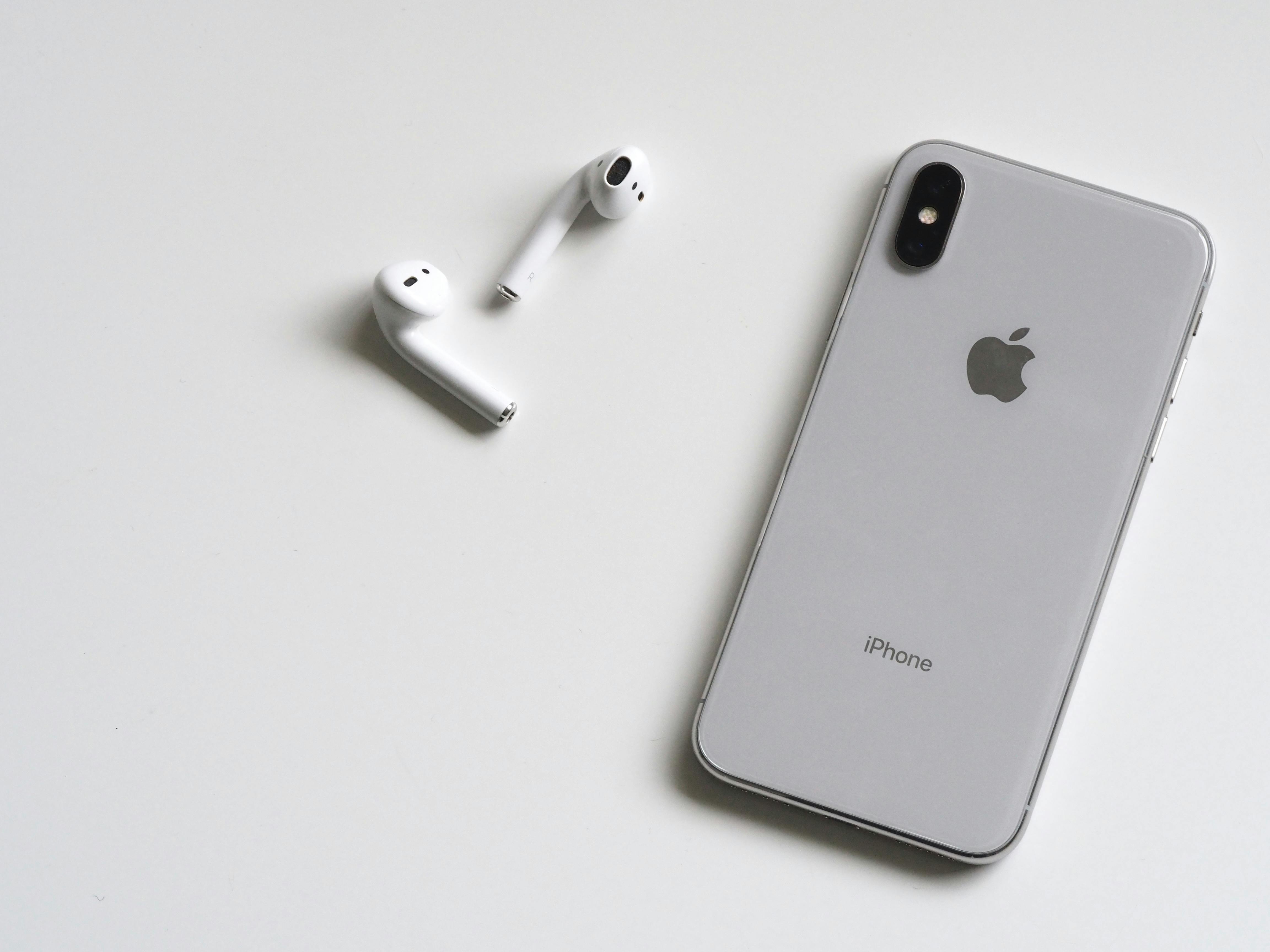
Apple’s AI narrative is inseparable from its silicon roadmap. The latest A‑series and M‑series chips, discussed widely in outlets like The Verge, TechCrunch, and Engadget, are designed to accelerate neural workloads alongside traditional CPU and GPU tasks.
Neural Engine and On‑Device Inference
Apple’s custom Neural Engine has grown from a niche accelerator into a core pillar of its chips:
- Increasing TOPS (trillions of operations per second) with each generation.
- Optimized for transformer architectures and attention mechanisms underpinning modern large language models (LLMs).
- Tightly integrated with unified memory to reduce latency for mixed CPU/GPU/Neural workloads.
This hardware enables:
- On-device language tasks: real-time translation, offline dictation, and message summarization without server round-trips.
- Media intelligence: advanced photo pipeline tuning, semantic video search (“show me clips of my dog at the beach”), and generative edits.
- Context modeling: continuous but local modeling of user habits to personalize recommendations and proactive suggestions.
Thermals, Battery Life, and Edge Constraints
Running generative models on a smartphone introduces stringent constraints:
- Thermal budgets: sustained inference can heat compact enclosures, requiring techniques like dynamic frequency scaling and task scheduling.
- Battery impact: frequent AI tasks can be power‑hungry, so Apple’s challenge is to exploit short, bursty inference and hardware‑level efficiency.
- Model size trade‑offs: large models are truncated or distilled to fit within memory and power envelopes, while heavier tasks are escalated to the cloud.
“Edge AI is a balancing act between capability, latency, and energy. The companies that can harmonize all three will define the mobile experience of the 2030s.”
— Yann LeCun, AI researcher at Meta (paraphrased from public commentary)
Hardware teardowns and benchmarks from independent YouTube channels and reviewers are already framing upcoming iPhones as AI appliances as much as traditional smartphones, with performance charts emphasizing Neural Engine throughput alongside GPU cores.
Software and Platform Intelligence: iOS, macOS, and Siri’s Reinvention
On top of this hardware, Apple is weaving generative AI into the operating systems themselves, turning iOS, iPadOS, and macOS into context-aware platforms rather than passive app launchers.
Generative Features Across the System
Reports and early developer documentation point to:
- System‑wide writing assistance: AI‑assisted drafting and rewriting in Mail, Messages, Notes, and compatible third‑party apps.
- Smarter search: semantic search across files, photos, messages, and app content, moving beyond exact keyword matches.
- Context‑aware suggestions: proactive prompts like “summarize this thread,” “extract key dates,” or “generate a follow‑up reply” within communication apps.
- Unified clipboard intelligence: understanding copied content to suggest formatting, translation, or summarization.
A More Conversational Siri
Perhaps the most anticipated change is a rebuilt Siri that leverages more capable language models:
- Conversational context: Siri can maintain multi‑turn dialogues rather than treating each query as isolated.
- Cross‑app reasoning: understanding user intent that spans multiple apps, such as booking travel based on email itineraries and calendar constraints.
- Developer hooks: new APIs enabling apps to expose capabilities in a way language models can reliably invoke (akin to “tool use” or “function calling”).
“Voice assistants were stuck in the command‑and‑control era. Large language models finally give them a brain that can handle ambiguity and context.”
— Andrej Karpathy, AI engineer (reflecting the broader community view on LLM‑powered assistants)
Developer Ecosystem and App Integration
For developers, Apple’s AI stack is expected to provide:
- On‑device inference frameworks via updated Core ML and Metal APIs.
- Optional cloud extensions where apps can request higher‑capacity models under Apple’s privacy and security guardrails.
- Unified policy surfaces for disclosing AI features, handling user consent, and managing data retention.
How Apple balances control versus flexibility here will heavily influence whether third‑party developers see Apple’s AI layer as an enabler—or a competitor.
Privacy, Data Governance, and Hybrid AI
While the technology headlines focus on flashy demos, the deeper conversation in outlets like Wired and Ars Technica centers on privacy and data governance. Apple’s brand rests on “privacy by design,” yet generative AI thrives on rich user data.

On-Device vs. Cloud: A Hybrid Approach
Apple’s emerging model is hybrid:
- Default: on-device processing for most tasks—summarization, classification, lightweight generation.
- Escalation: cloud inference for large or complex tasks that require bigger models or aggregated knowledge.
- Explicit indicators: UI signals when processing leaves the device, plus toggles in Settings to constrain or disable cloud AI features.
Techniques to Protect User Data
Tools and approaches that Apple is expected to lean on include:
- Differential privacy: adding statistical noise to data used for global model improvement to prevent re‑identification.
- On-device personalization layers: keeping user‑specific fine‑tuning local, while generic base models are trained in the cloud.
- End‑to‑end encryption for sensitive domains: such as health data, passwords, and certain forms of communication.
“The challenge isn’t just protecting individual data points; it’s ensuring that powerful models can’t infer sensitive traits you never intended to share.”
— Electronic Frontier Foundation researchers (summarizing AI privacy concerns)
Security researchers are already debating whether Apple’s hybrid approach truly preserves privacy at scale, particularly when models must observe behavior across apps to be most helpful. Regulatory scrutiny in the EU, US, and other regions will likely steer how aggressively Apple can deploy cross‑context modeling.
Scientific Significance: Edge AI at Consumer Scale
Apple’s AI strategy is scientifically significant because it tests, at massive scale, whether edge AI—models running directly on user devices—can deliver state‑of‑the‑art experiences without centralizing all data.
Challenging the “Cloud-First” Assumption
For most of the last decade, AI deployments favored huge cloud clusters. Apple’s approach advances several lines of research:
- Model compression and distillation: shrinking large models into smaller, faster variants that retain most of their capability.
- Federated learning: training global models from aggregated, anonymized updates computed on-device.
- Energy‑aware architectures: designing models that explicitly optimize for power efficiency on mobile hardware.
Human–AI Interaction and UX Research
Apple’s deployment also serves as a natural experiment in how ordinary users interact with ambient AI:
- Trust and transparency: how labeling, explanations, and controls affect whether users adopt AI features.
- Habituation: whether users come to rely on summarizations, suggestions, and generative edits in daily workflows.
- Boundaries: determining which tasks users are comfortable delegating to an AI deeply embedded in their personal devices.
For HCI researchers and cognitive scientists, telemetry (appropriately anonymized) from such deployments provides an unprecedented dataset to study the long‑term impact of AI assistance on attention, memory, and decision‑making.
Key Milestones in Apple’s AI Journey
Apple’s current AI push builds on a long series of incremental steps rather than a single leap.
Selected Historical Milestones
- Early 2010s: Acquisition of Siri and integration as a voice assistant across Apple devices.
- 2017–2019: Introduction and scaling of the Neural Engine, Core ML, and on‑device photo intelligence.
- 2020–2023: Transition to Apple silicon across the Mac lineup, enabling laptop‑class AI performance with high efficiency.
- 2024–2025: Deeper system‑wide intelligence in iOS and macOS, increasingly sophisticated on‑device models, and hints of generative features in beta software.
- 2025–2026: Intensified media coverage around generative AI integration, AI‑tuned iPhone hardware, and a more explicit “AI” marketing narrative.
Each step increased Apple’s capability to run complex models locally while tightening the integration between hardware, firmware, and software—an approach that differentiates Apple from more fragmented Android ecosystems.
Challenges and Open Questions
Despite the excitement, Apple’s AI trajectory faces substantial challenges spanning technology, ethics, competition, and regulation.
Technical and UX Challenges
- Model reliability: LLMs can hallucinate. Apple must design UX patterns that minimize misleading outputs and clearly signal uncertainty.
- Latency expectations: Users expect instant responses. Running complex models locally or via encrypted cloud calls must feel snappy, even on older devices.
- Backwards compatibility: Not every iPhone or Mac will support the heaviest AI features, raising fragmentation and fairness concerns.
Ethical, Legal, and Competitive Pressures
- Data and consent: How explicitly will Apple spell out what AI sees, stores, and uses for personalization versus global training?
- Content moderation: Generative features that create text or images must comply with legal, safety, and App Store guidelines.
- Regulatory compliance: The EU’s AI Act, US state privacy laws, and other regimes will shape what is allowed in different jurisdictions.
- Platform power: Developers worry that Apple could use its own AI services to compete with or sideline third‑party apps.
“When the same company designs the device, the OS, and the AI, lines blur between neutral platform and market participant.”
— Policy analysts at Brookings Institution (paraphrasing concerns about platform consolidation)
Practical Implications: How Users and Developers Can Prepare
As Apple’s AI features roll out, both everyday users and professionals can take steps to make the most of the new capabilities while maintaining control over their data.
For Users
- Audit privacy settings: Review AI‑related toggles under Settings > Privacy and security as they appear.
- Understand on‑device vs. cloud: Learn which AI features run locally and which rely on remote servers.
- Use AI as a co‑pilot, not an oracle: Cross‑check critical outputs, especially for work, health, or financial decisions.
For Developers and Power Users
- Explore Core ML and on‑device inference: Integrate compressed models where latency and privacy matter most.
- Design for explainability: Provide users with clear feedback on what your app’s AI is doing and why.
- Monitor Apple’s AI‑related Human Interface Guidelines: Align your UX with emerging best practices for AI in apps.
For engineers building AI‑enhanced workflows around Apple devices, external tools can complement Apple’s ecosystem. For example, high‑quality books like Practical Machine Learning for iOS Applications provide hands‑on guidance for deploying models efficiently on mobile hardware.
Conclusion: Apple’s AI Gamble and the Future of the iPhone Ecosystem
Apple’s pivot toward explicit AI branding and deep generative integration is more than a marketing move; it is a structural redefinition of what an iPhone or Mac is. Devices are evolving into continuous, context‑aware collaborators that live at the intersection of local intelligence and cloud‑scale models.
How Apple resolves the tension between capability and privacy, openness and control, will shape:
- Regulatory frameworks that govern personal AI assistants.
- Consumer expectations around data use, transparency, and reliability.
- Developer strategies for building on—or around—Apple’s AI layers.
The next‑generation iPhone ecosystem will likely be remembered as the moment when AI stopped being a separate app or cloud service and became a pervasive, mostly invisible layer of intelligence. Whether that shift ultimately empowers users or entrenches platform power will depend on design choices being made right now—in Cupertino and in regulatory capitals worldwide.
Further Reading, Media, and Resources
To dig deeper into Apple’s AI trajectory and the broader context of edge AI, consider:
- The Verge’s coverage of Apple AI and iPhone hardware
- TechCrunch analysis of Apple’s developer tools for machine learning
- Ars Technica deep dives on privacy and platform policy
- YouTube teardowns and benchmarks of the Apple Neural Engine
- Apple’s official machine learning documentation
References / Sources
- Apple Newsroom
- Wired – AI and privacy coverage
- Electronic Frontier Foundation – AI and surveillance
- IEEE Spectrum – AI on the edge
- Brookings Institution – platform power and regulation
As Apple’s AI features mature, staying informed through a mix of official documentation, independent technical analysis, and policy commentary will be essential for anyone who wants not just to use these tools, but to understand the trade‑offs behind them.
