
Inside Apple’s 2025–2026 AI Revolution: How On‑Device Intelligence Is Redefining the iPhone, iPad, and Mac
Apple’s AI strategy in 2025–2026 represents one of the biggest architectural shifts in its ecosystem since the move to Apple Silicon. After a relatively quiet stance during the first wave of generative AI hype, Apple has made “on‑device intelligence” a central pillar of iOS, iPadOS, and macOS—augmented when necessary by tightly controlled, privacy‑guarded cloud services. This hybrid approach is now a major focus across tech media, developer communities, and social platforms.
Rather than chase viral chatbot demos, Apple is positioning its AI stack as an invisible layer that makes everyday tasks faster, safer, and more intuitive. Summarizing long emails, generating context‑aware replies, organizing photos, refining video, and transcribing or translating speech are no longer “AI apps” but default capabilities. This fits Apple’s long‑standing pattern: arrive after the initial hype, then normalize a technology through deep ecosystem integration.
At the heart of this shift is the idea that your most personal data should be processed as close to you as possible—on the devices you own—only falling back to the cloud when models or workloads exceed local capabilities. That design choice has sweeping consequences for user privacy, latency, battery life, developer tooling, and even the competitive landscape of AI hardware.
Mission Overview: What Apple Is Trying to Achieve
Apple’s mission with on‑device intelligence is to make AI feel like a natural extension of the operating system, not a novelty. The company is aligning hardware, software, and services around three guiding objectives:
- Privacy by default: Keep as much processing as possible on the device, minimizing the need to send data to remote servers.
- Practical value over spectacle: Prioritize tasks that save time, reduce friction, or unlock creative workflows users already care about.
- Tight ecosystem integration: Leverage Apple Silicon, unified memory, and OS‑level frameworks so AI is available uniformly across iPhone, iPad, and Mac.
“The most powerful intelligence is the one that understands you, stays with you, and protects your privacy. That’s why we believe AI should live on the device you carry, not only in the cloud.”
— Senior Apple executive, paraphrased from keynote messaging in 2024–2025
This mission also serves a strategic purpose. While OpenAI, Google, and Microsoft dominate cloud‑centric models and enterprise deployments, Apple’s competitive advantage lies in shipping billions of tightly integrated devices. Owning both the silicon and the operating system lets Apple optimize AI workloads at a level many rivals cannot match.
Technology: Inside Apple’s Hybrid AI Architecture
Under the hood, Apple’s AI strategy in 2025–2026 is built on a layered technology stack that spans neural engines, OS frameworks, and privacy‑aware cloud infrastructure often described in Apple’s marketing as “Private Cloud Compute.”
Apple Silicon and the Neural Engine
Every recent iPhone, iPad, and Mac includes a dedicated Neural Engine—a specialized accelerator for matrix and tensor operations common in deep learning. With Apple’s latest A‑series and M‑series chips, the Neural Engine reaches tens of trillions of operations per second (TOPS), enabling:
- Real‑time image and video processing (e.g., enhanced low‑light photography, background blur, upscaling).
- On‑device large language models (LLMs) for text prediction, summarization, and rewriting.
- Speech recognition and translation that works offline for many languages.
On‑Device AI Frameworks for Developers
Developers access these capabilities through frameworks such as:
- Core ML: For running optimized models directly on Apple Silicon, with support for quantization and model compression.
- MLX & related tooling (Mac‑oriented): For training and experimentation on Apple Silicon Macs, often accelerated by the GPU and Neural Engine.
- Natural language and vision APIs: OS‑level functions for text analysis, sentiment detection, object recognition, and more.
These frameworks abstract much of the complexity of deploying models to edge devices, while still allowing power users and researchers to bring custom architectures if they conform to Apple’s performance and security constraints.
Private Cloud Compute and Hybrid Inference
When on‑device resources aren’t sufficient—for instance, for very large generative models or heavy multimodal tasks—Apple routes requests to its own cloud infrastructure. The distinguishing features compared with typical cloud AI services are:
- Data minimization: Only the data strictly required for a task is sent.
- Ephemerality: Inputs are not stored long‑term or used for further model training by default.
- Hardware security: Use of secure enclaves and hardware isolation in the data center.
- Transparency: Public white papers and security audits outlining the architecture and guarantees.
This hybrid model—on‑device first, cloud when needed—allows Apple to offer cutting‑edge generative features without abandoning its privacy‑centric narrative. Media outlets like The Verge and Ars Technica have highlighted how this design differs from cloud‑first systems used by many competitors.
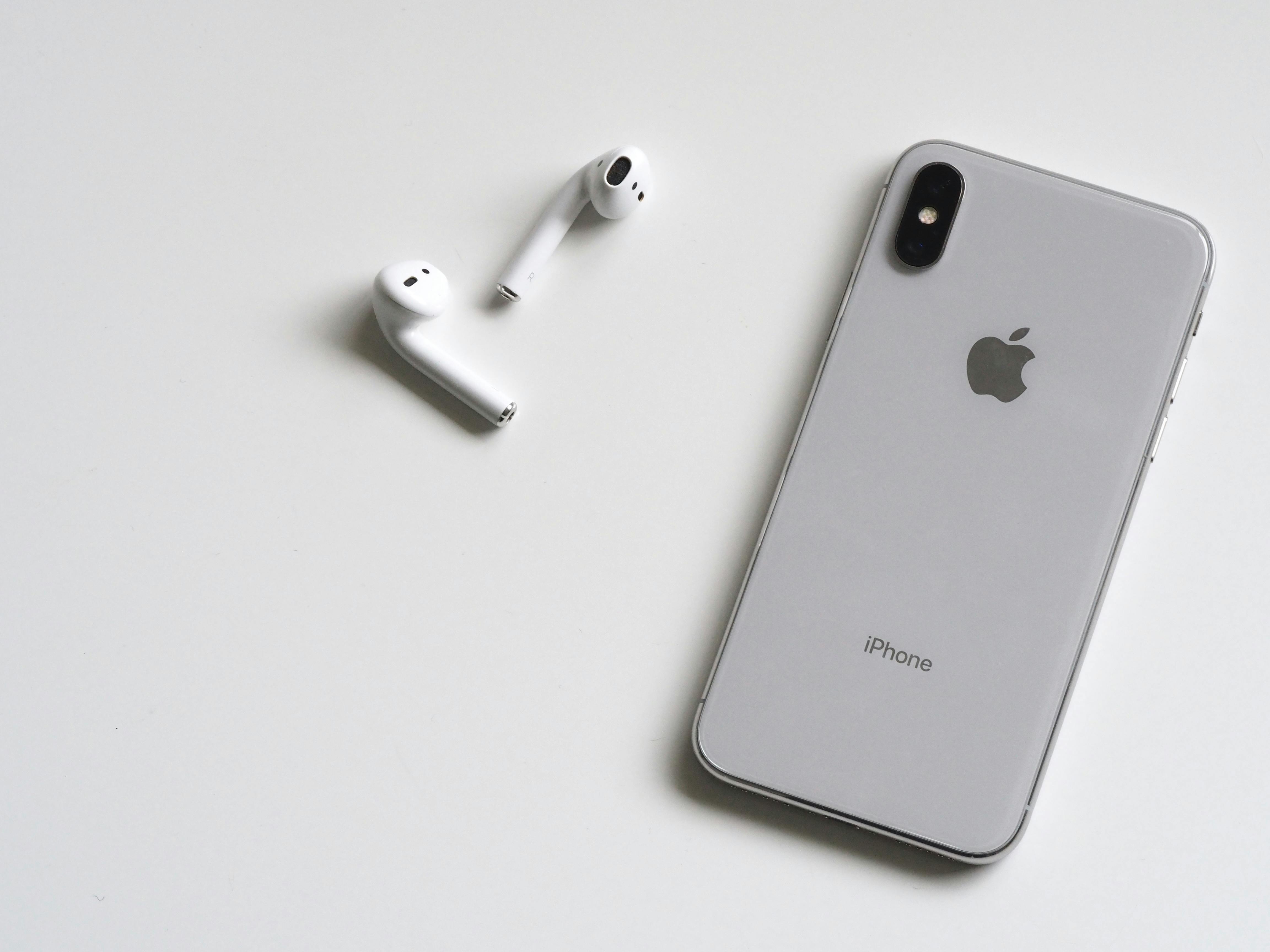
Visualizing Apple’s AI Push



What On‑Device Intelligence Actually Does for Users
Apple’s AI roadmap is framed less around “chatbots” and more around enhancing familiar workflows. On‑device and hybrid intelligence now power a wide spectrum of capabilities:
- Communication assistance
- Summarizing long email threads or message conversations.
- Suggesting tone‑aware replies (formal, casual, concise) based on context.
- Assistive writing for documents, notes, and social posts.
- Media and creativity
- Smart photo organization by people, places, events, and semantic concepts.
- Video editing aids like automatic cuts, highlight reels, and background noise reduction.
- Generative tools for layouts, simple visuals, or ideation prompts inside creative apps.
- Understanding the world around you
- On‑device transcription and translation for meetings, lectures, or travel.
- Visual search: pointing the camera at objects, documents, or signs to understand or act on them.
- Personalization and proactive assistance
- Context‑aware suggestions surfaced in widgets, Siri, and system prompts.
- Automations that adapt based on habits without explicit scripting.
These experiences are increasingly presented as system features rather than standalone products, making AI feel like part of the OS fabric. Influencers on platforms like YouTube and TikTok are testing these capabilities against Android flagships, often comparing:
- Latency for common tasks.
- Battery impact under sustained AI workloads.
- Offline reliability when connectivity is poor or absent.
Scientific and Technical Significance
Apple’s on‑device AI approach is not just a design preference; it advances several important directions in computer science and systems engineering.
Edge AI and Energy Efficiency
Running models directly on consumer devices pushes research into:
- Model compression: Quantization, pruning, and distillation to fit powerful models into limited memory and power envelopes.
- Scheduling and co‑design: Coordinating CPU, GPU, and Neural Engine workloads for optimal performance and thermal behavior.
- Adaptive inference: Dynamically scaling model size or precision based on available resources and importance of the task.
“Edge devices operating under tight energy budgets force us to rethink what ‘efficient’ models look like. The constraints are an engine for innovation rather than a roadblock.”
— Paraphrasing trends discussed in recent ML systems research at conferences like NeurIPS and MLSys
Privacy‑Preserving Machine Learning
Apple’s emphasis on data minimization overlaps with techniques studied in academia:
- Differential privacy for aggregating patterns without deanonymizing individuals.
- Federated learning concepts, where updates are computed on devices and aggregated centrally.
- Secure enclaves for isolating sensitive computations at the hardware level.
While Apple does not always expose full technical details publicly, its marketing and white papers have helped popularize privacy‑centric narratives and shaped consumer expectations for trustworthy AI.
Human‑Computer Interaction
Integrating AI directly into UI frameworks opens new research questions about explainability, control, and user trust. How do you design:
- Suggestions that are helpful but not intrusive?
- Interfaces that allow easy correction and feedback to improve personalization?
- Clear indicators of when data is processed locally versus in the cloud?
HCI researchers and practitioners on platforms like LinkedIn frequently discuss Apple’s design choices as case studies for large‑scale deployment of AI‑enhanced interfaces.
Key Milestones in Apple’s 2025–2026 AI Journey
From late 2024 through 2026, Apple’s AI roadmap is punctuated by notable milestones in hardware, software, and developer tools. While timelines evolve, the broad arc includes:
- System‑wide generative capabilities embedded in iOS, iPadOS, and macOS:
- Unified text assistance for Mail, Messages, Notes, and third‑party apps.
- Cross‑device context, where your Mac and iPhone share understanding of your documents and recent activity.
- Expanded language and multimodal support:
- More languages available fully offline for transcription and translation.
- Richer multimodal understanding of text, images, and possibly audio together.
- Developer‑facing APIs that:
- Provide access to system‑level models with strong privacy and content controls.
- Allow apps to integrate generative features without shipping their own massive models.
- Backwards compatibility constraints:
- Gradual roll‑out of advanced features only to devices with sufficient Neural Engine and memory capacity.
- Cloud‑assisted fallbacks for older hardware where feasible.
Tech outlets such as TechCrunch and Engadget routinely analyze each OS release and hardware generation through the lens of AI enablement: Which models are running locally now? What’s still cloud‑assisted? How do these trade‑offs evolve year over year?
Developer View: APIs, Constraints, and Opportunities
Among developers and power users, much of the conversation focuses on how open Apple’s AI stack will be and how far third‑party apps can push it. Discussions on Hacker News and specialized blogs frequently explore:
- Whether system models will be directly callable, or abstracted behind high‑level capabilities (e.g., “summarize,” “rewrite,” “translate”).
- How resource quotas and scheduling will work when multiple apps request AI services simultaneously.
- What guardrails and safety layers Apple will enforce at the OS level.
Opportunities for App Creators
For developers willing to work within Apple’s constraints, the new stack creates compelling opportunities:
- Productivity apps that deeply integrate AI summarization, drafting, and organization.
- Creative suites that harness on‑device models for image and audio processing without needing cloud credits.
- Accessibility tools leveraging speech, vision, and language together to assist users with disabilities.
For those who want to prototype or fine‑tune models locally on a Mac, high‑performance Apple Silicon laptops are becoming increasingly popular. For example, many AI developers in the U.S. report using machines like the 16‑inch MacBook Pro with Apple M1 Pro/Max or newer because of its strong Neural Engine, unified memory, and battery life.
Privacy, Trust, and Regulatory Scrutiny
Privacy is central to Apple’s branding and a major differentiator in the AI race. Its “on‑device first” messaging resonates with users who are uncomfortable sending personal content—photos, messages, documents—into opaque cloud models.
- Local processing: Many routine tasks (keyboard predictions, photo categorization, offline transcription) never touch the cloud.
- Transparent prompts: When a feature does require cloud compute, Apple increasingly surfaces explicit consent dialogs and clear explanations.
- No ad‑based profiling: Apple’s business model relies more on hardware and services than ad targeting, which supports a stricter privacy stance.
However, critics—and some regulators—point out that:
- Cloud‑assisted features still require a high degree of trust in Apple’s data centers and internal policies.
- Users rarely read full privacy documents, so defaults and UX cues must be especially strong.
- Competition laws in the EU and elsewhere may require interoperability or more transparent APIs for rival services.
“Apple has turned privacy into a product feature, but in AI, guarantees are only as strong as their technical implementation and independent verification.”
— Synthesis of perspectives often found in coverage by outlets like Wired and digital rights organizations
Challenges and Open Questions
Despite strong positioning, Apple’s AI strategy faces serious technical, ecosystem, and societal challenges.
Hardware Fragmentation and Legacy Devices
Not every iPhone, iPad, or Mac will support the same features:
- Older devices may lack sufficient Neural Engine throughput or RAM for advanced on‑device models.
- Maintaining multiple capability tiers complicates OS design and user expectations.
- Decisions about which models run locally vs. in the cloud can shape upgrade pressure on consumers.
Ecosystem Openness vs. Control
Apple’s historical preference for tightly curated user experiences may clash with the experimental culture of AI. Key debates include:
- Whether system AI services will allow deep customization or be limited to Apple’s own UX patterns.
- How third‑party models—from companies like OpenAI or Anthropic—will integrate at the OS level, if at all.
- What policies will govern content moderation and safety across apps leveraging system‑level AI.
Accuracy, Bias, and Safety
Like all generative systems, Apple’s models must contend with:
- Hallucinations: Confident but incorrect outputs in summarization or Q&A.
- Bias: Unintended patterns baked into training data, which can affect suggestions and classifications.
- Abuse scenarios: Potential misuse for spam, harassment, or misinformation if safeguards are insufficient.
Addressing these issues requires not only better models but also clear user education, transparent reporting, and collaboration with independent researchers.
Media, Social Networks, and Public Perception
Apple’s AI evolution is one of the most discussed topics in tech circles, with different communities emphasizing different aspects:
- Tech journalists focus on comparisons with Google, Microsoft, Samsung, and emerging AI hardware startups.
- Developers dissect each WWDC session and Apple white paper to infer long‑term platform constraints.
- Influencers on YouTube, TikTok, and X (Twitter) emphasize real‑world tests: camera performance, latency, and battery drain during AI‑heavy workloads.
Popular reviewers such as those on channels like YouTube’s tech review ecosystem run side‑by‑side comparisons that have a meaningful impact on public sentiment. Viral clips of AI features failing—or surpassing expectations—can rapidly sway perception, independent of official benchmarks.
Practical Guidance: Preparing for Apple’s AI‑First Ecosystem
For users and professionals looking to get the most from Apple’s AI push between 2025 and 2026, a few practical steps can help.
For Everyday Users
- Check device eligibility: Confirm which AI features your current iPhone, iPad, or Mac supports, and which require newer hardware.
- Review privacy settings: Explore system settings for on‑device vs. cloud processing, analytics sharing, and data retention.
- Learn the new workflows: Many AI capabilities are “hidden” behind context menus, long‑press actions, or share sheets.
For Professionals and Creators
- Invest in AI‑capable hardware: A modern Apple Silicon Mac can double as both a daily‑driver and an AI experimentation machine.
- Explore Apple’s documentation: WWDC videos and developer guides offer detailed insights into API capabilities and limitations.
- Prototype with guardrails in mind: Design features that respect privacy, minimize data collection, and explain clearly when AI is involved.
For those considering hardware upgrades specifically with AI workloads in mind, devices like the aforementioned MacBook Pro with Apple Silicon have become popular in the U.S. developer community due to their combination of performance, thermals, and battery life.
Conclusion: The Strategic Bet on On‑Device Intelligence
Apple’s 2025–2026 AI strategy is defined less by a single flagship product and more by a pervasive shift in how its devices perceive, understand, and assist users. By betting on on‑device intelligence, Apple is:
- Reinforcing its identity as a privacy‑centric, hardware‑driven company.
- Expanding the capabilities of iPhone, iPad, and Mac far beyond their original design constraints.
- Forcing competitors and regulators to grapple with a future where powerful AI is not only in the cloud, but in everyone’s pocket.
Whether this bet pays off fully will depend on Apple’s ability to keep pace with rapid advances in model architecture, scale its private cloud safely, and empower third‑party developers without sacrificing control. But one outcome is already clear: the boundary between “smartphone,” “laptop,” and “AI assistant” is blurring, and Apple intends its devices to sit at the center of that convergence.
Additional Resources and Further Reading
For readers who want to dive deeper into the technical and policy dimensions of Apple’s AI and on‑device intelligence, the following resources provide valuable context:
- Apple Machine Learning Research Blog – Official write‑ups on Apple’s ML techniques, optimizations, and applications.
- Apple Developer Machine Learning Resources – Documentation, sample code, and WWDC session videos.
- Wired AI Coverage – Critical reporting on AI, privacy, and policy from an independent media outlet.
- arXiv.org – Repository of research papers on edge AI, model compression, and privacy‑preserving ML.
- YouTube: “Apple on‑device AI explained” search results – Visual explainers and hands‑on demos from independent creators.
References / Sources
Selected sources and further reading (note: some reflect ongoing coverage and may be updated frequently):
- https://www.apple.com/newsroom/
- https://machinelearning.apple.com
- https://developer.apple.com/machine-learning/
- https://www.theverge.com/apple
- https://arstechnica.com/gadgets/
- https://www.engadget.com/tag/apple/
- https://techcrunch.com/tag/apple/
- https://news.ycombinator.com
- https://www.wired.com/tag/apple/
