
How Extreme Climate Events and Ecological Tipping Points Are Rewriting Our Planet’s Future
Climate change is no longer a distant, gradual curve on a graph—it is a lived reality of record-breaking heatwaves, megafires, catastrophic floods, and persistent droughts. Scientists now frame this shift as a new climate–ecology reality: a world where extreme events interact, ecosystems can cross irreversible tipping points, and “normal” conditions are rapidly being redrawn. This article unpacks the latest science behind extreme climate events, compound and cascading hazards, ecological tipping points, and what they mean for risk, adaptation, and policy in the 2020s and beyond.
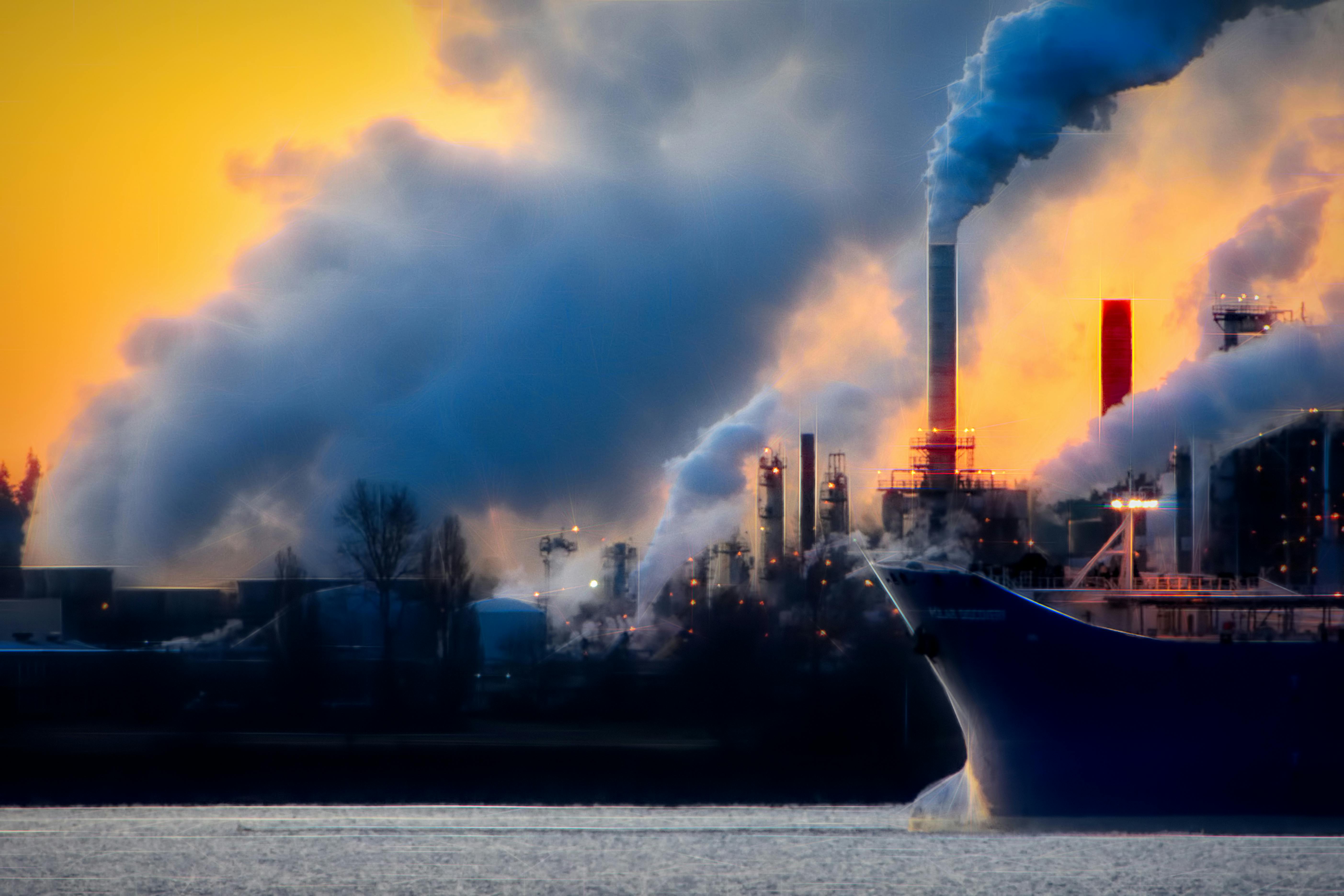
At the frontier of climate science, meteorology, and ecology, researchers are integrating satellite observations, high-resolution Earth system models, and socio-economic data to understand how quickly, and how unevenly, these changes are unfolding. The focus has shifted from asking whether climate is changing to understanding how extremes propagate through natural and human systems—from coral reefs and rainforests to power grids and food markets.
Mission Overview: Understanding Extreme Events in a Warming World
The “mission” of contemporary climate and ecological research is clear: quantify how human-driven warming alters the frequency, intensity, and clustering of extreme events, and identify thresholds beyond which ecosystems and societies face disproportionate damage.
The key objectives include:
- Detect and attribute changes in extreme weather (heatwaves, floods, storms, droughts) to anthropogenic greenhouse gas emissions.
- Characterize compound events (e.g., heat + drought + wildfire) and cascading impacts (e.g., crop failure → food price spikes → social instability).
- Identify and quantify ecological tipping points, such as Amazon rainforest dieback, Arctic sea-ice loss, or coral reef collapse.
- Develop high-resolution projections and early-warning tools that can guide adaptation, risk management, and policy.
- Incorporate biodiversity, ecosystem services, and human vulnerability into a single, integrated risk framework.
“Every increment of global warming will intensify multiple and concurrent hazards.” — IPCC Sixth Assessment Report (AR6)
Record-Breaking Extremes: From Rare Outliers to Regular Headlines
Over the last decade, climate records have fallen at a pace that would be statistically implausible in a stable climate. Many regions have experienced once-in-1000-year heatwaves, multi-year megadroughts, and rainfall events that deliver a month’s worth of precipitation in a single day.
Heatwaves and “hot droughts”
Recent events—such as the 2021 Western North America heatwave, the 2022–2024 multi-continent heat anomalies, and marine heatwaves in the North Atlantic and Mediterranean—reflect a combination of background warming and altered atmospheric circulation. As global mean temperature rises, the entire distribution of temperature shifts, making extremes more frequent and intense.
- Urban heat islands amplify heat stress, especially for vulnerable populations.
- Hot droughts—simultaneous heat and lack of rainfall—rapidly dry out soils and vegetation, priming landscapes for wildfire.
- Marine heatwaves trigger coral bleaching, fishery collapses, and harmful algal blooms.
Flooding, storms, and moisture-loaded atmospheres
A warmer atmosphere holds more moisture (around 7% more per °C), increasing the potential for intense downpours. Events such as the 2021 European floods, repeated flooding in South Asia, and recent “atmospheric river” events along the U.S. West Coast illustrate how water extremes are evolving.
“In many recent cases, attribution studies show that human-caused climate change made catastrophic events not just more likely, but in some cases virtually impossible without warming.” — World Weather Attribution Network
Modern event attribution studies use ensembles of climate model simulations with and without human emissions, combined with observations, to estimate how much climate change increased the probability or intensity of a given event. These studies now appear within weeks of an extreme event, shaping public dialogue and policy.
Compound and Cascading Events: When Disasters Collide
Traditional risk assessments treat hazards independently: a flood, a heatwave, a storm. However, lived experience and recent research show that disasters rarely occur in isolation. Instead, they emerge from overlapping hazards and systemic vulnerabilities.
Types of compound events
- Multivariate events: Simultaneous extremes in multiple variables (e.g., high temperature and low soil moisture).
- Temporally compounding events: Sequential events that erode resilience (e.g., back-to-back hurricanes, repeated heatwaves in one season).
- Spatially compounding events: Similar extremes occurring in multiple breadbasket regions at once, threatening global food supply.
- Cascading impacts: One hazard triggers failures in other systems (e.g., wildfire → power grid failure → hospital outages).
For instance, a heatwave combined with a drought increases wildfire risk, which then degrades air quality over thousands of kilometers, impacting human health and productivity. Power systems face simultaneous demand spikes (for cooling) and potential supply interruptions (e.g., transmission lines affected by fire or storms).

“Risk is increasingly driven by correlations—heat and drought, fires and storms, climate and conflict—rather than by isolated hazards.” — Paraphrased from compound risk research in Nature Climate Change
This systems perspective drives new modeling approaches that link climate dynamics to agriculture, energy, health, finance, and migration, using tools from network science and complex systems theory.
Ecological Tipping Points: Thresholds with Long-Lasting Consequences
A tipping point in the Earth system is a critical threshold where a small additional perturbation triggers a large, sometimes abrupt, and potentially irreversible shift in the state of a system. These shifts can lock in for centuries or millennia, even if global temperatures later decline.
Key potential tipping elements
- Amazon rainforest dieback: Deforestation and warming-induced droughts may push parts of the Amazon from rainforest to savanna, releasing vast amounts of carbon and undermining regional rainfall patterns.
- Boreal forest transitions: More frequent fires, pests, and droughts could shift conifer-dominated forests to more open woodland or grassland, altering carbon storage and surface reflectivity (albedo).
- Coral reef collapse: Marine heatwaves and ocean acidification are driving mass bleaching events. Many reefs are close to thresholds beyond which recovery becomes extremely difficult.
- Ice sheet and ocean circulation changes: Destabilization of the Greenland and West Antarctic ice sheets, as well as potential weakening of the Atlantic Meridional Overturning Circulation (AMOC), could significantly reshape global sea level and regional climate.

“The evidence from tipping elements alone suggests that we are in a state of planetary emergency.” — Tim Lenton et al., Nature, 2019
Nonlinearity and hysteresis
Many ecological systems exhibit hysteresis: once they cross a tipping point, simply reversing the original driver (e.g., temperature) does not restore the previous state. This has profound implications for overshoot scenarios, where global warming temporarily exceeds targets like 1.5 °C or 2 °C before being reduced.
Current research, including work synthesized in recent IPCC reports and Science/Nature reviews, indicates that some tipping elements may be vulnerable even between 1.5–2 °C of warming. That raises the urgency of near-term mitigation and robust adaptation planning.
Updated Climate Projections and Trend Breaks
Next-generation Earth system models and expanded observational datasets (satellites, Argo floats, reanalysis products) are refining our understanding of how the climate baseline is shifting. Several key themes emerge from recent analyses up to the mid-2020s:
Jet stream and circulation changes
Studies suggest that Arctic amplification (the rapid warming of high northern latitudes) can weaken the equator-to-pole temperature gradient, potentially influencing the behavior of the jet stream. A more meandering jet can lead to blocked weather patterns—such as stationary heat domes or persistent rainfall systems—amplifying extremes.
Monsoon and hydrological shifts
Changes in land–sea temperature contrasts and aerosols are affecting major monsoon systems (South Asian, East Asian, West African). Observational data indicate shifts in onset, intensity, and spatial patterns of rainfall, with both flood and drought risks increasing in different regions.
Overshoot scenarios
Many mitigation pathways now consider temperature overshoot: temporarily exceeding targets (e.g., 1.5 °C) before returning below them later in the century through deep decarbonization and potential carbon-dioxide removal. However, overshoot scenarios raise difficult questions:
- Which ecosystems can recover after overshoot, and over what timescales?
- Which tipping points, once crossed, cannot be reversed within human timescales?
- How do prolonged extremes during overshoot affect social stability and development?
Emerging research emphasizes that limiting the peak temperature and duration of overshoot is crucial for preserving biodiversity, ice sheets, and long-term ecosystem services.
Biodiversity, Adaptation, and the Ecology of a Hotter World
Ecologists are documenting wide-ranging biological responses to climate change: species shifting their ranges poleward or upslope, altering migration paths, and changing the timing of flowering, breeding, and hibernation. Not all species can keep pace with the velocity of climate change, leading to local or even global extinctions.
Observed ecological responses
- Range shifts: Many species are moving toward cooler climates, but fragmented habitats and human land use often block these movements.
- Phenological changes: Earlier springs can cause mismatches—for example, flowers bloom before pollinators emerge, or birds arrive after peak insect abundance.
- Community reassembly: Novel species combinations form as some species decline and others expand, altering food webs and ecosystem function.

Adaptation strategies across scales
As risks mount, adaptation moves from abstract planning to concrete implementation. Key strategies include:
- Nature-based solutions: Urban greening, wetland and mangrove restoration, reforestation, and regenerative agriculture to buffer floods, heat, and erosion.
- Climate-resilient agriculture: Drought-tolerant crop varieties, diversified cropping systems, and improved soil management to retain moisture and carbon.
- Assisted migration and genetic conservation: Carefully relocating species or conserving climate-resilient genotypes to preserve ecosystem function where natural migration is blocked.
- Urban adaptation: Cool roofs, reflective materials, expanded tree canopies, climate-ready building codes, and early-warning systems for heat and floods.
“Protecting and restoring nature is not a ‘nice to have’—it is a critical component of climate adaptation and mitigation.” — Paraphrased from IPBES and IPCC joint reports
Technology and Methodology: How We Study the New Climate–Ecology Reality
Understanding and managing extreme climate events and tipping points relies on a toolkit that spans observational networks, numerical modeling, data science, and increasingly, artificial intelligence.
Earth observation and monitoring
- Satellites track sea surface temperatures, vegetation health (NDVI), wildfire hotspots, atmospheric composition, and ice sheet dynamics.
- In situ networks—weather stations, ocean buoys, river gauges, and ecological field plots—provide ground truth and long-term records.
- Citizen science and low-cost sensors extend monitoring into urban neighborhoods and remote regions, refining high-resolution risk maps.
Models and AI
Earth system models (ESMs) simulate interactions among the atmosphere, oceans, land, cryosphere, and biosphere. High-resolution regional climate models add detail for local planning. Recent advances include:
- Machine-learning weather models that can produce skillful medium-range forecasts at lower computational cost.
- Hybrid statistical–dynamical models for event attribution and compound risk analysis.
- Early-warning algorithms that detect tipping signals (e.g., critical slowing down, increasing variance) in time-series data.
For practitioners and students, tools like the Introduction to Modern Climate Change provide a rigorous but accessible gateway into the scientific methods behind projections and risk assessments.
Professional communities often share open-source code and data via platforms like GitHub and collaborative initiatives such as the NASA Climate Change portal and Copernicus Climate Data Store.
Scientific Significance: From Detection to Integrated Risk Management
The emerging focus on extremes and tipping points marks a shift from purely physical climate science to integrated risk science. The central questions now include:
- How do physical hazards propagate through ecological and socio-economic systems?
- Which combinations of hazards pose systemic risk to food, water, energy, and health?
- What governance and financial mechanisms can reduce vulnerability and accelerate resilience?
Integrated assessment models (IAMs) increasingly incorporate climate extremes, land-use change, biodiversity impacts, and adaptation costs. Meanwhile, loss and damage research focuses on impacts that cannot be fully adapted to, such as the permanent loss of low-lying islands or unique ecosystems.
“We are the first generation to know we are undermining the Earth’s stability, and the last that can still do something at scale.” — Johan Rockström, Earth system scientist
These insights inform frameworks such as the IPCC assessments, the IPBES biodiversity reports, and national adaptation plans. They also guide sustainable finance, insurance, and infrastructure design.
Milestones in Understanding Extreme Climate and Ecological Risk
Over the past two decades, several milestones have shaped our current understanding and public awareness of extreme events and tipping points:
- Fourth–Sixth IPCC Assessment Reports (AR4–AR6): Progressively strengthened the attribution of extremes to human influence and explored risk at higher warming levels.
- Development of event attribution science: Initiatives like World Weather Attribution brought rapid, rigorous analyses to public discourse.
- Tipping point syntheses: Influential papers by Lenton and others framed key Earth system tipping elements and their critical thresholds.
- Global biodiversity assessments: IPBES and national reports highlighted climate change as a major driver of biodiversity loss, interacting with land-use change and pollution.
- Public mobilization: Social media, satellite imagery, documentaries, and youth climate movements made extremes and tipping points central to public debate.
These milestones transformed climate science from a niche academic field into a central pillar of global policy, finance, and security planning.
Challenges: Uncertainty, Inequity, and Governance
Despite rapid advances, major challenges complicate our response to extreme events and tipping risks.
Deep uncertainty and complexity
- Model limitations: Small-scale processes (clouds, ice dynamics, ecosystem feedbacks) remain difficult to represent, especially at the scales relevant for local planning.
- Unknown unknowns: Compound and cascading risks can arise from interactions that are not yet fully mapped or understood.
- Nonlinearities: As systems approach thresholds, small errors in projections can have large consequences for decisions.
Inequity and vulnerability
The communities least responsible for historical emissions are often the most exposed and least equipped to adapt. Coastal communities, small island states, Indigenous peoples, and low-income urban residents face disproportionately high risks from extremes and ecosystem degradation.
Governance and implementation gaps
- Translating science into building codes, land-use plans, and financial regulations is slow and politically contested.
- Short political cycles can conflict with the long-term horizon needed to avoid tipping points.
- Global coordination is essential for shared resources (oceans, atmosphere, large river basins), yet governance regimes are fragmented.
Addressing these challenges requires robust, inclusive governance frameworks, sustained investment in adaptation and mitigation, and better communication between scientists, policymakers, and communities.
Practical Actions: Building Resilience in Daily Life and Policy
While large-scale policy shifts are indispensable, individuals, communities, and professionals can take concrete steps to reduce risk and support resilience.
For households and communities
- Prepare for local hazards with emergency kits, heatwave plans, and flood-safe storage.
- Support urban greening projects and local conservation initiatives that reduce heat and flood risk.
- Engage with local planning processes to advocate for climate-resilient infrastructure.
For professionals and decision-makers
- Integrate updated climate projections and compound risk analyses into infrastructure design and investment decisions.
- Adopt nature-based solutions where possible to gain co-benefits for biodiversity and well-being.
- Use scenario planning to stress-test policies and assets against extreme and tipping-point scenarios.
For those seeking a more technical yet accessible overview of climate extremes and impacts, resources like the IPCC Assessment Report summaries and courses offered via platforms like Coursera and edX (e.g., climate science and adaptation specializations) provide structured learning paths.
Conclusion: Navigating the New Climate–Ecology Reality
Extreme climate events, compound disasters, and looming ecological tipping points collectively signal that the planet has entered a qualitatively new state. The climate system is now testing the resilience of ecosystems and societies at scales and speeds without precedent in human history.
Yet the same science that reveals these risks also equips us with tools to act—early-warning systems, improved forecasts, nature-based solutions, and pathways to rapid decarbonization. The critical task is to align scientific insight with governance, finance, and social movements capable of implementing change at the necessary scale and speed.
In this new reality, the most relevant questions are not whether change is occurring, but how fast, how unevenly, and how we can redesign our systems—food, water, energy, cities, and ecosystems—to thrive under conditions that are already different from the past.
References / Sources and Further Learning
The following resources provide deeper dives into the science of extreme events, tipping points, and ecological change:
- IPCC AR6 Working Group I: The Physical Science Basis
- IPCC AR6 Working Group II: Impacts, Adaptation and Vulnerability
- World Weather Attribution
- Lenton et al. (2019), “Climate tipping points — too risky to bet against” in Nature
- IPBES Global Assessment on Biodiversity and Ecosystem Services
- NASA Global Climate Change: Vital Signs of the Planet
- YouTube – Explainers on climate tipping points and extremes (check latest from reputable science channels)
Extra value: staying informed without becoming overwhelmed
Continuous exposure to news about disasters and tipping points can be emotionally draining. Many climate professionals emphasize the importance of a balanced approach:
- Follow evidence-based sources (IPCC, national meteorological agencies, reputable science outlets) rather than sensational headlines.
- Pair information consumption with action—community engagement, professional integration of climate risk, or lifestyle changes—to convert anxiety into agency.
- Recognize and support success stories: restored wetlands that reduced flood damage, heat action plans that saved lives, and policies that rapidly scaled renewable energy.
Understanding extreme climate events and ecological tipping points is not only about forecasting risk; it is about identifying leverage points where informed action today can still shape a more stable and just planetary future.
