
How Air Pollution Is Scrambling Ant Communication — And Why It Matters More Than You Think
Air pollution is usually framed as a human problem: asthma, heart disease, smoggy skylines. But in the last few years, scientists have started uncovering a quieter crisis. Tiny animals that run much of the planet’s “hidden infrastructure” – like ants – are having their worlds scrambled by dirty air.
A new study led by researchers at the Max Planck Institute, published in early 2026 and reported by ScienceAlert, shows that common air pollutants can interfere with the chemical scents ants depend on to recognize each other, organize work, and defend their colonies. When those scents are altered or erased, ant society quite literally falls apart.
If you’ve ever watched a line of ants marching with military precision, it’s easy to assume they’re almost indestructible. This research paints a different picture: one where invisible gases in the air can confuse ants so deeply that they start attacking their own nestmates.
How Ants Use Scent as Their “Social Glue”
Ants don’t recognize each other by sight or sound the way we do. Their entire social structure is built on smell — specifically on a thin layer of waxy chemicals called cuticular hydrocarbons (CHCs) that coat their exoskeleton.
- Each colony has a unique “odor profile,” like a chemical badge of membership.
- Workers constantly touch and smell one another with their antennae to confirm: “Are you one of us?”
- These scents help ants:
- Tell nestmates from intruders
- Divide tasks (foragers, nurses, guards)
- Follow pheromone trails to food
- Coordinate defense and care for brood
“For ants, scent is identity, GPS, and social network rolled into one. When you disrupt those signals, you’re not just confusing individuals – you’re destabilizing entire colonies.”
— Behavioral ecologist’s summary of recent CHC research
This means anything that alters those chemical badges — including pollution — has the potential to disturb ant societies at a fundamental level.
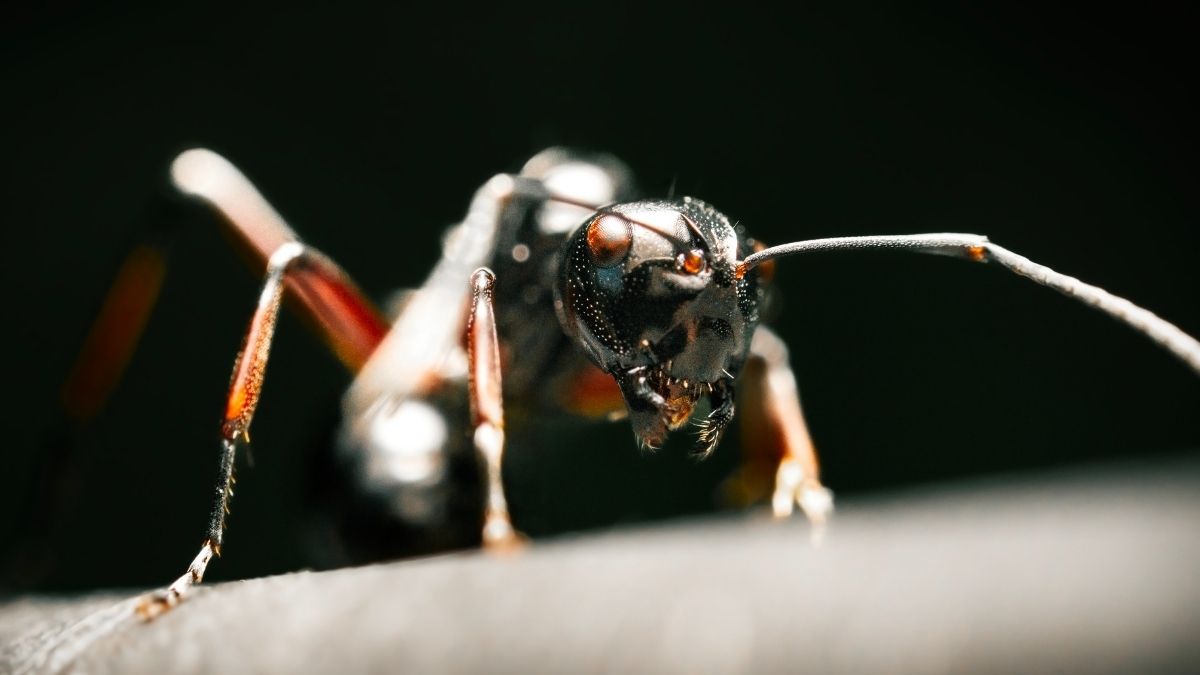
What the New 2026 Study Found About Air Pollution and Ants
The Max Planck Institute team, working with European collaborators, focused on how common urban and traffic-related pollutants affect ant scent cues. While ScienceAlert’s report highlights the black garden ant (Lasius niger), the mechanisms are relevant for many ant species worldwide.
The researchers exposed ants — and sometimes their isolated CHC layers — to realistic levels of air pollutants found in cities and near roads, including:
- Nitrogen oxides (NO and NO₂) from vehicle exhaust
- Ozone (O₃), a major component of photochemical smog
- Fine particulate matter (PM2.5)
- Complex mixtures of urban air instead of just one gas in a lab
They then observed how ants behaved when they tried to recognize nestmates, follow scent trails, or defend their nests.
Key laboratory and behavioral findings
- Pollutants chemically changed cuticular hydrocarbons.
Some CHCs were oxidized or broken down, subtly shifting the colony’s odor profile in minutes to hours. - Ants started misidentifying their own nestmates.
After exposure, workers were more likely to behave aggressively toward true nestmates, as if they were strangers or invaders. - Trail-following behavior weakened.
Forager ants had more difficulty following pheromone trails to food sources under polluted air conditions. - Colony coordination declined.
Over time, disturbed recognition and trail integrity produced slower foraging and more internal conflict.
Why Air Pollution Scrambles Ant Scent Signals
To understand why this is happening, it helps to look at the chemistry. Ant CHCs are made of long hydrocarbon chains. Many air pollutants — especially ozone and nitrogen oxides — are reactive oxidants that can attack these molecules.
- Oxidation of CHCs: Pollutants can add oxygen atoms or break double bonds, slightly changing the shape and smell of each molecule.
- Shortened “lifespan” of scent trails: Trail pheromones, which are often more volatile than CHCs, degrade faster in polluted air, shortening how long a trail remains detectable.
- Background “noise” in the air: High levels of reactive gases and particles can create a noisy chemical environment, making it harder for ants’ antennae to pick out relevant signals.
“Think of it like trying to recognize a friend’s voice in a crowded, echo-filled room. Pollution doesn’t just lower the volume of the signal — it also distorts the tone.”
— Interpretation based on current chemical ecology research
Similar scent-disruption effects have already been documented in other insects. For example, multiple studies over the past decade have shown that pollution reduces the distance at which bees and moths can detect floral scents, making it harder for them to find flowers. Ants appear to be facing a parallel challenge.

Why Ant Disruption Matters for Ecosystems and People
It might be tempting to think, “They’re just ants.” But ants are among the most important ecosystem engineers on the planet. When their societies falter, the ripple effects can be wide.
Ecosystem services ants provide
- Soil aeration: Ant tunnels help water and oxygen reach plant roots.
- Seed dispersal: Many plants rely on ants to carry and bury their seeds.
- Pest control: Ants prey on crop pests and other small invertebrates.
- Nutrient cycling: By moving and breaking down organic material, ants speed up decomposition.
If pollution causes ants to:
- Spend more energy fighting nestmates
- Forage less efficiently
- Fail to defend nests effectively
then entire colonies can become less stable and less effective at performing these roles.
For agriculture, that could mean weaker natural pest control and changes in soil structure. For wild ecosystems, it can shift which plants thrive and how nutrients move through the landscape.
A Real-World Glimpse: Ants in a Polluted City Park
While the Max Planck research was largely experimental, its findings align with observations from field biologists working in urban parks and roadside habitats.
In one informal monitoring effort described by urban ecologists in Europe, ant activity was compared between:
- A park section adjacent to a busy road with high NO₂ levels
- A quieter, more sheltered interior zone of the same park
Researchers noted that near the road:
- Ant trails were more fragmented and frequently broken.
- Colonies appeared smaller and less abundant.
- There were more observed “misdirected” aggressive encounters among workers.
While this kind of observational data can’t prove causation on its own, it’s consistent with the laboratory evidence: polluted air seems to make it harder for ants to maintain orderly, cooperative societies.
Before and After: Ant Society in Clean vs. Polluted Air
To visualize the impact, imagine two otherwise similar ant colonies, one living in relatively clean air, the other near a pollution hotspot.
Cleaner Air
- Stable, continuous foraging trails
- Low internal aggression
- Reliable nestmate recognition
- Efficient food transport to nest
Polluted Air
- Broken, meandering trails
- More fights among nestmates
- Confused or delayed recognition
- Reduced foraging efficiency overall
The 2026 study and related work suggest that as air quality declines, more colonies shift from the “clean air” pattern toward the “polluted air” behavior profile.

Challenges in Studying and Solving Ant–Pollution Problems
Turning this new understanding into action isn’t straightforward. Researchers and policymakers face several obstacles.
Scientific challenges
- Complex chemical mixtures: Real-world air contains hundreds of interacting compounds, making it hard to isolate which ones are most harmful to ant communication.
- Species differences: Not all ant species use identical CHC profiles or pheromone systems; some may be more resilient than others.
- Long-term effects: It takes time to see how subtle recognition errors translate into colony-level success or failure across seasons.
Policy and practical barriers
- Air quality regulations are usually based on human health thresholds, not ecosystem-level behavior changes.
- Insects often receive little attention in environmental policy, despite their outsized ecological importance.
- Urban planning rarely considers microscopic communication systems when siting roads or industrial zones.
What Can Be Done? Evidence-Based Steps to Protect Ants and Air Quality
The good news is that measures that protect human lungs also tend to protect ant communication. You don’t need to be an ecologist to make a difference; many of the actions below also improve daily quality of life.
1. Support policies that reduce key air pollutants
- Back stricter NOₓ and PM regulations: These pollutants are central in the recent ant studies and are known to degrade many biological scent cues.
- Promote cleaner transport: Expanded public transit, low-emission zones, and electric vehicle adoption all lower the chemical “noise” ants have to navigate.
- Advocate for science-based air quality standards: Encourage governments to incorporate ecosystem research into their air-quality reviews.
2. Make local habitat choices that buffer pollution
- Plant dense, native vegetation between busy roads and green spaces. Vegetation can help disperse and partially filter pollutants, providing microrefuges.
- Create “quiet corners” in gardens and parks away from exhaust sources where soil is undisturbed and leaf litter can accumulate.
- Avoid unnecessary pesticide use, especially in already stressed urban ant communities.
3. Reduce your own emissions where realistic
Individual actions won’t solve the problem alone, but they add up, especially in dense urban areas where ants are heavily exposed.
- Walk, cycle, or use public transit for short trips when possible.
- Keep vehicles well-maintained to reduce NOₓ and particulate emissions.
- Minimize wood and trash burning, which adds to local particulates.

How You Can Engage With Ongoing Research
The story of air pollution and ants is still unfolding. The 2026 Max Planck work adds an important piece, but many questions remain: Which species are most vulnerable? Can ants adapt? How do these effects interact with climate change and land use?
- Follow reputable science reporting from outlets like ScienceAlert and peer-reviewed journals in ecology and environmental science.
- Participate in citizen science projects that track urban biodiversity or ant population changes in your area.
- Support research institutions that integrate behavior, chemistry, and atmospheric science.
If you’re an educator, even simple classroom experiments — like observing ant trails in areas with different traffic levels — can help students connect global issues like air pollution to the tiny, fascinating societies beneath their feet.
Looking Ahead: Protecting the Invisible Languages of Nature
The latest research on air pollution and ants is a reminder that our emissions don’t just cloud the sky; they interfere with the invisible chemical “languages” many species rely on to survive. For ants, that language is written in hydrocarbons and pheromones — and polluted air is starting to blur the text.
While we still have much to learn, the message is clear enough to act on: cleaner air safeguards not only our lungs, but also the tiny, tireless workers that keep soils breathing, seeds moving, and ecosystems functioning.
As you step outside today, consider the ant trails crossing a sidewalk or weaving through a park. Their world is far more sensitive to the air around us than it appears. Every effort to cut pollution — in policy, in city planning, and in personal choices — helps keep those hidden conversations going.
Call to action: Stay informed, support strong air quality standards, and help create urban spaces where both people and ants can breathe — and communicate — more clearly.
