
How AI Is Inventing New Enzymes: De Novo Protein Design Transforming Biology and Green Chemistry
In this article, we explore how generative AI models build entirely new proteins from scratch, what makes de novo enzymes so powerful, the technologies behind them, the emerging risks, and how this field is redefining the limits of what life’s molecular machinery can be.
Mission Overview: From AlphaFold to AI‑Invented Proteins
The release of AlphaFold’s protein structure predictions in 2021 marked a historic inflection point for structural biology, solving many long‑standing protein folding problems. But the field has rapidly shifted from predicting structures of existing proteins to designing new ones. Instead of asking, “What does this sequence fold into?”, researchers now ask, “What sequence will fold into the structure and function we want?”
AI‑driven protein design uses deep learning systems—often diffusion models or large transformers—trained on millions of natural protein sequences and structures. These models can propose amino‑acid sequences that:
- Fold into stable 3D shapes that may never have existed in nature.
- Catalyze specific chemical reactions as de novo enzymes.
- Bind targets with antibody‑like precision for therapeutic use.
- Self‑assemble into nanostructures or materials with programmable properties.
Experimental labs then synthesize, express, and characterize the most promising candidates. This AI–lab loop is turning protein engineering into a much faster, more targeted discipline, with clear implications for drug discovery, green chemistry, materials science, and basic biology.
“We are entering an era where we can ask AI to create proteins that evolution never explored, and then test those ideas in the lab.” — Adapted from interviews with protein designers in Nature.
Visualizing AI‑Designed Proteins
High‑throughput computation and visualization tools allow scientists to screen thousands of AI‑generated candidates, focusing scarce experimental resources on the molecules with the highest predicted impact.
Technology: How AI Designs De Novo Enzymes
Modern AI‑driven protein design builds on both classical biophysics and next‑generation machine learning. Several complementary technologies work together:
Generative Models for Protein Sequences
Generative models learn the probability distribution of amino‑acid sequences that correspond to functional proteins. Popular architectures include:
- Transformer language models trained on protein sequences (e.g., Meta’s ESM, ProGen‑like models) that treat proteins like “biological text”.
- Diffusion models that iteratively refine random noise in sequence or structure space into realistic protein backbones and side‑chains.
- Variational autoencoders (VAEs) that map sequences into a continuous latent space and sample new variants with controlled properties.
These systems can be “steered” toward specific targets—like binding a receptor, stabilizing under heat, or arranging catalytic residues in a particular geometry.
Structure Prediction and Molecular Simulation
After generating sequences, researchers use high‑accuracy structure predictors (e.g., AlphaFold2, RoseTTAFold, OpenFold) to:
- Check whether the sequence folds into a stable, compact 3D structure.
- Verify that active‑site residues align correctly for catalysis.
- Ensure that binding interfaces are complementary to target molecules.
For critical designs, molecular dynamics simulations and quantum chemistry tools further refine and validate predictions about reaction mechanisms and stability.
Wet‑Lab Validation Loop
AI design is only as good as its experimental feedback. A typical loop includes:
- DNA synthesis & expression of candidate genes in systems such as E. coli, yeast, or mammalian cells.
- Biochemical assays to measure activity (kcat, KM), stability (melting temperature), and specificity.
- Directed evolution to further optimize AI hits by introducing mutations and selecting improved variants.
Over time, performance data is fed back into the models, producing a virtuous cycle of improved predictions.
“AI gives us an incredible starting point, but evolution in the test tube still does the fine‑tuning.” — Paraphrased from comments by Frances Arnold, Nobel laureate in directed evolution, in Science.
De Novo Enzymes for Green Chemistry
One of the most compelling applications of AI‑designed proteins lies in green chemistry—replacing harsh industrial processes with efficient, biologically inspired catalysis.
Why Enzymes Are Ideal Catalysts
- They operate under mild temperatures and pressures, reducing energy consumption.
- They often work in water instead of organic solvents, lowering toxicity.
- They exhibit high chemo‑, regio‑, and stereoselectivity, minimizing unwanted by‑products.
AI‑Enabled Green Chemistry Use Cases
Recent work, building on labs such as David Baker’s at the University of Washington and several industrial groups, highlights how AI‑invented enzymes are being explored for:
- Plastics degradation: Custom hydrolases engineered to break down PET and mixed plastic waste more efficiently at moderate temperatures.
- CO₂ utilization: De novo carboxylases and carbon‑fixing enzymes that could help convert CO₂ into fuels or specialty chemicals.
- Pharmaceutical synthesis: Tailor‑made enzymes that catalyze key chiral steps in drug manufacturing, replacing expensive metal catalysts.
- Biobased materials: Enzymes for synthesizing novel polymers or cross‑linking biomaterials with tunable mechanical properties.
Videos and explainers across YouTube and scientific media often showcase conceptual pipelines where AI proposes a catalytic pocket, experiments validate activity, and process engineers integrate the enzyme into bioreactors or flow chemistry setups.
Novel Therapeutics and Biologics
Protein therapeutics—antibodies, cytokines, enzymes, and scaffolds—are at the core of modern medicine. AI‑driven design accelerates discovery and enables modalities that were previously impractical.
AI‑Optimized Binding Proteins
Transformer and diffusion models can:
- Design new binding scaffolds that are smaller and more stable than antibodies.
- Optimize binding affinity and specificity to disease targets, such as oncogenic receptors or viral proteins.
- Tune pharmacokinetics by engineering half‑life extension tags, reduced immunogenic epitopes, or controlled degradation motifs.
Enzyme Replacement and Gene‑Encoded Therapies
For enzyme deficiency disorders, de novo or radically engineered enzymes can be optimized to:
- Function in challenging compartments (e.g., lysosomes, mitochondria).
- Resist denaturation and proteolysis in circulation.
- Interact minimally with off‑target pathways.
When paired with gene therapy or mRNA delivery, AI‑designed proteins can be encoded directly as genetic payloads, opening access to long‑acting or programmable therapeutics.
AI‑First Biotech Pipelines
Numerous startups and pharma partnerships are building “AI‑first” discovery engines that integrate:
- Large protein language models for idea generation.
- Automated labs (“self‑driving labs”) for high‑throughput screening.
- Data platforms that continuously refine models with real assay data.
Public announcements of AI‑designed preclinical candidates—for oncology, autoimmune disease, and infectious disease—are increasingly common in 2024–2026, often sparking discussions on platforms like LinkedIn and X (Twitter) about how quickly these pipelines can reach the clinic.
Relevant Reading and Tools
Understanding Protein Evolution and Constraints
Designing proteins from scratch does more than create new tools; it illuminates why natural proteins look the way they do. AI models explore the vast “sequence space” that evolution only partially sampled.
Exploring Protein Sequence Space
A modest‑length protein of 100 amino acids has 20100 possible sequences—astronomically more than life has ever tested. AI allows scientists to:
- Map regions of sequence space that yield stable folds.
- Identify “islands” of function connected by mutational pathways.
- Quantify how mutations interact (epistasis) in stability and activity.
Insights into Evolutionary Design Rules
By comparing AI‑invented proteins with their natural counterparts, researchers gain insight into:
- Robustness: How tolerant a fold is to mutation and how that relates to evolvability.
- Redundancy: How many different sequences can realize the same functional motif.
- Biophysical constraints: Universal rules governing packing, hydrogen bonding, and dynamics.
“AI gives us a flashlight into the dark corners of protein space that evolution never visited.” — Summarizing viewpoints from recent reviews in Cell on machine learning for protein evolution.
Educational and Community Resources
Open‑source projects and teaching materials have dramatically lowered the barrier to entry:
- ESM protein language models by Meta AI.
- YouTube tutorials on protein design and AlphaFold usage.
- Rostlab and other academic groups offering open educational content.
Open‑Source Ecosystems and Community Projects
The AI protein design revolution is not confined to large companies. An active open‑source ecosystem enables academic groups, startups, and skilled enthusiasts to participate.
Key Open‑Source Components
- Structure predictors: OpenFold, ColabFold, RosettaFold pipelines.
- Design libraries: Rosetta, PyRosetta, FoldDock, and new Python toolkits for generative design.
- Benchmark datasets: Curated sets of experimentally characterized proteins to validate new algorithms.
Community Challenges and Competitions
Community initiatives foster innovation and skills development:
- Protein design challenges hosted on Kaggle‑like platforms.
- Academic competitions for students to design stable de novo proteins.
- Hackathons blending ML engineers and biochemists to prototype new tools.
Popular Posts and Social Media Engagement
Highly shared posts often mix:
- Animations of proteins folding or assembling into nanoscale cages.
- Stories of AI‑designed enzymes degrading plastics or neutralizing toxins.
- Commentary from prominent scientists such as David Baker on LinkedIn or AlphaFold‑related accounts on X.
Milestones: Key Achievements in AI‑Driven Protein Design
Since AlphaFold’s landmark results, several milestones have defined the trajectory toward fully AI‑invented enzymes and therapeutics.
Selected Milestone Categories
- High‑accuracy structure prediction (2020–2022): AlphaFold2, RoseTTAFold, and related tools make near‑experimental 3D predictions broadly available.
- First practical de novo enzymes: Designed catalysts for reactions like Kemp elimination, Diels–Alder reactions, and ester hydrolysis show that artificial active sites can be functional.
- AI‑assisted antibody and binder design: Companies report binders generated in silico with strong affinity and specificity, shortening discovery timelines.
- Automated design–build–test loops: Labs integrate robotics, high‑throughput screening, and ML to close the feedback loop.
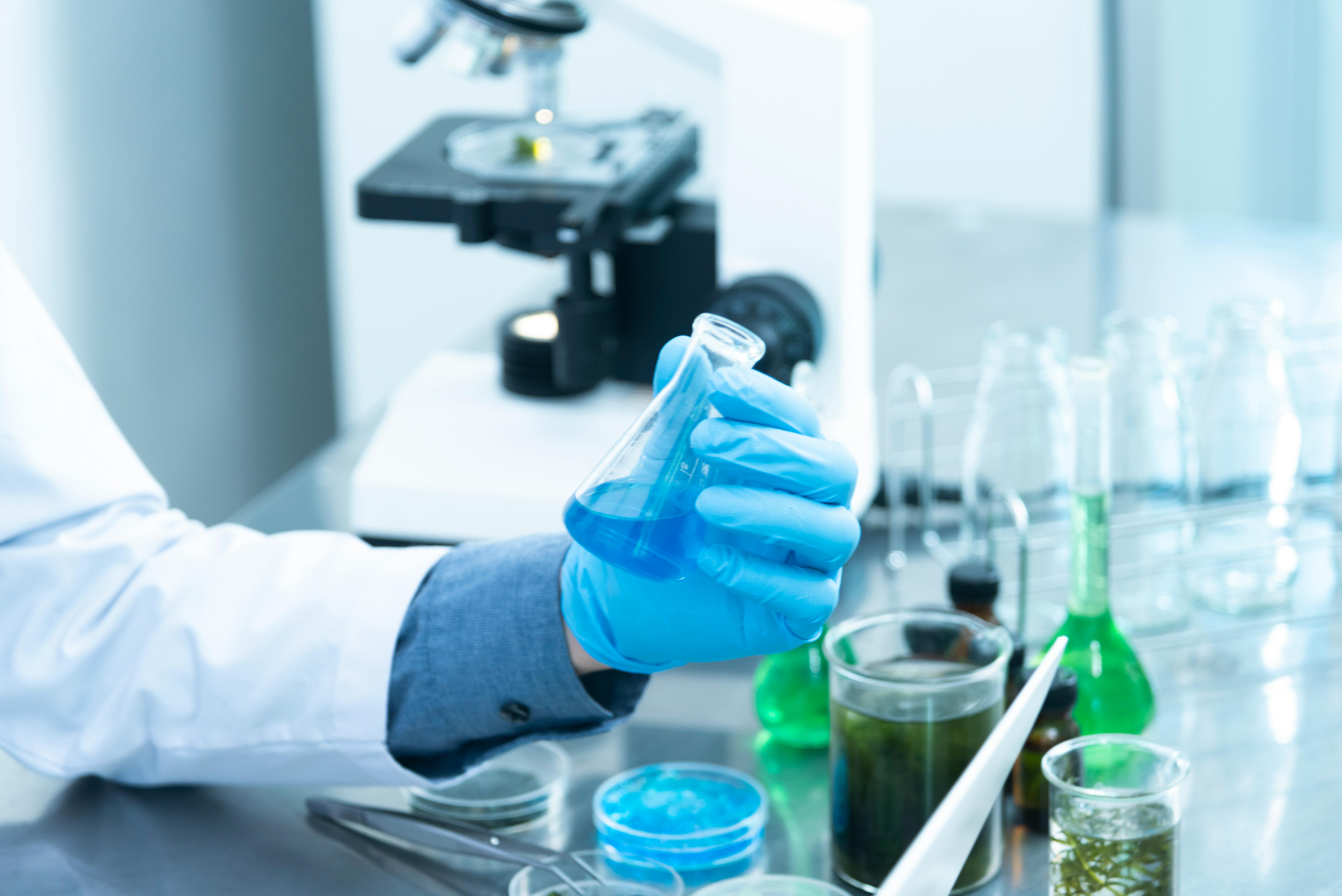
The period 2023–2026 has particularly emphasized diffusion‑based backbone generation and conditioning on functional motifs, allowing designers to place active‑site geometries with much higher precision.
Challenges and Biosecurity Considerations
Despite rapid progress, AI‑driven protein design faces major technical and societal challenges, especially around reliability and responsible use.
Technical Limitations
- Model–experiment gap: Predicted stability or activity often fails to match real‑world performance; protein dynamics and cellular context remain difficult to capture.
- Multi‑objective optimization: Balancing stability, activity, manufacturability, immunogenicity, and safety in a single design is complex.
- Data biases: Training data enriched in well‑studied protein families can skew designs away from truly novel spaces.
Biosecurity and Misuse Risks
The ability to design new proteins also raises concerns:
- Potential design of more potent toxins or novel immune‑evasive proteins.
- Easy ordering of synthetic DNA encoding harmful designs if screening is weak.
- Publication of detailed “how‑to” design workflows that could be misapplied.
Policy papers in Nature and Science emphasize that “AI tools for biological design must be developed with guardrails, including access controls, monitoring, and rigorous DNA synthesis screening.”
Emerging Governance Approaches
Governments, research institutions, and industry are responding with:
- DNA synthesis screening standards coordinated by organizations such as the International Gene Synthesis Consortium.
- Responsible publication guidelines to limit operational detail for risky applications.
- Access controls for advanced design models, balancing openness with security.
Constructive dialogue between AI researchers, biologists, ethicists, and policymakers is crucial to ensure that the technology remains a force for good.
Tools, Hardware, and Learning Resources
For researchers and advanced learners who want to work in AI‑driven protein design, a combination of computational and experimental tools is essential.
Recommended Computing Setup
Training or fine‑tuning protein design models often requires GPUs with substantial memory. For individuals or small labs, a powerful local workstation can be a practical starting point. For example:
- A modern desktop with an NVIDIA GPU such as the MSI Gaming GeForce RTX 4070 12GB GDRR6X Graphics Card offers an accessible entry point for running many open‑source protein ML models efficiently.
Key Software Resources
- ColabFold notebooks for running AlphaFold‑like predictions in the cloud.
- AlphaFold open‑source code (research use) and forks.
- RosettaCommons repositories for structure prediction and design.
Introductory Learning Path
- Gain foundational knowledge in biochemistry, structural biology, and thermodynamics.
- Study modern deep learning (transformers, diffusion, VAEs) with a focus on sequence and graph data.
- Complete tutorials on AlphaFold, Rosetta, or similar tools using public datasets.
- Start with small design problems—stabilizing a mini‑protein, designing a simple binder—before moving to full de novo enzymes.
AI as a Lab Collaborator
Rather than replacing scientists, AI acts as a creative partner—suggesting candidates, revealing non‑intuitive patterns, and handling combinatorial complexity that would otherwise be overwhelming.
Future Directions: Toward Programmable Biology
AI‑driven de novo protein design is a key step toward programmable biology, where we engineer cells and organisms with bespoke molecular machines.
Integration with Synthetic Biology
Synthetic biology aims to design genetic circuits and cellular systems with predictable behaviors. AI‑designed proteins will increasingly serve as:
- Regulatory components (switchable transcription factors, logic gate proteins).
- Metabolic enzymes that reroute flux toward desired products.
- Structural parts for building organelle‑like compartments or scaffolds.
Multimodal Foundation Models
Emerging research is blending:
- Protein sequence and structure data.
- Gene expression, epigenetic, and cellular phenotype datasets.
- Chemical reaction networks and environmental conditions.
Such multimodal foundation models could predict how a designed enzyme behaves inside real cells or whole organisms, not just in a test tube.
Ethical and Societal Considerations
As capabilities grow, so do questions about:
- Equitable access to life‑saving AI‑designed therapies.
- Environmental impacts of large‑scale enzyme‑enabled bioprocesses.
- Public understanding and trust in AI‑engineered biological products.
Conclusion
AI‑driven protein design is transforming molecular biology from a primarily descriptive science into a creative, engineering‑oriented discipline. By generating de novo enzymes and binding proteins tailored to specific needs, these tools promise advances in green chemistry, medicine, and materials science—while simultaneously deepening our understanding of how proteins evolve and function.
Realizing this potential responsibly will require sustained collaboration across fields, robust experimental validation, and thoughtful governance of powerful design tools. If these conditions are met, the coming decade could see AI‑invented proteins become as central to technology and medicine as semiconductors and software are today.
Additional Practical Tips for Following the Field
To keep up with rapid developments in AI‑driven protein design and de novo enzymes:
- Monitor preprint servers like bioRxiv with keywords such as “protein design”, “de novo enzyme”, and “diffusion model”.
- Follow leading labs and companies on LinkedIn and X, including groups in Seattle, Boston, Cambridge (UK), and Zurich that frequently publish high‑impact work.
- Join online communities and Slack/Discord groups dedicated to computational biology, where researchers share code, tutorials, and benchmarks.
- Take advantage of open online courses in structural biology and machine learning from universities and platforms like Coursera and edX.
Combining high‑quality educational resources with hands‑on experimentation—whether in silico or in collaboration with a lab—remains the most effective path into this fast‑moving, interdisciplinary domain.
References / Sources
Selected reputable sources for deeper reading:
- Jumper et al., “Highly accurate protein structure prediction with AlphaFold,” Nature (2021).
- Huang et al., “De novo design of a four-fold symmetric TIM-barrel protein with atomic-level accuracy,” Science.
- Watson et al., “De novo design of protein structure and function with RFdiffusion,” Nature (2023).
- Reviews on protein language models and evolution in Cell Reports Methods.
- Nature collection on machine learning in structural biology and drug design.
- Policy discussions and biosecurity guidance from OSTP and related agencies.
Imagining the Next Generation of Molecular Machines

As AI‑designed proteins become more capable and commonplace, they may underpin everything from carbon‑negative manufacturing to precision therapeutics, quietly operating as the invisible machinery of a more sustainable and health‑focused future.
