From Curse to Cheers: How WWE Really Feels About Danhausen’s Chaotic Debut
Danhausen’s WWE Debut: Backstage Reaction, Redemption Arc, and What It Means for Character-Driven Wrestling
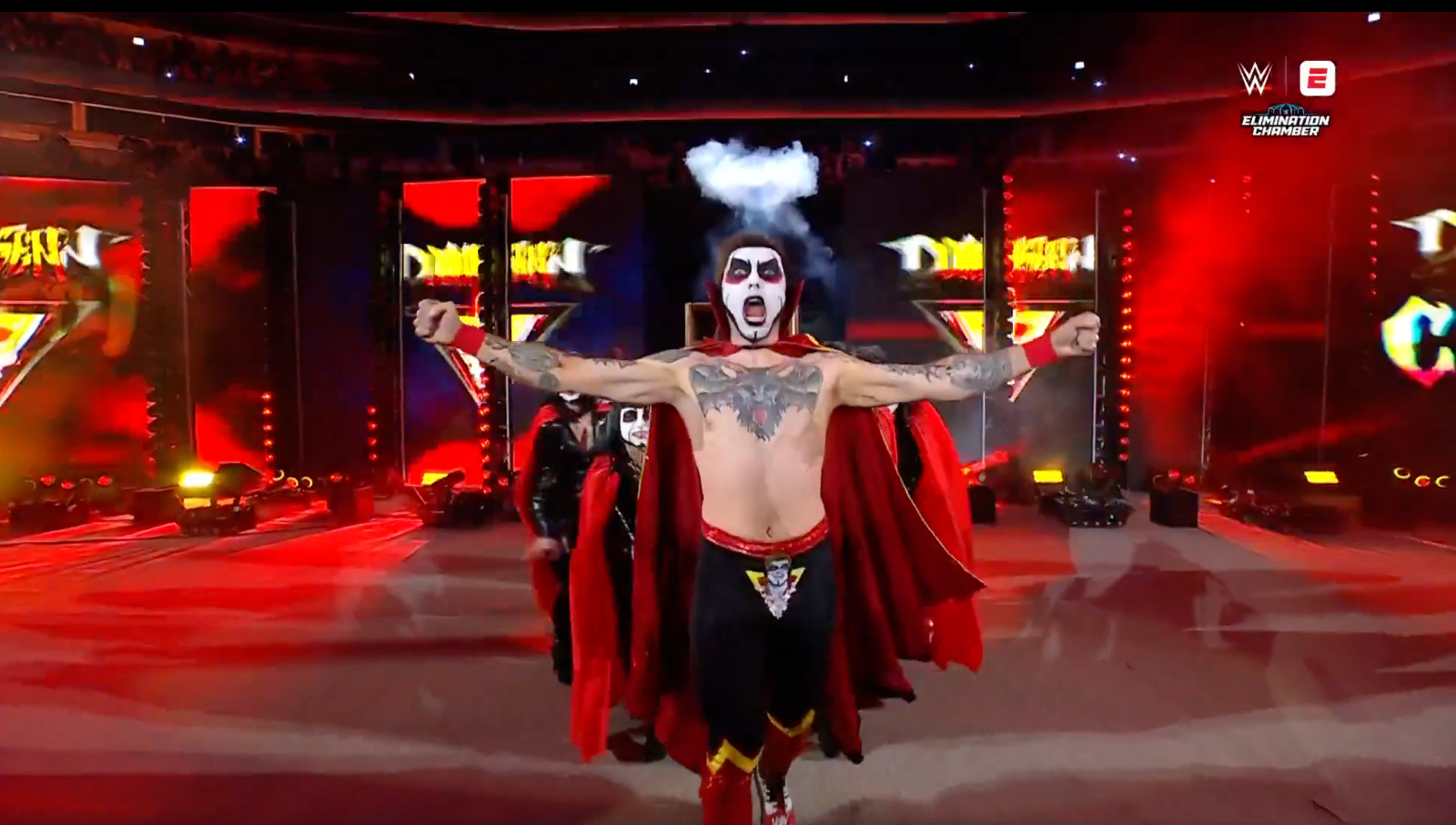
Danhausen’s WWE debut could not have gone much worse on the night, at least if you go by early fan reaction and social media memes. But according to a new backstage report, his resilience, attitude, and surprisingly quick integration into the locker room are turning that shaky start into one of 2026’s more intriguing wrestling stories.
With F4W Online highlighting the situation and Fightful Select weighing in on WWE’s internal response, Danhausen’s move from cult favorite to sports-entertainment experiment tells us a lot about how WWE now handles unconventional acts.
From Indie Cult Figure to WWE Experiment
Before ever stepping into a WWE ring, Danhausen was already internet-famous: a heavily painted, “very nice, very evil” goblin of a character who blended B-movie horror, deadpan comedy, and old-school territory promo energy. His time in Ring of Honor and later AEW proved that he could sell merch, draw reactions, and live rent-free in social media feeds—key currencies in today’s wrestling economy.
WWE historically hasn’t always known what to do with performers whose primary value is quirky character work rather than traditional tough-guy presentations. For every Bray Wyatt success, there’s a graveyard of undercooked gimmicks. That’s what made Danhausen’s signing fascinating: could the biggest sports-entertainment machine properly harness a character that was built almost entirely in the algorithmic wild?
“WWE has always been a character company. The question now is whether it can let characters that weren’t created in Stamford breathe on their own terms.”
— Industry analyst quoted in F4W/WON coverage
That context makes the rocky debut all the more meaningful: this wasn’t just about one entrance going sideways; it was an early test of WWE’s current philosophy toward fan-built personas.
What Went Wrong with Danhausen’s WWE Debut?
By most accounts, Danhausen’s first night in WWE was an exercise in how not to introduce a cult favorite act. The entrance felt rushed, the crowd mic didn’t quite capture the reaction, and the overall presentation leaned more awkward than ominously funny. For a character so dependent on timing and tone, the margin for error was thin.
- Pacing issues: The segment reportedly didn’t give him enough space to land his signature quirks.
- Audience familiarity gap: Casual WWE viewers may not have known the backstory, leading to confusion instead of instant laughs.
- Production mismatch: Danhausen’s lo-fi, horror-comedy persona can clash with WWE’s polished, neon-heavy aesthetic if not carefully framed.
None of this is fatal, but in wrestling, first impressions matter. Debuts often set the ceiling for how high a character can climb, which is why reports that WWE brass were initially underwhelmed shouldn’t surprise anyone.
Fightful’s Report: How WWE Really Views Danhausen Now
The latest report from Fightful Select, as summarized by F4W/WON, paints a more optimistic picture than the debut might suggest. While the first appearance “could not have gone much worse,” the internal narrative has shifted as Danhausen settled in backstage.
“His success and attitude since then have reportedly impressed his new peers and colleagues.”
— Summary of Fightful Select’s report via F4W Online
Translation in wrestling-speak: he’s showing up prepared, not big-timing veterans, and is willing to adapt his act to the WWE system without losing its core weirdness. That matters. WWE has cooled on plenty of outside hires who bucked the system or didn’t adjust quickly.
There’s also the not-so-small factor of early merch and digital performance. Even in a rough rollout, Danhausen tends to move shirts and rack up social media engagement—a language WWE’s decision-makers understand fluently in 2026.

Can Danhausen’s “Very Nice, Very Evil” Persona Work in WWE?
Danhausen is part of a lineage of wrestling oddballs who thrive by being aggressively themselves—think Goldust, The Boogeyman, or Broken Matt Hardy. WWE is at its best when it leans into that theatricality rather than sanding it down into midcard comedy filler.
- Strength: Instantly recognizable look and cadence.
- Strength: Built-in memeability and catchphrases that play well online.
- Weakness: Risk of being pigeonholed as pure comedy with no upward mobility.
- Weakness: Needs careful booking to avoid becoming a background skit guy.
The good news: current WWE creative has generally been more willing to preserve what made outside acts work in the first place—see Cody Rhodes and LA Knight. The bad news: the company still leans hard on comedic characters as “palate cleansers” rather than serious contenders.

What Danhausen’s Situation Says About WWE in 2026
Zoomed out, Danhausen’s WWE story is less about one performer and more about the industry’s shifting power dynamics. We’re in an era where wrestlers arrive with their own brands, established fanbases, and content strategies. WWE no longer has the monopoly on character creation; it has to collaborate with personas built elsewhere.
The reported change in how management views Danhausen—from “rough debut” to “impressed by attitude”—suggests a company increasingly aware that:
- Botched debuts can be corrected with consistent, character-faithful booking.
- Locker room fit and professionalism can prolong opportunities even after a shaky start.
- Digital metrics (social views, engagement, merch) heavily influence patience from the top.

In that sense, Danhausen’s arc could end up as a case study: not just in whether a “very nice, very evil” character can flourish on WWE TV, but in how flexible the WWE system is willing to be in 2026 and beyond.
Verdict: A Rocky Start with Real Upside
On paper, Danhausen’s WWE debut was a stumble: the timing was off, the presentation muddled, and the early buzz mixed at best. But the latest reporting from Fightful Select, amplified by F4W/WON, hints at a more hopeful trajectory—one where work ethic, adaptability, and natural charisma are buying him time to prove that his gimmick can translate to WWE’s massive platform.
If creative learns from the misfires and leans into what made Danhausen a cult favorite—while WWE’s production sharpens the presentation—this could evolve from a cautionary tale into a slow-burn success story. In an industry that loves a redemption arc, that feels oddly fitting.
Early WWE Run Score: 3.5/5 — Rough debut, promising recovery, and a character with real upside if handled with care.