
From AlphaFold to Generative Biology: How AI‑Designed Proteins Are Rewiring Synthetic Biology
Over the last few years, AI has moved from predicting the shapes of natural proteins to designing new ones from scratch. This transition—from analysis to generation—marks the beginning of what many researchers call the era of programmable proteins, where amino acid sequences can be written in silico to perform specific functions in cells, materials, and devices.
This article explores how AI-driven protein design works, what tools and models are leading the field, which applications are emerging first, and how scientists, companies, and regulators are grappling with biosafety and ethical implications.
Mission Overview: From Prediction to Generation
The turning point arrived with AlphaFold2 (DeepMind/Google DeepMind) and related systems like RoseTTAFold, which showed that AI could accurately predict protein 3D structures directly from amino acid sequences. By 2023–2024, these models had mapped structures for hundreds of millions of proteins, many of which had never been experimentally characterized.
The next wave pushed further: if AI can understand the mapping from sequence to structure, perhaps it can generate new sequences with desired shapes and functions. This gave rise to:
- Diffusion models that iteratively refine random noise into realistic protein backbones or sequences.
- Transformer-based language models trained on massive protein sequence databases (e.g., UniProt, metagenomic datasets).
- Graph neural networks (GNNs) that model residues and their spatial relationships as graphs.
“We’re moving from reading and editing biological code to writing it from scratch. AI-designed proteins are the first clear example of that shift.”
Collectively, these tools are re-framing biology as an information discipline, where sequences are treated as programmable objects and AI models as compilers that translate human intent into molecular function.
Technology: How AI Designs New Proteins
Modern AI protein design pipelines integrate multiple model types and experimental loops. While implementations differ, most share a common architecture:
- Objective specification: Researchers define what they want—binding a specific target, catalyzing a chemical reaction, self-assembling into a cage, or surviving at high temperature.
- Generative proposal: A model proposes candidate sequences or backbones that may achieve those objectives.
- In silico screening: Structural predictors (AlphaFold-like), energy calculations, and docking simulations filter hundreds of thousands of candidates down to a small set.
- Experimental validation: DNA is synthesized, proteins are expressed and purified, and assays measure stability, activity, binding, or toxicity.
- Feedback and optimization: Experimental data feeds back into the models via fine-tuning, reinforcement learning, or active learning.
Key Model Families
Several model classes dominate current AI-driven protein design:
- Protein language models (pLMs): Systems like ESM (Meta), ProGen, and OpenFold-inspired models treat amino acid sequences like text, learning grammar-like rules. They capture patterns linked to folding and function and can generate plausible new sequences token by token.
- Diffusion models: Inspired by image generators, these models start from random noise and iteratively denoise toward realistic 3D structures or sequence-structure pairs, enabling de novo protein topologies not seen in nature.
- Structure-conditioned generators: Models such as RFdiffusion and other backbone-conditioned networks generate sequences that fit a given 3D scaffold, ideal for designing binding interfaces or enzyme active sites.
- GNN-based models: By representing residues as nodes and interactions as edges, GNNs capture local and global constraints on folding and stability, often used in scoring and refinement.
Integration With High-Throughput Experiments
AI models are greatly accelerated by deep mutational scanning (DMS) and similar techniques, which measure the effects of thousands to millions of sequence variants in parallel. These datasets:
- Provide supervised signals for learning functional landscapes.
- Reveal which positions tolerate mutations and which are constrained.
- Enable active-learning loops where models propose the next set of most-informative mutants.
The synergy between in silico generation and in vitro screening underpins many current breakthroughs in AI-designed enzymes and antibodies.
Scientific Significance and Real-World Applications
AI-designed proteins matter because they unlock regions of “sequence space” that evolution has never explored. Where traditional protein engineering tweaks natural templates, generative models can leap to entirely new designs with tailored properties.
Therapeutics: De Novo Antibodies and Beyond
Drug discovery is one of the fastest-moving application areas. AI models are now being used to:
- Design antibodies and binders that recognize difficult or “cryptic” epitopes, including conserved viral regions that mutate slowly.
- Create multi-specific biologics, where a single protein engages multiple receptors or antigens, potentially improving efficacy in cancer immunotherapy or autoimmune disease.
- Engineer stabilized vaccine antigens that maintain the right shape to elicit broadly neutralizing antibodies, building on work with stabilized spike proteins for coronaviruses.
For readers interested in hands-on background, highly regarded texts like the Introduction to Protein Structure can provide a rigorous foundation on protein folding and architecture.
Green Chemistry and Industrial Biocatalysis
Industrial chemistry often depends on metal catalysts, high temperatures, or toxic solvents. AI-designed enzymes promise:
- Milder reaction conditions, reducing energy use and equipment costs.
- Improved selectivity, cutting down on wasteful by-products.
- Custom pathways for producing fine chemicals, flavors, and pharmaceuticals.
Companies in biomanufacturing are actively exploring AI-designed enzymes for polymer synthesis, amide bond formation, and late-stage functionalization of complex molecules—tasks that were previously challenging for biocatalysts.
Biomaterials and Protein Nanotechnology
Self-assembling proteins can form cages, fibers, and lattices with nanoscale precision. AI now helps design:
- Protein cages that encapsulate drugs or imaging agents for targeted delivery.
- Fibrous scaffolds for tissue engineering and regenerative medicine.
- Programmable lattices that act as frameworks for inorganic components, enabling hybrid materials for catalysis or electronics.
“We’re starting to think of proteins as programmable building blocks, like nanoscale LEGO bricks that snap together according to rules learned by AI.”
Environmental Applications: Plastics, CO₂, and Pollutants
AI-designed enzymes could be key tools in climate and environmental remediation:
- Plastic-degrading enzymes that break down PET and other polymers faster and at lower temperatures, enhancing recycling or biodegradation.
- CO₂-fixing enzymes with improved kinetics or altered substrates, which could boost carbon capture in industrial processes or engineered organisms.
- Bioremediation enzymes that detoxify persistent organic pollutants, pesticides, or heavy-metal complexes.
These efforts are still early-stage, but early successes with evolved PETase variants illustrate the potential of combining AI with directed evolution for environmental benefit.
Milestones in AI-Driven Protein Design
Several landmark achievements highlight the rapid maturation of this field:
- AlphaFold2 and RoseTTAFold (2020–2021): Established near-experimental accuracy for many single-chain protein structures, enabling structure-guided design at scale.
- RFdiffusion and related diffusion-based tools: Demonstrated de novo design of symmetric assemblies, binders, and enzyme scaffolds using generative models on the 3D backbone level.
- De novo protein binders and vaccines: Academic labs and biotech startups reported AI-designed proteins that bind viral antigens or host receptors with nanomolar affinity, some entering preclinical or early clinical evaluation.
- Integration with robotics and lab automation: Closed-loop systems now knit together generative models, liquid-handling robots, and high-throughput screening, dramatically compressing design–build–test cycles.
On social media and platforms like YouTube, code walkthroughs for tools such as ColabFold and open-source protein design frameworks have made these methods more accessible to graduate students, computational biologists, and even advanced hobbyists.
Visualizing AI-Designed Proteins
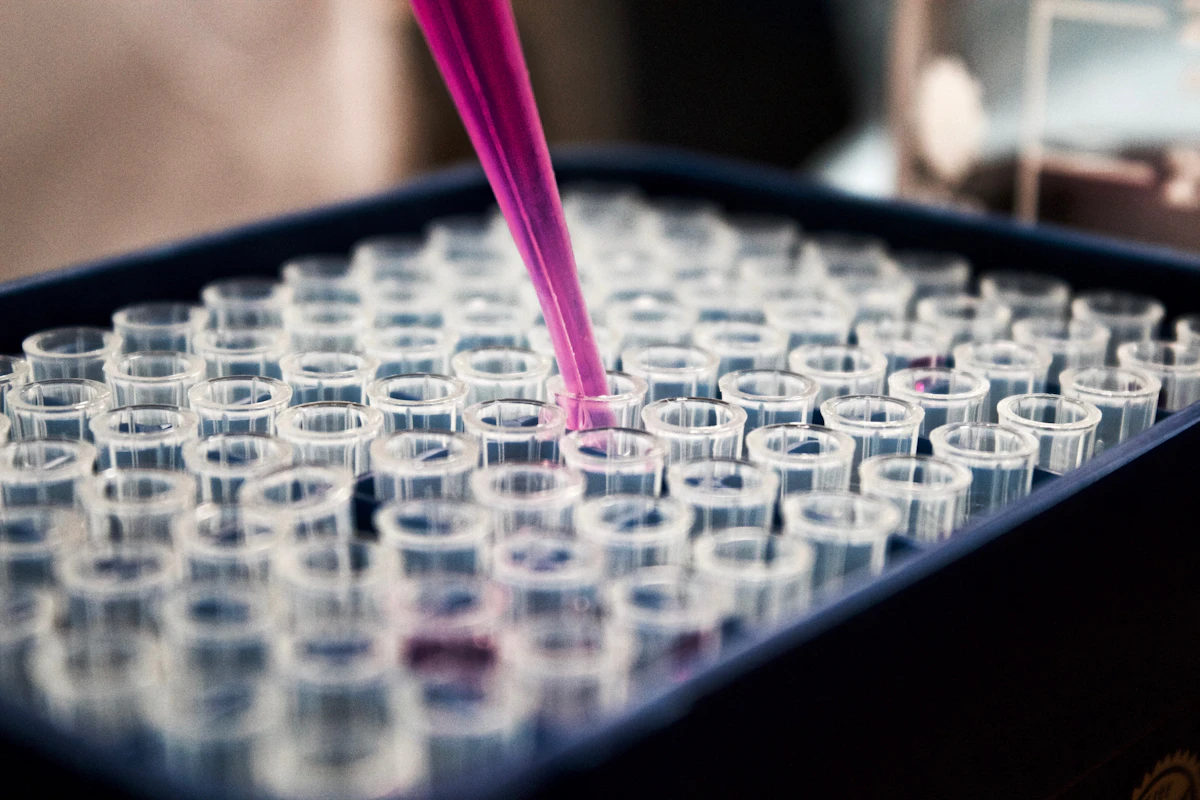
High-quality visualizations help researchers and students intuitively understand how AI manipulates protein structure and function.


Challenges: Biosafety, Validation, and Governance
Despite impressive progress, AI-designed proteins face scientific, technical, and ethical hurdles.
Scientific and Technical Limitations
- Function prediction remains difficult: While structure prediction is strong, accurately forecasting catalytic rates, off-target binding, immunogenicity, and in vivo behavior is far from solved.
- Context dependence: Protein behavior depends on cellular context—post-translational modifications, crowding, pH, cofactors—which are often absent from training data and models.
- Designability constraints: Not every mathematically possible sequence or fold is biologically realistic. Models may generate designs that are hard to express, fold, or scale up.
Biosafety and Dual Use
AI lowers the barrier to design proteins with powerful biological functions, raising dual-use concerns:
- Potential misuse: Inadvertent or deliberate creation of proteins with harmful properties—enhanced toxins, immune-evading components, or proteins that modulate critical host pathways.
- Screening challenges: Traditional DNA synthesis screening focuses on known pathogen sequences; generative models may design entirely novel sequences that bypass naive filters.
- Information hazards: Publishing overly detailed protocols for designing dangerous functions could enable misuse by non-experts.
“The same tools that let us engineer life-saving therapies could, in principle, be repurposed for harm. Responsible governance has to evolve as quickly as the technology.”
Emerging Governance Approaches
In response, the community is exploring:
- Model-level safeguards, such as training-time restrictions, red-teaming, and hard-coded constraints that bias models away from dangerous outputs.
- Stronger DNA synthesis screening, coordinated by groups like the International Gene Synthesis Consortium (IGSC), using ML-based classifiers to flag suspicious orders, including de novo sequences.
- Publication norms and tiered access for high-risk capabilities, balancing scientific openness with risk mitigation.
- Regulatory updates that explicitly address AI-enabled biology within national and international biosecurity frameworks.
Policymakers, ethicists, and scientists are increasingly collaborating to articulate responsible innovation pathways that enable beneficial applications while reducing the likelihood of catastrophic misuse.
Tooling and Learning Resources
For researchers, students, or developers entering this field, the ecosystem of tools and educational content has grown substantially.
- AlphaFold and ColabFold: Widely used for structure prediction; ColabFold lowers the barrier via cloud notebooks.
- Open protein language models: Systems such as ESM and related open-source pLMs provide embeddings and generative capabilities via public code repositories.
- Protein design frameworks: Community tools built on PyTorch, JAX, or Rosetta integrate generative models with classical energy functions.
- Educational media: Channels on YouTube, blog posts by research groups, and long-form explainers on platforms like LinkedIn highlight recent preprints and code releases.
For those building their own models or pipelines, a solid GPU workstation or access to cloud GPUs is essential. Many practitioners also rely on lab-automation platforms to close the loop between computation and experiment.
Looking Ahead: Toward Programmable, Multi-Scale Biology
AI-designed proteins are likely just the first layer in a multi-scale redesign of biology. As models improve and datasets expand, we can expect:
- Integrated design of proteins, RNA, and small molecules, where systems co-optimize multiple components of a pathway or therapeutic.
- Cell- and organism-level design, coupling protein design with gene circuits, metabolic pathways, and developmental programs.
- Real-time, adaptive therapeutics, where AI continually updates designs in response to evolving pathogens or tumor escape mutants.
- Open, community-driven platforms where researchers worldwide contribute designs, data, and models, accelerating collective progress.
To follow cutting-edge developments, readers can track preprints on bioRxiv, conference talks from venues like NeurIPS and ISMB, and updates from leading labs such as the Institute for Protein Design.
Conclusion
AI-designed proteins mark a profound expansion of what is possible in synthetic biology. Instead of modestly editing what evolution has already produced, researchers can now write new molecular functions into existence, with implications that span medicine, industry, and the environment.
The same technologies that might yield ultra-precise cancer therapies or carbon-neutral manufacturing also demand careful stewardship. Ensuring robust validation, transparent risk assessment, and globally inclusive governance will be as important as any single algorithmic breakthrough.
For scientists, policymakers, and informed citizens alike, the emergence of generative protein design is an invitation to rethink how we relate to the living world—not just as observers or editors, but as responsible authors of new biological capabilities.
Additional Perspectives and Practical Tips
For graduate students or professionals considering a move into AI-driven protein design, a useful skill stack includes:
- Core biology and biochemistry (protein folding, enzymology, molecular biology).
- Machine learning fundamentals (deep learning, sequence models, generative modeling).
- Hands-on experimental techniques (cloning, expression, purification, basic biophysics).
- Software engineering (Python, version control, containerization, basic cloud computing).
Combining these skills opens doors in academia, biotech startups, pharma, and industrial biotechnology. As the field matures, interdisciplinary fluency—understanding both the “wet lab” and the “code”—will be a decisive advantage.
References / Sources
Selected, accessible sources for further reading:
- Jumper et al. (2021). Highly accurate protein structure prediction with AlphaFold. Nature. https://www.nature.com/articles/s41586-021-03819-2
- Baek et al. (2021). Accurate prediction of protein structures and interactions using RoseTTAFold. Science. https://www.science.org/doi/10.1126/science.abj8754
- Watson et al. (2023). De novo design of protein structure and function with RFdiffusion. Preprint. https://www.biorxiv.org/content/10.1101/2023.01.08.523139v1
- Alley et al. (2019). Unified rational protein engineering with sequence-based deep representation learning. Nature Methods. https://www.nature.com/articles/s41592-019-0598-1
- International Gene Synthesis Consortium (IGSC). https://genesynthesisconsortium.org
- Institute for Protein Design, University of Washington. https://www.ipd.uw.edu
